Kirjojen hintavertailu. Mukana 12 268 284 kirjaa ja 12 kauppaa.

Kirjailija

Stephen Wade

Kirjat ja teokset yhdessä paikassa: 61 kirjaa, julkaisuja vuosilta 1998-2027, suosituimpien joukossa Red Rose Paranormal - Everyday Paranormal Tales and Classic Cases from Lancashire. Vertaile teosten hintoja ja tarkista saatavuus suomalaisista kirjakaupoista.

61 kirjaa

Kirjojen julkaisuhaarukka 1998-2027.

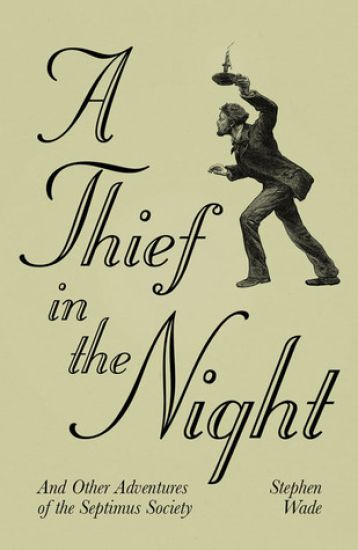
A Thief in the Night

A Thief in the Night

Stephen Wade

The History Press Ltd
2014
nidottu
London, 1890: A group of seven amateur criminologists based at the Septimus Club in Piccadilly set out to investigate a series of mysterious crimes committed in the capital. Including a professor, a Lord, an ex-jockey, an actress, a talented rogue, a Scotland Yard detective and a society lady, the sleuths become embroiled in the murder of an artist, an attempted assassination and even come up against some Russian anarchists. In these, their first six adventures, the society take on some challenging cases, relishing the thrill of the chase as enemies mount against them and old vendettas return. This collection is a treat for all fans of vintage crime fiction.
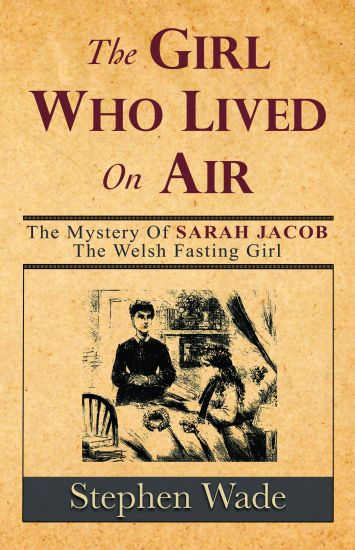
Girl Who Lived on Air

Girl Who Lived on Air

Stephen Wade

Seren
2014
nidottu
Sarah Jacob was the Carmarthenshire farm girl who dominated the national and regional press for almost all of 1869. In the popular imagination she was 'the Welsh fasting girl' and although she was not the first anorexic, she was arguably the first to cause a national furore, and become something of a celebrity. She died despite a team of nurses from Guy's Hospital stationed at her home in Lletherneuadd, and after the best minds in British medicine had set theorised about the cause of her apparently supernatural existence - living in spite of starvation, losing no weight yet clearly suffering in all kinds of ways. Sarah's was not the only story here. Her parents were charged with murder and eventually convicted of manslaughter. The Girl Who Lived on Air retells this human story of an anorexic made to be the centre of a lucrative and also media-hungry 'spin' on the nineteenth century nexus of knowledge between science and superstition, folk-belief and religious asceticism. Stephen Wade covers new ground in examining the medical issues surrounding the case, the legal complexities (including the use of Welsh in court) and the interpretation on a newly enacted law which reformulated serious crime, the prison life of Sarah's parents, and the significance of folklore and superstition in an unusual and yet all too familiar story.
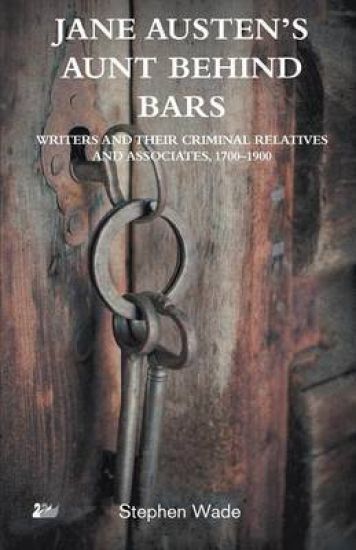
Jane Austen’s Aunt Behind Bars

Jane Austen’s Aunt Behind Bars

Stephen Wade

Thames River Press
2013
nidottu
The collected essays explore the lives of several writers in Georgian and Victorian Britain, in terms of their knowledge and experience of prison life. This book focuses on the lives of the writers themselves, or on the prison stretches endured by their relatives or acquaintances. Some of these writers were locked up for debt, while others were deprived of liberty for sedition or treason. Here the reader will find, amongst many other stories, accounts of Dickens’s father in debtors’ prison, of Leigh Hunt living with his whole family in The Surrey House of Correction and of Oscar Wilde in Reading Gaol.
The Beautiful Music All Around Us

The Beautiful Music All Around Us

Stephen Wade

University of Illinois Press
2012
muu
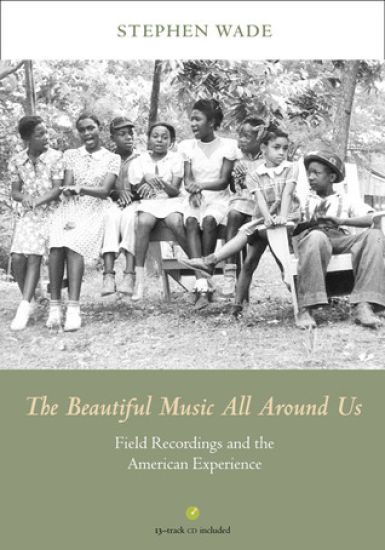
The Beautiful Music All Around Us presents the extraordinarily rich backstories of thirteen performances captured on Library of Congress field recordings between 1934 and 1942 in locations reaching from Southern Appalachia to the Mississippi Delta and the Great Plains. Including the children's play song "Shortenin' Bread," the fiddle tune "Bonaparte's Retreat," the blues "Another Man Done Gone," and the spiritual "Ain't No Grave Can Hold My Body Down," these performances were recorded in kitchens and churches, on porches and in prisons, in hotel rooms and school auditoriums. Documented during the golden age of the Library of Congress recordings, they capture not only the words and tunes of traditional songs but also the sounds of life in which the performances were embedded: children laugh, neighbors comment, trucks pass by.Musician and researcher Stephen Wade sought out the performers on these recordings, their families, fellow musicians, and others who remembered them. He reconstructs the sights and sounds of the recording sessions themselves and how the music worked in all their lives. Some of these performers developed musical reputations beyond these field recordings, but for many, these tracks represent their only appearances on record: prisoners at the Arkansas State Penitentiary jumping on "the Library's recording machine" in a rendering of "Rock Island Line"; Ora Dell Graham being called away from the schoolyard to sing the jump-rope rhyme "Pullin' the Skiff"; Luther Strong shaking off a hungover night in jail and borrowing a fiddle to rip into "Glory in the Meetinghouse."Alongside loving and expert profiles of these performers and their locales and communities, Wade also untangles the histories of these iconic songs and tunes, tracing them through slave songs and spirituals, British and homegrown ballads, fiddle contests, gospel quartets, and labor laments. By exploring how these singers and instrumentalists exerted their own creativity on inherited forms, "amplifying tradition's gifts," Wade shows how a single artist can make a difference within a democracy.Reflecting decades of research and detective work, the profiles and abundant photos in The Beautiful Music All Around Us bring to life largely unheralded individuals--domestics, farm laborers, state prisoners, schoolchildren, cowboys, housewives and mothers, loggers and miners--whose music has become part of the wider American musical soundscape. The hardcover edition also includes an accompanying CD that presents these thirteen performances, songs and sounds of America in the 1930s and '40s.
Conan Doyle and the Crimes Club

Conan Doyle and the Crimes Club

Stephen Wade

Fonthill Media
2012
sidottu
In December 1903, a group of gentlemen friends met for dinner at the Carlton Club. They had one great interest in common: a fascination with crimes and criminals. In the ranks of that first convivial circle there were writers, lawyers and academics rubbing shoulders with a London coroner and two celebrated aristocrats. In a golden age of literary dinners and good fellowship, these aficionados of murder agreed to have meetings at which members would talk on famous and infamous crimes. At the very heart of what came to be The Crimes Club was Sir Arthur Conan Doyle, creator of Sherlock Holmes and literary lion at many a gathering. Conan Doyle and the Crimes Club: The Creator of Sherlock Holmes and his Criminological Friends recounts the lives of the first members of this celebrated body of criminologists, including their escapades in detective work, changing the law and undertaking spying missions. Cases include espionage as well as major crimes and some stories involve famous or forgotten unsolved cases or mysteries. This enthralling book also provides the social and legal contexts for each biography as in the strong element of describing the periodical press of the time and its profound interest in crime and criminals. Each member of the Crimes Club had some connection with or involvement in the law. These people range from the criminologist son of Sir Henry Irving to the coroner for London for decades, Ingleby Oddie. But, in addition, novelist A. E. W. Mason worked for naval intelligence, Arthur Pearson founded the Daily Express and Arthur Lambton battled to change the law on legitimacy! Even the most obscure, Dr Herbert Crosse, not only worked with coroners and police, he qualified as a lawyer and worked at the Old Bailey, then wrote articles on forensics for his regional paper. Explaining a little known and fascinating aspect of Conan Doyle's life, Stephen Wade's Conan Doyle and the Crimes Club: The Creator of Sherlock Holmes and his Criminological Friends reveals the Edwardian world of gentleman sleuths and their investigations and adventures, all to be recalled over a square meal and good cigar.
The A-Z of Curious Lincolnshire

The A-Z of Curious Lincolnshire

Stephen Wade

The History Press Ltd
2011
nidottu
Curious Tales from Lincolnshire is filled with hilarious and surprising examples of folklore, eccentrics, historical and literary events, and popular culture from days gone by, all taken from Lincolnshire’s tumultuous history. Here the reader will meet forgers, poets, aristocrats, politicians and some less likely residents of the county, including Spring-Heeled Jack – whose spectral figure reportedly jumped over Newport Arch – and the appearance of an angel in Gainsborough. There has always been much more to Lincolnshire than farm lands and sea-side towns: this is the county that brought us Lord Tennyson (whose brother was treated at an experimental asylum in the area), John Wesley and, in contrast, William Marwood, the notorious hangman; here too were found the Dam Busters, the first tanks and the fishing fleets of Grimsby. All may be found within the pages of this book, bound to delight residents and visitors alike.
Escapes from the Noose

Escapes from the Noose

Stephen Wade

Amberley Publishing
2010
nidottu
Over the centuries of British history, from the Anglo-Saxons to the 1960s, our society imposed the death penalty for serious crime. In the Regency years, the number of capital offences increased to over 200. But by the side of retribution there was always clemency. What could save a felon from the noose? From earliest times, the condemned could look to the sovereign for a royal pardon. Then, in 1782, came the establishment of the Home Office and the Home Secretary could play a part in reprieving those awaiting death in the condemned cell. At meetings in London, lists of the condemned were discussed and verdicts condoned or quashed. Life hung in the balance. In Escapes from the Noose, Stephen Wade tells the story of the pardons, the reprieves, the performances of some brilliant barristers to save clients, and the thorny problem of insanity and diminished responsibility. The book gives an account of these legal subjects, and explains the drama and sensation of the court of criminal appeal, which, from 1907, gave a last chance for the condemned in a hearing before the top judges of the land. Here you will find the stories of attempts to assassinate Queen Victoria, Dr Whitmarsh the abortionist, early forensics dramas, the murderous widow of Windy Nook, the story of Mrs Maybrick who may have been married to Jack the Ripper and many more. The stories cover the bizarre and the tragic, from the reprieve of the legless man to the murder of Jeannie Donald, for which the trial ended in the Scottish verdict of 'not proven.'
Yorkshire Murders & Misdemeanours

Yorkshire Murders & Misdemeanours

Stephen Wade

Amberley Publishing
2009
nidottu
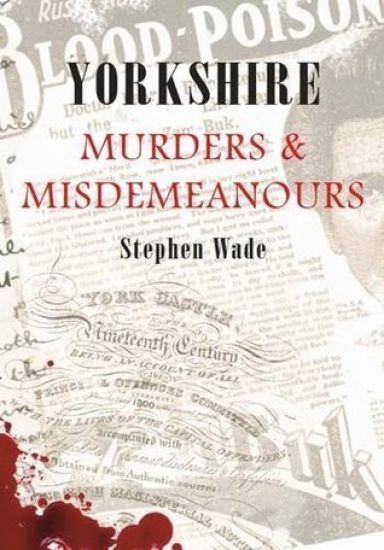
Yorkshire Murders & Misdemeanours invites the reader to take a look at the dark side of life. This gruesome collection of historical murders and misdemeanours vividly brings to life a selection of true crimes; crimes which took place on the streets, on public transport, in homes, pubs, prisons, workhouses and brothels. The reader will be introduced to characters such as Joseph Wooler whose wife died in 1855 in mysterious circumstances; the question is, was Joseph responsible for poisoning his wife, Jane, with arsenic or was her body simply unable to cope with the medication she was taking for her weak constitution? We are also introduced to the case of James Smith, the keeper of the toll house at Hebden Bridge in 1850, who was found with his throat cut. Was the man arrested for this crime the right man? This collection of real life crimes vividly recreates the events surrounding them. A must have book for any armchair detective!
Hanged at Lincoln

Hanged at Lincoln

Stephen Wade

The History Press Ltd
2009
nidottu
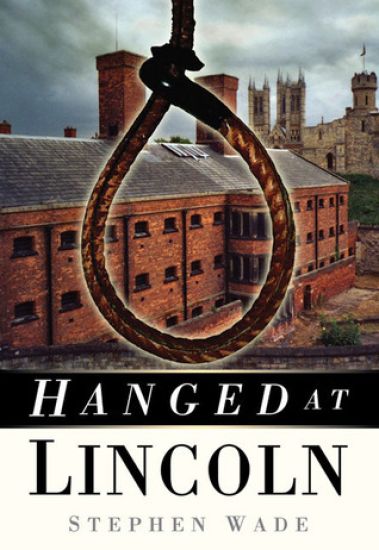
This intriguing book gathers together the stories of 120 criminals hanged at both Lincoln Castle Prison and HMP Lincoln on Greetwell Road between 1203 and 1961. The condemned featured here range from coiners and forgers, to thieves, highwamen and poisoners. Among those executed at Lincoln were Richard Insole, hanged in 1887 for murdering his wife; child killer Frederick Nodder, hanged in 1937; and Herbert Leonard Mills, who failed to commit the perfect murder and was hanged in 1951 by Albert Pierrepoint. Fully illustrated with photographs, drawings, news cuttings and documents, Hanged at Lincoln will appeal to everyone interested in the shadier side of Lincoln's history.
Square Mile Bobbies

Square Mile Bobbies

Stephen Wade

The History Press Ltd
2009
nidottu
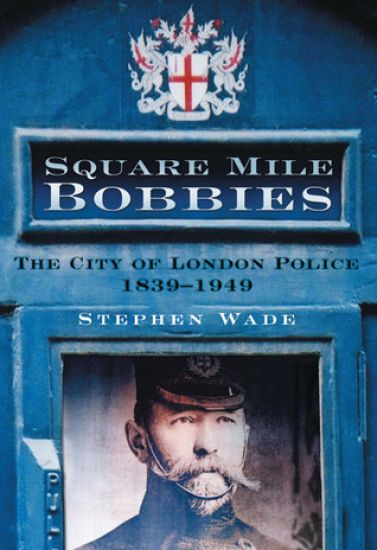
Square Mile Bobbies is a history and casebook of the City of London Police between 1839, when the force was first established after general recognition that London was not being policed effectively, and the Second World War. During this time the City Police were involved in a succession of major cases, from the attempted assassination of the Rothschilds in 1862 and detective's pursuit of forgers in 1873, to Jack the Ripper's brutal killing of Catherine Eddowes in 1888 and the notorious siege of Sidney Street in 1911.
Victoria's Spymasters

Victoria's Spymasters

Stephen Wade

The History Press Ltd
2009
sidottu
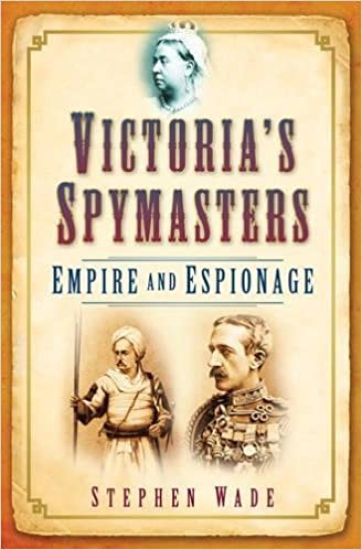
Covering the lives and achievements of five English intelligence officers involved in wars at home and abroad between 1870 and 1918, this exceptionally researched book offers an insight into spying in the age of Victoria. Including material from little-known sources such as memoirs, old biographies and information from M15 and the police history archives, this book is a more detailed sequel to Wade's earlier work, Spies in the Empire. The book examines the social and political context of Victorian spying and the role of intelligence in the Anglo-Boer wars as well as case studies on five intriguing characters: William Melville, Sir John Ardagh, Reginald Wingate and Rudolf Slatin, and William Robertson. Responding to a dearth of books covering this topic, Wade both presents fascinating biographies of some of the most significant figures in the history of intelligence as well as a snapshot of a time in which the experts and amateurs who would eventually become M15 struggled against bias, denigration and confusion.
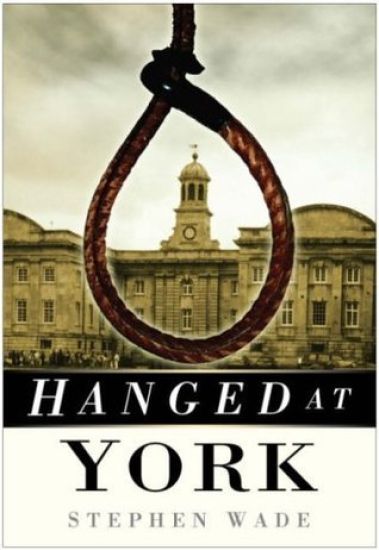
Hanged at York

Hanged at York

Stephen Wade

The History Press Ltd
2008
nidottu
Features stories of criminals hanged at York from the middle of the eighteenth century to the late nineteenth century. The condemned featured in this work range from coiners and forgers to murderers, thieves and highwaymen, the most infamous being Dick Turpin, who was hanged on York's Knavesmire in 1739 for horse-stealing.
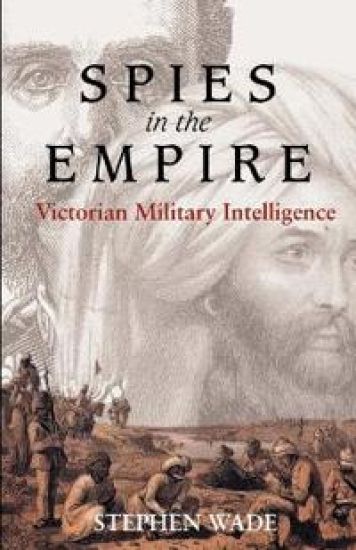
Spies in the Empire

Spies in the Empire

Stephen Wade

Anthem Press
2007
nidottu
There have been a great many books written on military intelligence and the secret services rooted in the twentieth century; however there is very little covering the activities of the men involved in the establishment of this fascinating institution. Its origins lie in the British Army: from the beginnings in the Topographical Department to the Boer War, when various factors made the foundation work of the eventual MI5 (founded in 1909) possible. Incredibly, there were two vast armies in the 1840s, both serving the state and Queen, yet no formally organized military intelligence bureau. Such ignorance of the enemy brought about many botched and bloody encounters, such as the notorious ‘Charge of the Light Brigade’. The thrilling story of the various intelligence sources for the armed forces throughout the Victorian period is one of individuals, adventurers and small, ad hoc bodies set up by commanders when the need arose. Stephen Wade’s enthralling book reveals the unsteady foundations of one of the country’s most prominent and renowned organizations, tracing the various elements that gradually composed the intelligence and political branches of Britain’s Secret Service.
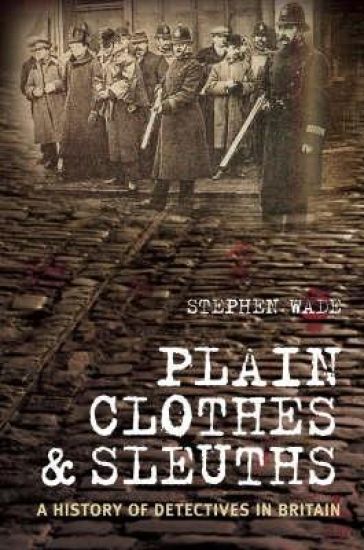
Plain Clothes and Sleuths

Plain Clothes and Sleuths

Stephen Wade

The History Press Ltd
2007
sidottu
The detective is a familiar figure in British history. This work looks at famous cases such as the Ripper murders and the beginnings of the Special Branch and Detective Branch of Scotland Yard. This history covers various aspects of crime history, including the career of Jim 'the Penman' Saward, a notorious forger, and more.
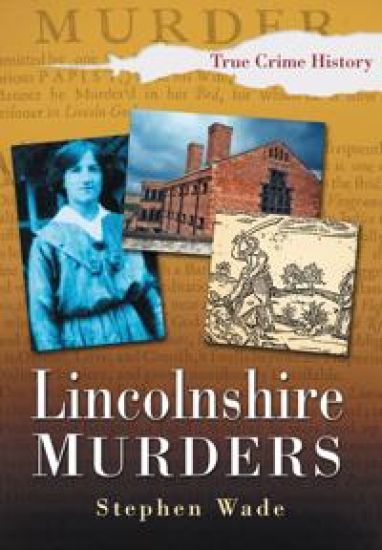
Lincolnshire Murders

Lincolnshire Murders

Stephen Wade

The History Press Ltd
2006
nidottu
The murder cases in this book are a mixture of classic narratives of jealousy, elimination and passion, now retold from new perspectives and with more research. The author also includes some little-known mysteries: three unsolved homicides from across the county, including the killing of the 'Barton recluse' and the enigmatic death of a young farmer in Gedney in which the dead man's dog appeared in court. In this chronicle of violent deaths and courtroom struggles the reader will find a new slant on some of the principal cases, with plenty of social and legal history added to enrich the stories. Lincolnshire Murders is a powerful and fascinating reappraisal of some of the most brutal and gruesome killings in the county's history.
In My Own Shire

In My Own Shire

Stephen Wade

Praeger Publishers Inc
2002
sidottu
An overview of 19th- and 20th-century writing from the British Isles shows a constant interplay between metropolitan centers and regional peripheries—an interplay that points to the basic importance of place and belonging in literary creation and evaluation. This volume examines the relationship between British literature—including poetry, fiction, biography, and drama—and regional consciousness in the Victorian and modern periods, introducing the reader to a range of responses to the profound feelings of belonging engendered by the sense of place. The works covered are a mixture of familiar classics and less well-known writings from working-class writers or forgotten writers who were successful in their era. After accounting for the emergence of regional writing in the early 19th century, the author analyzes the development of regional writing in England, Scotland, Ireland, and Wales, focusing on issues such as the sociopolitical context of the regional novel, the print and literary cultures around regional presses, and the place of documentary in regional consciousness.
Jewish-American Writing since 1945

Jewish-American Writing since 1945

Stephen Wade

Keele University Press
1999
nidottu
Jewish American writing is an exciting and controversial genre within post-war literature. In this book Stephen Wade offers a student guide to major writers, their key works and to influential background factors including the postmodern, the masternarrative and metafiction. The themes, issues and philosophies of writers including Saul Bellow, Philip Roth and Isaac Bashevis Singer are inter-related and wider literary and historical topics are alluded to and explained. Covering women's writing, novels, poetry and drama, the author offers a readable guide to the achievements of a key group of writers in twentieth-century American literature. Key Features * A student guide to major writers in post-war American literature * A chapter on each of the 5 main writers * Covers theoretical aspects -- the postmodern, the masternarrative and metafiction -- in an easily accessible way * Offers background material to situate the work of the writers