Kirjojen hintavertailu. Mukana 12 459 402 kirjaa ja 12 kauppaa.

Kirjailija

Stephen Wynn

Kirjat ja teokset yhdessä paikassa: 32 kirjaa, julkaisuja vuosilta 2012-2025, suosituimpien joukossa Die 12. SS-Panzerdivision "Hitlerjugend". Vertaile teosten hintoja ja tarkista saatavuus suomalaisista kirjakaupoista.

32 kirjaa

Kirjojen julkaisuhaarukka 2012-2025.

The Rise and Fall of Imperial Japan

The Rise and Fall of Imperial Japan

Stephen Wynn

Pen Sword Military
2020
sidottu
The question is, how did a once great nation that built an empire lose it all? From the Meiji Restoration in 1868, restoring Imperial rule under Emperor Meiji, until Japan's surrender at the end of the Second World War in 1945, the dream lasted a comparatively short period of time: seventy-seven years from beginning to end. Under Emperor Meiji's rule, Imperial Japan began a period of rapid industrialisation and militarisation, leading to its emergence as a world power and the establishment of a colonial empire. Economic and political turmoil in the early 1920s led Japan down the path of militarism, culminating in her conquest of large parts of the Asian and Pacific region. The beginning of this path can be traced back to the Paris Peace Conference in 1919, when Japan's proposal for racial equality was supported and approved by the other members, but overruled by the American President, Woodrow Wilson. Was this rebuttal by the West, and in particular the United States, the moment that changed the course of history? During the empire's existence, Japan was involved in some sixteen conflicts, resulting in the occupation of numerous countries and islands throughout Asia and the Pacific regions. Thousands were under the emperor's control, not all of whom were treated as they should have been. The book culminates with the atomic bombs dropped on Hiroshima and Nagasaki, which finally brought about Japan's surrender and the end of the war in Asia and the Pacific.
Fighter Aces of the Great War

Fighter Aces of the Great War

Stephen Wynn; Tanya Wynn

Pen Sword Aviation
2020
nidottu
History has recorded that the first ever powered flight took place at Kitty Hawk in America, on 17 December 1903 and was carried out by the Wright brothers, Orville and Wilbur, who were aircraft designers and manufacturers. By the time of the outbreak of the First World War, aviation was only eleven years old. The daddy of battlefield warfare until that point in time had been the cavalry, a position it maintained even as war was declared on the Western Front. Aircraft were not initially seen as an offensive weapon and were instead used by both sides as observation platforms, or to take aerial photographs from. Even when they were eventually used in an offensive capacity, they did not have machine guns attached to them; if the crew wanted to open fire then they had to use a pistol or rifle. As the war progressed so the use of aircraft changed from being an observational tool, to that of a fighter and bomber aircraft - something that had never been foreseen at the outbreak of the war. The book then looks at the fighter aces from all sides. These were pilots who had been credited with shooting or forcing down a minimum of five enemy aircraft, of which their were hundreds. While some of these aces survived, many of them were killed. The most famous fighter ace of all is without doubt the German pilot known as the Red Baron, Manfred von Richthofen.
City of London at War 1939-45

City of London at War 1939-45

Stephen Wynn

Pen Sword Military
2020
nidottu
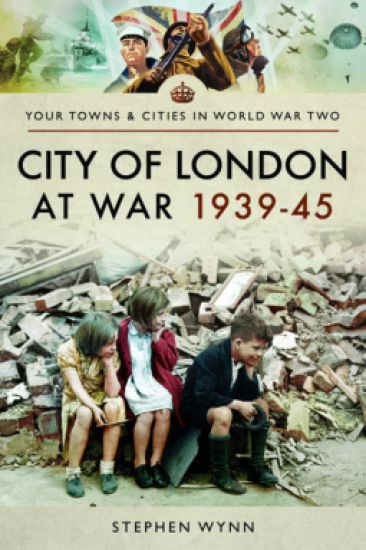
The City of London was always going to be an obvious target for German bombers during the Second World War. What better way for Nazi Germany to spread fear and panic amongst the British people than by attacking their capital city?Although not vastly populated in the same way that a bigger city or larger town would be, there were still enough people working there during the day for attacks on it to take their toll. The city's ancient and iconic buildings also bore the brunt of the German bombs, including churches designed by Sir Christopher Wren after the Great Fire in 1666. The book looks at the effects of war on the City of London, including the damage caused by the 8 months of the Blitz between September 1940 and May 1941. The most devastating of the raids took place on 29 December 1940, with both incendiary and explosive bombs causing a firestorm so intense it was known as the Second Great Fire of London. It also looks at the bravery of the staff at St Bart's Hospital, which was one of the medical facilities that remained open during the course of the war. Other stories include the sterling work carried out by the City's civilian population and the different voluntary roles that they performed to help keep the city safe, including the Home Guard and the Fire Watchers, who spent their nights on the city's rooftops looking out for incendiary devices dropped by the German Luftwaffe. Despite the damage to its buildings and its population, by the end of the war the City of London was able to rise, like a phoenix, from the flames of destruction, ready to become the vibrant and flourishing borough that it is today.
Holocaust

Holocaust

Stephen Wynn

Pen Sword Military
2020
sidottu
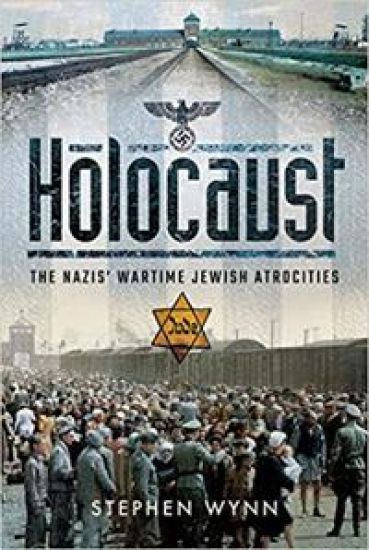
The Holocaust is without doubt one of the most abhorrent and despicable events not only of the Second World War, but of the twentieth century. What makes it even more staggering is that it was not perpetrated by just one individual, but by thousands of men and women who had become part of the Nazi ideology and belief that Jews were responsible for all of their woes. This book looks at the build up to the Second World War, from the time of Hitler's appointment as Chancellor of Germany in January 1933, as the Nazi Party rose to power in a country that was still struggling to recover politically, socially and financially from the aftermath of the First World War, whilst at the same time, through the enactment of a number of laws, making life extremely difficult for German Jews. Some saw the dangers ahead for Jews in Germany and did their best to get out, some managed to do so, but millions more did not. The book then moves on to look at a wartime Nazi Germany and how the dislike of the Jews had gone from painting the star of David on shop windows, to their mass murder in the thousands of concentration camp that were scattered throughout Germany. As well as the camps, it looks at some of those who were culpable for the atrocities that were carried out in the name of Nazism. Not all those who were murdered lost their lives in concentration camps. Some were killed in massacres, some in ghettos and some by the feared and hated Einsatzgruppen.
The Channel Islands in the Great War

The Channel Islands in the Great War

Stephen Wynn

Pen Sword Military
2019
nidottu
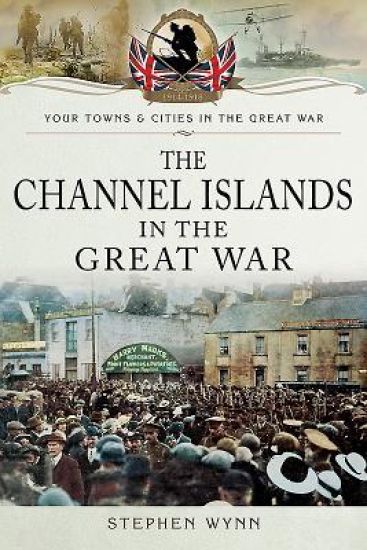
Before the outbreak of the First World War, the Channel Islands were viewed as they are today; scenic, sunny and relaxing holiday destinations, where it was possible to briefly escape from the hustle and bustle of everyday life. As soon as the fighting began, the immediate worry was the threat of a German invasion to the Islands, which are much closer to the coast line of France than they are to the southern coast line of Great Britain. Both men and women alike played their part. Men by either joining one of the islands Militia or enlisting in one of the numerous regiments of the British Army, including the 'Jersey Pals', and the men who served with the Royal Irish Fusiliers, the Royal Irish Rifles and the Royal Irish Regiment. The book looks at the pride in the commitment and achievements of the Channel Islands' very own Royal Guernsey Light Infantry, formed in December 1916. The Islands' women volunteered in their droves to serve with the British Red Cross' Voluntary Aid Detachments, but not just throughout the Channel Islands, but to mainland Great Britain, and further afield in Belgium and France and other similar theatres of war. As far as most people are aware, the first time German soldiers stepped foot in the Channel Islands, was when their troops landed unopposed in June 1940 during the Second World War. However, between 1915 and 1917, some 2,000 German prisoners of war, were held captive at the Les Blanches Banques camp. The book closes by taking a look at the men from all of the Islands who voluntarily went off to war, and ended up paying the ultimate price and didn't make it back home to their loved ones.
Hartlepool in the Great War

Hartlepool in the Great War

Stephen Wynn

Pen Sword Military
2018
nidottu
With the outbreak of the First World War, it was not surprising that a number of individuals who were of German decent, and who lived in Hartlepool and its surrounding areas, were rounded up and detained by the British military authorities, in the interests of both national security and for their own personal safety. They were held at the towns Stranton Ice Rink. Their numbers included the ex-German Consul for the Hartlepool's district as well as others who had been local residents of many years standing. The first soldier with connections to Hartlepool to be killed on foreign soil during the war, was Corporal 57561 John Robert Richardson, who was serving with the 54th Battery, Royal Field Artillery, when he was killed in action on 4 October 1914. He is buried at the Bergen Communal Cemetery at Mons. The war came to Hartlepool on the morning of Wednesday, 16 December 1914 in the shape of three vessels of the Imperial German Navy. By the time their attack was over, more than 1,100 artillery shells had landed on the town, killing 9 soldiers, 86 civilians and wounding a further 438. Amongst the dead was 29 year old Private 18/295 Theophilus Jones of the 18th Battalion, Durham Light Infantry, making him the first British serviceman to be killed on British soil as a result of enemy action during the course of the First World War. Before the war was over, his brother Alfred, would also be killed, during fighting at the Battle of Arras, on 3 May 1917. By the time the war had ended, some 1700 men and women from Hartlepool and its surrounding areas had paid the ultimate price of having served their King and country.
Against All Odds

Against All Odds

Stephen Wynn

Pen Sword Military
2018
sidottu
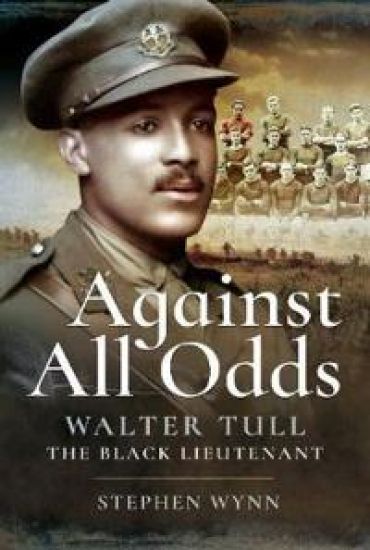
Walter Tull would have been a remarkable individual no matter when he had been born, but to achieve what he did, during the time that he did, makes him even more remarkable. He was an orphan at just six years of age, and despite not wanting to, his step mother, Clara, had no choice but to place him and his elder brother, Edward, in to a children's home in the East End of London. As neither Walter or Edward had ever travelled outside of Folkestone before, the upheaval must have come as quite a shock. Two years after entering the home, Walter and Edward were split up when Edward was adopted and went to live in Glasgow. Walter's sporting prowess saw him play for top local amateur side, Clapton Football club, signing for them in 1908, but it was to be a short lived affair, as by the following year he had signed as a professional for the prestigious Tottenham Hotspur Football Club, making his first team debut against Manchester United. In October 1911 Walter was transferred to Northampton Town Football Club, where he would go on to play over one hundred first team games, before the First World War brought a premature end to his career as a professional footballer. With the outbreak of war, Walter wasted no time enlisting in the British Army, initially as a Private in the newly formed 17th (Football) Battalion, Middlesex Regiment. Further promotions followed and in no time at all he had reached the rank of Sergeant. He was put forward for a commission and passed out as a 2nd Lieutenant on 29 May 1917\. He went on to become the first black officer in the British Army, to lead white troops in to battle, and was fondly regarded by the men who served under him. Walter was killed in action whilst leading his men in a counter attack against German defensive positions on Monday 25 March 1918\. He died a hero. He was well liked and respected by all who knew him. Like many men of his generation his life was cut short for the greater good whilst in the service of his country, so that others might prevail.
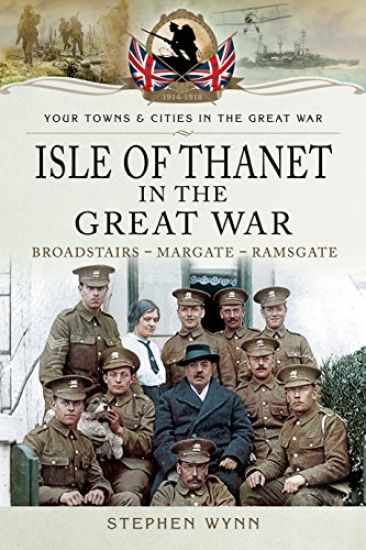
Isle of Thanet in the Great War

Isle of Thanet in the Great War

Stephen Wynn

Pen Sword Military
2017
nidottu
Because of the geographical location of the Isle of Thanet, it was always going to play a part in the First World War. For some wounded British and Commonwealth troops returning from the fighting in France and Belgium, it was their first sight of England in months. The Isle of Thanet just happened to be on one of the routes German Zeppelins and Gotha Bombers took on their way to try and bomb London, which meant that parts of the district were always going to be vulnerable from a sudden an unexpected attack from the air. The Isle of Thanet not only provided thousands of men for service in the armed forces, but hundreds of men and women to serve in the Voluntary Aid Detachments that were greatly needed, not just throughout the Isle of Thanet, but all over Kent, to help deal with the steady influx of returning wounded soldiers from across the English Channel. Members of local Territorial units, the 4th Battalion, The Buffs (East Kent Regiment) and the 3rd (Kent) Battalion, Royal Field Artillery, were quickly mobilized for war time service, during the early days of the war, suddenly making everything so very real for those concerned. Many of the districts Police Constables, were ex-servicemen, some of whom were still on the Army Reserve, they too were called up to once again go and serve with the colours. There was a great clamour across the country with everybody wanting to do their bit in what ever way they could, the people of the Isle of Thanet were no different. By the end of the war, they had certainly played their part in ensuring that the outcome was a victorious one, making the sadness of the ones who had paid the ultimate price, slightly easier to accept.
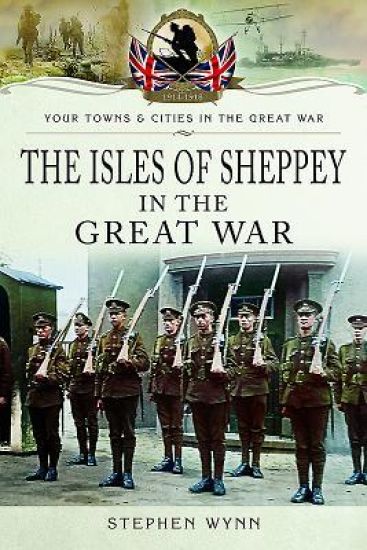
Isle of Sheppey in the Great War

Isle of Sheppey in the Great War

Stephen Wynn

Pen Sword Military
2017
nidottu
The Isle of Sheppey, although not a heavily populated area, played an extremely important part in Great Britain s war effort on the home front throughout the four and a half years of the First World War. In doing so, Sheppey provided protection for the Thames Estuary, the River Medway and the naval shipyards at both Sheerness and Chatham. Its defensive emplacements largely responsible for acquiring the nickname locally of the 'Barbed Wire Island.' One of its main claims to fame in relation to the years of the First World War would have undoubtedly been in relation to aviation. The island had been a hive of activity in relation to flying since the beginning of the twentieth century, when the Royal Aero Club came to Leysdown, making it the first airfield in England. What became Eastchurch Aerodrome was where the first pilots of the Royal Naval Air Service were trained, making it the first military flying school in the country. The Short brothers also had an aircraft factory at Eastchurch where they designed and built their own aircraft, some of which would be used during the First World War. The Isle of Sheppey also boasted another aircraft factory, which was situated at Shellbeach on the east coast of the island, an emergency landing strip at Harty on the south east side of the island, and a balloon station at Sheerness. The First World War certainly saw the Isle of Sheppey rise to the occasion and add to its long and illustrious military history. The part it played went a long way in enhancing the island s reputation of having a dogged determination to do what needed to be done for the greater good in the nations time of need.
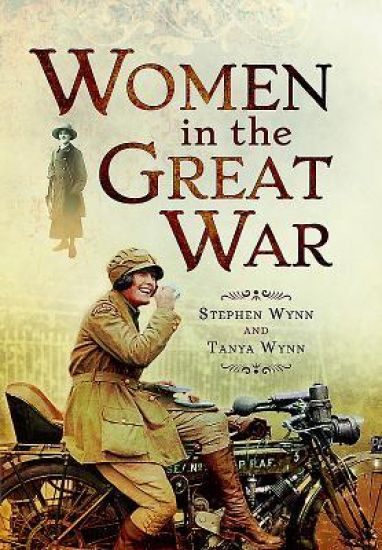
Women in the Great War

Women in the Great War

Stephen Wynn

Pen Sword Military
2017
nidottu
The First World War was fought on two fronts. In a military sense it was fought on the battlefields throughout Europe, the Gallipoli peninsular and other such theatres of war, but on the Home Front it was the arduous efforts of women that kept the country running. Before the war women in the workplace were employed in such jobs as domestic service, clerical work, shop assistants, teachers or as barmaids. These jobs were nearly all undertaken by single women, as once they were married their job swiftly became that a of a wife, mother and home maker. The outbreak of the war changed all of that. Suddenly, women were catapulted into a whole new sphere of work that had previously been the sole domain of men. Women began to work in munitions factories, as nurses in military hospitals, bus drivers, mechanics, taxi drivers, as well as running homes and looking after children, all whilst worrying about their men folk who were away fighting a war in some foreign clime, not knowing if they were ever going to see them again.With the work came a wage, which provided women with financial freedom for the first time, as well as an element of independence and social integration, which they would have possibly never otherwise experienced. Women were not paid the same wages as men for doing the same work, but what they did earn was much more than they had ever earned before. This was also a time of the suffrage movement, who wanted more out of life for women. Accordingly, some of these women were reluctant to stop working, with some of these being sacked so that returning soldiers could have their pre-war jobs back. Whilst, tens of thousands of women were left widowed, many with young children to bring up. Despite all of this, one thing was for sure, for lots of women there was no going back to how things had been before the war. There was only going to be one way, and that was forward.
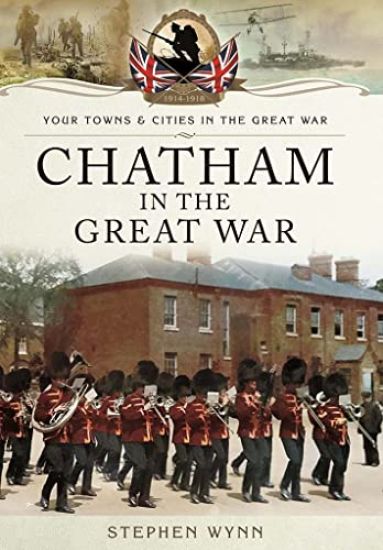
Chatham in the Great War

Chatham in the Great War

Stephen Wynn

Pen Sword Military
2017
nidottu
Chatham played a very important part in the nation's Great War effort. It was one of the British Royal Navy's three 'Manning Ports', with more than a third of the town's ships manned by men allocated to the Chatham Division. The war was only 6 weeks old when Chatham felt the affects of war for the first time. On 22 September 1914, three Royal Naval vessels from the Chatham Division, HMS Aboukir, Cressy and Hogue, were sunk in quick succession by a German submarine, U-9. A total of 1,459 men lost their lives that day, 1,260 of whom were from the Chatham Division. Two months later, on 26 November, the battleship HMS Bulwark exploded and sunk whilst at anchor off of Sheerness on the Kent coast. There was a loss of 736 men, many of whom were from the Chatham area. On 18 August 1914, Private 6737 Walter Henry Smith, who was nineteen and serving with the 6th Battalion, Middlesex Regiment, became the first person to be killed during wartime Chatham. He was on sentry duty with a colleague, who accidentally dropped his loaded rifle, discharging a bullet that strook Private Smith and killed him. It wasn't all doom and gloom, however.Winston Churchill, as the First Lord of the Admiralty, visited Chatham early on in the war, on 30 August 1914. On 18 September 1915, two German prisoners of war, Lieutenant Otto Thelen and Lieutenant Hans Keilback, escaped from Donnington Hall in Leicestershire. At first, it was believed they had escaped the country and were on their way back to Germany, but they were re-captured in Chatham four days later. By the end of the war, Chatham and the men who were stationed there had truly played their part in ensuring a historic Allied victory.
German P.O.W Camp 266 Langdon Hills

German P.O.W Camp 266 Langdon Hills

Ken Porter; Stephen Wynn

UKUnpublished
2012
pokkari
This book isn't a story it's an historical account of what life was like for the German POW's who spent time incarcerated in Camp 266 at Langdon Hills in Essex. The camp opened just before the end of the Second World War and saw the arrival of its first inhabitants in April 1945 before finally closing its doors in June 1948. The camp could hold up to 800 prisoners at a time and also had satellite camps at nearby places such as Tillingham and Purfleet. It includes accounts from some of the prisoners themselves, looking at what they did before the outbreak of the war. It then looks at how and where they were captured, their time spent at the camp and what they did after the war on their release. Some met local girls, fell in love, married and began new lives living in England. Their personal stories along with newspaper articles of the day, prisoners letters as well as other documents, help bring the book to life giving it a truly unique feeling. There are stories from some of the local residents who lived through it all and got to know some of the POW's quite closely. In some cases this included inviting them in to their homes and befriending them.Some of these friendships lasted for years after the war. Only the passage of time causing some of them to finally succumb. Read their stories and find yourself transported back in time to a bygone era that was the start of a new begining for all of us.