

Kirjailija
Steve Ford
Kirjat ja teokset yhdessä paikassa: 9 kirjaa, julkaisuja vuosilta 2014-2024, suosituimpien joukossa 20 West. Vertaile teosten hintoja ja tarkista saatavuus suomalaisista kirjakaupoista.
9 kirjaa
Kirjojen julkaisuhaarukka 2014-2024.


Now available in trade paper! How did a couple of quirky siblings from suburban Pittsburgh end up as the king and queen of eclectic-design chic with their own HGTV show? They never let fear get in the way of a great idea. Leanne and Steve Ford share their secrets for how to turn dreams into reality.Leanne and Steve were middle-class kids growing up in Pittsburgh in the 80s and 90s. There was nothing particularly glamorous or unusual about their lives as kids. Leanne was a shy, stubborn child who lived a rich life in her own imagination. Steve was outdoorsy and offbeat and was bullied mercilessly at school for being different. Their parents, grounded in faith and always encouraging of both creativity and hard work, gave them the confidence and the encouragement they needed to pursue the often difficult creative life. Leanne’s slogan as a child was, “My name is Leanne. If I want to, I can.”Leanne studied clothing design and pulled gigs at fashion houses in New York and as a stylist to country music stars in Nashville before she found her true passion: interior design. Steve threw himself into kayaking and snowboarding and opening his own men’s clothing store in Pittsburgh. And then their individual passions converged when Leanne asked Steve to help renovate her bathroom. There was magic in their collaboration, and they began renovating for clients in Pittsburgh—creating unique, authentic spaces that manage to feel both chic and completely obtainable—before catching the eye of producers at HGTV.Leanne and Steve share the details of their journey, including the beliefs that have inspired them and the experiences that have challenged them along the way.

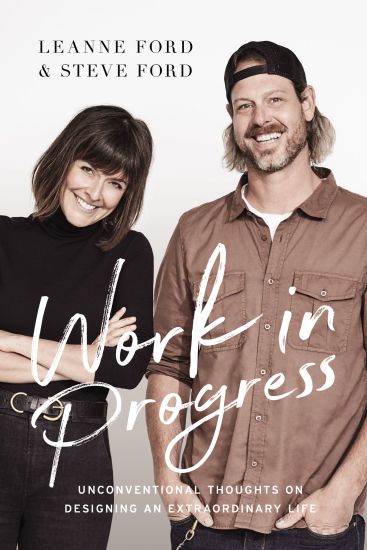
How did a couple of quirky siblings from suburban Pittsburgh end up as the king and queen of eclectic-design chic with their own HGTV show? They never let fear get in the way of a great idea. Leanne and Steve Ford share their secrets for how to turn dreams into reality.Leanne and Steve were middle-class kids growing up in Pittsburgh in the 80s and 90s. There was nothing particularly glamorous or unusual about their lives as kids. Leanne was a shy, stubborn child who lived a rich life in her own imagination. Steve was outdoorsy and offbeat and was bullied mercilessly at school for being different. Their parents, grounded in faith and always encouraging of both creativity and hard work, gave them the confidence and the encouragement they needed to pursue the often difficult creative life. Leanne’s slogan as a child was, “My name is Leanne. If I want to, I can.”Leanne studied clothing design and pulled gigs at fashion houses in New York and as a stylist to country music stars in Nashville before she found her true passion: interior design. Steve threw himself into kayaking and snowboarding and opening his own men’s clothing store in Pittsburgh. And then their individual passions converged when Leanne asked Steve to help renovate her bathroom. There was magic in their collaboration, and they began renovating for clients in Pittsburgh—creating unique, authentic spaces that manage to feel both chic and completely obtainable—before catching the eye of producers at HGTV.Leanne and Steve share the details of their journey, including the beliefs that have inspired them and the experiences that have challenged them along the way.


Student-centered instruction is the buzzword among today’s educators, yet the teaching of writing is still very top-down. Student-centered should mean student-inspired, and that’s where Keys to Inspiration comes in. The path to a writer’s truth always starts with an emotion, and almost all forms of writing contain at least a trace of emotional DNA. This book shows teachers how to align emotion with subject matter, and it offers them lessons and projects (from challenging writing exercises to larger projects, such as memoir, research reports, and editorials) that resonate with young authors. While Keys to Inspiration focuses sharply on content, it contains an instructive mechanics section and an Appendix of unique word lists (emotion-related words, themed spelling lists, and alternatives to “went” and “said,” to name a few), as well as a few grammar worksheets. Once motivated, young authors must learn to describe with detail, meddle with metaphor, and mind their mechanics. Veteran writing instructor Steve Ford offers many lessons and exercises that will polish students’ narrative skills, and he alerts teachers to the common spelling, punctuation, and grammar mistakes that young writers need to learn to avoid.
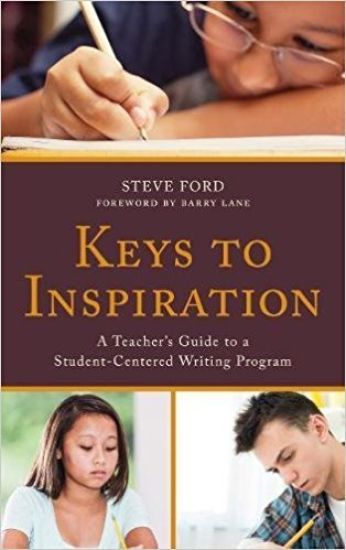
Student-centered instruction is the buzzword among today’s educators, yet the teaching of writing is still very top-down. Student-centered should mean student-inspired, and that’s where Keys to Inspiration comes in. The path to a writer’s truth always starts with an emotion, and almost all forms of writing contain at least a trace of emotional DNA. This book shows teachers how to align emotion with subject matter, and it offers them lessons and projects (from challenging writing exercises to larger projects, such as memoir, research reports, and editorials) that resonate with young authors. While Keys to Inspiration focuses sharply on content, it contains an instructive mechanics section and an Appendix of unique word lists (emotion-related words, themed spelling lists, and alternatives to “went” and “said,” to name a few), as well as a few grammar worksheets. Once motivated, young authors must learn to describe with detail, meddle with metaphor, and mind their mechanics. Veteran writing instructor Steve Ford offers many lessons and exercises that will polish students’ narrative skills, and he alerts teachers to the common spelling, punctuation, and grammar mistakes that young writers need to learn to avoid.
"The story of Steve Ford's realisation is unusual. One night in his room in 1999 there was a total falling away of all identification as the personal self. It was unusual in the sense that Steve had no prior experience of spiritual seeking. He had neither teacher nor guru, no paradigm which would explain what had happened. All vestiges of personality were suddenly gone, there was direct and immediate seeing as and from no-thing, from the absolute. Such accounts exist within the spiritual literature and in each case there appears to follow a period of relative dysfunctionality and subsequent reintegration such that what has happened may be understood and conveyed within the world of form. In Steve's case this took the form of an exhaustive investigation in consciousness which he eventually came to refer to as The Living Process. He explains that realisation is just the beginning and unless subsequent investigation into the nature of consciousness takes place there is re-identification and consequently self-orientation around no-thing. Many contemporary teachers and their students relate in this way. So what follows in this introductory book is the story of Steve's early life, his realisation, enquiry and integration in consciousness, and some interactions that have taken place with some of those who have made their way to be with Steve."The story of Steve Ford's realisation is unusual. One night in his room in 1999 there was a total falling away of all identification as the personal self. It was unusual in the sense that Steve had no prior experience of spiritual seeking. He had neither teacher nor guru, no paradigm which would explain what had happened. All vestiges of personality were suddenly gone, there was direct and immediate seeing as and from no-thing, from the absolute."Such accounts exist within the spiritual literature and in each case there appears to follow a period of relative dysfunctionality and subsequent reintegration such that what has happened may be understood and conveyed within the world of form."In Steve's case this took the form of an exhaustive investigation in consciousness which he eventually came to refer to as The Living Process. He explains that realisation is just the beginning and unless subsequent investigation into the nature of consciousness takes place there is re-identification and consequently self-orientation around no-thing. Many contemporary teachers and their students relate in this way.So what follows in this introductory book is the story of Steve's early life, his realisation, enquiry and integration in consciousness, and some interactions that have taken place with some of those who have made their way to be with Steve."-From the Foreword by Nathan Gill