Kirjojen hintavertailu. Mukana 12 390 323 kirjaa ja 12 kauppaa.

Kirjailija

Steve Fuller

Kirjat ja teokset yhdessä paikassa: 38 kirjaa, julkaisuja vuosilta 1998-2025, suosituimpien joukossa Nietzschean Meditations: Untimely Thoughts at the Dawn of the Transhuman Era. Vertaile teosten hintoja ja tarkista saatavuus suomalaisista kirjakaupoista.

38 kirjaa

Kirjojen julkaisuhaarukka 1998-2025.

Media and the Power of Knowledge

Media and the Power of Knowledge

Steve Fuller

Bloomsbury Academic
2025
nidottu
In Media and the Power of Knowledge, Fuller argues that from literacy to digitality, access and control of the available media have arguably done the most to shape the course of knowledge.Fuller radically extends Marshall McLuhan’s slogan, ‘The medium is the message’, by reading the distinction between ‘hot’ and ‘cool’ media through the lens of sociologist Max Weber’s ‘prophetic’ and ‘priestly’ religious voices, the former demanding that receivers complete the message, the latter that they conform to it.Readers will find a comparative appraisal of Socrates and Jesus as long-standing media personalities, as well as the fate of individual integrity, expert authority and the public sphere in the radically democratized landscape of the post-truth condition, in which truth-telling has been turned into a performing art that may adopt many forms. Does the tweet signal the return of the aphorism as a conveyor of insight about the world?Historically and philosophically informed, while presenting provocative arguments that address today’s concerns, this book considers the likely future developments of the media and its far-reaching implications for the human condition.
Media and the Power of Knowledge

Media and the Power of Knowledge

Steve Fuller

Bloomsbury Academic
2025
sidottu
In Media and the Power of Knowledge, Fuller argues that from literacy to digitality, access and control of the available media have arguably done the most to shape the course of knowledge.Fuller radically extends Marshall McLuhan’s slogan, ‘The medium is the message’, by reading the distinction between ‘hot’ and ‘cool’ media through the lens of sociologist Max Weber’s ‘prophetic’ and ‘priestly’ religious voices, the former demanding that receivers complete the message, the latter that they conform to it.Readers will find a comparative appraisal of Socrates and Jesus as long-standing media personalities, as well as the fate of individual integrity, expert authority and the public sphere in the radically democratized landscape of the post-truth condition, in which truth-telling has been turned into a performing art that may adopt many forms. Does the tweet signal the return of the aphorism as a conveyor of insight about the world?Historically and philosophically informed, while presenting provocative arguments that address today’s concerns, this book considers the likely future developments of the media and its far-reaching implications for the human condition.

Encounters with the Posthuman and the Environment

Encounters with the Posthuman and the Environment

Steve Fuller

BLOOMSBURY PUBLISHING PLC
2024
sidottu
With the advent of posthumanism, many scholars in the humanities have started to explore a transforming conception of the “human,” recognizing the limits of “anthropocentricism” both within and between disciplines. Posthumanism may be defined in various ways but the emphasis in this volume is on the idea of constitutive alterity, not simply in the relationship between human beings and other human beings, but in that between human beings and other species and life forms, and between human beings, nature and technology. As a result, Encounters with the Posthuman and the Environment is located at a crossover between posthumanism and environmental humanities. Between them they move not only between disciplines but also between levels of abstraction, from the most general reflection to the most everyday empirical detail. At the same time, all the chapters are case studies, whether they address particular aspects of philosophical or scientific posthumanism, analyze particular pieces of film, theatre, art, literature, or recall for us instructive episodes from social history. The aim at any rate is to give a feel for the range and depth of the posthumanist problematic within the wider context of environmental humanities.
To Judge and To Justify

To Judge and To Justify

Steve Fuller

Springer International Publishing AG
2024
sidottu
This book argues that judging and justifying are the two skills that specifically require academic training. In the current times, where the value of a university degree is increasingly questioned, it’s important to emphasize the significance of these skills. This volume addresses that universities are not necessarily stressing these skills, preferring instead to focus on the delivery of ‘content’ and the provision of ‘credentials’. Its main focus is on articulating the positive case for the university’s focus on judging and explaining as its core ‘transferable skills.’ It involves examining the historical and philosophical case for this claim, canvassing arguments made – and the example set -- by Plato, Francis Bacon, Immanuel Kant, William Whewell, Ludwig Wittgenstein, Paul Feyerabend, Richard Rorty, John Rawls and Robert Nozick – as well as considering how they might be realized in today’s world. This book extends the arguments in Fuller’s recent book, Back to the University’s Future: The Second Coming of Humboldt (Springer, 2023).
Back to the University's Future

Back to the University's Future

Steve Fuller

Springer International Publishing AG
2024
nidottu
This volume addresses the central question facing the future of higher education around the world, whether and why universities need to exist at all. This book accepts the question’s premise: It is not clear that the university is any longer needed as an institution -- that is, unless its defenders recover what had made the university the revolutionary institution that over the past two centuries has not only defined the shape of modern systematic inquiry but also the distinctiveness of the societies that have housed them. In short, what is required is a reanimation of the spirit of Wilhelm von Humboldt for our times; hence the book's title and subtitle. Humboldt was responsible for relaunching the university as the vanguard institution of 'Enlightenment' to which we continue to pay lip service – and sometimes not much more than that. Admittedly, the task of relaunching Humboldt today is made difficult because many of the concrete achievements associated with the Humboldtian university – not least academic disciplines and nation-states – are increasingly seen as problematic if not obsolete. However, the global reach of the Humboldtian vision in its 19th century and 20th century heyday offers hope that it may be recovered in the 21st century. The book focuses on the performative character of the academic vocation, what Humboldt memorably characterized as the 'unity of research and teaching' in the same person, a role model for students and society at large. The book's seven chapters develop this theme in a historically and philosophically nuanced way in terms of the Humboldtian vision of knowledge, sense of free expression and critical judgement, and commitment to translation and publicity.
Back to the University's Future

Back to the University's Future

Steve Fuller

Springer International Publishing AG
2023
sidottu
This volume addresses the central question facing the future of higher education around the world, whether and why universities need to exist at all. This book accepts the question’s premise: It is not clear that the university is any longer needed as an institution -- that is, unless its defenders recover what had made the university the revolutionary institution that over the past two centuries has not only defined the shape of modern systematic inquiry but also the distinctiveness of the societies that have housed them. In short, what is required is a reanimation of the spirit of Wilhelm von Humboldt for our times; hence the book's title and subtitle. Humboldt was responsible for relaunching the university as the vanguard institution of 'Enlightenment' to which we continue to pay lip service – and sometimes not much more than that. Admittedly, the task of relaunching Humboldt today is made difficult because many of the concrete achievements associated with the Humboldtian university – not least academic disciplines and nation-states – are increasingly seen as problematic if not obsolete. However, the global reach of the Humboldtian vision in its 19th century and 20th century heyday offers hope that it may be recovered in the 21st century. The book focuses on the performative character of the academic vocation, what Humboldt memorably characterized as the 'unity of research and teaching' in the same person, a role model for students and society at large. The book's seven chapters develop this theme in a historically and philosophically nuanced way in terms of the Humboldtian vision of knowledge, sense of free expression and critical judgement, and commitment to translation and publicity.
A Player's Guide to the Post-Truth Condition
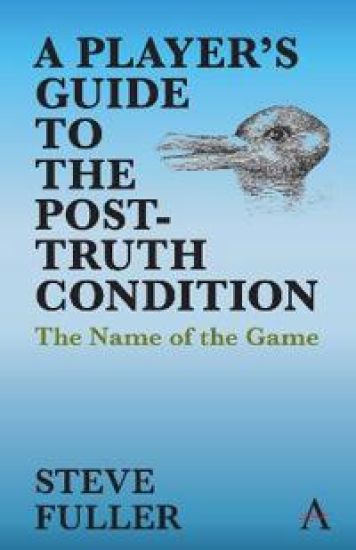
A Player’s Guide to the Post-Truth Condition: The Name of the Game presents sixteen short, readable chapters designed to leverage our post-truth condition’s deep historical and philosophical roots into opportunities for unprecedented innovation and change. Fuller offers a bracing, proactive and hopeful vision against the tendency to demonize post-truth as the realm of ‘fake news’ and ‘bullshit’. Where others see threats to the established order, Fuller sees opportunities to overturn it. This theme is pursued across many domains, including politics, religion, the economy, the law, public relations, journalism, the performing arts and academia, not least academic science. The red thread running through Fuller’s treatment is that these domains are games that cannot be easily won unless one can determine the terms of engagement, which is to say, the ‘name of the game’. This involves the exercise of ‘modal power’, which is the capacity to manipulate what people think is possible. Once the ‘necessarily’ true appears to be only ‘contingently’ so, then the future suddenly becomes a more open space for action. This was what frightened Plato about the alternative realities persuasively portrayed by playwrights in ancient Athens. Nevertheless, Fuller believes that it should be embraced by denizens of today’s post-truth condition.
A Player's Guide to the Post-Truth Condition
A Player’s Guide to the Post-Truth Condition: The Name of the Game presents sixteen short, readable chapters designed to leverage our post-truth condition’s deep historical and philosophical roots into opportunities for unprecedented innovation and change. Fuller offers a bracing, proactive and hopeful vision against the tendency to demonize post-truth as the realm of ‘fake news’ and ‘bullshit’. Where others see threats to the established order, Fuller sees opportunities to overturn it. This theme is pursued across many domains, including politics, religion, the economy, the law, public relations, journalism, the performing arts and academia, not least academic science. The red thread running through Fuller’s treatment is that these domains are games that cannot be easily won unless one can determine the terms of engagement, which is to say, the ‘name of the game’. This involves the exercise of ‘modal power’, which is the capacity to manipulate what people think is possible. Once the ‘necessarily’ true appears to be only ‘contingently’ so, then the future suddenly becomes a more open space for action. This was what frightened Plato about the alternative realities persuasively portrayed by playwrights in ancient Athens. Nevertheless, Fuller believes that it should be embraced by denizens of today’s post-truth condition.
Fly Fishing the River Styx

Fly Fishing the River Styx

Steve Fuller

Independently Published
2019
nidottu
This novella braids Greek mythology, fly fishing and my personal life experiences as a field geologist into an adventurous politically incorrect tale that unfolds in the Greek underworld. It is up to you to ascertain time and space, separate fact from fiction, reality from myth, and dream state from consciousness, as you enter the realm of fly fishing erotic fantasy. Storytelleruk2020.
Post-Truth

Post-Truth

Steve Fuller

Anthem Press
2018
sidottu
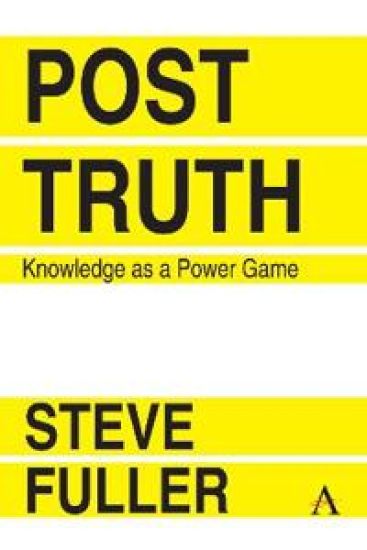
‘Post-truth’ was Oxford Dictionaries 2016 word of the year. While the term was coined by its disparagers in the light of the Brexit and US presidential campaigns, the roots of post-truth lie deep in the history of Western social and political theory. Post-Truth reaches back to Plato, ranging across theology and philosophy, to focus on the Machiavellian tradition in classical sociology, as exemplified by Vilfredo Pareto, who offered the original modern account of post-truth in terms of the ‘circulation of elites’. The defining feature of ‘post-truth’ is a strong distinction between appearance and reality which is never quite resolved and so the strongest appearance ends up passing for reality. The only question is whether more is gained by rapid changes in appearance or by stabilizing one such appearance. Post-Truth plays out what this means for both politics and science.
Post-Truth

Post-Truth

Steve Fuller

Anthem Press
2018
nidottu
‘Post-truth’ was Oxford Dictionaries 2016 word of the year. While the term was coined by its disparagers in the light of the Brexit and US presidential campaigns, the roots of post-truth lie deep in the history of Western social and political theory. Post-Truth reaches back to Plato, ranging across theology and philosophy, to focus on the Machiavellian tradition in classical sociology, as exemplified by Vilfredo Pareto, who offered the original modern account of post-truth in terms of the ‘circulation of elites’. The defining feature of ‘post-truth’ is a strong distinction between appearance and reality which is never quite resolved and so the strongest appearance ends up passing for reality. The only question is whether more is gained by rapid changes in appearance or by stabilizing one such appearance. Post-Truth plays out what this means for both politics and science.
Theistic Evolution

Theistic Evolution

Steve Fuller

Crossway Books
2017
sidottu
This volume of more than two dozen essays written by highly credentialed scientists, philosophers, and theologians from Europe and North America provides the most comprehensive critique of theistic evolution yet produced, opening the door to scientific and theological alternatives.
The Academic Caesar

The Academic Caesar

Steve Fuller

SAGE Publications Ltd
2016
sidottu
Aimed directly at those who aspire to be university leaders in these turbulent times, and written as an academic counterpart to Machiavelli's The Prince, The Academic Caesar explores four themes that are central to the contemporary university: its Caesar-leaders, its economics, its disciplines, and whether academics have a future in the universities. Drawing on a wealth of experience writing about the social epistemology of higher education, Steve Fuller makes a witty, robust and provocative contribution to the ongoing debate about where the university has come from and where it is going. The Academic Caesar will prove a fascinating read for those seeking new insights into current crisis in higher education as well as researchers and academics interested in the sociology of leadership.
Knowledge Management Foundations

Knowledge Management Foundations

Steve Fuller

Routledge
2016
sidottu
'Knowledge Management Foundations' is just what it claims, the first attempt to provide a secure intellectual footing for the myriad of practices called "knowledge management." A breath of fresh air from the usual KM gurus, Fuller openly admits that the advent of KM is a mixed blessing that often amounts to the conduct of traditional management by subtler means. However, Fuller's deep understanding of both the history of management theory and knowledge production more generally enables him to separate the wheat from the chaff of the KM literature. This ground-breaking book will prove of interest to both academics and practitioners of knowledge management. It highlights the ways in which KM has challenged the values associated with knowledge that academics have taken for granted for centuries. At the same time, Fuller resists the conclusion of many KM gurus, that the value of knowledge lies in whatever the market will bear in the short term. He pays special attention to how information technology has not only facilitated knowledge work but also has radically altered its nature. There are chapters devoted to the revolution in intellectual property and an evaluation of peer review as a quality control mechanism. The book culminates in a positive re-evaluation of universities as knowledge producing institutions from which the corporate sector still has much to learn.
Science

Science

Steve Fuller

Routledge
2016
sidottu
In this challenging and provocative book, Steve Fuller contends that our continuing faith in science in the face of its actual history is best understood as the secular residue of a religiously inspired belief in divine providence. Our faith in science is the promise of a life as it shall be, as science will make it one day. Just as men once put their faith in God's activity in the world, so we now travel to a land promised by science. In "Science", Fuller suggests that the two destinations might be the same one. Fuller sympathetically explores what it might mean to live scientifically. Can science give a sense of completeness to one's life? Can it account for the entirety of what it is to be human? And what does our continuing belief in scientific progress say about us as a species? In answering these questions, Fuller ranges widely over the history of science and religion - from Aristotle and the atomists to Dawkins and the neo-Darwinists - and takes a close look at what science is, how its purpose has changed over the years, and what role religion and in more recent years atheism have played in its progression. Science, argues Fuller, is now undergoing its own version of secularization. We are ceasing to trust science in its institutional forms, formulated by an anointed class of science priests, and instead we are witnessing the emergence of what Fuller calls Protscience' - all sorts of people, from the New Age movement to anti-evolutionists, claiming scientific authority as their own. Fuller shows that these groups are no more anti-scientific than Protestant sects were atheistic. Fearless and thought-provoking, Science questions some of our most fundamental beliefs about the nature and role of science, and is a distinct and important contribution to debates about evolution, intelligent design, atheism, humanism, the notion of scientific progress, and the public understanding of science.
Knowledge

Knowledge

Steve Fuller

Acumen Publishing Ltd
2014
sidottu
The theory of knowledge, or epistemology, is often regarded as a dry topic that bears little relation to actual knowledge practices. Knowledge: The Philosophical Quest in History addresses this perception by showing the roots, developments and prospects of modern epistemology from its beginnings in the nineteenth century to the present day.Beginning with an introduction to the central questions and problems in theory of knowledge, Steve Fuller goes on to demonstrate that contemporary epistemology is enriched by its interdisciplinarity, analysing keys areas including: Epistemology as Cognitive EconomicsEpistemology as Divine PsychologyEpistemology as Philosophy of ScienceEpistemology as Sociology of ScienceEpistemology and Postmodernism.A wide-ranging and historically-informed assessment of the ways in which man has - and continues to - pursue, question, contest, expand and shape knowledge, this book is essential reading anyone in the Humanities and Social Sciences interested in the history and practical application of epistemology.
Knowledge

Knowledge

Steve Fuller

Acumen Publishing Ltd
2014
nidottu
The theory of knowledge, or epistemology, is often regarded as a dry topic that bears little relation to actual knowledge practices. Knowledge: The Philosophical Quest in History addresses this perception by showing the roots, developments and prospects of modern epistemology from its beginnings in the nineteenth century to the present day.Beginning with an introduction to the central questions and problems in theory of knowledge, Steve Fuller goes on to demonstrate that contemporary epistemology is enriched by its interdisciplinarity, analysing keys areas including: Epistemology as Cognitive EconomicsEpistemology as Divine PsychologyEpistemology as Philosophy of ScienceEpistemology as Sociology of ScienceEpistemology and Postmodernism.A wide-ranging and historically-informed assessment of the ways in which man has - and continues to - pursue, question, contest, expand and shape knowledge, this book is essential reading anyone in the Humanities and Social Sciences interested in the history and practical application of epistemology.