Kirjojen hintavertailu. Mukana 12 657 676 kirjaa ja 12 kauppaa.

Kirjailija

Steve Garner

Kirjat ja teokset yhdessä paikassa: 11 kirjaa, julkaisuja vuosilta 2003-2023, suosituimpien joukossa A Moral Economy of Whiteness. Vertaile teosten hintoja ja tarkista saatavuus suomalaisista kirjakaupoista.

11 kirjaa

Kirjojen julkaisuhaarukka 2003-2023.

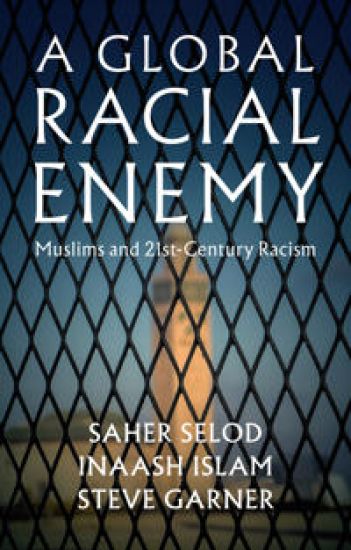
A Global Racial Enemy

A Global Racial Enemy

Saher Selod; Inaash Islam; Steve Garner

JOHN WILEY AND SONS LTD
2023
nidottu
Prejudice against Muslims has a long and complex history. In recent decades, discrimination, violence, and human rights abuses against Muslims have taken a significant turn, with rising reports and discussions of Islamophobia across the globe. However, much of the conversation has missed the key features of this increasingly insidious phenomenon.This original book puts race at the center of the analysis, exposing the global racialization of Muslims. With special attention paid to the United States, China, India, and the United Kingdom, the authors examine both the unique national contexts and – crucially – the shared characteristics of anti-Muslim racism. They uncover how a range of counterterrorism policies, from hyper-surveillance to racialized policing, and the ensuing representation of Islam, have taken a decisive role in shaping social life for Muslims and have worked across borders to justify and institutionalize an acceptable, state-sponsored face of racism.Ultimately, A Global Racial Enemy argues that anti-Muslim animus is a symptom of a global and powerful form of twenty-first-century racism.
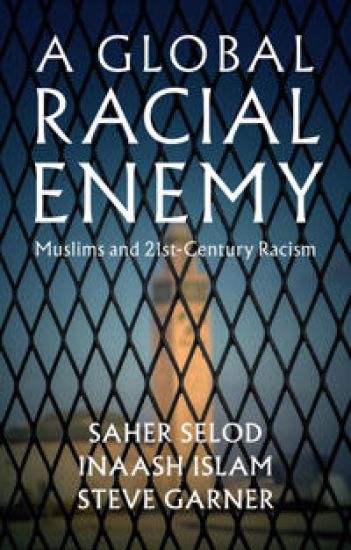
A Global Racial Enemy

A Global Racial Enemy

Saher Selod; Inaash Islam; Steve Garner

JOHN WILEY AND SONS LTD
2023
sidottu
Prejudice against Muslims has a long and complex history. In recent decades, discrimination, violence, and human rights abuses against Muslims have taken a significant turn, with rising reports and discussions of Islamophobia across the globe. However, much of the conversation has missed the key features of this increasingly insidious phenomenon.This original book puts race at the center of the analysis, exposing the global racialization of Muslims. With special attention paid to the United States, China, India, and the United Kingdom, the authors examine both the unique national contexts and – crucially – the shared characteristics of anti-Muslim racism. They uncover how a range of counterterrorism policies, from hyper-surveillance to racialized policing, and the ensuing representation of Islam, have taken a decisive role in shaping social life for Muslims and have worked across borders to justify and institutionalize an acceptable, state-sponsored face of racism.Ultimately, A Global Racial Enemy argues that anti-Muslim animus is a symptom of a global and powerful form of twenty-first-century racism.
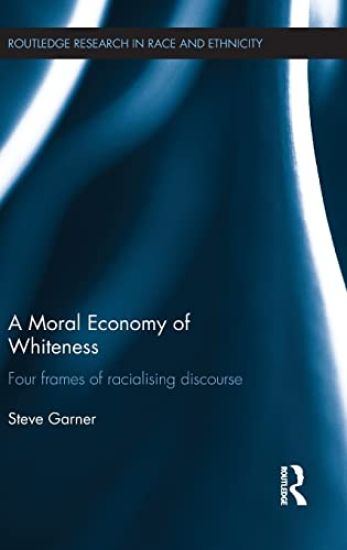
A Moral Economy of Whiteness

A Moral Economy of Whiteness

Steve Garner

Routledge
2019
nidottu
A Moral Economy of Whiteness presents a working model for understanding the main ways in which white UK people make ‘race’ through talking about immigration in the twenty-first century. Based on extensive empirical interviews, Steve Garner establishes four overlapping frames through which white English people understand immigration. This comprises a narrative of unequal treatment, where ‘equality’ is a ‘dirty word’ because it is seen as an agenda for redistributing resources to ‘undeserving’ ethnic minorities, ‘non-integrating’ migrants and unproductive white people. Political correctness is seen as the ideological glue binding this unfair system. People are thus retreating from Britishness into a more exclusive Englishness. Garner explores the context of these understandings: the dominance of neoliberal market rationales, in which the State deprioritises anti-discrimination work. He concludes that these frames only make sense in a social world where Britain’s imperial past has no bearing on the present, and where ‘racism’ in popular and media culture becomes purely a story of individual deviancy. This book generates numerous international points of comparison that deepen our understanding of the backlash against multiculturalism in the West. It will appeal to scholars and students of sociology, social policy, anthropology, political science, (im)migration, multiculturalism, nationalism and British studies.
Racisms

Racisms

Steve Garner

SAGE Publications Inc
2017
nidottu
Combining key theoretical perspectives with contemporary case studies, this text will be invaluable in helping you to fully understand the complex issue of racism. With clear definitions and practical examples this is a solid resource when seeking to examine the way in which racisms have become part of social practices and institutions. Providing a clear and readable introduction to all of the key concepts, theories and debates, this fully revised new edition: Includes new chapters on Ethnicity and ImmigrationHas 30 new boxed case studies with a more international focusContains new learning features including further reading and questions for reflection Racisms is an ideal introduction for undergraduates studying race and ethnicity, social divisions and stratification.
Racisms

Racisms

Steve Garner

SAGE Publications Inc
2017
sidottu
Combining key theoretical perspectives with contemporary case studies, this text will be invaluable in helping you to fully understand the complex issue of racism. With clear definitions and practical examples this is a solid resource when seeking to examine the way in which racisms have become part of social practices and institutions. Providing a clear and readable introduction to all of the key concepts, theories and debates, this fully revised new edition: Includes new chapters on Ethnicity and ImmigrationHas 30 new boxed case studies with a more international focusContains new learning features including further reading and questions for reflection Racisms is an ideal introduction for undergraduates studying race and ethnicity, social divisions and stratification.
A Moral Economy of Whiteness

A Moral Economy of Whiteness

Steve Garner

Routledge
2015
sidottu
A Moral Economy of Whiteness presents a working model for understanding the main ways in which white UK people make ‘race’ through talking about immigration in the twenty-first century. Based on extensive empirical interviews, Steve Garner establishes four overlapping frames through which white English people understand immigration. This comprises a narrative of unequal treatment, where ‘equality’ is a ‘dirty word’ because it is seen as an agenda for redistributing resources to ‘undeserving’ ethnic minorities, ‘non-integrating’ migrants and unproductive white people. Political correctness is seen as the ideological glue binding this unfair system. People are thus retreating from Britishness into a more exclusive Englishness. Garner explores the context of these understandings: the dominance of neoliberal market rationales, in which the State deprioritises anti-discrimination work. He concludes that these frames only make sense in a social world where Britain’s imperial past has no bearing on the present, and where ‘racism’ in popular and media culture becomes purely a story of individual deviancy. This book generates numerous international points of comparison that deepen our understanding of the backlash against multiculturalism in the West. It will appeal to scholars and students of sociology, social policy, anthropology, political science, (im)migration, multiculturalism, nationalism and British studies.
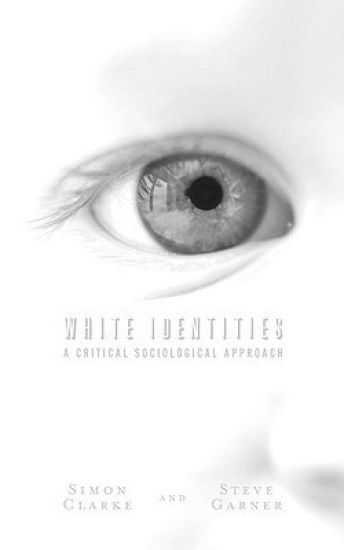
White Identities

White Identities

Simon Clarke; Steve Garner

Pluto Press
2009
sidottu
This book guides students as they explore how white identities are forged using both sociological and psycho-social ideas. Whiteness has traditionally been seen as 'ethnically transparent' - the marker against which other ethnicities are measured. Only recently have scholars moved away from focusing on ethnic minorities and instead oriented their studies around the construction of white identities. Including an excellent survey of the existing literature and original research from the UK, this book will be an invaluable guide for sociology students taking modules in race and ethnicity.
White Identities

White Identities

Simon Clarke; Steve Garner

Pluto Press
2009
pokkari
This book guides students as they explore how white identities are forged using both sociological and psycho-social ideas. Whiteness has traditionally been seen as 'ethnically transparent' - the marker against which other ethnicities are measured. Only recently have scholars moved away from focusing on ethnic minorities and instead oriented their studies around the construction of white identities. Including an excellent survey of the existing literature and original research from the UK, this book will be an invaluable guide for sociology students taking modules in race and ethnicity.
Whiteness

Whiteness

Steve Garner

Routledge
2007
nidottu
What is whiteness? Why is it worth using as a tool in the social sciences? Making sociological sense of the idea of whiteness, this book skilfully argues how this concept can help us understand contemporary societies. If one of sociology's objectives is to make the familiar unfamiliar in order to gain heightened understanding, then whiteness offers a perfect opportunity to do so.Leaning firstly on the North American corpus, this key book critically engages with writings on the formation of white identities in Britain, Ireland and the Americas, using multidisciplinary sources. Empirical work done in the UK, including the author's own, is developed in order to suggest how whiteness functions in Britain. Bringing an emphasis on empirical work to a heavily theorized area, this important text synthesizes and reviews existing work, incorporates multidisciplinary sources of interest to those outside the sociology sphere, and features concise chapters which will engage undergraduates. Garner deftly argues that whiteness is a multifaceted, contingent and fluid identity, and that it must be incorporated into any contemporary understandings of racism as a system of power relationships in both its local and global forms.
Whiteness

Whiteness

Steve Garner

Routledge
2007
sidottu
What is whiteness? Why is it worth using as a tool in the social sciences? Making sociological sense of the idea of whiteness, this book skilfully argues how this concept can help us understand contemporary societies. If one of sociology's objectives is to make the familiar unfamiliar in order to gain heightened understanding, then whiteness offers a perfect opportunity to do so.Leaning firstly on the North American corpus, this key book critically engages with writings on the formation of white identities in Britain, Ireland and the Americas, using multidisciplinary sources. Empirical work done in the UK, including the author's own, is developed in order to suggest how whiteness functions in Britain. Bringing an emphasis on empirical work to a heavily theorized area, this important text synthesizes and reviews existing work, incorporates multidisciplinary sources of interest to those outside the sociology sphere, and features concise chapters which will engage undergraduates. Garner deftly argues that whiteness is a multifaceted, contingent and fluid identity, and that it must be incorporated into any contemporary understandings of racism as a system of power relationships in both its local and global forms.
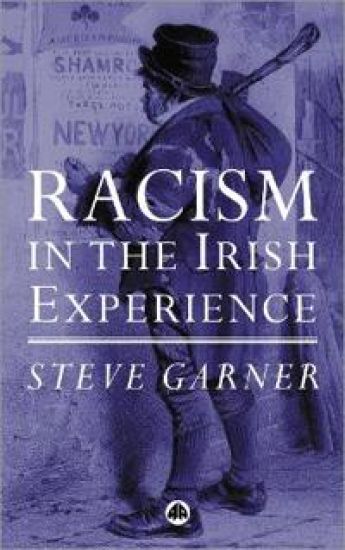
Racism in the Irish Experience

Racism in the Irish Experience

Steve Garner

Pluto Press
2003
sidottu
Ireland's unique position as the only state in the European Union to have been colonised, coupled with the ambivalent experiences of Irish people within the British Empire, means that issues of 'race' in Ireland are overlaid by complex social and historical forces. This book is a unique analysis of the racialisation of Irish identities. The author examines key phases in the historical development of an Irish 'racial' consciousness, including 16th century colonisation and 19th century immigration to America and Great Britain. He then examines the legacy of this relationship, both in terms of the new migration into Ireland and relations with indigenous minorities - travellers and Irish Jews. Garner explores the problematic links between nationalist ideologies and racism. He assesses the economic, social and political factors framing the experience of minorities in contemporary Ireland, and places these in a broader European context.