Kirjojen hintavertailu. Mukana 12 303 946 kirjaa ja 12 kauppaa.

Kirjailija

Steve Moyise

Kirjat ja teokset yhdessä paikassa: 16 kirjaa, julkaisuja vuosilta 2005-2015, suosituimpien joukossa Evoking Scripture. Vertaile teosten hintoja ja tarkista saatavuus suomalaisista kirjakaupoista.

16 kirjaa

Kirjojen julkaisuhaarukka 2005-2015.

The Old Testament in the New: An Introduction
Steve Moyise provides an accessible and well-informed introduction to the Old Testament in the New Testament. Tried and tested in previous editions, it explores the basic issues and offers summaries of the uses of the Old Testament in the Gospels and Acts, in Paul and Hebrews, James, and Revelation. Issues of quotation, allusion and echo are fully explored and placed sensitively in the context of the differing approaches to the interpretation of Old Testament texts. Readers are informed of contemporary debates that have arisen from literary criticism, such as the questions of intertextuality and the uses of allegory. Also discussed are the uses of the Bible in the first century. For the second edition two entirely new chapters on 'Jesus and Scripture' and 'James and 1-3 John' have been added, as well as full revisions to the text where necessary to take account of changes and developments in scholarship. Each chapter includes a summary-conclusion, and extensive and detailed suggestions for further reading. This is an ideal textbook for undergraduate students.
The Old Testament in the New: An Introduction
Steve Moyise provides an accessible and well-informed introduction to the Old Testament in the New Testament. Tried and tested in previous editions, it explores the basic issues and offers summaries of the uses of the Old Testament in the Gospels and Acts, in Paul and Hebrews, James, and Revelation. Issues of quotation, allusion and echo are fully explored and placed sensitively in the context of the differing approaches to the interpretation of Old Testament texts. Readers are informed of contemporary debates that have arisen from literary criticism, such as the questions of intertextuality and the uses of allegory. Also discussed are the uses of the Bible in the first century. For the second edition two entirely new chapters on 'Jesus and Scripture' and 'James and 1-3 John' have been added, as well as full revisions to the text where necessary to take account of changes and developments in scholarship. Each chapter includes a summary-conclusion, and extensive and detailed suggestions for further reading. This is an ideal textbook for undergraduate students.
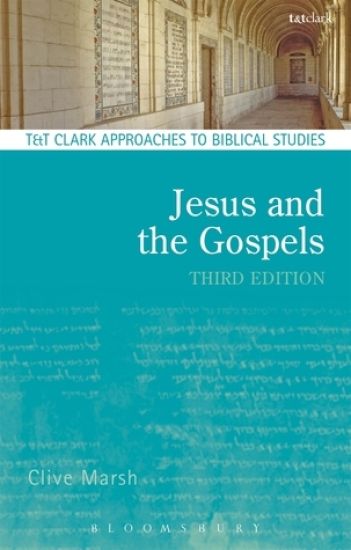
Jesus and the Gospels

Jesus and the Gospels

Clive Marsh; Steve Moyise

T. T.Clark Ltd
2015
sidottu
This book offers an ideal introduction to the Gospels and explains why it is that scholars and lay people have such different understandings of the person of Jesus. The first half of the book looks at the main sources for the life of Jesus, principally the Gospels of Matthew, Mark, Luke and John, but also the so-called apocryphal Gospels. The second half of the book begins with an examination of the criteria employed by scholars to determine the earliest and most reliable forms of the tradition. The third edition interacts with developments in modern scholarship, particularly the advance of memory studies. With study questions at the end of each chapter, updated reading lists, and a new chapter bringing scholarship up to date the third edition of this classic text will provide a perfect companion for students coming to grips with academic study of Jesus and the Gospels.
Jesus and the Gospels

Jesus and the Gospels

Clive Marsh; Steve Moyise

T. T.Clark Ltd
2015
nidottu
This book offers an ideal introduction to the Gospels and explains why it is that scholars and lay people have such different understandings of the person of Jesus. The first half of the book looks at the main sources for the life of Jesus, principally the Gospels of Matthew, Mark, Luke and John, but also the so-called apocryphal Gospels. The second half of the book begins with an examination of the criteria employed by scholars to determine the earliest and most reliable forms of the tradition. The third edition interacts with developments in modern scholarship, particularly the advance of memory studies. With study questions at the end of each chapter, updated reading lists, and a new chapter bringing scholarship up to date the third edition of this classic text will provide a perfect companion for students coming to grips with academic study of Jesus and the Gospels.
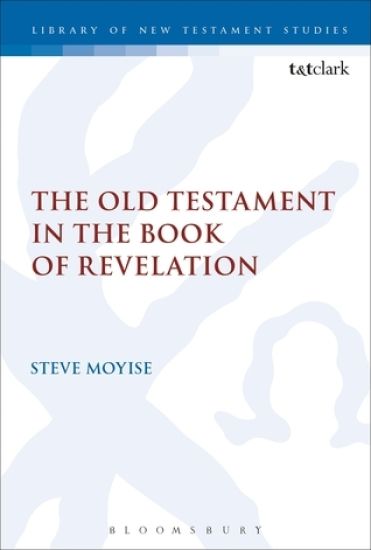
The Old Testament in the Book of Revelation
This book explores the relationship between the new context that John provides for his allusions and their context in the Old Testament. For example, did John choose texts to meet the needs of the recipients or did his meditation on the scriptures give him a unique insight into their situation? Ramsay held that local knowledge led to John's choice of texts whereas Beale believed that Revelation is a midrash on Daniel. Both are one-sided, as a study of John's use of Ezekiel shows. John based a number of his incidents on Ezekiel, in much the same order. Nevertheless, there are also major discontinuities, such as his denial of the very thing -the temple- that Ezekiel 40-48 is all about. To do justice to John's use of the Old Testament requires an interactive model, which involves the use of scripture at Qumran and the concept of intertextuality. Moyise shows John to be a master of combining and juxtaposing images.
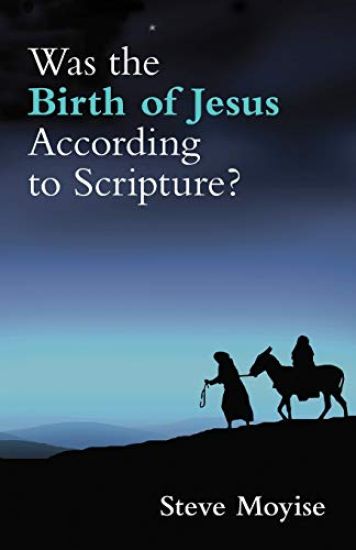
Was the Birth of Jesus According to Scripture?
This book focuses on the question that will be of most interest to readers: Was the Birth of Jesus according to Scripture? It sets the scene by outlining the debate between those who think that Matthew and Luke devised their narratives on the basis of specific Old Testament texts and those who think the Gospel narratives have determined the choice and meaning of those texts. It helps the reader engage with the material by beginning with the least controversial topics (Jesus was preceded by a forerunner and was of the house of David), then moving on to the importance of particular places in the narrative (Bethlehem, Jerusalem, Egypt, Nazareth) and the historical evidence for associating Jesus with them, before ending with the most controversial topics (virgin birth and slaughter of the innocents).
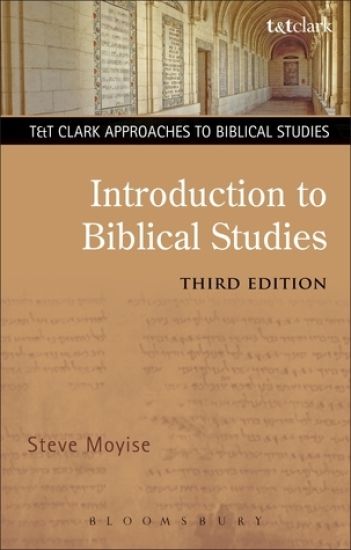
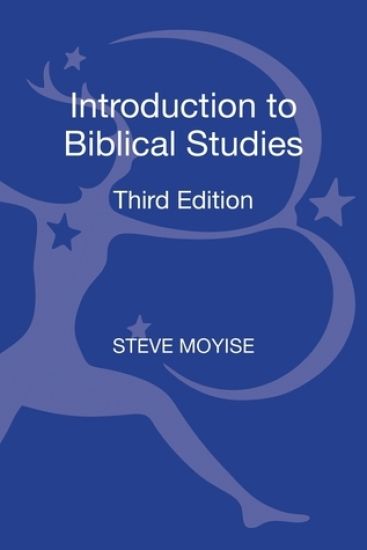
Introduction to Biblical Studies

Introduction to Biblical Studies

Steve Moyise

T. T.Clark Ltd
2013
nidottu
This is an ideal introduction to modern biblical studies. Readers are introduced to questions of inspiration, canon and authority. This is followed by chapters on historical approaches to the Bible, such as source, form and redaction criticism. Comparisons with other literature, such as ancient flood stories or Egyptian psalms help to set the context for this. Moyise also asks such questions as 'How did we get the Bible?' and, 'why do modern versions of the Bible differ among themselves?' Moyise considers a number of approaches to the Bible. Beginning with literary criticism, he shows how texts 'speak' to readers and influence their attitudes, emotions and behaviour. This is followed by liberation, feminist and finally a variety of theological approaches used by those who consider the Bible to be sacred scripture.For the third edition Moyise has added two sections, one giving a basic outline of the biblical story together with a timeline and key dates, and another on dating the New Testament.
Introduction to Biblical Studies

Introduction to Biblical Studies

Steve Moyise

T. T.Clark Ltd
2013
sidottu
This is an ideal introduction to modern biblical studies. Readers are introduced to questions of inspiration, canon and authority. This is followed by chapters on historical approaches to the Bible, such as source, form and redaction criticism. Comparisons with other literature, such as ancient flood stories or Egyptian psalms help to set the context for this. Moyise also asks such questions as 'How did we get the Bible?' and, 'why do modern versions of the Bible differ among themselves?' Moyise considers a number of approaches to the Bible. Beginning with literary criticism, he shows how texts 'speak' to readers and influence their attitudes, emotions and behaviour. This is followed by liberation, feminist and finally a variety of theological approaches used by those who consider the Bible to be sacred scripture. For the third edition Moyise has added two sections, one giving a basic outline of the biblical story together with a timeline and key dates, and another on dating the New Testament.
Jesus and Scripture

Jesus and Scripture

Steve Moyise

SPCK Publishing
2010
nidottu
This book meets the need for an accessible introduction to the various ways that Jesus used Scripture, both in his teaching and in his own understanding of his ministry. After an introductory chapter on the forms of the text that Jesus might have known, it first analyses the way that the four Evangelists (Matthew, Mark, Luke, John) portray Jesus' use of Scripture, under the headings 'Jesus and the Law', 'Jesus and the Prophets' and 'Jesus and the Writings'. It then shows how modern scholars take very different views on how the historical Jesus might be reconstructed (e.g., Crossan, Vermes, Sanders, Dunn, Wright) and demonstrates how this affects one's understanding of Jesus' use of Scripture. It concludes with an assessment of how far Jesus' use of Scripture can be seen as formative for Paul and other New Testament writers.
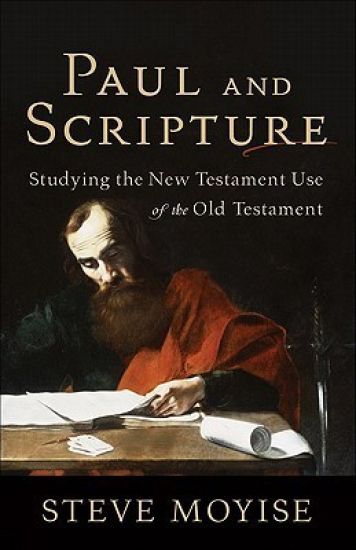
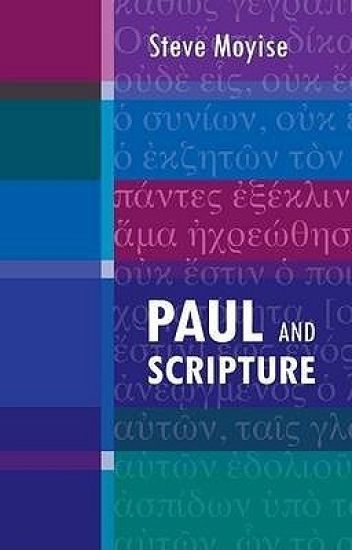
Paul and Scripture: Studying the New Testament Use of the Old Testament
There are over one hundred explicit quotations of Scripture in Paul's letters and at least two hundred allusions. The coming of Jesus and the birth of the church caused Paul to look at the Scriptures with new eyes, sometimes clarifying what was written and sometimes reinterpreting it. This volume illuminates Paul's use of the Old Testament, providing a big-picture overview for students of the New Testament. Steve Moyise, a recognized expert on the use of the Old Testament in the New, discusses Paul's handling of creation stories, Abraham, Moses, the Law, the Prophets, and the Writings. He then assesses competing contemporary approaches to Paul's interpretations of Scripture.
Paul and Scripture

Paul and Scripture

Steve Moyise

SPCK Publishing
2010
nidottu
An accessible introduction to the various ways that scripture is used in Paul's theology and argumentation. It considers how particular texts were influential for Paul's understanding of God's purposes for the world, along with key themes such as the constitution of the church, the nature of faith and the role of the Law.
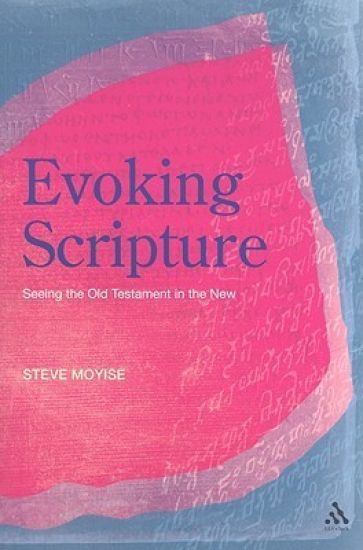
Evoking Scripture

Evoking Scripture

Steve Moyise

T. T.Clark Ltd
2008
nidottu
In clear and lucid prose Evoking Scripture explores the literary and theological frameworks that lie behind the various quotations from and allusions to the Old Testament in the New. Steve Moyise takes a series of case studies from Mark, Romans, Galatians, 1 Peter and Revelation to raise key questions about the author's hermeneutical stance as well as the methods and assumptions of those who study them. Engaging in debate with scholars such as Christopher Stanley, Richard Hays and Francis Watson, Evoking Scripture draws on the insights of both author-centered and reader-centered approaches, while also offering a critique of them. Each chapter focuses on a particular question. For example, is the opening quotation of Mark's Gospel intended to evoke a prophetic framework for understanding the rest of the book? Does Paul quote Habakkuk in order to evoke its ‘theodicy' theme or as a summary of ‘righteousness by faith'? Does the prophecy theory of 1 Peter 1:10-12 (‘the prophets who prophesied of the grace that was to be made yours made careful search...') explain the author's actual uses of Scripture? The results are brought together in a final chapter which explores the literary and theological frameworks of the New Testament authors and of the scholars who study them.
Evoking Scripture

Evoking Scripture

Steve Moyise

T. T.Clark Ltd
2008
sidottu
In clear and lucid prose Evoking Scripture explores the literary and theological frameworks that lie behind the various quotations from and allusions to the Old Testament in the New. Steve Moyise takes a series of case studies from Mark, Romans, Galatians, 1 Peter and Revelation to raise key questions about the author's hermeneutical stance as well as the methods and assumptions of those who study them. Engaging in debate with scholars such as Christopher Stanley, Richard Hays and Francis Watson, Evoking Scripture draws on the insights of both author-centered and reader-centered approaches, while also offering a critique of them. Each chapter focuses on a particular question. For example, is the opening quotation of Mark's Gospel intended to evoke a prophetic framework for understanding the rest of the book? Does Paul quote Habakkuk in order to evoke its ‘theodicy' theme or as a summary of ‘righteousness by faith'? Does the prophecy theory of 1 Peter 1:10-12 (‘the prophets who prophesied of the grace that was to be made yours made careful search...') explain the author's actual uses of Scripture? The results are brought together in a final chapter which explores the literary and theological frameworks of the New Testament authors and of the scholars who study them.
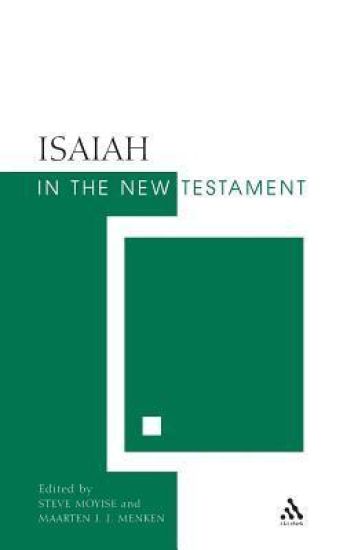
Isaiah in the New Testament

Isaiah in the New Testament

Steve Moyise; Maarten J.J. Menken

T. T.Clark Ltd
2005
sidottu
"'Isaiah in the New Testament' brings together a set of specially commissioned studies by authors who are experts in the field. After an introductory chapter on the use of Isaiah in the Dead Sea Scrolls and second temple literature, each of the New Testament books that contain quotations from Isaiah are discussed: Matthew, Mark, Q, Luke-Acts, John, Romans & Galatians, 1 & 2 Corinthians, Hebrews, 1 Peter, Revelation. The book provides an overview of the status, role and function of Isaiah in the first century. It considers the Greek and Hebrew manuscript traditions and offers insights into the various hermeneutical stances of the New Testament authors and the development of New Testament theology."
Isaiah in the New Testament

Isaiah in the New Testament

Steve Moyise; Maarten J.J. Menken

T. T.Clark Ltd
2005
nidottu
Isaiah in the New Testament brings together a set of specially commissioned studies by authors who are experts in the field. After an introductory chapter on the use of Isaiah in the Dead Sea Scrolls and second temple literature, each of the New Testament books that contain quotations from Isaiah are discussed: Matthew, Mark, Q, Luke-Acts, John, Romans & Galatians, 1 & 2 Corinthians, Hebrews, 1 Peter, Revelation. The book provides an overview of the status, role and function of Isaiah in the first century. It considers the Greek and Hebrew manuscript traditions and offers insights into the various hermeneutical stances of the New Testament authors and the development of New Testament theology.