Kirjojen hintavertailu. Mukana 12 657 676 kirjaa ja 12 kauppaa.

Kirjailija

Steve Myers

Kirjat ja teokset yhdessä paikassa: 14 kirjaa, julkaisuja vuosilta 2007-2025, suosituimpien joukossa The KSH, AWK, and SED Script Collection: Mastering Unix Programming Through Practical Examples. Vertaile teosten hintoja ja tarkista saatavuus suomalaisista kirjakaupoista.

14 kirjaa

Kirjojen julkaisuhaarukka 2007-2025.

Assessment in Social Work

Assessment in Social Work

Judith Milner; Steve Myers; Patrick O'Byrne

Red Globe Press
2020
nidottu
Assessment is a core component of social work. Since first publication, Assessment in Social Work has provided students and practitioners with a clear overview of the complex issues they face and a map of the theory they need to draw on in order to conduct thorough, effective and meaningful assessments. New to this Edition:- Updated and revised chapter on Signs of Safety/Strengths in light of recent research and guidance- Coverage of recording and sharing information included throughout the text- Added coverage of confidentiality and inter-agency workingUpdated material in light of the Mental Capacity Act- More material on Cultural differences throughout- Updated legislation and professional guidance throughout Refreshed and updated examples thought-out the text- A more detailed outline of the different national perspectives within the UK
Myers-Briggs Typology vs. Jungian Individuation
In Myers-Briggs Typology vs Jungian Individuation: Overcoming One-Sidedness in Self and Society, Steve Myers unravels the century-long misinterpretation of Jung’s seminal text, Psychological Types, to show how Jung’s thinking offers solutions to the conflicts that have torn apart our societies. By challenging the popular interpretation of the Myers-Briggs Type Indicator® and similar instruments, Myers argues that we have not only missed Jung’s main proposition, but our contemporary interpretation runs counter to it. Myers aims to rediscover the overlooked argument of Jung’s Psychological Types and make it of practical relevance to contemporary issues. He intends to refocus rather than discard Myers-Briggs typology, showing that there are further stages of development after becoming a type and that typological principles have a much broader application. Raising queries about the way typology is used in contemporary society, Myers uses literary examples, such as Romeo and Juliet and Carl Spitteler’s Prometheus and Epimetheus, to show how one-sidedness leads to conflict and to illustrate Jung’s solution to the problem of opposites. He also applies this to real-life political crises by examining the decision-making of key political figures, such as Nelson Mandela, Robert Mugabe, and those involved in Brexit or the Northern Ireland peace process. The latter part of the book relates Jung’s process of typological development to his later writings on alchemy, notably the axiom of Maria, to show how they all have a common goal, the transformation of attitude. The book concludes by analysing the implications of the divergence of Myers-Briggs typology and Jungian individuation for the communities who use those ideas.This book puts Jungian individuation back at the forefront of debate and will be essential reading for intermediate and advanced users of Myers-Briggs typology. Due to its political relevance, it will also be of interest to Jungian analysts and their clients, and to academics and students of Jungian and post-Jungian ideas and political science.
Myers-Briggs Typology vs. Jungian Individuation
In Myers-Briggs Typology vs Jungian Individuation: Overcoming One-Sidedness in Self and Society, Steve Myers unravels the century-long misinterpretation of Jung’s seminal text, Psychological Types, to show how Jung’s thinking offers solutions to the conflicts that have torn apart our societies. By challenging the popular interpretation of the Myers-Briggs Type Indicator® and similar instruments, Myers argues that we have not only missed Jung’s main proposition, but our contemporary interpretation runs counter to it. Myers aims to rediscover the overlooked argument of Jung’s Psychological Types and make it of practical relevance to contemporary issues. He intends to refocus rather than discard Myers-Briggs typology, showing that there are further stages of development after becoming a type and that typological principles have a much broader application. Raising queries about the way typology is used in contemporary society, Myers uses literary examples, such as Romeo and Juliet and Carl Spitteler’s Prometheus and Epimetheus, to show how one-sidedness leads to conflict and to illustrate Jung’s solution to the problem of opposites. He also applies this to real-life political crises by examining the decision-making of key political figures, such as Nelson Mandela, Robert Mugabe, and those involved in Brexit or the Northern Ireland peace process. The latter part of the book relates Jung’s process of typological development to his later writings on alchemy, notably the axiom of Maria, to show how they all have a common goal, the transformation of attitude. The book concludes by analysing the implications of the divergence of Myers-Briggs typology and Jungian individuation for the communities who use those ideas.This book puts Jungian individuation back at the forefront of debate and will be essential reading for intermediate and advanced users of Myers-Briggs typology. Due to its political relevance, it will also be of interest to Jungian analysts and their clients, and to academics and students of Jungian and post-Jungian ideas and political science.
Using Solution Focused Practice with Adults in Health and Social Care

Using Solution Focused Practice with Adults in Health and Social Care

Judith Milner; Steve Myers

Jessica Kingsley Publishers
2017
pokkari
Solution focused practice offers proven ways of helping adults overcome a range of life difficulties, from physical and mental illness to learning disability and the challenges of old age. This book outlines the basic principles and techniques which can be used to identify people's strengths and abilities to overcome challenges, make their own decisions and achieve their goals. Using case examples of life challenges at every stage of adulthood, including problematic behaviours, trauma, loss and end of life care, it provides stimulating activities and questions that will help professionals develop constructive conversations with service users and help them find the solutions they need.This comprehensive guide is an essential introduction for all those working with adults in health and social care.
Creative Ideas for Solution Focused Practice

Creative Ideas for Solution Focused Practice

Judith Milner; Steve Myers

Jessica Kingsley Publishers
2017
pokkari
Exploring creative ways to implement solution focused practice, this book is packed full of ideas to inspire ways of working with clients which focus on their strengths as a means to finding solutions.Outlining how and why strengths-based interviewing for solutions is effective, the book provides a wealth of different ways to apply key solution focused techniques. With exercises, sample questions and top tips for tricky situations, the authors show how to apply creative methods in a variety of different settings and with different service user groups. Suitable for use with children and adults, this accessible book will offer exciting ideas for those new to solution focused working as well as more experienced practitioners looking for inspiration.
Working with Violence and Confrontation Using Solution Focused Approaches

Working with Violence and Confrontation Using Solution Focused Approaches

Judith Milner; Steve Myers; Andrew Turnell

Jessica Kingsley Publishers
2016
pokkari
An authoritative, interdisciplinary book which outlines how solution focused practice is particularly effective in addressing violent behaviour in clients and service users, encompassing work with both adults and children. Solution focused approaches have been used successfully with a range of violent behaviours from school-based bullying to severe domestic violence, as well as with victims of violence. Solution focused approaches hold people accountable for building solutions to their violent behaviour. The book shows how to engage clients in solution talk as opposed to problem talk, set useful goals and help clients to develop new behaviours. It outlines the practice principles and working techniques that make up solution focused practice with physical, emotional and sexual violence. Illustrative case studies and practice activities are provided. This book is suitable for anyone working to help reduce violent behaviour, including social workers, counsellors, therapists, nurses, probation workers and youth offending teams.
Social Work with Sex Offenders

Social Work with Sex Offenders

Malcolm Cowburn; Steve Myers

Policy Press
2016
nidottu
This topical book engages with a wide range of issues related to social work practice with people who have sexually offended. It addresses the emotional impacts of ‘facing the sex offender’, the importance of values and ethics in practice, and reviews popular and academic understandings of sex offenders and sex crimes. Its accessible style and use of practice based learning exercises will help readers to reflect on theory, practice and developing emotional resilience.
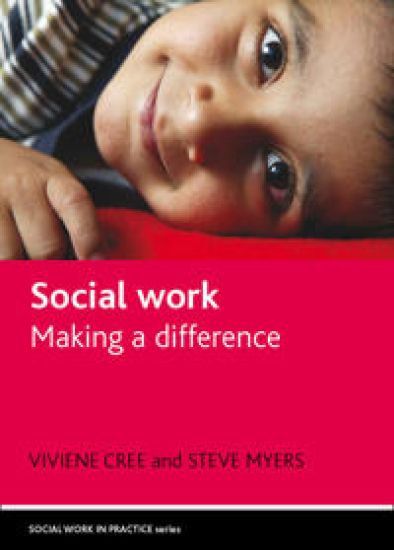
Social work

Social work

Viviene Cree; Steve Myers

Policy Press
2008
nidottu
Social work in the UK has recently undergone its biggest change for 30 years. As new regulatory bodies are working to consolidate social work's professional status, a new training programme, now at degree level, expects increased in-practice learning. Yet until now, students have struggled to find resources to underpin their learning. This major text addresses the new agenda and explores what social work is in the 21st Century. Structured around the framework of the National Occupational Standards for social work - and using terminology and concepts contained within them - the book examines how social work can make a difference in the lives of individuals, families and communities and argues that to really make a difference it is necessary to think outside the box. The book provides all social work students with an introductory social work textbook for the 21st century with the main chapters following the six National Occupational Standards for social work. Each chapter uses a problem-based learning approach, beginning with a 'real-life' case scenario from social work practice and drawing on messages from theory and research. It includes a range of student friendly features including glossaries, summaries, questions, exercises, further reading and links to other resources and is written by leading authors in their field and evaluated in detail by a distinguished editorial panel. Demonstrating social work's potential to be transformative, this book provides the perfect introductory text for a new generation of social workers.
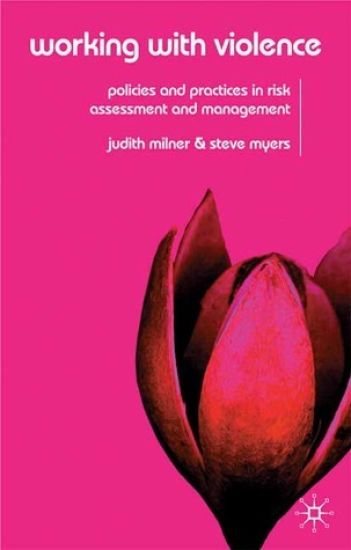
Working With Violence

Working With Violence

Judith Milner; Steve Myers

Red Globe Press
2007
nidottu
Assessing and managing violence places a heavy burden on practitioners in social work, criminal justice and health care settings. Milner and Myers examine current explanatory theories of violence and how these influence assessment and intervention. Using case studies and a variety of agency documents, the strengths and weaknesses of these approaches are weighed up and a framework is presented to help workers looking to effect positive change.
Sexual issues in social work

Sexual issues in social work

Steve Myers; Judith Milner

Policy Press
2007
nidottu
Social workers and social care practitioners are increasingly required to engage directly with matters relating to sex and sexuality in their everyday work. Policies and guidance on how to approach these sensitive areas are emerging. This book provides busy practitioners with a ready reference for the day-to-day problems that they are likely to face in key areas of engagement, such as promoting sexual health, preventing sexual violence, working with those subjected to sexual abuse, and engaging with the complexities of contemporary sexualities. The book: · reviews current policy in each area; · outlines the relevant guidance; · and provides links to further reading and other helpful sources of information. Concise but comprehensive, practical and accessible, the book is realistic in terms of what services practitioners can provide. "Sexual issues in social work" is essential reading for anyone who works with others where sex and sexuality have become part of the practice concerns.