Kirjojen hintavertailu. Mukana 12 595 353 kirjaa ja 12 kauppaa.

Kirjailija

Steve Silberman

Kirjat ja teokset yhdessä paikassa: 5 kirjaa, julkaisuja vuosilta 1994-2018, suosituimpien joukossa The Autism Job Club. Vertaile teosten hintoja ja tarkista saatavuus suomalaisista kirjakaupoista.

5 kirjaa

Kirjojen julkaisuhaarukka 1994-2018.

The Autism Job Club

The Autism Job Club

Michael Bernick; Richard Holden; Steve Silberman

Skyhorse Publishing
2018
pokkari
The Autism Job Club is a groundbreaking book for bringing adults with autism and other neuro-diverse conditions into the work world. This second edition of The Autism Job Club includes a new Foreword by Steve Silberman, author of the best-selling NeuroTribes, along with an Afterword by the authors. The Afterword covers the many employment initiatives for adults on the autism spectrum launched just in the three years since the book was originally published. The book has its basis in the autism job club that the authors have been part of in the San Francisco Bay Area, the job-creation and job-placement efforts the club has undertaken, and similar efforts throughout the United States. The authors review the high unemployment rates among adults with autism and other neuro- diverse conditions more than two decades after the ADA. Bernick and Holden also outline and explain six strategies that, taken together, will reshape employment for adults with autism: the art of the autism job coach; the autism advantage in technology employment; autism employment and the internet economy; autism employment and the practical/craft economy; autism and extra-governmental job networks; autism and public service employment. The Autism Job Club is a vital resource for adults with autism, their families, and advocates who are committed to neuro-diverse employment, not unemployment. But it also speaks to a far broader audience interested in how to carve out a place for themselves or others in an increasingly competitive job world.

Neurotribes: The Legacy of Autism and the Future of Neurodiversity
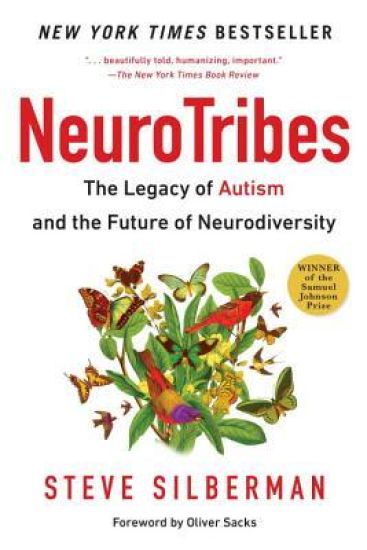
This New York Times-bestselling book upends conventional thinking about autism and suggests a broader model for acceptance, understanding, and full participation in society for people who think differently. What is autism? A lifelong disability, or a naturally occurring form of cognitive difference akin to certain forms of genius? In truth, it is all of these things and more--and the future of our society depends on our understanding it. Wired reporter Steve Silberman unearths the secret history of autism, long suppressed by the same clinicians who became famous for discovering it, and finds surprising answers to the crucial question of why the number of diagnoses has soared in recent years. Going back to the earliest days of autism research, Silberman offers a gripping narrative of Leo Kanner and Hans Asperger, the research pioneers who defined the scope of autism in profoundly different ways; he then goes on to explore the game-changing concept of neurodiversity. NeuroTribes considers the idea that neurological differences such as autism, dyslexia, and ADHD are not errors of nature or products of the toxic modern world, but the result of natural variations in the human genome. This groundbreaking book will reshape our understanding of the history, meaning, function, and implications of neurodiversity in our world.
NeuroTribes

NeuroTribes

Steve Silberman

Allen Unwin
2016
nidottu
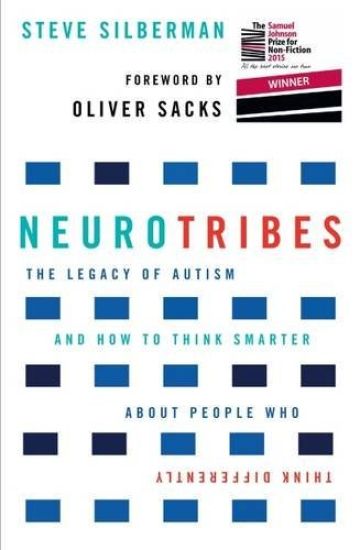
Winner of the 2015 Samuel Johnson Prize for Non-FictionShortlisted for the Wellcome Book PrizeA Sunday Times and New York Times bestsellerForeword by Oliver SacksWhat is autism: a devastating developmental condition, a lifelong disability, or a naturally occurring form of cognitive difference akin to certain forms of genius? In truth, it is all of these things and more - and the future of our society depends on our understanding it. Following on from his groundbreaking article 'The Geek Syndrome', Wired reporter Steve Silberman unearths the secret history of autism, long suppressed by the same clinicians who became famous for discovering it, and finds surprising answers to the crucial question of why the number of diagnoses has soared in recent years.Going back to the earliest autism research and chronicling the brave and lonely journey of autistic people and their families through the decades, Silberman provides long-sought solutions to the autism puzzle while casting light on the growing movement of 'neurodiversity' and mapping out a path towards a more humane world for people with learning differences.
Skeleton Key

Skeleton Key

David Shenk; Steve Silberman

Random House USA Inc
1994
pokkari
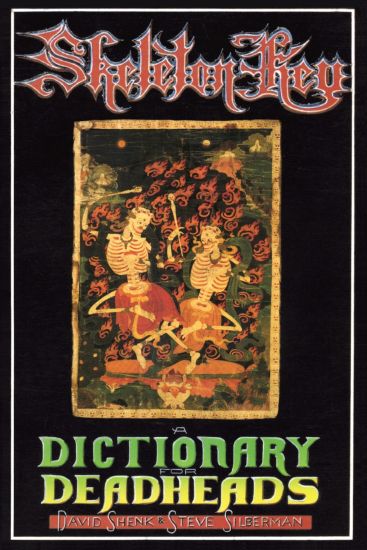
Steve Silberman's tribute to Jerry Garcia, 1942-1995 Skeleton Key: A Dictionary for Deadheads is 400 pages of lore, history, interviews, and thoughts on the Meaning of It All, from what guitarist Jerry Garcia calls "the Grateful Dead outback" - the diverse global community that is nourished by the music of the Grateful Dead and the shared experience of Dead shows. Skeleton Key is a labor of love and "deadication" by Deadheads David Shenk and Steve Silberman, published by Doubleday/Main Street Books in 1994. Skeleton Key celebrates the magic, humor, and significance of the Deadhead community, while it investigates the history of the Long Strange Trip - from the days of be-bop jazz and the Beat Generation writers whose literary adventures inspired many Deadheads' own on-the-road journeys, to now, when Deadheads swap tapes and tales around the virtual campfires of Deadhead cyberspace. 1995 marks the 30th year of the Dead's experiment in improvisational telepathy. Skeleton Key is the first detailed road map of the culture and lifeways of Deadheads, featuring interviews with hundreds of fans and family, including Elvis Costello and Bill Walton, and thoughts on the music and community by people like Dead lyricist Robert Hunter, mythographer Joseph Campbell, and Grateful Dead Hour host David Gans. Skeleton Key features a foreword by John Perry Barlow, Dead lyricist and co-founder of the Electronic Frontier Foundation. The psychedelic lettering on the cover is by Alton Kelley, one of the original San Francisco poster artists, who also designed the covers for the Dead albums American Beauty and Europe '72. The icon on the cover of Skeleton Key is a 200-year-old Tibetan thangka used for meditation, of skeletons dancing in a cloud of fire, an image of enlightened consciousness awakening even in the midst of death. We hope that whether you are a committed Deadhead, or just a curious Websurfer, you'll poke around this site and get a taste of the beauty, joy, humor, and mystery of Deadhead life. Feel free to pop on a tape and make yourself comfortable as the first notes sing your blues away, and you enter the Skeleton Zone...A Word from the AuthorsSince the publication of Skeleton Key last fall, Steve and I have been overwhelmed and overjoyed by the nice reviews from fellow Deadheads and from the press. To me, the best compliments have been along the lines of, "I can't wait to show this to my Pop - now maybe he'll understand!" I wanted to help articulate why we all love this music so much, and report to the world about the generous spirit of the community which has formed around it. If you haven't yet, I hope you'll get a chance to check out the entire book sometime soon. We'd love to hear what you think. Drop us a line at [email protected]. Howdy folks! After spending 20 years of my life dancing happily in the Phil Zone at Dead shows, I'm deeply thankful I was given the chance to offer something back to the community which has given me more joy and meaning than any other: a deep picture of our extended family. I hope you enjoy it, and you may learn a few things along the way, whether you're an old-time tourhead or a newbie who just got on the bus. Be well. See you in the Zone! - Steve