Kirjojen hintavertailu. Mukana 12 390 323 kirjaa ja 12 kauppaa.

Kirjailija

Steve Woolgar

Kirjat ja teokset yhdessä paikassa: 5 kirjaa, julkaisuja vuosilta 1986-2026, suosituimpien joukossa Science. Vertaile teosten hintoja ja tarkista saatavuus suomalaisista kirjakaupoista.

5 kirjaa

Kirjojen julkaisuhaarukka 1986-2026.

Science

Science

Steve Woolgar

TAYLOR FRANCIS LTD
2026
sidottu
Sociological studies of knowledge and science have typically dealt with the view that science represents pure and ‘objective’ knowledge, untainted by ‘social’ factors which distort or divert it from uncovering the ‘true’ nature of the physical world. Originally published in 1988 this book introduces and develops a critical appraisal of a new approach, known as the ‘social study of science’, which treats the social context of science as essentially similar to other social activities. The approach is relevant to long standing issues about the scientific status of sociology and attendant problems of objectivity and subjectivity. Lucidly argued, authoritative and instructive about the institution and practice of science, Dr. Woolgar’s book will appeal to scientists of any persuasion – social or natural – and by anybody with an interest in how science and scientific thinking operate.
Mundane Governance

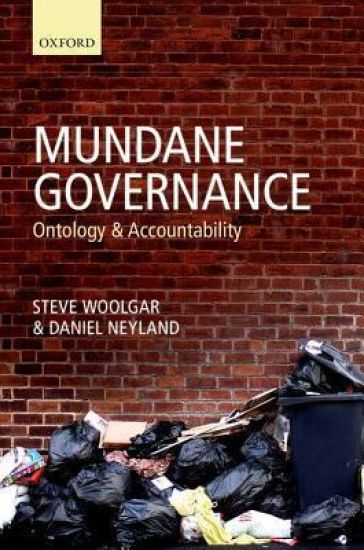
Mundane Governance

Steve Woolgar; Daniel Neyland

Oxford University Press
2020
nidottu
What is to be made of the outcry when newly issued recycling "wheelie" bins are discovered to contain microchips for weighing and evaluating householders' rubbish? The angry accusations that speed cameras are generating excessive income for the government? The consternation at the measures taken by airports to heighten security in the wake of the increased threat of terrorist attacks? These increasingly widespread reactions to ordinary events and everyday phenomena share a common theme. They all embody concerns about the ways in which our lives are increasingly regulated and controlled in relation to ordinary objects and technologies. This book takes these concerns as the starting point for exploring the ways in which relations of governance and accountability in contemporary life are organized around ordinary, everyday, pervasive objects and technologies. In contrast to the contemporary literature on governance, the book argues for the importance of examining how accountability relations are enacted on the ground, in relation to mundane objects and technologies. In particular, it is crucial to understand how governance and accountability are mediated through material relations involving ordinary everyday objects and technologies. The book argues that the key to understanding governance is to focus on political constitution at the level of ontology rather than just on the traditional politics of organization, structure, and human compliance. The term ontology is used here to draw attention to the social and cultural processes whereby the nature and existence of ordinary things come to matter. The argument is developed in relation to a wide variety of empirical materials drawn from three main areas of everyday life: waste management and recycling; the regulation and control of traffic (especially speed cameras and parking); and security and passenger movement in airports.
Mundane Governance

Mundane Governance

Steve Woolgar; Daniel Neyland

Oxford University Press
2013
sidottu
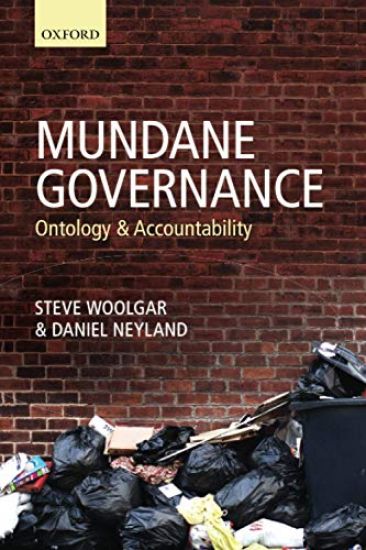
What is to be made of the outcry when newly issued recycling "wheelie" bins are discovered to contain microchips for weighing and evaluating householders' rubbish? The angry accusations that speed cameras are generating excessive income for the government? The consternation at the measures taken by airports to heighten security in the wake of the increased threat of terrorist attacks? These increasingly widespread reactions to ordinary events and everyday phenomena share a common theme. They all embody concerns about the ways in which our lives are increasingly regulated and controlled in relation to ordinary objects and technologies. This book takes these concerns as the starting point for exploring the ways in which relations of governance and accountability in contemporary life are organized around ordinary, everyday, pervasive objects and technologies. In contrast to the contemporary literature on governance, the book argues for the importance of examining how accountability relations are enacted on the ground, in relation to mundane objects and technologies. In particular, it is crucial to understand how governance and accountability are mediated through material relations involving ordinary everyday objects and technologies. The book argues that the key to understanding governance is to focus on political constitution at the level of ontology rather than just on the traditional politics of organization, structure, and human compliance. The term ontology is used here to draw attention to the social and cultural processes whereby the nature and existence of ordinary things come to matter. The argument is developed in relation to a wide variety of empirical materials drawn from three main areas of everyday life: waste management and recycling; the regulation and control of traffic (especially speed cameras and parking); and security and passenger movement in airports.
The Machine at Work

The Machine at Work

Keith Grint; Steve Woolgar

JOHN WILEY AND SONS LTD
1997
nidottu
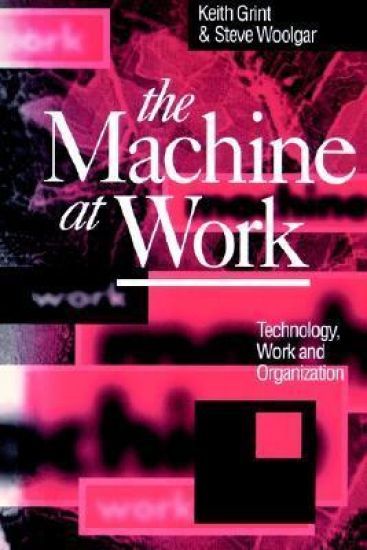
This highly topical book is a concise and accessible account of the relationship between technology and work. Firstly, it reviews and critically assesses a variety of recent approaches to the social and cultural dimensions of technology. Secondly, it examines the implications of these new approaches for existing ideas about the nature of technology and work organization. At the core of much thinking about technology is the assumption that the technical character and capacity of artefacts is given. The enduring image of deus ex machina captures the idea that it is the essential capacity 'within' a technology which, in the end, accounts for the way we organize ourselves, our work and other life experiences. Recent work in the sociology of technology, by contrast, sets out relativist and constructivist accounts of technology, which begin to challenge this central assumption. The Machine at Work includes a reinterpretation of the Luddites; a review of the social processes of development in information technology; a reassessment of theories of the role of technology in work; and an analysis of the common limitations of some constructivist and feminist perspectives on technology. The book argues that only a commitment to a particular conception of constructivism enables the kind of radical rethinking about technology and work relations that is needed. This engaging and informative text will be of interest to students in a range of subject areas - from sociology, organizational theory and behaviour, to industrial relations, management and business studies.
Laboratory Life

Laboratory Life

Bruno Latour; Steve Woolgar

Princeton University Press
1986
pokkari
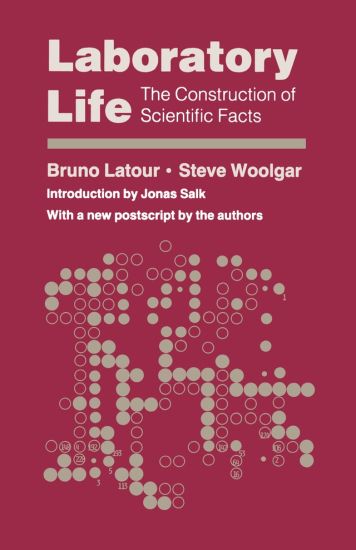
This highly original work presents laboratory science in a deliberately skeptical way: as an anthropological approach to the culture of the scientist. Drawing on recent work in literary criticism, the authors study how the social world of the laboratory produces papers and other "texts,"' and how the scientific vision of reality becomes that set of statements considered, for the time being, too expensive to change. The book is based on field work done by Bruno Latour in Roger Guillemin's laboratory at the Salk Institute and provides an important link between the sociology of modern sciences and laboratory studies in the history of science.