Kirjojen hintavertailu. Mukana 12 595 353 kirjaa ja 12 kauppaa.

Kirjailija

Steve Wozniak

Kirjat ja teokset yhdessä paikassa: 8 kirjaa, julkaisuja vuosilta 2002-2025, suosituimpien joukossa The Infinite Retina. Vertaile teosten hintoja ja tarkista saatavuus suomalaisista kirjakaupoista.

8 kirjaa

Kirjojen julkaisuhaarukka 2002-2025.

The Infinite Retina

The Infinite Retina

Irena Cronin; Robert Scoble; Steve Wozniak

PACKT PUBLISHING LIMITED
2025
nidottu
An insightful look into how spatial computing is transforming seven major industries today—from healthcare to retail and finance—and what it means for businesses and consumers This second edition explores the impact of generative AI, Apple Vision Pro, and Meta Quest, while offering a critical perspective on challenges like data privacy, automation, and ethical concerns Key Features Explore spatial computing's shift from theory to real-world use by Apple, Meta, and Tesla Examine spatial computing disruptions across seven industries with expert insights on real-world applications Analyze generative AI and Apple Vision Pro's impact on retail, healthcare, and finance Purchase of the print or Kindle book includes a free PDF eBook Book DescriptionWhat is Spatial Computing, and why are companies like Tesla, Apple, and Meta investing billions into it? In The Infinite Retina, Irena Cronin and Robert Scoble explore how spatial computing—where humans and machines interact in a digital–physical space—has progressed beyond theory into real-world applications. This second edition has many substantial updates, including two new chapters on the relevance of Generative AI in Spatial Computing and a new chapter on the impact of Apple Vision Pro. Each existing chapter has been updated to have the most current information and commentary. The book offers a fresh look at seven major industries, including healthcare and retail, featuring updated case studies, expert commentary, and real-world examples. Additionally, it addresses crucial risks and challenges, such as data privacy, automation's impact on employment, and ethical concerns. This edition moves beyond speculation to critically analyze what Spatial Computing means for businesses and individuals today.What you will learn Explore how spatial computing is applied today, with examples from Apple, Meta, Tesla, and other major players Analyze the economic and ethical challenges of spatial computing, including automation and privacy Understand generative AI's influence on spatial computing, from creativity to automation Investigate industry-specific case studies, from autonomous vehicles to retail and finance Gain expert insights into industry trends, including potential career paths in the spatial computing revolution Discover how virtual reality and augmented reality will change healthcare Who this book is forThe Infinite Retina is for anyone interested in the future of technology and how augmented reality and spatial computing (among other developments) will affect both businesses and the individual.
The Infinite Retina

The Infinite Retina

Irena Cronin; Robert Scoble; Steve Wozniak

Packt Publishing Limited
2020
nidottu
A compelling and insightful look at the future of Spatial Computing, and how this cutting-edge technology is changing the way we do business across seven primary industries, and what it means for humanity as a whole. Key Features Discover how Spatial Computing is changing the face of technology Get a roadmap for the disruptions caused by Spatial Computing and how it will affect seven major industries Gain insights about the past, present, and future of technology from the world’s leading experts and innovators Book DescriptionWhat is Spatial Computing and why is everyone from Tesla, Apple, and Facebook investing heavily in it? In The Infinite Retina, authors Irena Cronin and Robert Scoble attempt to answer that question by helping you understand where Spatial Computing?an augmented reality where humans and machines can interact in a physical space?came from, where it's going, and why it's so fundamentally different from the computers or mobile phones that came before. They present seven visions of the future and the industry verticals in which Spatial Computing has the most influence?Transportation; Technology, Media, and Telecommunications; Manufacturing; Retail; Healthcare; Finance; and Education. The book also shares insights about the past, present, and future from leading experts an other industry veterans and innovators, including Sebastian Thrun, Ken Bretschneider, and Hugo Swart. They dive into what they think will happen in Spatial Computing in the near and medium term, and also explore what it could mean for humanity in the long term. The Infinite Retina then leaves it up to you to decide whether Spatial Computing is truly where the future of technology is heading or whether it's just an exciting, but passing, phase.What you will learn Look back at historical paradigms that changed the face of technology Consider how Spatial Computing could be the new technology that changes our lives See how Virtual and Augmented Reality will change the way we do healthcare Learn how Spatial Computing technology will lead to fully automated transportation Think about how Spatial Computing will change the manufacturing industry Explore how finance and retail are going to be impacted through Spatial Computing devices Hear accounts from industry experts on what they expect Spatial Computing to bring to their sectors Who this book is forThe Infinite Retina is for anyone interested in the future of technology and how Augmented Reality and Spatial Computing (among other developments) will affect both businesses and the individual.
Rewiring Education

Rewiring Education

John D. Couch; Jason Towne; Steve Wozniak

BenBella Books
2018
sidottu
What if we could unlock the potential in every child? As it turns out, we can.Apple's iconic cofounder Steve Jobs had a powerful vision for education: employing technology to make an enormous impact on the lives of millions of students. To realize this vision, Jobs tapped John D. Couch, a trusted engineer and executive with a passion for education. Couch believed the real purpose of education was to help children discover their unique potential and empower them to reach beyond their perceived limitations. Today, technology is increasingly integrated into every aspect of our lives, rewiring our homes, our jobs, and even our brains. Most important, it presents an opportunity to rewire education to enrich and strengthen our schools, children, and societyIn Rewiring Education, Couch shares the professional lessons he's learned during his 50-plus years in education and technology. He takes us behind Apple's major research study, Apple Classrooms of Tomorrow (ACOT), and its follow-up (ACOT 2), highlighting the powerful effects of the Challenge-Based Learning framework. Going beyond Apple's walls, he also introduces us to some of the most extraordinary parents, educators, and entrepreneurs from around the world who have ignored the failed promises of memorization and, instead, utilize new science-backed methods and technologies that benefit all children, from those who struggle to honor students. Rewiring Education presents a bold vision for the future of education, looking at promising emerging technologies and how we—as parents, teachers, and voters—can ensure children are provided with opportunities and access to the relevant, creative, collaborative, and challenging learning environments they need to succeed.
Iwoz: Computer Geek to Cult Icon

Iwoz: Computer Geek to Cult Icon

Steve Wozniak

W. W. Norton Company
2007
nidottu
Before slim laptops that fit into briefcases, computers looked like strange, alien vending machines. But in "the most staggering burst of technical invention by a single person in high-tech history" (BusinessWeek) Steve Wozniak invented the first true personal computer. Wozniak teamed up with Steve Jobs, and Apple Computer was born, igniting the computer revolution and transforming the world. In iWoz the mischievous genius with the low profile treats readers to a rollicking, no-holds-barred account of his life--for once, in the voice of the wizard himself.
I, Woz

I, Woz

Steve Wozniak

Headline Review
2007
pokkari
I, WOZ offers readers a unique glimpse into the offbeat and brilliant but ethical mind that conceived the Macintosh. After 25 years avoiding the public eye, Steve Wozniak reveals the full story of the Apple computer, from its conception to his views on the iconic cult status it has achieved today. In June 1975 Steve's curiosity and determination inspired him to build a computer, the first Apple. Six months later, he sold the machine, and for the self-professed 'engineer's engineer', success was imminent. But this story is full of life lessons, critical decisions, huge triumphs and big mistakes. Steve speaks also of his childhood, phone hacking pranks, working at Hewlett-Packard, the life-changing plane crash and teaching.
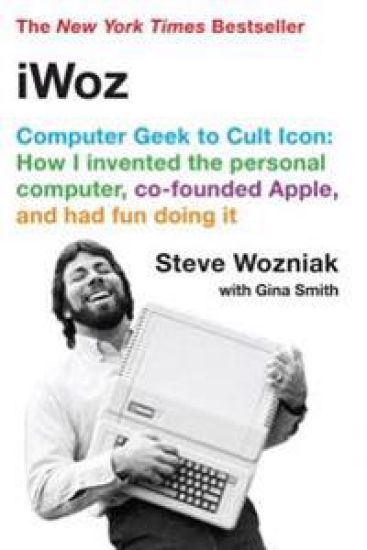
iWoz

iWoz

Steve Wozniak; Gina Smith

WW Norton Co
2006
sidottu
The high-tech wizard behind Apple offers a personal account of the creation of the first personal computer by marrying computer circuitry with a video screen and a typewriter keyboard to create the affordable, easy-to-use Apple I, detailing his life before and after Apple and providing a personal perspective on an invention that ignited the computer revolution. 50,000 first printing.
The Art of Deception

The Art of Deception

Kevin D. Mitnick; William L. Simon; Steve Wozniak

Hungry Minds Inc,U.S.
2003
nidottu
The world's most infamous hacker offers an insider's view of the low-tech threats to high-tech security Kevin Mitnick's exploits as a cyber-desperado and fugitive form one of the most exhaustive FBI manhunts in history and have spawned dozens of articles, books, films, and documentaries. Since his release from federal prison, in 1998, Mitnick has turned his life around and established himself as one of the most sought-after computer security experts worldwide. Now, in The Art of Deception, the world's most notorious hacker gives new meaning to the old adage, "It takes a thief to catch a thief." Focusing on the human factors involved with information security, Mitnick explains why all the firewalls and encryption protocols in the world will never be enough to stop a savvy grifter intent on rifling a corporate database or an irate employee determined to crash a system. With the help of many fascinating true stories of successful attacks on business and government, he illustrates just how susceptible even the most locked-down information systems are to a slick con artist impersonating an IRS agent. Narrating from the points of view of both the attacker and the victims, he explains why each attack was so successful and how it could have been prevented in an engaging and highly readable style reminiscent of a true-crime novel. And, perhaps most importantly, Mitnick offers advice for preventing these types of social engineering hacks through security protocols, training programs, and manuals that address the human element of security.
The Art of Deception

The Art of Deception

Kevin D. Mitnick; William L. Simon; Steve Wozniak

John Wiley Sons Inc
2002
sidottu
The world's most infamous hacker offers an insider's view of the low-tech threats to high-tech security Kevin Mitnick's exploits as a cyber-desperado and fugitive form one of the most exhaustive FBI manhunts in history and have spawned dozens of articles, books, films, and documentaries. Since his release from federal prison, in 1998, Mitnick has turned his life around and established himself as one of the most sought-after computer security experts worldwide. Now, in The Art of Deception, the world's most notorious hacker gives new meaning to the old adage, "It takes a thief to catch a thief." Focusing on the human factors involved with information security, Mitnick explains why all the firewalls and encryption protocols in the world will never be enough to stop a savvy grifter intent on rifling a corporate database or an irate employee determined to crash a system. With the help of many fascinating true stories of successful attacks on business and government, he illustrates just how susceptible even the most locked-down information systems are to a slick con artist impersonating an IRS agent. Narrating from the points of view of both the attacker and the victims, he explains why each attack was so successful and how it could have been prevented in an engaging and highly readable style reminiscent of a true-crime novel. And, perhaps most importantly, Mitnick offers advice for preventing these types of social engineering hacks through security protocols, training programs, and manuals that address the human element of security.