Kirjojen hintavertailu. Mukana 12 595 353 kirjaa ja 12 kauppaa.

Kirjailija

Steven C. Topik

Kirjat ja teokset yhdessä paikassa: 3 kirjaa, julkaisuja vuosilta 1997-2014, suosituimpien joukossa Trade and Gunboats. Vertaile teosten hintoja ja tarkista saatavuus suomalaisista kirjakaupoista.

3 kirjaa

Kirjojen julkaisuhaarukka 1997-2014.

Global Markets Transformed

Global Markets Transformed

Steven C. Topik; Allen Wells

The Belknap Press
2014
nidottu
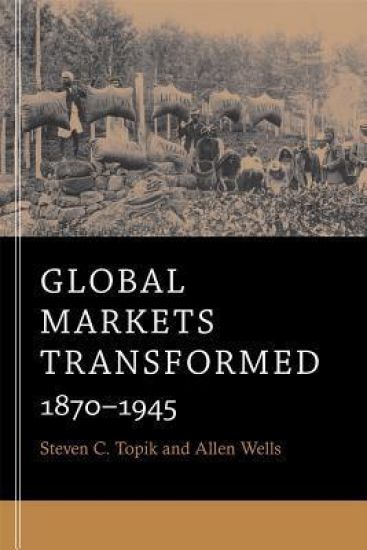
Offering a fresh look at trade during the second industrial revolution, Global Markets Transformed describes a world of commodities on the move—wheat and rice, coffee and tobacco, oil and rubber, all jostling around the planet through a matrix of producers, processors, transporters, and buyers. Steven C. Topik and Allen Wells discuss how innovations in industrial and agricultural production, transportation, commerce, and finance transformed the world economy from 1870 to 1945.Topik and Wells trace the evolution of global chains of commodities, from basic food staples and stimulants to strategically important industrial materials, that linked the agricultural and mineral-producing areas of Latin America, Asia, and Africa to European and North American consumers and industrialists. People living a great distance apart became economically intertwined as never before. Yet laborers and consumers at opposite ends of commodity chains remained largely invisible to one another. Affluent American automobile owners who were creating the skyrocketing demand for tires, for example, knew almost nothing about poor Brazilian tappers who sweated in the Amazon to supply the rubber necessary for their vehicles.As commodity chains stretched out around the world, more goods were bound up in markets that benefited some countries more than others. Global Markets Transformed highlights the lessons and legacy of the early years of globalization—when the world’s population doubled, trade quadrupled, industrial output multiplied fivefold, and the gap between rich and poor regions grew ever wider.
Trade and Gunboats

Trade and Gunboats

Steven C. Topik

Stanford University Press
2000
pokkari
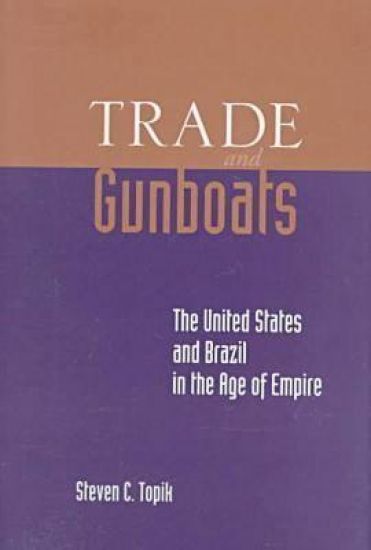
A hundred years ago, the United States first projected itself onto the international stage, hoping to stake out a sphere of influence in Latin America just as the largest of Latin American countries, Brazil, ending a 67-year-long monarchical regime, struggled to redefine its relationship to the world economy. Debates raged between liberals and corporatists, between free traders and protectionists. When the trajectories of these two unequal giants collided, their interaction revealed much about the international economic and political affairs of their day that bears upon the debates surrounding today's "new world order." The book begins by examining the Blaine-Mendonca Accord of 1891, the first commercial pact ever signed between Brazil and the United States, thus beginning a special relationship that lasted into the 1970's. This is the first study of U.S.-Brazilian relations that seriously examines the internal politics and economics of both countries and how they played themselves out in the late nineteenth century. The author attempts a new kind of international history, comparative political economy, that examines not only internal dynamics but also the nature of the international regime at the time.
Trade and Gunboats

Trade and Gunboats

Steven C. Topik

Stanford University Press
1997
sidottu
A hundred years ago, the United States first projected itself onto the international stage, hoping to stake out a sphere of influence in Latin America just as the largest of Latin American countries, Brazil, ending a 67-year-long monarchical regime, struggled to redefine its relationship to the world economy. Debates raged between liberals and corporatists, between free traders and protectionists. When the trajectories of these two unequal giants collided, their interaction revealed much about the international economic and political affairs of their day that bears upon the debates surrounding today’s “new world order.” The book begins by examining the Blaine-Mendonca Accord of 1891, the first commercial pact ever signed between Brazil and the United States, thus beginning a special relationship that lasted into the 1970’s. This is the first study of U.S.-Brazilian relations that seriously examines the internal politics and economics of both countries and how they played themselves out in the late nineteenth century. The author attempts a new kind of international history, comparative political economy, that examines not only internal dynamics but also the nature of the international regime at the time.