Kirjojen hintavertailu. Mukana 12 595 353 kirjaa ja 12 kauppaa.

Kirjailija

Steven D. Hales

Kirjat ja teokset yhdessä paikassa: 4 kirjaa, julkaisuja vuosilta 2000-2021, suosituimpien joukossa This Is Philosophy. Vertaile teosten hintoja ja tarkista saatavuus suomalaisista kirjakaupoista.

Mukana myös kirjoitusasut: Steven D Hales

4 kirjaa

Kirjojen julkaisuhaarukka 2000-2021.

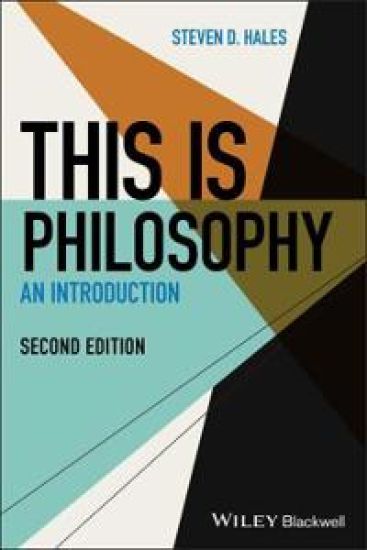
This Is Philosophy

This Is Philosophy

Steven D. Hales

John Wiley Sons Inc
2021
nidottu
THIS IS PHILOSOPHY “The second edition of This is Philosophy improves upon an excellent first edition. This clear, succinct book is quite possibly the best introduction to Western philosophy on the market.” —Gregory Morgan, Stevens Institute of Technology“This is a terrific book. The writing is not only extremely clear, it is downright gripping—with relevant and detailed examples at every turn. Steven Hales has produced not just a great little introduction to philosophy—he has produced a great little book in philosophy, period.” —Michael Lynch, University of Connecticut“Hales clearly explains important philosophical ideas with a minimum of jargon and without sacrificing depth of content and he consistently gives a fair and accurate presentation of both sides of central philosophical disputes.” —Matthew Van Cleave, Teaching PhilosophyAs the oldest discipline in the academy, philosophy began by asking questions of the world and of human nature. Philosophers are responsible for the Enlightenment and laid the foundations for constitutional governments. Yet, while it may have given birth to the natural sciences, philosophy has earned a contemporary reputation as an esoteric and impractical field out of touch with everyday life—but it doesn’t have to be that way. This is Philosophy: An Introduction expertly guides students through the fundamentals of philosophy by illuminating difficult, abstract ideas with straightforward language. Assuming no prior background in the subject, this volume brings philosophical concepts into sharp focus through relatable examples and clear explanations of philosophy’s big questions and arguments.The second edition of this accessible textbook is organized around seven central philosophical problems, including ethics, the existence of God, free will, personal identity, philosophy of mind, and epistemology. New to this edition is a chapter on political philosophy that explores the state of nature, anarchy, contractarianism, libertarianism, and the liberal state. These self-contained chapters have been reordered and recalibrated to best suit the needs of introductory philosophy courses, and can be taught independently or in sequence. Enhanced by updated examples, new hyperlinks and references, and detailed bibliographies, the book is complemented by extensively-revised online resources available to instructors, including a 200-question test bank and over 450 PowerPoint slides designed to strengthen student comprehension of key concepts.Strengthening the popular first edition which launched the series, This is Philosophy: An Introduction, Second Edition is the perfect primary textbook for beginning philosophy students as well as general readers with an interest in philosophy.
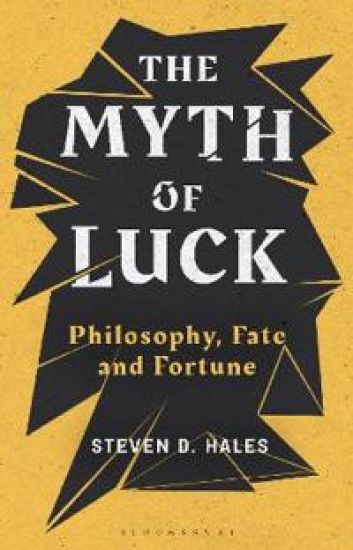
The Myth of Luck

The Myth of Luck

Steven D. Hales

Bloomsbury Academic
2020
sidottu
Humanity has thrown everything we have at implacable luck—novel theologies, entire philosophical movements, fresh branches of mathematics—and yet we seem to have gained only the smallest edge on the power of fortune. The Myth of Luck tells us why we have been fighting an unconquerable foe. Taking us on a guided tour of one of our oldest concepts, we begin in ancient Greece and Rome, considering how Plato, Plutarch, and the Stoics understood luck, before entering the theoretical world of probability and exploring how luck relates to theology, sports, ethics, gambling, knowledge, and present-day psychology. As we travel across traditions, times and cultures, we come to realize that it’s not that as soon as we solve one philosophical problem with luck that two more appear, like heads on a hydra, but rather that the monster is altogether mythological. We cannot master luck because there is nothing to defeat: luck is no more than a persistent and troubling illusion. By introducing us to compelling arguments and convincing reasons that explain why there is no such thing as luck, we finally see why in a very real sense we make our own luck, that luck is our own doing. The Myth of Luck helps us to regain our own agency in the world - telling the entertaining story of the philosophy and history of luck along the way.
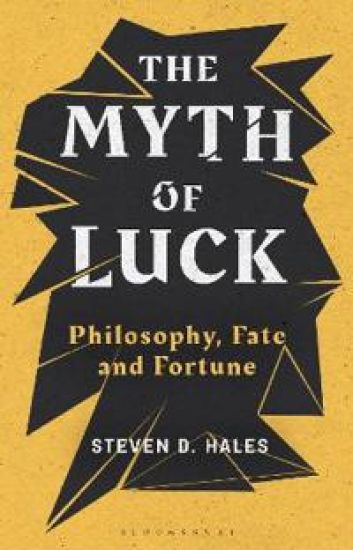
The Myth of Luck

The Myth of Luck

Steven D. Hales

Bloomsbury Academic
2020
nidottu
Humanity has thrown everything we have at implacable luck—novel theologies, entire philosophical movements, fresh branches of mathematics—and yet we seem to have gained only the smallest edge on the power of fortune. The Myth of Luck tells us why we have been fighting an unconquerable foe. Taking us on a guided tour of one of our oldest concepts, we begin in ancient Greece and Rome, considering how Plato, Plutarch, and the Stoics understood luck, before entering the theoretical world of probability and exploring how luck relates to theology, sports, ethics, gambling, knowledge, and present-day psychology. As we travel across traditions, times and cultures, we come to realize that it’s not that as soon as we solve one philosophical problem with luck that two more appear, like heads on a hydra, but rather that the monster is altogether mythological. We cannot master luck because there is nothing to defeat: luck is no more than a persistent and troubling illusion. By introducing us to compelling arguments and convincing reasons that explain why there is no such thing as luck, we finally see why in a very real sense we make our own luck, that luck is our own doing. The Myth of Luck helps us to regain our own agency in the world - telling the entertaining story of the philosophy and history of luck along the way.
Nietzsche's Perspectivism

Nietzsche's Perspectivism

Steven D Hales; Rex Welshon

University of Illinois Press
2000
nidottu
In Nietzsche's Perspectivism, Steven Hales and Rex Welshon offer an analytic approach to Nietzsche's important idea that truth is perspectival. Drawing on Nietzsche's entire published corpus, along with manuscripts he never saw to press, they assess the different perspectivisms at work in Nietzsche's views with regard to truth, logic, causality, knowledge, consciousness, and the self. They also examine Nietzsche's perspectivist ontology of power and the attendant claims that substances and subjects are illusory while forces and alliances of power constitute the only reality. Hales and Welshon present Nietzsche's treatment of perspectivism as both more complex and more fruitful than the common view of it as a doctrine that truth is not objective. Neither a metaphor nor a methodology, perspectivism emerges as a protean concept akin to a unifying theme; an alternative to the absolutism that recurs in science, philosophy, and religion; and a technique for revealing the unimagined possibilities open to every individual.