Kirjojen hintavertailu. Mukana 12 586 032 kirjaa ja 12 kauppaa.

Kirjailija

Steven D. Hoelscher

Kirjat ja teokset yhdessä paikassa: 2 kirjaa, julkaisuja vuosilta 2006-2008, suosituimpien joukossa Picturing Indians. Vertaile teosten hintoja ja tarkista saatavuus suomalaisista kirjakaupoista.

2 kirjaa

Kirjojen julkaisuhaarukka 2006-2008.

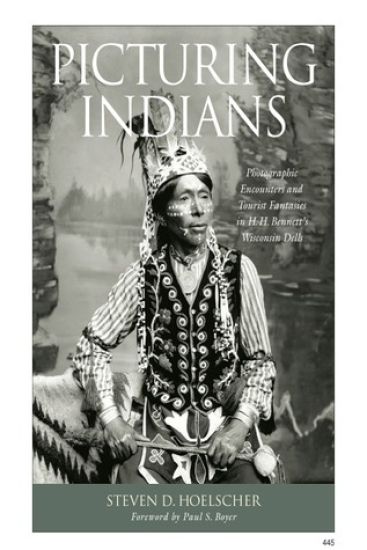
Picturing Indians

Picturing Indians

Steven D. Hoelscher; Paul S. Boyer

University of Wisconsin Press
2008
nidottu
Today a tourist mecca, the area now known as the Wisconsin Dells was once wilderness - and a gathering place for the region's Native peoples, the Ho-Chunk, who for centuries migrated to this part of the Wisconsin River for both sustenance and spiritual renewal. By the late 1800s their numbers had dwindled through displacement or forcible removal, and it was this smaller band that caught the attention of photographer Henry Hamilton Bennett. Having built his reputation on his photographs of the Dells' steep gorges and fantastic rock formations, H. H. Bennett now turned his camera upon the Ho-Chunk themselves, and thus began the many-layered relationship unfolded by Steven D. Hoelscher in ""Picturing Indians: Photographic Encounters and Tourist Fantasies in H. H. Bennett's Wisconsin Dells"".The interactions between Indian and white man, photographer and photographed, suggested a relationship in which commercial motives and friendly feelings mixed, though not necessarily in equal measure. The Ho-Chunk resourcefully sought new ways to survive in the increasingly tourist-driven economy of the Dells. Bennett, struggling to keep his photography business alive, capitalized on America's comfortably nostalgic image of Native peoples as a vanishing race, no longer threatening and now safe for white consumption.Hoelscher traces these developments through letters, diaries, financial records, guidebooks, and periodicals of the day. He places Bennett within the context of contemporary artists and photographers of American Indians and examines the receptions of this legacy by the Ho-Chunk today. In the final chapter, he juxtaposes Bennett's depictions of Native Americans with the work of present-day Ho-Chunk photographer Tom Jones, who documents the lives of his own people with a subtlety and depth foreshadowed, a century ago, in the flickers of irony, injury, humor, and pride conveyed by his Ho-Chunk ancestors as they posed before the lens of a white photographer.
Southern Heritage on Display

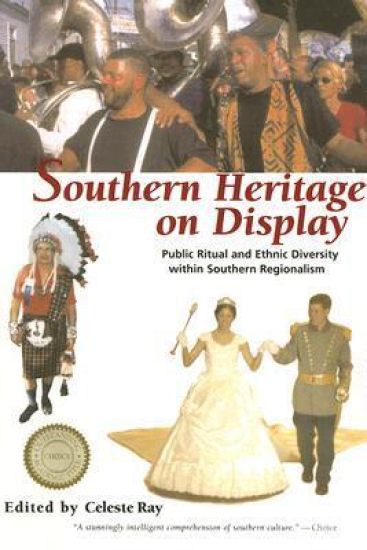
Southern Heritage on Display

Laura Ehrisman; Clyde Ellis; Joan Flocks; Steven D. Hoelscher; Susan A. Keefe; Paul Monaghan; Gwen Kennedy Neville; Helen Regis; Melissa Schrift

The University of Alabama Press
2006
nidottu
How ritualized public ceremonies affirm or challenge cultural identities associated with the American South* A Choice Outstanding Academic Title"From the jazz funeral processions in the streets of New Orleans to the annual Natchez Pilgrimage in Mississippi and the Scottish Highland games atop Grandfather Mountain in North Carolina, the reader is exposed to a diverse southern culture, or heritage, that is often overlooked by many people, both within and outside the South. The reality of a southern culture based in Mexican heritage or a celebration of [a] Southeastern tribe's heritage through the powwow helps deconstruct the myth of a solid southern culture as one that is simply portrayed as black and white."--Florida Historical Quarterly"The ambition Celeste Ray sets out in her introduction is to show how these groups are not only in the South but of it, how they interpret their diverse identities as Southern--put another way, to answer a question that arises in one noteworthy piece, why do Indians in North Carolina eat barbecue pork and collard greens at their powwows?"--Journal of American Ethnic History"Thought-provoking and well-crafted, Southern Heritage on Display is an innovative and important resource for regional studies and scholarship on public display."--Journal of Folklore ResearchW. J. Cash's 1941 observation that "there are many Souths and many cultural traditions among them" is certainly validated by this book. Although the Civil War and its "lost cause" tradition continues to serve as a cultural root paradigm in celebrations, both uniting and dividing loyalties, southerners also embrace a panoply of public rituals--parades, cook-offs, kinship homecomings, church assemblies, music spectacles, and material culture exhibitions--that affirm other identities. From the Appalachian uplands to the Mississippi Delta, from Kentucky bluegrass to Carolina piedmont, southerners celebrate in festivals that showcase their diverse cultural backgrounds and their mythic beliefs about themselves.The ten essays of this cohesive, interdisciplinary collection present event-centered research from various fields of study--anthropology, geography, history, and literature--to establish a rich, complex picture of the stereotypically "Solid South." Topics include the Mardi Gras Indian song cycle as a means of expressing African-American identity in New Orleans; powwow performances and Native American traditions in southeast North Carolina; religious healings in southern Appalachian communities; Mexican Independence Day festivals in central Florida; and, in eastern Tennessee, bonding ceremonies of melungeons who share Indian, Scots Irish, Mediterranean, and African ancestry. Seen together, these public heritage displays reveal a rich "creole" of cultures that have always been a part of southern life and that continue to affirm a flourishing regionalism.This book will be valuable to students and scholars of cultural anthropology, American studies, and southern history; academic and public libraries; and general readers interested in the American South. It contributes a vibrant, colorful layer of understanding to the continuously emerging picture of complexity in this region historically depicted by simple stereotypes.