
Kirjailija
Steven D. Smith
Kirjat ja teokset yhdessä paikassa: 26 kirjaa, julkaisuja vuosilta 1996-2026, suosituimpien joukossa Bailey's Dam. Vertaile teosten hintoja ja tarkista saatavuus suomalaisista kirjakaupoista.
Mukana myös kirjoitusasut: Steven D Smith
26 kirjaa
Kirjojen julkaisuhaarukka 1996-2026.
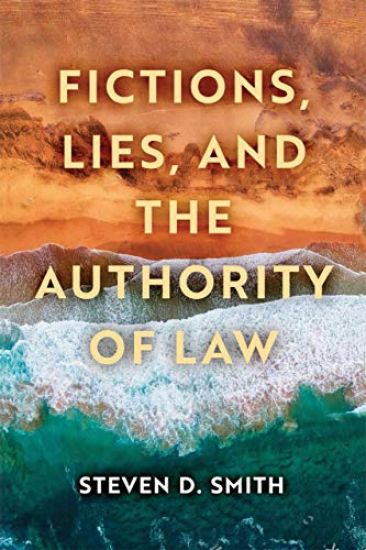
Fictions, Lies, and the Authority of Law
Steven D. Smith
UNIVERSITY OF NOTRE DAME PRESS
2026
nidottu
Fictions, Lies, and the Authority of Law discusses legal, political, and cultural difficulties that arise from the crisis of authority in the modern world. Is there any connection linking some of the maladies of modern life—"cancel culture," the climate of mendacity in public and academic life, fierce conflicts over the Constitution, disputes over presidential authority? Fictions, Lies, and the Authority of Law argues that these diverse problems are all a consequence of what Hannah Arendt described as the disappearance of authority in the modern world. In this perceptive study, Steven D. Smith offers a diagnosis explaining how authority today is based in pervasive fictions and how this situation can amount to, as Arendt put it, "the loss of the groundwork of the world." Fictions, Lies, and the Authority of Law considers a variety of problems posed by the paradoxical ubiquity and absence of authority in the modern world. Some of these problems are jurisprudential or philosophical in character; others are more practical and lawyerly—problems of presidential powers and statutory and constitutional interpretation; still others might be called existential. Smith's use of fictions as his purchase for thinking about authority has the potential to bring together the descriptive and the normative and to think about authority as a useful hypothesis that helps us to make sense of the empirical world. This strikingly original book shows that theoretical issues of authority have important practical implications for the kinds of everyday issues confronted by judges, lawyers, and other members of society.
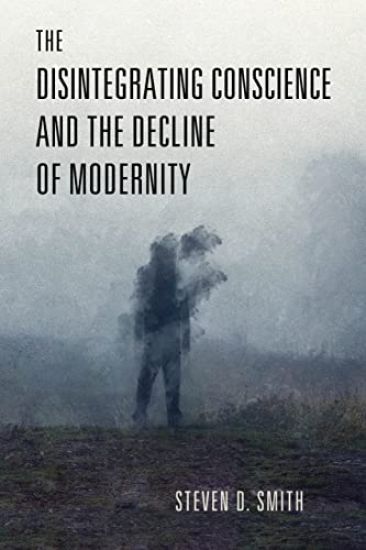
The Disintegrating Conscience and the Decline of Modernity
Steven D. Smith
UNIVERSITY OF NOTRE DAME PRESS
2026
nidottu
This book considers how the modern concept of "conscience" turns the historic commitment on its head, in a way that underlies the decadence of modern society.Steven D. Smith's books are always anticipated with great interest by scholars, jurists, and citizens who see his work on foundational questions surrounding law and religion as shaping the debate in profound ways. Now, in The Disintegrating Conscience and the Decline of Modernity, Smith takes as his starting point Jacques Barzun's provocative assertion that "the modern era" is coming to an end. Smith considers the question of decline by focusing on a single theme—conscience—that has been central to much of what has happened in Western politics, law, and religion over the past half-millennium. Rather than attempting to follow that theme step-by-step through five hundred years, the book adopts an episodic and dramatic approach by focusing on three main figures and particularly portentous episodes: first, Thomas More's execution for his conscientious refusal to take an oath mandated by Henry VIII; second, James Madison's contribution to Virginia law in removing the proposed requirement of religious toleration in favor of freedom of conscience; and, third, William Brennan's pledge to separate his religious faith from his performance as a Supreme Court justice. These three episodes, Smith suggests, reflect in microcosm decisive turning points at which Western civilization changed from what it had been in premodern times to what it is today. A commitment to conscience, Smith argues, has been a central and in some ways defining feature of modern Western civilization, and yet in a crucial sense conscience in the time of Brennan and today has come to mean almost the opposite of what it meant to Thomas More. By scrutinizing these men and episodes, the book seeks to illuminate subtle but transformative changes in the commitment to conscience—changes that helped to bring Thomas More's world to an end and that may also be contributing to the disintegration of (per Barzun) "the modern era."
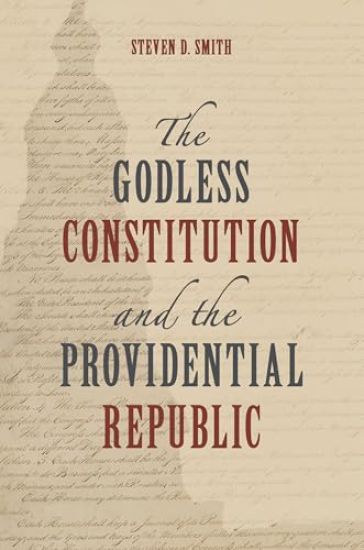
The Godless Constitution and the Providential Republic
Steven D. Smith
William B. Eerdmans Publishing Company
2025
sidottu
Were America's founding ideals religious or secular? In this timely and well-researched book, law scholar Steven D. Smith makes the case that the United States of America was founded on a providentialist view--the belief that God actively directs the destinies not only of individuals but of nations. Smith shows how this providentialist perspective was pervasively, officially, and unapologetically expressed in essential public documents like the Declaration of Independence and by presidents from Washington, Adams, Jefferson, Madison, and Lincoln to modern presidents including FDR, Eisenhower, Kennedy, and Obama. A crucial point in Smith's argument is that the Constitution neither prescribed nor forbade this providentialist understanding; it was like an agnostic parent who allowed their children the freedom to follow a religious or nonreligious path, as they wished. In modern times, by contrast, the courts and the legal and academic communities have frequently misinterpreted the Constitution as mandating governance that is completely secular. In so doing, they have effectively banished the providentialist perspective from American public philosophy. The consequences of this banishment have been deeply disruptive, contributing to dangerous polarization and lack of trust in government and other public institutions. Smith's compelling study is an essential resource for making sense of current debates about the place of religion in American public life. Readers will gain a deeper understanding of the extent to which secular neutrality is not mandated by the Constitution but rather is a modern invention with little grounding in the nation's history.
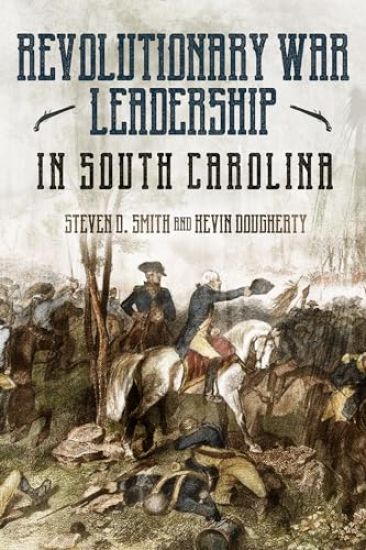
The Revolutionary War in South Carolina
Steven D Smith; Kevin Dougherty
Casemate Publishers
2025
sidottu
An examination of the panorama of individuals whose leadership helped make the Patriot cause successful in South Carolina. Historians Steven D. Smith and Kevin Dougherty look beyond the towering figure of Francis Marion to profile significant personalities and actions both on and off the battlefield in this innovative approach to the Revolutionary War in South Carolina. The book profiles a range of individuals: Henry Laurens was the President of the Council of Safety. Richard Furman was the pastor of a church; John Rutledge was the Governor of South Carolina; and Rebecca Motte was a plantation owner. William Moultrie and Andrew Pickens—perhaps most familiar as soldiers—are discussed in their noncombatant roles: Moultrie as a prisoner of war and Pickens as a postwar civic leader. Military leaders William Jasper, Thomas Sumter, Francis Marion, Isaac Shelby, Nathanael Greene, Daniel Morgan, Tadeusz Kosciuszko, Hezekiah Maham, and Henry Lee round out the selection of profiles. The profiles are preceded by a historical overview of the Southern Campaign and the Revolutionary War in South Carolina, in order to provide the reader the background necessary to understand the leadership profiles in context. The book’s conclusion highlights that the Revolutionary War was a landmark in the “democratization” of war and that the choices made by these leaders and their followers reflect the same element of choice inherent in the democratic process.

Trail Guide to Mount Washington and the Presidential Range: An Abridgment of Amc's White Mountain Guide, Featuring the Full Presidential Range and Gre
Ken Macgray; Steven D. Smith
Appalachian Mountain Club
2024
nidottu
The Appalachian Mountain Club's White Mountain Guide is renowned for its comprehensive hiking trail coverage of New Hampshire's White Mountain National Forest region. Locals and visitors alike have relied on this guide for over 100 years. But, over those years, the guide has grown as more and more trails and trail systems have been developed. This abridged version of the guide includes the first two (and most popular) sections, covering the entire Presidential Range. With only the essential safety, camping, and trail information, this guide is a reader's shortcut to great Presidential hiking.
A Principled Constitution?
Steven D. Smith; Larry Alexander; James Allan; Maimon Schwarzschild
BLOOMSBURY PUBLISHING PLC
2024
nidottu
Is the United States Constitution the embodiment of certain principles? The four authors of this book for a variety of reasons, and with somewhat different emphases, believe the answer is no. Those who authored the Constitution no doubt all believed in liberty, equality, and, with caveats, republican self-government values, or if you will, principles. But they had different conceptions of those principles and what those principles entailed for constituting a government. Although the Constitution they created reflected, in some sense, their principles, the Constitution itself was a specific list of do’s and don’ts that its creators hoped would gain the allegiance of the newly independent and sovereign states. And, for somewhat different reasons, the authors of this book believe that was a good thing.
The Disintegrating Conscience and the Decline of Modernity
Steven D. Smith
UNIVERSITY OF NOTRE DAME PRESS
2023
sidottu
This book considers how the modern concept of "conscience" turns the historic commitment on its head, in a way that underlies the decadence of modern society. Steven D. Smith's books are always anticipated with great interest by scholars, jurists, and citizens who see his work on foundational questions surrounding law and religion as shaping the debate in profound ways. Now, in The Disintegrating Conscience and the Decline of Modernity, Smith takes as his starting point Jacques Barzun's provocative assertion that "the modern era" is coming to an end. Smith considers the question of decline by focusing on a single theme—conscience—that has been central to much of what has happened in Western politics, law, and religion over the past half-millennium. Rather than attempting to follow that theme step-by-step through five hundred years, the book adopts an episodic and dramatic approach by focusing on three main figures and particularly portentous episodes: first, Thomas More's execution for his conscientious refusal to take an oath mandated by Henry VIII; second, James Madison's contribution to Virginia law in removing the proposed requirement of religious toleration in favor of freedom of conscience; and, third, William Brennan's pledge to separate his religious faith from his performance as a Supreme Court justice. These three episodes, Smith suggests, reflect in microcosm decisive turning points at which Western civilization changed from what it had been in premodern times to what it is today. A commitment to conscience, Smith argues, has been a central and in some ways defining feature of modern Western civilization, and yet in a crucial sense conscience in the time of Brennan and today has come to mean almost the opposite of what it meant to Thomas More. By scrutinizing these men and episodes, the book seeks to illuminate subtle but transformative changes in the commitment to conscience—changes that helped to bring Thomas More's world to an end and that may also be contributing to the disintegration of (per Barzun) "the modern era."
A Principled Constitution?
Steven D. Smith; Larry Alexander; James Allan; Maimon Schwarzschild
BLOOMSBURY PUBLISHING PLC
2022
sidottu
Is the United States Constitution the embodiment of certain principles? The four authors of this book for a variety of reasons, and with somewhat different emphases, believe the answer is no. Those who authored the Constitution no doubt all believed in liberty, equality, and, with caveats, republican self-government values, or if you will, principles. But they had different conceptions of those principles and what those principles entailed for constituting a government. Although the Constitution they created reflected, in some sense, their principles, the Constitution itself was a specific list of do’s and don’ts that its creators hoped would gain the allegiance of the newly independent and sovereign states. And, for somewhat different reasons, the authors of this book believe that was a good thing.
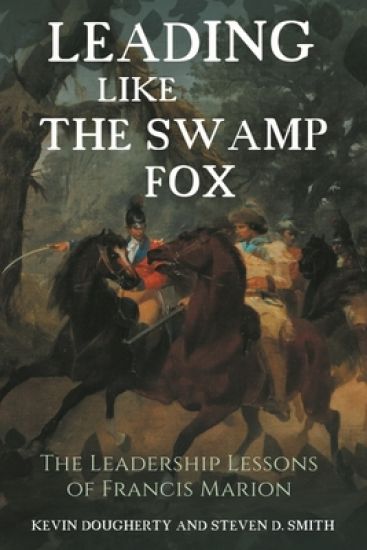
Francis Marion is certainly the stuff of which legends are made. His nickname “The Swamp Fox,” bestowed upon him by one of his fiercest enemies, captures his wily approach to battle. The embellishment of his exploits in Parson Weems’ early biography make separation of fact from fiction difficult, but certainly represents the awe, loyalty, and attraction he produced in those around him. His legacy is enshrined in the fact that more places in the United States have been named after him than any other soldier of the American Revolution, with the sole exception of George Washington. Even today’s U.S. Army Rangers include Marion as one of their formative heroes. Surely much about leadership can be learned from such an intriguing personality. Leading like the Swamp Fox: The Leadership Lessons of Francis Marion unlocks those lessons. Divided into three parts, the book first presents the historical background and context necessary to appreciate Marion’s situation. The main body of the book then examines Marion’s leadership across eight categories, with a number of vignettes demonstrating Marion’s competency. The summary then captures some conclusions about how leadership impacted the American Revolution in the South Carolina Lowcountry. An appendix provides some information about how the reader might explore those physical reminders of Marion and his exploits that exist today. Readers interested in history or leadership, or both, will all find something for them in Leading like the Swamp Fox.
Fictions, Lies, and the Authority of Law
Steven D. Smith
University of Notre Dame Press
2021
sidottu
Fictions, Lies, and the Authority of Law discusses legal, political, and cultural difficulties that arise from the crisis of authority in the modern world. Is there any connection linking some of the maladies of modern life—"cancel culture," the climate of mendacity in public and academic life, fierce conflicts over the Constitution, disputes over presidential authority? Fictions, Lies, and the Authority of Law argues that these diverse problems are all a consequence of what Hannah Arendt described as the disappearance of authority in the modern world. In this perceptive study, Steven D. Smith offers a diagnosis explaining how authority today is based in pervasive fictions and how this situation can amount to, as Arendt put it, "the loss of the groundwork of the world." Fictions, Lies, and the Authority of Law considers a variety of problems posed by the paradoxical ubiquity and absence of authority in the modern world. Some of these problems are jurisprudential or philosophical in character; others are more practical and lawyerly—problems of presidential powers and statutory and constitutional interpretation; still others might be called existential. Smith's use of fictions as his purchase for thinking about authority has the potential to bring together the descriptive and the normative and to think about authority as a useful hypothesis that helps us to make sense of the empirical world. This strikingly original book shows that theoretical issues of authority have important practical implications for the kinds of everyday issues confronted by judges, lawyers, and other members of society. The book is aimed at scholars and students of law, political science, and philosophy, but many of the topics it addresses will be of interest to politically engaged citizens.
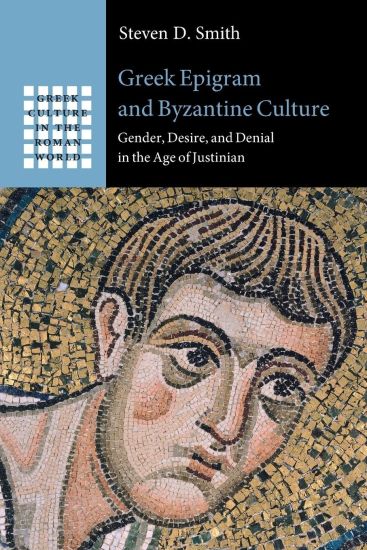
Sexy, scintillating, and sometimes scandalous, Greek epigrams from the age of the Emperor Justinian commemorate the survival of the sensual in a world transformed by Christianity. Around 567 CE, the poet and historian Agathias of Myrina published his Cycle, an anthology of epigrams by contemporary poets who wrote about what mattered to elite men in sixth-century Constantinople: harlots and dancing girls, chariot races in the hippodrome, and the luxuries of the Roman bath. But amid this banquet of worldly delights, ascetic Christianity - pervasive in early Byzantine thought - made sensual pleasure both more complicated and more compelling. In this book, Steven D. Smith explores how this miniature classical genre gave expression to lurid fantasies of domination and submission, constraint and release, and the relationship between masculine and feminine. The volume will appeal to literary scholars and historians interested in Greek poetry, Late Antiquity, Byzantine studies, Early Christianity, gender, and sexuality.
Pagans and Christians in the City
Steven D Smith; Robert P George
William B Eerdmans Publishing Co
2021
pokkari

Loyalist Colonel Robert Gray] described South Carolina as "a piece of patch work, the inhabitants of every settlement, when united in sentiment being in arms for the side they liked best and making continual inroads into one another's settlements." One of those pieces of patch work, the people living on and surrounding Snow's Island, South Carolina, were "united in sentiment" against the British crown. This community of partisans had joined the rebellion as early as 1775 and had stubbornly refused to surrender, even when Charleston fell in 1780. They had supplied food, forage, and blood to the rebellion, and under the leadership of General Francis Marion, had become an obstacle to British control of the southern colonies. This book is their story.Co-Recipient of the 2022 Harry M. Ward Book Prize presented by the American Revolution Round Table of Richmond.

Sexy, scintillating, and sometimes scandalous, Greek epigrams from the age of the Emperor Justinian commemorate the survival of the sensual in a world transformed by Christianity. Around 567 CE, the poet and historian Agathias of Myrina published his Cycle, an anthology of epigrams by contemporary poets who wrote about what mattered to elite men in sixth-century Constantinople: harlots and dancing girls, chariot races in the hippodrome, and the luxuries of the Roman bath. But amid this banquet of worldly delights, ascetic Christianity - pervasive in early Byzantine thought - made sensual pleasure both more complicated and more compelling. In this book, Steven D. Smith explores how this miniature classical genre gave expression to lurid fantasies of domination and submission, constraint and release, and the relationship between masculine and feminine. The volume will appeal to literary scholars and historians interested in Greek poetry, Late Antiquity, Byzantine studies, Early Christianity, gender, and sexuality.
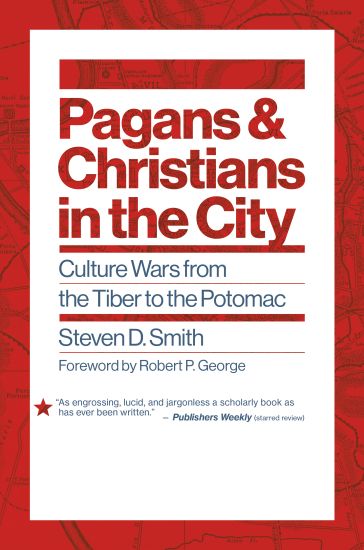
Traditionalist Christians who oppose same-sex marriage and other cultural developments in the US wonder why they are being forced to bracket their beliefs in order to participate in public life. This situation is not new, says Steven D. Smith: Christians two thousand years ago in the Roman Empire faced similar challenges and questions.Starting with T. S. Eliot's claim that the future of the West would be determined by a contest between Christianity and "modern paganism," Smith argues in Pagans and Christians in the City that today's culture wars can be seen as a contemporary reprise of the basic antagonism that pitted pagans against Christians in the late Roman Empire. He looks at that historical conflict and explores how the same competing orientations continue to clash today. Readers on both sides of the culture wars, Smith shows, have much to learn from seeing how patterns from ancient history are reemerging in today's most controversial issues.
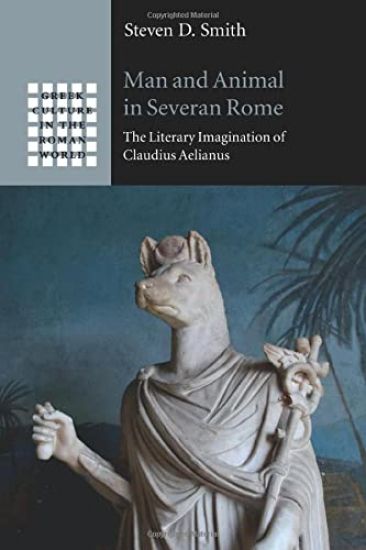
The Roman sophist Claudius Aelianus, born in Praeneste in the late second century CE, spent his career cultivating a Greek literary persona. Aelian was a highly regarded writer during his own lifetime, and his literary compilations would be influential for a thousand years and more in the Roman world. This book argues that the De natura animalium, a miscellaneous treasury of animal lore and Aelian's greatest work, is a sophisticated literary critique of Severan Rome. Aelian's fascination with animals reflects the cultural issues of his day: philosophy, religion, the exoticism of Egypt and India, sex, gender, and imperial politics. This study also considers how Aelian's interests in the De natura animalium are echoed in his other works, the Rustic Letters and the Varia Historia. Himself a prominent figure of mainstream Roman Hellenism, Aelian refined his literary aesthetic to produce a reading of nature that is both moral and provocative.
The Roman sophist Claudius Aelianus, born in Praeneste in the late second century CE, spent his career cultivating a Greek literary persona. Aelian was a highly regarded writer during his own lifetime, and his literary compilations would be influential for a thousand years and more in the Roman world. This book argues that the De natura animalium, a miscellaneous treasury of animal lore and Aelian's greatest work, is a sophisticated literary critique of Severan Rome. Aelian's fascination with animals reflects the cultural issues of his day: philosophy, religion, the exoticism of Egypt and India, sex, gender, and imperial politics. This study also considers how Aelian's interests in the De natura animalium are echoed in his other works, the Rustic Letters and the Varia Historia. Himself a prominent figure of mainstream Roman Hellenism, Aelian refined his literary aesthetic to produce a reading of nature that is both moral and provocative.
The Rise and Decline of American Religious Freedom
Steven D. Smith
Harvard University Press
2014
sidottu
Familiar accounts of religious freedom in the United States often tell a story of visionary founders who broke from the centuries-old patterns of Christendom to establish a political arrangement committed to secular and religiously neutral government. These novel commitments were supposedly embodied in the religion clauses of the First Amendment. But this story is largely a fairytale, Steven D. Smith says in this incisive examination of a much-mythologized subject. He makes the case that the American achievement was not a rejection of Christian commitments but a retrieval of classic Christian ideals of freedom of the church and freedom of conscience.Smith maintains that the distinctive American contribution to religious freedom was not in the First Amendment, which was intended merely to preserve the political status quo in matters of religion. What was important was the commitment to open contestation between secularist and providentialist understandings of the nation which evolved over the nineteenth century. In the twentieth century, far from vindicating constitutional principles, as conventional wisdom suggests, the Supreme Court imposed secular neutrality, which effectively repudiated this commitment to open contestation. Rather than upholding what was distinctively American and constitutional, these decisions subverted it. The negative consequences are visible today in the incoherence of religion clause jurisprudence and the intense culture wars in American politics.
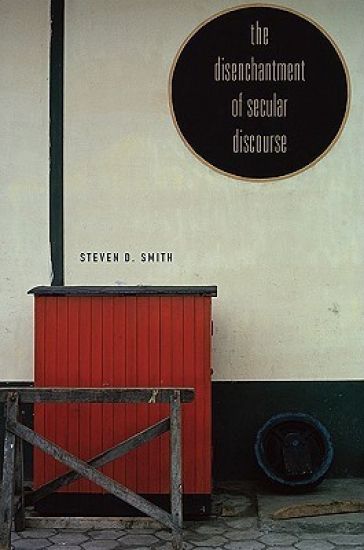
Prominent observers complain that public discourse in America is shallow and unedifying. This debased condition is often attributed to, among other things, the resurgence of religion in public life. Steven Smith argues that this diagnosis has the matter backwards: it is not primarily religion but rather the strictures of secular rationalism that have drained our modern discourse of force and authenticity.Thus, Rawlsian “public reason” filters appeals to religion or other “comprehensive doctrines” out of public deliberation. But these restrictions have the effect of excluding our deepest normative commitments, virtually assuring that the discourse will be shallow. Furthermore, because we cannot defend our normative positions without resorting to convictions that secular discourse deems inadmissible, we are frequently forced to smuggle in those convictions under the guise of benign notions such as freedom or equality.Smith suggests that this sort of smuggling is pervasive in modern secular discourse. He shows this by considering a series of controversial, contemporary issues, including the Supreme Court’s assisted-suicide decisions, the “harm principle,” separation of church and state, and freedom of conscience. He concludes by suggesting that it is possible and desirable to free public discourse of the constraints associated with secularism and “public reason.”