Kirjojen hintavertailu. Mukana 12 390 323 kirjaa ja 12 kauppaa.

Kirjailija

Steven E. Woodworth

Kirjat ja teokset yhdessä paikassa: 21 kirjaa, julkaisuja vuosilta 1990-2025, suosituimpien joukossa Sherman. Vertaile teosten hintoja ja tarkista saatavuus suomalaisista kirjakaupoista.

21 kirjaa

Kirjojen julkaisuhaarukka 1990-2025.

Sherman

Sherman

Steven E. Woodworth; Wesley K. Clark

Palgrave Macmillan
2010
nidottu
Sherman is not only one of the most important generals in the American Civil War, but also one of the most famous commanders in the military annals of the western world. He has become an almost mythical character in popular memory, the embodiment of grim-visaged, implacable war. Legend has him burning a sixty-mile-wide swath of desolation across the South, and southerners still confidently assert that their ancestors were burned out by Sherman and his vandal hordes. Sherman famously said, "War is cruelty, and you cannot refine it," and yet, even at his most destructive, he maintained strict limits on the degree of damage his soldiers could inflict. Sherman's wartime career makes a fascinating study of the degree to which the severity of war can be channeled, directed, and limited - especially as it relates to the current war in Iraq.
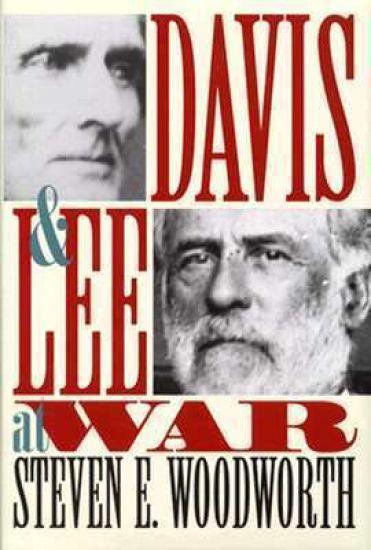
Davis and Lee at War

Davis and Lee at War

Steven E. Woodworth

UNIVERSITY PRESS OF KANSAS
2025
nidottu
Winner: Fletcher Pratt AwardSteven Woodworth’s previous book, the critically acclaimed Jefferson Davis and His Generals, won the prestigious Fletcher Pratt Award and was a main selection of the History Book Club. In that book he showed how the failures of Davis and his military leaders in the west paved the way for Confederate defeat. In Davis and Lee at War, he concludes his study of Davis as rebel commander-in-chief and shows how the lack of a unified purpose and strategy in the east sealed the Confederacy’s fate.Woodworth argues that Davis and Robert E. Lee, the South’s greatest military leader, had sharply conflicting views over the proper conduct of the war. Davis was convinced that the South should fight a defensive war, to simply outlast the North’s political and popular support for the war. By contrast, Lee and the other eastern generals—notably P.G.T. Beauregard, Gustavus Smith, and Stonewall Jackson—were eager for the offensive. They were convinced that only quick and decisive battlefield victories would prevent the North from eventually defeating them with its overwhelming advantage in men and materials.Davis and Lee, Woodworth shows, shared a mutual respect for each other for most of the war. But it was respect mixed with a stubborn resistance to the other’s influence. The result of this tense tug-of-war was Davis’s misguided pursuit of a middle ground that gave neither strategy its best chance for success. The war finally ground to a bloody conclusion with Davis as indecisive as ever and virtually blind to how little confidence his generals had in his leadership.Drawing extensively upon the papers of Jefferson Davis and the works of leading Civil War historians, Woodworth places the eastern military campaigns in an entirely new light and expands our understanding of Davis as leader of the Confederacy.
Shiloh

Shiloh

Steven E. Woodworth

Praeger Publishers Inc
2013
sidottu
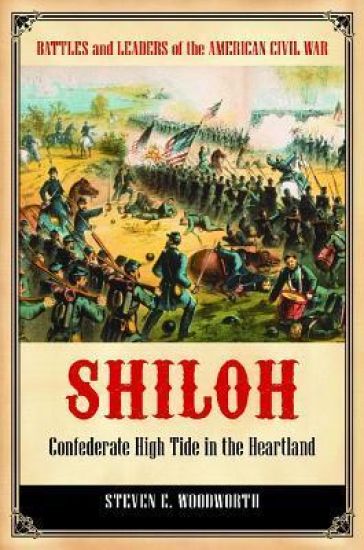
This book analyzes the pivotal battle of Shiloh in 1862, the bloodiest fought by Americans up to that time, in which Albert Sidney Johnston's desperate effort to reverse Confederate fortunes in the heartland fell just short of decisive victory.The Battle of Shiloh was one of the most important battles of the Civil War, and it offers a particularly rich opportunity to study the ways in which different leaders reacted to unexpected challenges. Shiloh: Confederate High Tide in the Heartland provides a fascinating and fast-paced narrative history of the key campaign and battle in the Civil War's decisive western theater—the heartland of the Confederacy west of the Appalachians.The book emphasizes the significance of contingency in evaluating the decisions of the Union and Confederate commanders, as well as the tenacity displayed by both sides, which contributed to the tremendous bloodshed of the conflict and revealed the depth of Union determination that would ultimately doom the Confederacy. Intended for Civil War enthusiasts as well as scholars of American military history, this work reveals the complex challenges and decisions of leadership and documents how the Confederacy was never as close to scoring a truly decisive victory as its forces were on the first day of the Battle of Shiloh.
This Great Struggle

This Great Struggle

Steven E. Woodworth

Rowman Littlefield
2012
nidottu
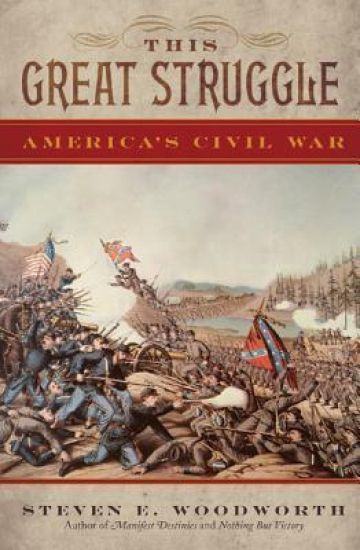
Referring to the war that was raging across parts of the American landscape, Abraham Lincoln told Congress in 1862, "We shall nobly save, or meanly lose, the last best hope on earth." Lincoln recognized what was at stake in the American Civil War: not only freedom for 3.5 million slaves but also survival of self-government in the last place on earth where it could have the opportunity of developing freely. Noted historian Steven E. Woodworth tells the story of what many regard as the defining event in United States history. While emphasizing the importance of action in the region between the Appalachians and the Mississippi River in determining the outcome of the war, Woodworth argues that the Civil War had a distinct purpose that was understood by most of its participants: it was primarily a conflict over the issue of slavery. The soldiers who filled the ranks of the armies on both sides knew what they were fighting for. The outcome of the war—from its beginnings at Fort Sumter to the Confederate surrender four years later—was the result of the decisions that those millions of Americans made. Written in clear and compelling fashion, This Great Struggle is their story—and ours.
Manifest Destinies

Manifest Destinies

Steven E. Woodworth

Random House Inc
2011
pokkari
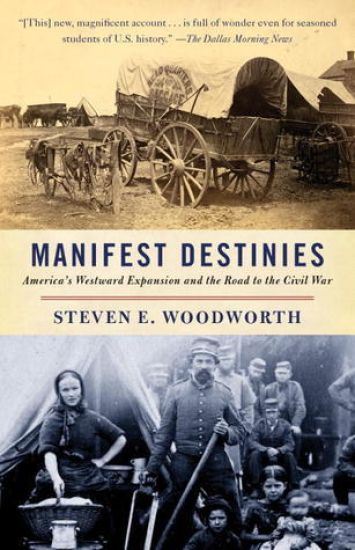
A sweeping history of the 1840s, Manifest Destinies captures the enormous sense of possibility that inspired America's growth and shows how the acquisition of western territories forced the nation to come to grips with the deep fault line that would bring war in the near future. Steven E. Woodworth gives us a portrait of America at its most vibrant and expansive. It was a decade in which the nation significantly enlarged its boundaries, taking Texas, New Mexico, California, and the Pacific Northwest; William Henry Harrison ran the first modern populist campaign, focusing on entertaining voters rather than on discussing issues; prospectors headed west to search for gold; Joseph Smith founded a new religion; railroads and telegraph lines connected the country's disparate populations as never before. When the 1840s dawned, Americans were feeling optimistic about the future: the population was growing, economic conditions were improving, and peace had reigned for nearly thirty years. A hopeful nation looked to the West, where vast areas of unsettled land seemed to promise prosperity to anyone resourceful enough to take advantage. And yet political tensions roiled below the surface; as the country took on new lands, slavery emerged as an irreconcilable source of disagreement between North and South, and secession reared its head for the first time. Rich in detail and full of dramatic events and fascinating characters, Manifest Destinies is an absorbing and highly entertaining account of a crucial decade that forged a young nation's character and destiny.
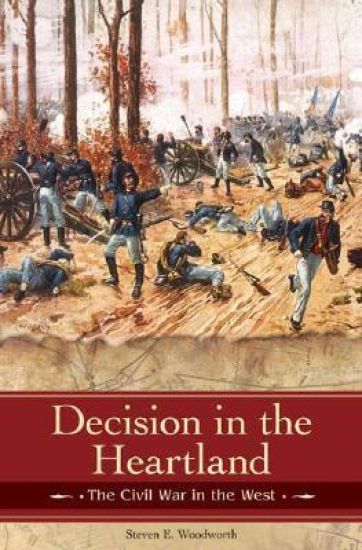
Decision in the Heartland

Decision in the Heartland

Steven E. Woodworth

Bison Books
2011
pokkari
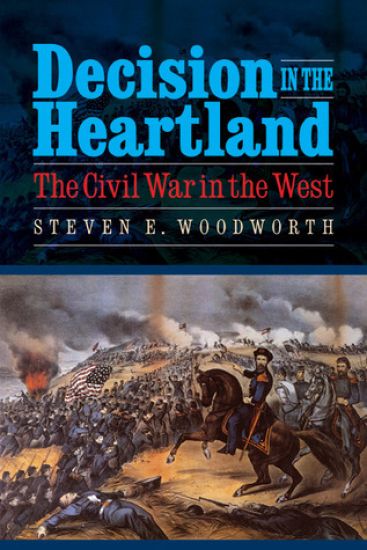
The verdict is in: the Civil War was won in the West, that is, in the nation's heartland, between the Appalachian Mountains and the Mississippi River. Contrary to much popular literature, serious scholars have determined in one careful study after another the pivotal importance of what was, at the time of the Civil War, the western United States. In this fast-paced overview, Steven E. Woodworth presents his case for the decisiveness of that theater. Overwhelming evidence now indicates that western campaigns cost the Confederacy vast territories, the manufacturing center of Nashville, the financial center of New Orleans, communications hubs such as Corinth, Chattanooga, and Atlanta, along with the agricultural produce of the breadbasket of the Confederacy. They sapped the morale of Confederates and buoyed the spirits of Unionists, ultimately sealing the Northern electorate's decision to return Lincoln to the presidency for a second term and to see the war through to final victory. Detailing the "western" clashes (Fort Donelson, Shiloh, Chattanooga, and Atlanta) that proved so significant, Woodworth contends that it was there alone that the Civil War could be—and was—decided.
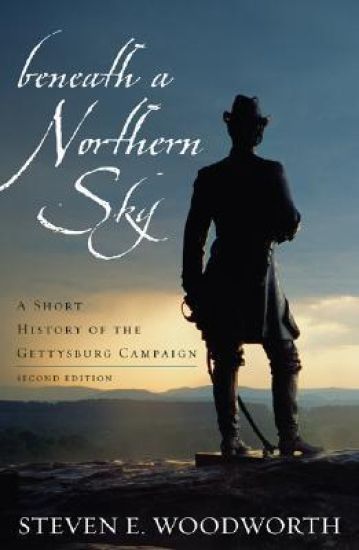
Beneath a Northern Sky

Beneath a Northern Sky

Steven E. Woodworth

Rowman Littlefield Publishers
2008
nidottu
Of all the places and events in this nation's history, Gettysburg may well be the name best known to Americans. Millions flock each year to the little town in south-central Pennsylvania where more than 135 years ago the largest, bloodiest, and most dramatic battle of the Civil War raged across the now-peaceful hills and meadows. The subject of an epic movie and a best-selling work of fiction, the battle continues to fascinate Americans. Indeed, for most Americans, Gettysburg is the Civil War. In Beneath a Northern Sky, eminent Civil War historian Steven E. Woodworth offers a balanced and thorough overview of the entire battle, its drama, and its meaning. From Lee's decision to take his heretofore successful Army of Northern Virginia across the Potomac and into Pennsylvania to the withdrawal of the battle-battered Confederate's back across the river into Virginia, Woodworth paints a vivid picture of this pivotal campaign. In this day-by-day account, he describes the fierce fighting that left 48,000 men dead or wounded at sites that have now become famous: Little Round Top, Cemetery Ridge, Devil's Den. This new book provides a realistic sequence of events surrounding the legendary Pickett's Charge, detailing the Confederate's magnificent display of courage and the Union's stalwart, rock-hard defense. Woodworth describes the strategic and tactical decision making and shows how infighting and disagreements among the leaders on both sides impacted the campaign. He details the mind set and morale of the soldiers, revealing how—surprisingly—Union leaders did not take advantage of their troops' high spirits after their victory to finish off the retreating Confederates. Instead of focusing on only one aspect of the Gettysburg Campaign as most other books do, Beneath a Northern Sky tells the tale of the entire battle in a richly detailed but swiftly moving narrative. This new approach to a defining battle is sure to fascinate Civil War buffs and all those interested in the rich history of the United States.
Decision in the Heartland

Decision in the Heartland

Steven E. Woodworth

Praeger Publishers Inc
2008
sidottu
The verdict is in: the Civil War was won in the West—that is, in the nation's heartland, between the Appalachian Mountains and the Mississippi River. Yet, a person who follows the literature on the war might still think that it was the conflict in Virginia that ultimately decided the outcome. Each year sees the appearance of new books aimed at the popular market that simply assume that it was in the East, often at Gettysburg, that the decisive clashes of the war took place. For decades, serious historians of the Civil War have completed one careful study after another, nearly all tending to indicate the pivotal importance of what people during the war referred to as the West. In this fast paced overview, Woodworth presents his case for the decisiveness of the theater. Overwhelming evidence now indicates that it was battles like Fort Donelson, Shiloh, Chattanooga, and Atlanta that sealed the fate of the Confederacy-not the nearly legendary clashes at Bull Run or Chancellorsville or the mythical high-water mark at Gettysburg. The western campaigns cost the Confederacy vast territories, the manufacturing center of Nashville, the financial center of New Orleans, communications hubs such as Corinth, Chattanooga, and Atlanta, along with the agricultural produce of the breadbasket of the Confederacy. They sapped the morale of Confederates and buoyed the spirits of Unionists, ultimately sealing the northern electorate's decision to return Lincoln to the presidency for a second term and thus to see the war through to final victory. Detailing the Western clashes that proved so significant, Woodworth contends that it was there alone that the Civil War could be—and was—decided.
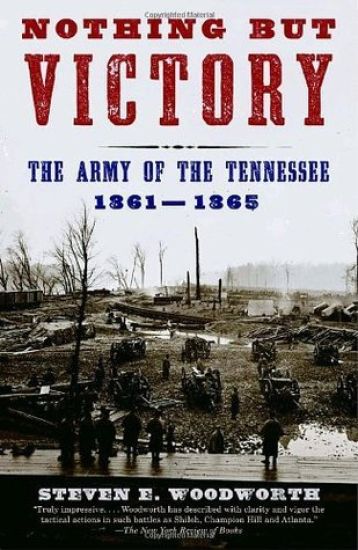
Nothing but Victory

Nothing but Victory

Steven E. Woodworth

Random House USA Inc
2006
pokkari
Composed almost entirely of Midwesterners and molded into a lean, skilled fighting machine by Ulysses S. Grant and William Tecumseh Sherman, the Army of the Tennessee marched directly into the heart of the Confederacy and won major victories at Shiloh and at the rebel strongholds of Vicksburg and Atlanta.Acclaimed historian Steven Woodworth has produced the first full consideration of this remarkable unit that has received less prestige than the famed Army of the Potomac but was responsible for the decisive victories that turned the tide of war toward the Union. The Army of the Tennessee also shaped the fortunes and futures of both Grant and Sherman, liberating them from civilian life and catapulting them onto the national stage as their triumphs grew. A thrilling account of how a cohesive fighting force is forged by the heat of battle and how a confidence born of repeated success could lead soldiers to expect "nothing but victory."
Shiloh

Shiloh

Mark Grimsley; Steven E. Woodworth

Bison Books
2006
pokkari
A comprehensive guide to Shiloh, one of the key battlefields of the Civil War, provides precise directions to all the important locations on the battlefield, along with more than forty detailed maps, vivid descriptions of the battle, and an analysis of the events of the engagement, key personalities involved, and the ultimate ramifications of the conflict. Original.
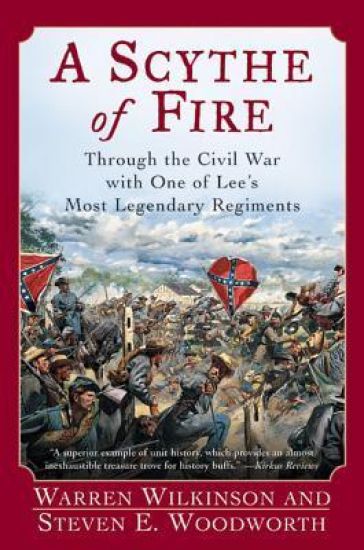
A Scythe of Fire: Through the Civil War with One of Lee's Most Legendary Regiments
The men of the Eighth Georgia Infantry Regiment answered the Confederate call to arms in the spring of 1861. They fought hard in most major battles of the war, including Bull Run and Gettysburg, enduring heartbreaking losses and finally, at Appomattox, witnessing their ultimate defeat. A Scythe of Fire tells the remarkable story of this regiment, which held together through long years of victory, defeat, and despair. The magnificent product of meticulous research, Warren Wilkinson and Steven E. Woodworth's stirring chronicle brings the conflict alive through the eyes of the courageous men who fought and died on the nation's battlefields. Based on personal accounts, diaries, letters, and other primary sources, A Scythe of Fire is the history of the Eighth Georgia as experienced by those who carried its standard into battle: doctors and farmers, landowners and simple folk -- each dedicated to victory, yet proud and unbroken in the face of defeat.
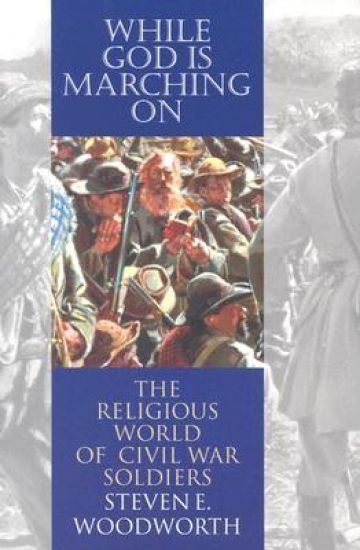
While God is Marching on

While God is Marching on

Steven E. Woodworth

University Press of Kansas
2001
nidottu
They read the same Bible and prayed to the same God, but they faced each other in battle with rage in their hearts. The Civil War not only pitted brother against brother but also Christian against Christian, with soldiers from North and South alike devoutly believing that God was on their side. Steven Woodworth, one of our most prominent and provocative Civil War historians, presents the first detailed study of soldiers' religious beliefs and how they influenced the course of that tragic conflict. He shows how Christian teaching and practice shaped the worldview of soldiers on both sides: how it motivated them for the struggle, how it influenced the way they fought, and how it shaped national life after the war ended.Through the diaries, letters, and reminiscences of common soldiers, Woodworth illuminates religious belief from the home front to the battlefield, where thoughts of death and the afterlife were always close at hand. Woodworth reveals what these men thought about God and what they believed God thought about the war.Wrote one Unionist, "I believe our cause to be the cause of liberty and light . . . the cause of God, and holy and justifiable in His sight, and for this reason, I fear not to die in it if need be." With a familiar echo, his Confederate counterpart declared that "our Cause is Just and God is Just and we shall finally be successful whether I live to see the time or not."Woodworth focuses on mainstream Protestant beliefs and practices shared by the majority of combatants in order to help us better understand soldiers' motivations and to realize what a strong role religion played in American life throughout the conflict. In addition, he provides sharp insights into the relationship between Christianity and both the abolition movement in the North and the institution of slavery in the South.Ultimately, Woodworth shows us how opposing armies could put their trust in the same God while engaging in four years of organized slaughter and destruction. His compelling work provides a rich new perspective on religion in American life and will forever change the way we look at the Civil War.
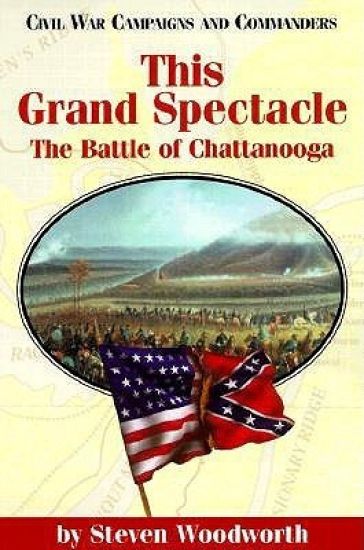
This Grand Spectacle

This Grand Spectacle

Steven E. Woodworth

McWhiney Foundation Press
2000
nidottu
During the summer of 1863, Federal Forces scored major victories at Gettysburg and Vicksburg, turning the tide of war in favor of the Union. In southeastern Tennessee, U.S. troops focused their attention on the river and railroad center of Chattanooga, the gateway to the Confederate heartland. They took the town with little resistance, and complete victory in the region seemed imminent. The Confederate under Braxton Bragg struck back. At Chickamauga, in northern Georgia, veterans of both the Army of Tennessee and the Army of Northern Virginia combined to mangle the Union army, driving the shaken survivors back to their newly captured base at Chattanooga. The victorious Confederates settled into siege lines for the kill. A desperate Abraham Lincoln turned to the hero of Vicksburg, General U.S. Grant, to lead the campaign to save the trapped Union troops. A vivid account of how the union snatched victory from the jaws of disaster. An excellent companion volume to A Deep Steady Thunder: The Battle of Chickamauga by the same author, and General James Longstreet in the West: A Monumental Failure by Judith Hallock, both Civil War Campaigns and Commanders titles. Steven Woodworth holds a Ph.D. from Rice University and is assistant professor of history at Texas Christian University. He is the award winning author of Jefferson Davis and His Generals, Davis and Lee at War, and Six Armies in Tennessee.
Six Armies in Tennessee

Six Armies in Tennessee

Steven E. Woodworth

Bison Books
1999
pokkari
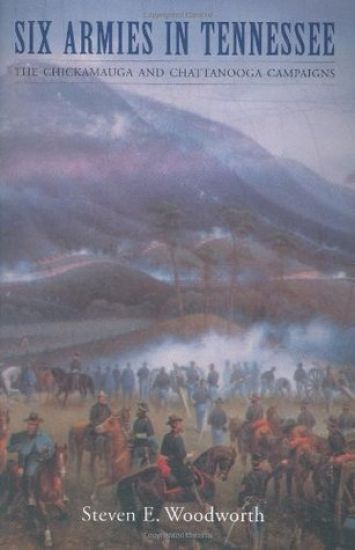
When Vicksburg fell to Union forces under General Grant in July 1863, the balance turned against the Confederacy in the trans-Appalachian theater. The Federal success along the river opened the way for advances into central and eastern Tennessee, which culminated in the bloody battle of Chickamauga and then a struggle for Chattanooga. Chickamauga is usually counted as a Confederate victory, albeit a costly one. That battle-indeed the entire campaign-is marked by muddle and blunders occasionally relieved by strokes of brilliant generalship and high courage. The campaign ended significant Confederate presence in Tennessee and left the Union poised to advance upon Atlanta and the Confederacy on the brink of defeat in the western theater.
Civil War Generals in Defeat

Civil War Generals in Defeat

Steven E. Woodworth

University Press of Kansas
1999
sidottu
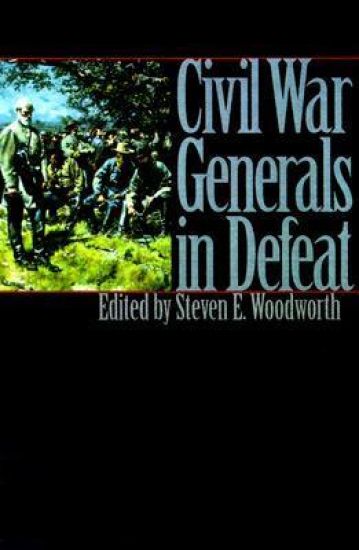
By looking closely at Civil War generals who have borne the stigma of failure, this study rejects the view that significant defeats were due simply to poor generalship. The authors examine the reasons these men suffered defeat, whether flaws of character, or circumstances beyond their control.
Chickamauga

Chickamauga

Steven E. Woodworth

Bison Books
1999
pokkari
The hard-fought and dramatic battles of Chickamauga (September 19–20, 1863) and Chattanooga (November 23–25, 1863) changed the course of the Civil War. These battles sounded the death knell of the Confederacy and put Ulysses S. Grant on the road to final victory. For the first time in one convenient guide, Steven E. Woodworth provides an overview of the battles and an on-site tour to help both serious students and casual visitors get the most out of a visit to Chickamauga and Chattanooga. The guide emphasizes how the opposing armies used terrain and how that terrain shaped the course of each battle. Easy-to-follow directions to specific locations enable you to view the field from the historic perspectives of the combatants. Whether used alone or as a supplement to a tour, this guide will enhance your visit. Clearly written and illustrated with maps and photographs, it is an invaluable tool for both knowledgeable Civil War enthusiasts and first-time visitors to Chickamauga and Chattanooga.
A Deep Steady Thunder

A Deep Steady Thunder

Steven E. Woodworth; Grady McWhiney

McWhiney Foundation Press
1998
nidottu
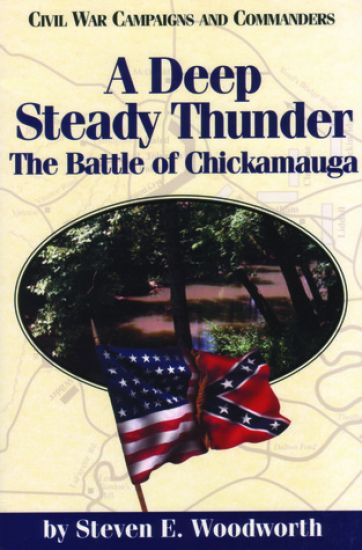
In September 1863, Union Gen. William S. Rosecrans drives into Georgia flanking Confederate Gen. Braxton Bragg out of Chattanooga. Bragg, heavily reinforced, turns on Rosecrans and nearly traps him before he can fall back. The two great armies finally meet at Chickamauga. Through woods and small clearings, a confused but vicious battle rages as each army gropes and grapples at the other trying to find the enemy's flanks. At nightfall, Rosecrans holds his ground and continues to slide his army northward to Chattanooga. The following morning, however, Bragg launches an attack that catches Rosecrans in the midst of a clumsy readjustment of his lines. Half the Union Army is crushed and sent streaming back to Chattanooga. The other half, led by the redoubtable George H. Thomas, stands firm, weathers furious day-long assaults, and salvages honor and survival for the beaten Union Army. A brief, fast-moving, colorful account of one of the biggest and bloodiest battles of the Civil War by a widely published historian.
The American Civil War

The American Civil War

Steven E. Woodworth

Greenwood Press
1996
sidottu
The single most important volume for anyone interested in the Civil War to own and consult. (From the foreword by James M. McPherson) The first guide to Civil War literature to appear in nearly 30 years, this book provides the most comprehensive, up-to-date, and informative survey and analysis of the vast body of Civil War literature. More than 40 essays, each by a specialist in a particular subfield of Civil War history, offer unmatched thoroughness and discerning assessments of each work's value. The essays cover every aspect of the war from strategy, tactics, and battles to logistics, intelligence, supply, and prisoner-of-war camps, from generals and admirals to the men in the ranks, from the Atlantic to the Far West, from fighting fronts to the home front. Some sections cover civilian leaders, the economy, and foreign policy, while others deal with the causes of war and aspects of Reconstruction, including the African-American experience during and after the war. Breadth of topics is matched by breadth of genres covered. Essays discuss surveys of the war, general reference works, published and unpublished papers, diaries and letters, as well as the vast body of monographic literature, including books, dissertations, and articles. Genealogical sources, historical fiction, and video and audio recordings also receive attention. Students of the American Civil War will find this work an indispensable gateway and guide to the enormous body of information on America's pivotal experience.
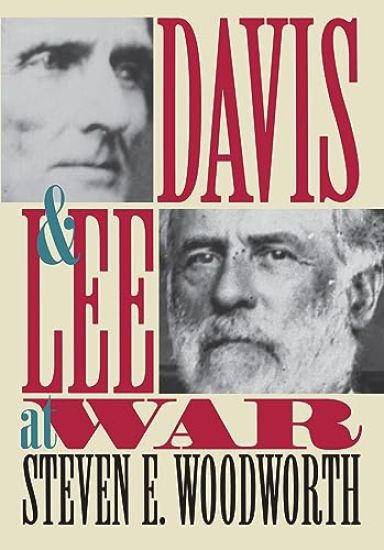
Davis and Lee at War

Davis and Lee at War

Steven E. Woodworth

University Press of Kansas
1995
sidottu
Steven Woodworth's previous book, the critically acclaimed Jefferson Davis and His Generals, won the prestigious Fletcher Pratt Award and was a main selection of the History Book Club. In that book he showed how the failures of Davis and his military leaders in the west paved the way for Confederate defeat. In Davis and Lee at War, he concludes his study of Davis as rebel commander-in-chief and shows how the lack of a unified purpose and strategy in the east sealed the Confederacy's fate.Woodworth argues that Davis and Robert E. Lee, the South's greatest military leader, had sharply conflicting views over the proper conduct of the war. Davis was convinced that the South should fight a defensive war, to simply outlast the North's political and popular support for the war. By contrast, Lee and the other eastern generals-notably P.G.T. Beauregard, Gustavus Smith, and Stonewall Jackson-were eager for the offensive. They were convinced that only quick and decisive battlefield victories would prevent the North from eventually defeating them with its overwhelming advantage in men and materials.Davis and Lee, Woodworth shows, shared a mutual respect for each other for most of the war. But it was respect mixed with a stubborn resistance to the other's influence. The result of this tense tug-of-war was Davis's misguided pursuit of a middle ground that gave neither strategy its best chance for success. The war finally ground to a bloody conclusion with Davis as indecisive as ever and virtually blind to how little confidence his generals had in his leadership.Drawing extensively upon the papers of Jefferson Davis and the works of leading Civil War historians, Woodworth places the eastern military campaigns in an entirely new light and expands our understanding of Davis as leader of the Confederacy.