Kirjojen hintavertailu. Mukana 12 105 357 kirjaa ja 12 kauppaa.

Kirjailija

Steven French

Kirjat ja teokset yhdessä paikassa: 13 kirjaa, julkaisuja vuosilta 2003-2023, suosituimpien joukossa The Structure of the World. Vertaile teosten hintoja ja tarkista saatavuus suomalaisista kirjakaupoista.

13 kirjaa

Kirjojen julkaisuhaarukka 2003-2023.

A Phenomenological Approach to Quantum Mechanics

A Phenomenological Approach to Quantum Mechanics

Steven French

Oxford University Press
2023
sidottu
Steven French suggests a radical new approach to the understanding of quantum physics, derived from Husserl's phenomenological philosophy. In 1939 two physicists, Fritz London and Edmund Bauer, published an account of measurement in quantum mechanics. Widely cited, their 'little book' featured centrally in an important debate over the role of consciousness in that process. However, it has been fundamentally misunderstood, both in that debate and beyond. Steven French argues that London, in particular, approached the measurement process from the perspective of Husserlian phenomenology, which he had studied as a student and which he retained an interest in throughout his career. This casts his work with Bauer in an entirely novel light and suggests a radical alternative understanding of quantum mechanics in which consciousness still plays a role but one that is fundamentally different than previously conceived. Most interpretations of the theory approach it on the basis of the so-called 'analytic' tradition in philosophy. However, there has recently been a surge of interest in 'continental' approaches and this book offers a significant new contribution to such developments. Intertwining history and philosophy, it presents London's background in physics and phenomenology, together with an outline of the latter as developed by Husserl, Gurwitsch, Merleau-Ponty, and others, as well as a detailed analysis of the work on measurement with Bauer. The book concludes by comparing the London and Bauer understanding with that afforded by Fuch's QBism, Everett's 'Many Worlds' interpretation, and Rovelli's Relational Quantum Mechanics. It is hoped that this exploratory work will open up new avenues of thought with regard to one of our most fundamental physical theories.
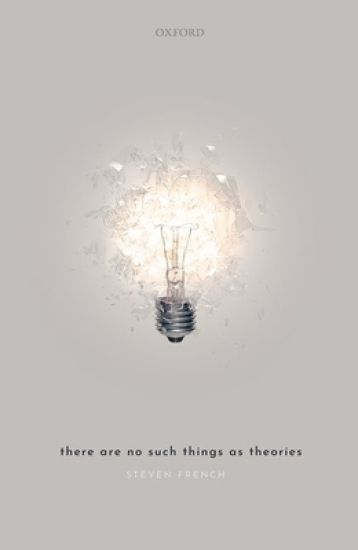
There Are No Such Things As Theories

There Are No Such Things As Theories

Steven French

Oxford University Press
2020
sidottu
There Are No Such Things as Theories considers the fundamental question: what is a scientific theory? It presents a range of options - from theories are sets of propositions, to theories are families of models, abstract artefacts, or fictions - and highlights the various problems they all face. In so doing it draws multiple comparisons between theories and artworks: on the one hand, theories are like certain kinds of paintings with regard to their representational capacity; on the other, they are like musical works in that they can be multiply presented. An alternative answer to the question is then offered, drawing on the metaphysics of musical works: there are no such things as theories. Nevertheless, we can still talk about them, since that talk is made true by the various practices that scientists engage in. The implications of this form of eliminativism for the realism debate is then discussed and it is concluded that this may offer a more flexible framework in which we can understand both the history and the philosophy of science in general.
Applying Mathematics

Applying Mathematics

Otávio Bueno; Steven French

Oxford University Press
2018
sidottu
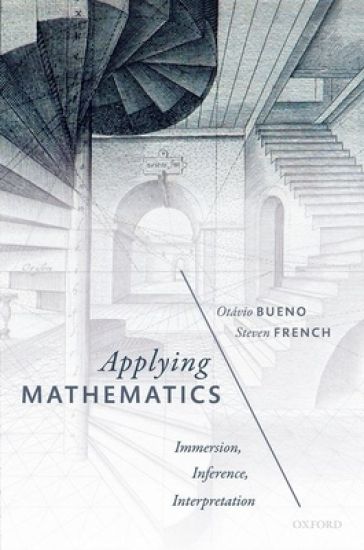
How is that when scientists need some piece of mathematics through which to frame their theory, it is there to hand? What has been called 'the unreasonable effectiveness of mathematics' sets a challenge for philosophers. Some have responded to that challenge by arguing that mathematics is essentially anthropocentric in character, whereas others have pointed to the range of structures that mathematics offers. Otávio Bueno and Steven French offer a middle way, which focuses on the moves that have to be made in both the mathematics and the relevant physics in order to bring the two into appropriate relation. This relation can be captured via the inferential conception of the applicability of mathematics, which is formulated in terms of immersion, inference, and interpretation. In particular, the roles of idealisations and of surplus structure in science and mathematics respectively are brought to the fore and captured via an approach to models and theories that emphasize the partiality of the available information: the partial structures approach. The discussion as a whole is grounded in a number of case studies drawn from the history of quantum physics, and extended to contest recent claims that the explanatory role of certain mathematical structures in scientific practice supports a realist attitude towards them. The overall conclusion is that the effectiveness of mathematics does not seem unreasonable at all once close attention is paid to how it is actually applied in practice.
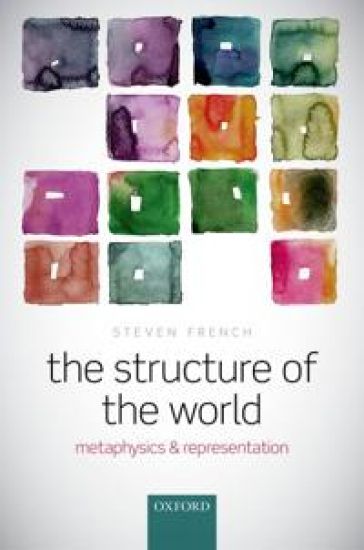
The Structure of the World

The Structure of the World

Steven French

Oxford University Press
2016
nidottu
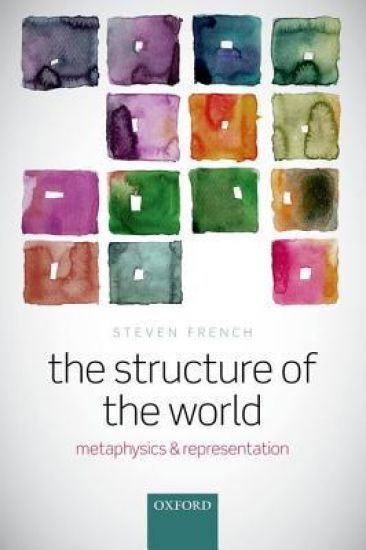
In The Structure of the World, Steven French articulates and defends the bold claim that there are no objects. At the most fundamental level, modern physics presents us with a world of structures and making sense of that view is the central aim of the increasingly widespread position known as structural realism. Drawing on contemporary work in metaphysics and philosophy of science, as well as the 'forgotten' history of structural realism itself, French attempts to further ground and develop this position. He argues that structural realism offers the best way of balancing our need to accommodate the results of modern science with our desire to arrive at an appropriately informed understanding of the world that science presents to us. Covering not only the realism-antirealism debate, the nature of representation, and the relationship between metaphysics and science, The Structure of the World defends a form of eliminativism about objects that sets laws and symmetry principles at the heart of ontology. In place of a world of microscopic objects banging into one another and governed by the laws of physics, it offers a world of laws and symmetries, on which determinate physical properties are dependent. In presenting this account, French also tackles the distinction between mathematical and physical structures, the nature of laws, and causality in the context of modern physics, and he concludes by exploring the extent to which structural realism can be extended into chemistry and biology.
Philosophy of Science: Key Concepts

Philosophy of Science: Key Concepts

Steven French

Bloomsbury Academic
2016
sidottu
Science has made a huge impact on human society over hundred years, but how does it work? How do scientists do the things they do? How do they come up with the theories? How do they test them? How do they use these theories to explain phenomena? How do they draw conclusions from them about how the world might be? Now updated, this second edition of Philosophy of Science: Key Concepts looks at each of these questions and more. Taking in turn the fundamental theories, processes and views lying at the heart of the philosophy of science, this engaging introduction illuminates the scientific practice and provides a better appreciation of how science actually works. It features:- Chapters on discovery, evidence, verification and falsification, realism and objectivity- Accessible overviews of work of key thinkers such as Galileo, Einstein and Mullis- A new chapter on explanation- An extended range of easy-to-follow and contemporary examples to help explain more technical ideas- Study exercises, an annotated bibliography and suggestions of Where to Go NextSuccinct and approachable, Philosophy of Science: Key Concepts outlines some of the most central and important scientific questions, problems and arguments without assuming prior knowledge of philosophy. This enjoyable introduction is the perfect starting point for anyone looking to understand how and why science has shaped and changed our view of the world.
Philosophy of Science: Key Concepts

Philosophy of Science: Key Concepts

Steven French

Bloomsbury Academic
2016
nidottu
Science has made a huge impact on human society over hundred years, but how does it work? How do scientists do the things they do? How do they come up with the theories? How do they test them? How do they use these theories to explain phenomena? How do they draw conclusions from them about how the world might be? Now updated, this second edition of Philosophy of Science: Key Concepts looks at each of these questions and more. Taking in turn the fundamental theories, processes and views lying at the heart of the philosophy of science, this engaging introduction illuminates the scientific practice and provides a better appreciation of how science actually works. It features:- Chapters on discovery, evidence, verification and falsification, realism and objectivity- Accessible overviews of work of key thinkers such as Galileo, Einstein and Mullis- A new chapter on explanation- An extended range of easy-to-follow and contemporary examples to help explain more technical ideas- Study exercises, an annotated bibliography and suggestions of Where to Go NextSuccinct and approachable, Philosophy of Science: Key Concepts outlines some of the most central and important scientific questions, problems and arguments without assuming prior knowledge of philosophy. This enjoyable introduction is the perfect starting point for anyone looking to understand how and why science has shaped and changed our view of the world.
The Structure of the World

The Structure of the World

Steven French

Oxford University Press
2014
sidottu
In The Structure of the World, Steven French articulates and defends the bold claim that there are no objects. At the most fundamental level, modern physics presents us with a world of structures and making sense of that view is the central aim of the increasingly widespread position known as structural realism. Drawing on contemporary work in metaphysics and philosophy of science, as well as the 'forgotten' history of structural realism itself, French attempts to further ground and develop this position. He argues that structural realism offers the best way of balancing our need to accommodate the results of modern science with our desire to arrive at an appropriately informed understanding of the world that science presents to us. Covering not only the realism-antirealism debate, the nature of representation, and the relationship between metaphysics and science, The Structure of the World defends a form of eliminativism about objects that sets laws and symmetry principles at the heart of ontology. In place of a world of microscopic objects banging into one another and governed by the laws of physics, it offers a world of laws and symmetries, on which determinate physical properties are dependent. In presenting this account, French also tackles the distinction between mathematical and physical structures, the nature of laws, and causality in the context of modern physics, and he concludes by exploring the extent to which structural realism can be extended into chemistry and biology.
Sinister Presence: The Chair

Sinister Presence: The Chair

Brianna Carlisle; Steven French

Createspace Independent Publishing Platform
2013
nidottu
Imagine a place where all your darkest dreams and greatest fears manifest into reality. Think of abandoned urban streets, shrouded by rain and fog, where nightmare creatures prowl the everlasting night in search of human prey. Picture a desolate world ruled by petty and despotic gods who toy with the lives of mortals as if they were nothing more than disposable pawns in a cruel game of salvation and death. Welcome to Misty Springs, Colorado. Brent Griffis awoke alone one day to find everyone he knew and loved was gone. What was worse is that the world had changed into a nightmare landscape populated by lost souls and desperate bloodthirsty fiends. Then his estranged wife called asking for help. Could she also be trapped in this world gone crazy? If so, could he be reunited with his daughter and all the other missing people he loved? Furthermore, could Brent survive in a world haunted by an eerie sinister presence? A Supernatural Thriller & Dark Urban Fantasy
Identity in Physics

Identity in Physics

Steven French; Décio Krause

Oxford University Press
2010
nidottu
Can quantum particles be regarded as individuals, just like books, tables and people? According to the 'received' view - articulated by several physicists in the immediate aftermath of the quantum revolution - quantum physics itself tells us they cannot: quantum particles, unlike their classical counterparts, must be regarded as 'non-individuals' in some sense. However, recent work has indicated that this is not the whole story and that the theory is also consistent with the position that such particles can be taken to be individuals, albeit at a metaphysical price. Drawing on philosophical accounts of identity and individuality, as well as the histories of both classical and quantum physics, the authors explore these two alternative metaphysical packages. In particular, they argue that if quantum particles are regarded as individuals, then Leibniz's famous Principle of the Identity of Indiscernibles is in fact violated. Recent discussions of this conclusion are analysed in detail and, again, the costs involved in saving the Principle are carefully considered. Taking the alternative package, the authors deploy recent work in non-standard logic and set theory to indicate how we can make sense of the idea that objects can be non-individuals. The concluding chapter suggests how these results might then be extended to quantum field theory. Identity in Physics brings together a range of work in this area and further develops the authors' own contributions to the debate. Uniquely, as the title indicates, it situates this work in the appropriate formal, historical, and philosophical contexts.
Science: Key Concepts in Philosophy

Science: Key Concepts in Philosophy

Steven French

Continuum International Publishing Group Ltd.
2007
nidottu
The philosophical questions raised by the history and practice of science are among the most complex and stimulating. The philosophy of science inquires into such matters as scientific reasoning, scientific explanation, the nature and value of scientific knowledge, progress in science, and the debate between realist and anti-realist views of science. Science: Key Concepts in Philosophy is the ideal first stop for the student wishing to get to grips with this challenging subject. Written with the specific needs of students new to the discipline in mind, it covers the work of key thinkers and outlines clearly the central questions, problems and arguments encountered in studying the philosophy of science. The book considers such fundamentals as discovery, evidence, verification and falsification, realism and objectivity. It also draws on specific examples from the history of science to further illuminate the philosophical questions addressed. This is a practical and informative introduction to a major component of the undergraduate philosophy curriculum, as well as being a support to ongoing study.
Science: Key Concepts in Philosophy

Science: Key Concepts in Philosophy

Steven French

BLOOMSBURY PUBLISHING PLC
2007
sidottu
Key Concepts in Philosophy is a series of concise, accessible and engaging introductions to the core ideas and subjects encountered in the study of philosophy. Specially written to meet the needs of students and those with an interest in, but little prior knowledge of, philosophy, these books open up fascinating, yet sometimes difficult ideas. The series builds to give a solid grounding in philosophy and each book is also ideal as a companion to further study. The philosophical questions raised by the history and practice of science are among the most complex and stimulating. The philosophy of science inquires into such matters as scientific reasoning, scientific explanation, the nature and value of scientific knowledge, progress in science, and the debate between realist and anti-realist views of science.
Identity in Physics

Identity in Physics

Steven French; Décio Krause

Clarendon Press
2006
sidottu
Can quantum particles be regarded as individuals, just like books, tables and people? According to the 'received' view - articulated by several physicists in the immediate aftermath of the quantum revolution - quantum physics itself tells us they cannot: quantum particles, unlike their classical counterparts, must be regarded as 'non-individuals' in some sense. However, recent work has indicated that this is not the whole story and that the theory is also consistent with the position that such particles can be taken to be individuals, albeit at a metaphysical price. Drawing on philosophical accounts of identity and individuality, as well as the histories of both classical and quantum physics, the authors explore these two alternative metaphysical packages. In particular, they argue that if quantum particles are regarded as individuals, then Leibniz's famous Principle of the Identity of Indiscernibles is in fact violated. Recent discussions of this conclusion are analysed in detail and, again, the costs involved in saving the Principle are carefully considered. Taking the alternative package, the authors deploy recent work in non-standard logic and set theory to indicate how we can make sense of the idea that objects can be non-individuals. The concluding chapter suggests how these results might then be extended to quantum field theory. Identity in Physics brings together a range of work in this area and further develops the authors' own contributions to the debate. Uniquely, as the title indicates, it situates this work in the appropriate formal, historical, and philosophical contexts.
Science and Partial Truth

Science and Partial Truth

Newton C. A. da Costa; Steven French

Oxford University Press Inc
2003
sidottu
Da Costa and French explore the consequences of adopting a "pragmatic" notion of truth in the philosophy of science--in other words, accepting a theory as valid when it may only be partially true rather than wholly true. Their framework sheds new light on issues dealing with belief, theory acceptance, and the realism-antirealism debate, as well as the nature of scientific models and their heuristic development.