Kirjojen hintavertailu. Mukana 12 595 353 kirjaa ja 12 kauppaa.

Kirjailija

Steven Friedman

Kirjat ja teokset yhdessä paikassa: 12 kirjaa, julkaisuja vuosilta 2000-2023, suosituimpien joukossa Golden Memories of the San Francisco Bay Area. Vertaile teosten hintoja ja tarkista saatavuus suomalaisista kirjakaupoista.

12 kirjaa

Kirjojen julkaisuhaarukka 2000-2023.

Good Jew, Bad Jew

Good Jew, Bad Jew

Steven Friedman

WITS UNIVERSITY PRESS
2023
sidottu
Shows how anti-Semitism has been distorted to serve the Israeli state Good Jew, Bad Jew is a critique by one of South Africa's foremost political theorists of mainstream understandings of Jewishness. Steven Friedman offers a searing analysis of the weaponisation of anti-Semitism in service of political objectives that support the Israeli state and global white supremacy. Looking specifically at the way in which language is used to shape identities, Friedman uses many examples to illustrate how anti-Semitism and anti-Semites are increasingly defined as anything and anyone that opposes the interests and policies of the Israeli state. The use of anti-racist language to defend racial domination distorts not only the meaning of what it is to be Jewish, but sheds light on how all dogmatic nationalisms function. Friedman uses India and South Africa as examples, but the analysis applies across the world too. Good Jew, Bad Jew does not offer a simplistic binary understanding of Jewishness and the actions of the Israeli state and ideology. It is a detailed, deeply researched and critical work that will appeal to both specialists and general readers looking for a considered view on how language shapes belief systems and how the powerful forces of racism and nationalism – and their opponents – are being misrepresented.

Good Jew, Bad Jew

Good Jew, Bad Jew

Steven Friedman

WITS UNIVERSITY PRESS
2023
pokkari
Shows how anti-Semitism has been distorted to serve the Israeli state Good Jew, Bad Jew is a critique by one of South Africa's foremost political theorists of mainstream understandings of Jewishness. Steven Friedman offers a searing analysis of the weaponisation of anti-Semitism in service of political objectives that support the Israeli state and global white supremacy. Looking specifically at the way in which language is used to shape identities, Friedman uses many examples to illustrate how anti-Semitism and anti-Semites are increasingly defined as anything and anyone that opposes the interests and policies of the Israeli state. The use of anti-racist language to defend racial domination distorts not only the meaning of what it is to be Jewish, but sheds light on how all dogmatic nationalisms function. Friedman uses India and South Africa as examples, but the analysis applies across the world too. Good Jew, Bad Jew does not offer a simplistic binary understanding of Jewishness and the actions of the Israeli state and ideology. It is a detailed, deeply researched and critical work that will appeal to both specialists and general readers looking for a considered view on how language shapes belief systems and how the powerful forces of racism and nationalism – and their opponents – are being misrepresented.
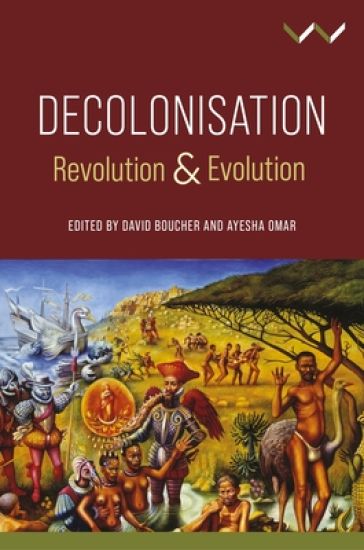
Decolonisation

Decolonisation

David Boucher; Ayesha Omar; Christopher Allsobrook; Camilla Boisen; Ndumiso Dladla; Sule Emmanuel Egya; Michael Elliott; Steven Friedman; Amber Murrey; Paul Patton; Chris Saunders; Ian S Spears

WITS UNIVERSITY PRESS
2023
sidottu
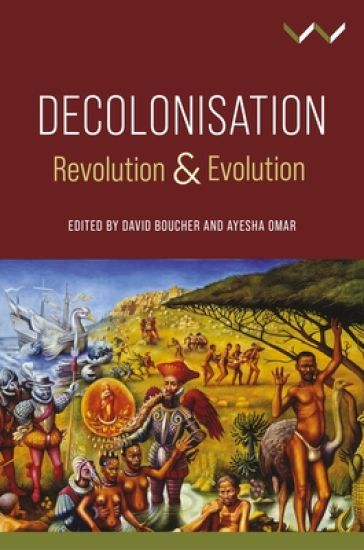
Offers a comparative analysis of the processes and aftermath of decolonisation from philosophical, historical, literary and legal perspectives.
Decolonisation

Decolonisation

David Boucher; Ayesha Omar; Christopher Allsobrook; Camilla Boisen; Ndumiso Dladla; Sule Emmanuel Egya; Michael Elliott; Steven Friedman; Amber Murrey; Paul Patton; Chris Saunders; Ian S Spears

WITS UNIVERSITY PRESS
2023
pokkari
Offers a comparative analysis of the processes and aftermath of decolonisation from philosophical, historical, literary and legal perspectives.
One Virus, Two Countries: What Covid-19 Tells Us about South Africa
An overview of South African politics and economic system, through the lens of the response to COVID-19 Has South Africa 'done well' at limiting illness and deaths during the COVID-19 pandemic? Academic and political commentator, Steven Friedman, thinks not. While the country's mainstream media believes it has, in his view the evidence tells another story. South Africa has experienced by far the most cases and deaths in Africa - at one point as many as the rest of the continent combined. One Virus, Two Countries: What Covid-19 tells us about South Africa offers a searing analysis of government and expert scientists' responses to the pandemic. Friedman argues that South Africa is two societies in one - a 'First World' which resembles Western Europe and North America, and a 'Third World' which looks much like the rest of Africa or South Asia. The South African state, the media and the scientific community have largely tried to deal with the virus through a 'First World' lens in which much of the country was either invisible or a problem - not a partner. Friedman argues this approach prevented the country from responding in a way which would have protected most citizens. This is why case numbers and deaths are so high: South Africa has done worse than the rest of Africa not despite the fact that it has a 'more developed' health system, but because it does. One Virus, Two Countries is a controversial book that will rouse much needed debate about South Africa's health and economic system in a context of serious inequality.
One Virus, Two Countries

One Virus, Two Countries

Steven Friedman

WITS UNIVERSITY PRESS
2021
nidottu
One Virus, Two Countries: What Covid-19 tells us about South Africa offers a searing analysis of government and expert scientists’ responses to the COVID-19 pandemic. Friedman argues that South Africa is two societies in one – a ‘First World’ which resembles Western Europe and North America, and a ‘Third World’ which looks much like the rest of Africa or South Asia. The South African state, the media and the scientific community have largely tried to deal with the virus through a ‘First World’ lens in which much of the country was either invisible or a problem – not a partner. Friedman argues this approach prevented the country from responding in a way which would have protected most citizens. This is why case numbers and deaths are so high: South Africa has done worse than the rest of Africa not despite the fact that it has a ‘more developed’ health system, but because it does. One Virus, Two Countries is a controversial book that will rouse much needed debate about South Africa’s health and economic system in a context of serious inequality.
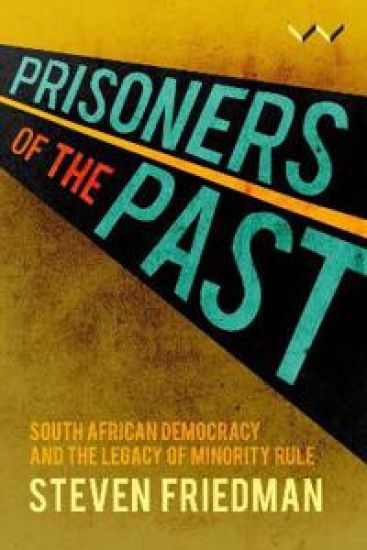
Prisoners of the Past

Prisoners of the Past

Steven Friedman

Wits University Press
2021
pokkari
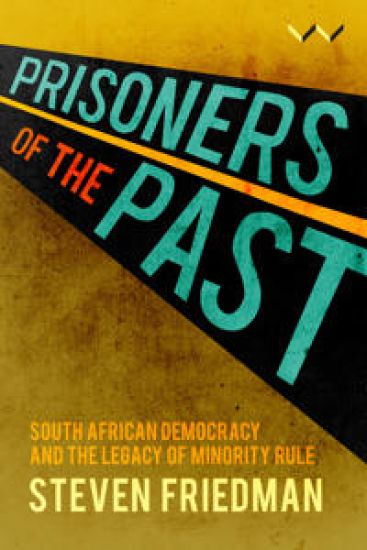
Building on the work of economic historian Douglass North and Ugandan political scholar Mahmood Mamdani, Friedman argues that the difficulties besetting South African democracy are legacies of the past, not products of the post-1994 era South Africa's democracy is often seen as a story of bright beginnings gone astray, a pattern said to be common to Africa. The negotiated settlement of 1994, it is claimed, ended racial domination and created the foundation for a prosperous democracy – but greedy politicians betrayed the promise of a new society. In Prisoners of the Past Steven Friedman astutely argues that this misreads the nature of contemporary South Africa. Building on the work of the economic historian Douglass North and the political thinker Mahmood Mamdani, Friedman shows that South African democracy's difficulties are legacies of the pre-1994 past. The settlement which ushered in majority rule left intact core features of the apartheid economy and society. The economy continues to exclude millions from its benefits, while racial hierarchies have proved stubborn: apartheid is discredited, but the values of the pre-1948 colonial era, the period of British colonization, still dominate. Thus South Africa's democracy supports free elections, civil liberties and the rule of law, but also continues past patterns of exclusion and domination. Friedman reasons that this 'path dependence' is not, as is often claimed, the result of constitutional compromises in 1994 that left domination untouched. This bargain was flawed because it brought not too much compromise, but too little. Compromises extended political citizenship to all but there were no similar bargains on economic and cultural change. Using the work of the radical sociologist Harold Wolpe, Friedman shows that only negotiations on a new economy and society can free South Africans from the prison of the past.
Prisoners of the Past

Prisoners of the Past

Steven Friedman

WITS UNIVERSITY PRESS
2021
sidottu
Building on the work of economic historian Douglass North and Ugandan political scholar Mahmood Mamdani, Friedman argues that the difficulties besetting South African democracy are legacies of the past, not products of the post-1994 era South Africa's democracy is often seen as a story of bright beginnings gone astray, a pattern said to be common to Africa. The negotiated settlement of 1994, it is claimed, ended racial domination and created the foundation for a prosperous democracy - but greedy politicians betrayed the promise of a new society. In Prisoners of the Past Steven Friedman astutely argues that this misreads the nature of contemporary South Africa. Building on the work of the economic historian Douglass North and the political thinker Mahmood Mamdani, Friedman shows that South African democracy's difficulties are legacies of the pre-1994 past. The settlement which ushered in majority rule left intact core features of the apartheid economy and society. The economy continues to exclude millions from its benefits, while racial hierarchies have proved stubborn: apartheid is discredited, but the values of the pre-1948 colonial era, the period of British colonization, still dominate. Thus South Africa's democracy supports free elections, civil liberties and the rule of law, but also continues past patterns of exclusion and domination. Friedman reasons that this 'path dependence' is not, as is often claimed, the result of constitutional compromises in 1994 that left domination untouched. This bargain was flawed because it brought not too much compromise, but too little. Compromises extended political citizenship to all but there were no similar bargains on economic and cultural change. Using the work of the radical sociologist Harold Wolpe, Friedman shows that only negotiations on a new economy and society can free South Africans from the prison of the past.
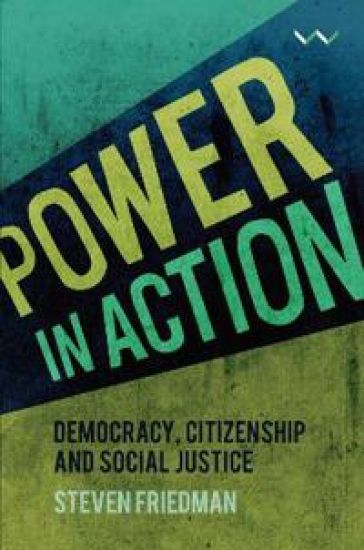
Power in Action

Power in Action

Steven Friedman

WITS UNIVERSITY PRESS
2019
sidottu
Argues that South Africans, like everyone else, need democracy for a more equal society What are democracies meant to do? And how does one know when one is a democratic state? These incisive questions and more by leading political scientist, Steven Friedman, underlie this robust enquiry into what democracy means for South Africa post 1994. Democracy is often viewed through a lens reflecting Western understanding. New democracies are compared to idealized notions by which the system is said to operate in the global North. The democracies of Western Europe and North America are understood to be the finished product and all others are assessed by how far they have progressed towards approximating this model. Power in Action persuasively argues against this stereotype. Friedman asserts that democracies can only work when every adult has an equal say in the public decisions that affect them.Democracy is achieved not by adopting idealized models derived from other societies–rather, it is the product of collective action by citizens who claim the right to be heard not only through public protest action, but also through the conscious exercise of influence on public and private power holders. Viewing democracy in this way challenges us to develop a deeper understanding of democracy's challenges and in so doing to ensure that more citizens can claim a say over more decisions in society.
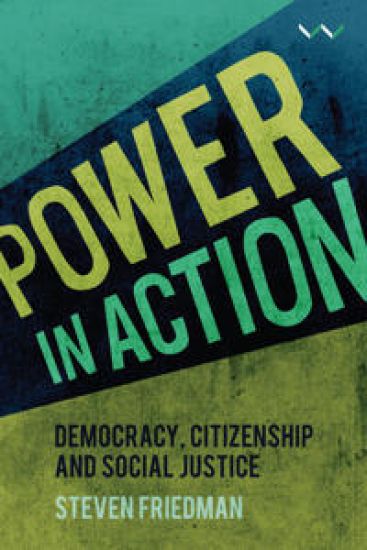
Power in Action

Power in Action

Steven Friedman

Wits University Press
2018
pokkari
Argues that South Africans, like everyone else, need democracy for a more equal society What are democracies meant to do? And how does one know when one is a democratic state? These incisive questions and more by leading political scientist, Steven Friedman, underlie this robust enquiry into what democracy means for South Africa post 1994. Democracy is often viewed through a lens reflecting Western understanding. New democracies are compared to idealized notions by which the system is said to operate in the global North. The democracies of Western Europe and North America are understood to be the finished product and all others are assessed by how far they have progressed towards approximating this model. Power in Action persuasively argues against this stereotype. Friedman asserts that democracies can only work when every adult has an equal say in the public decisions that affect them.Democracy is achieved not by adopting idealized models derived from other societies–rather, it is the product of collective action by citizens who claim the right to be heard not only through public protest action, but also through the conscious exercise of influence on public and private power holders. Viewing democracy in this way challenges us to develop a deeper understanding of democracy's challenges and in so doing to ensure that more citizens can claim a say over more decisions in society.
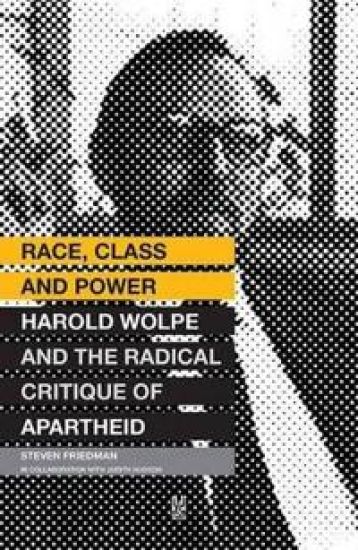
Race, Class and Power

Race, Class and Power

Steven Friedman

University of KwaZulu-Natal Press
2014
nidottu
Over four decades ago, radical scholars began to suggest a new way of looking at South African society, one that blamed the economic power of those who owned property for the racial bondage of the black majority. Their work, and the debates it triggered, are mostly forgotten: but they and their critics have much to say that sheds lights on today’s South African realities.Harold Wolpe was arguably the most influential theorist of this generation. His writing played a major role in a revolution in thought and his celebrated escape from prison in the 1960s made him a symbol of alternative action.Race, Class and Powerclearly and insightfully examines Wolpe’s work in the political, intellectual and social contexts in which it was developed and to which it gave form. Drawing on interviews with those he worked with, disagreed with and inspired, the book also maps his influence on ideas and the culture that emerged in anti-apartheid circles in the 1970s. Wolpe’s writing is a prism through which South African society can be viewed; this book is an intellectual biography both of Wolpe and of South Africa’s left.Race, Class and Power also assesses and engages with the ongoing impact of Wolpe’s ideas into the post-apartheid present. Moreover, it suggests how Wolpe’s work can move us towards a way of thinking about and acting upon South Africa’s realities differently.
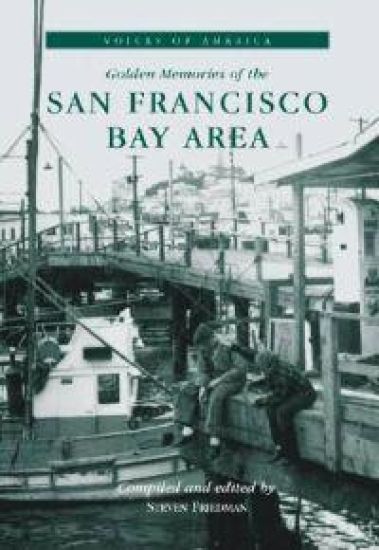
Golden Memories of the San Francisco Bay Area

Golden Memories of the San Francisco Bay Area

Steven Friedman

Arcadia Publishing (SC)
2000
nidottu
San Francisco, the flamboyant and cosmopolitan city by the bay and its neighboring municipalities, was born to tell stories upon stories. Ranging in ages from 68 to 91, the narrators reflect the ethnic and religious diversity of a metropolis that has been a pioneer of several social, political, and cultural movements. They also stretch across both ends of the economic spectrum. A Japanese-American woman describes the harsh humiliation of internment during World War II, while an Irish Catholic man fondly remembers being a paperboy in the same neighborhood for ten years--until he was 20. An African-American woman from Marin City explains why she'll never sell the quilts she makes. Another woman recalls kissing under the Golden Gate Bridge with the man who eventually became her husband. The book also utilizes more than 80 photographs from the narrators and the collections of local libraries, museums, and historical societies to complement the poignant, humorous, and revealing portraits of the people and places of the San Francisco Bay Area.