Kirjojen hintavertailu. Mukana 12 390 323 kirjaa ja 12 kauppaa.

Kirjailija

Steven Gregory

Kirjat ja teokset yhdessä paikassa: 5 kirjaa, julkaisuja vuosilta 1999-2025, suosituimpien joukossa Towering Above Harlem. Vertaile teosten hintoja ja tarkista saatavuus suomalaisista kirjakaupoista.

5 kirjaa

Kirjojen julkaisuhaarukka 1999-2025.

Towering Above Harlem

Towering Above Harlem

Steven Gregory; Arlene Dávila

NEW YORK UNIVERSITY PRESS
2025
pokkari
Charts racialized and class-based exclusion in Morningside Heights and its surrounding area by elite institutions New York City's storied diversity has also been a story of racialized class discrimination. Towering Above Harlem focuses on understudied players in this process: the elite institutions of Morningside Heights—Columbia University, Teachers College and the Riverside Church—to reveal the troubling ways in which they exploited existing geographic features to build a racially and economically exclusive "city on a hill." In his final book-length work, Steven Gregory explores the long history of economic and racial discrimination in Morningside Heights, beginning in the late 19th century and extending into the present day. This exclusion of the surrounding racial minorities and working-class population has been enacted physically, through the acquisition of property by Columbia and others, but it has also been enacted through a variety of discourses and practices aimed at setting apart the so-called "civilization-building" mission of the elites overlooking Harlem from the racialized others in the vicinity. The book shows that the major institutions of Morningside Heights have since the beginning tried to physically secede from the Black and Puerto Rican communities geographically below the Morningside plateau, while also symbolically rising above them as beacons of progress. The volume charts the coordinated effort among elites to use space to naturalize relations of power and prestige, illuminating the past, present, and uncertain future of racial discrimination and exclusivity in Morningside Heights and in New York City at large.
Towering Above Harlem

Towering Above Harlem

Steven Gregory; Arlene Dávila

NEW YORK UNIVERSITY PRESS
2025
sidottu
Charts racialized and class-based exclusion in Morningside Heights and its surrounding area by elite institutions New York City's storied diversity has also been a story of racialized class discrimination. Towering Above Harlem focuses on understudied players in this process: the elite institutions of Morningside Heights—Columbia University, Teachers College and the Riverside Church—to reveal the troubling ways in which they exploited existing geographic features to build a racially and economically exclusive "city on a hill." In his final book-length work, Steven Gregory explores the long history of economic and racial discrimination in Morningside Heights, beginning in the late 19th century and extending into the present day. This exclusion of the surrounding racial minorities and working-class population has been enacted physically, through the acquisition of property by Columbia and others, but it has also been enacted through a variety of discourses and practices aimed at setting apart the so-called "civilization-building" mission of the elites overlooking Harlem from the racialized others in the vicinity. The book shows that the major institutions of Morningside Heights have since the beginning tried to physically secede from the Black and Puerto Rican communities geographically below the Morningside plateau, while also symbolically rising above them as beacons of progress. The volume charts the coordinated effort among elites to use space to naturalize relations of power and prestige, illuminating the past, present, and uncertain future of racial discrimination and exclusivity in Morningside Heights and in New York City at large.

Learn the Law of Attraction from Folk and Fairy Tales

Learn the Law of Attraction from Folk and Fairy Tales

Steven Gregory

Independently Published
2019
nidottu
The Law of Attraction isn't new today and it wasn't new to our ancestors. The principles for putting the Law of Attraction into action are so well known and tested that you can find them in the folk and fairy tales we've told for generations. Here, in some tales you may know and others you may not, are the things we need to learn and make part of our lives to attract to us everything we want
The Devil behind the Mirror

The Devil behind the Mirror

Steven Gregory

University of California Press
2014
pokkari
In The Devil behind the Mirror, Steven Gregory provides a compelling and intimate account of the impact that transnational processes associated with globalization are having on the lives and livelihoods of people in the Dominican Republic. Grounded in ethnographic fieldwork conducted in the adjacent towns of Boca Chica and Andres, Gregory's study deftly demonstrates how transnational flows of capital, culture, and people are mediated by contextually specific power relations, politics, and history. He explores such topics as the informal economy, the making of a telenova, sex tourism, and racism and discrimination against Haitians, who occupy the lowest rung on the Dominican economic ladder. Innovative, beautifully written, and now updated with a new preface, The Devil behind the Mirror masterfully situates the analysis of global economic change in everyday lives.
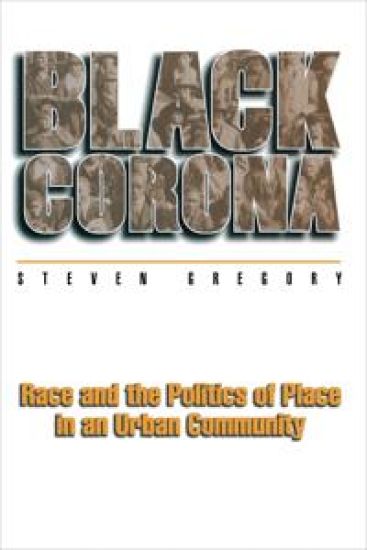
Black Corona

Black Corona

Steven Gregory

Princeton University Press
1999
pokkari
In Black Corona, Steven Gregory examines political culture and activism in an African-American neighborhood in New York City. Using historical and ethnographic research, he challenges the view that black urban communities are "socially disorganized." Gregory demonstrates instead how working-class and middle-class African Americans construct and negotiate complex and deeply historical political identities and institutions through struggles over the built environment and neighborhood quality of life. With its emphasis on the lived experiences of African Americans, Black Corona provides a fresh and innovative contribution to the study of the dynamic interplay of race, class, and space in contemporary urban communities. It questions the accuracy of the widely used trope of the dysfunctional "black ghetto," which, the author asserts, has often been deployed to depoliticize issues of racial and economic inequality in the United States. By contrast, Gregory argues that the urban experience of African Americans is more diverse than is generally acknowledged and that it is only by attending to the history and politics of black identity and community life that we can come to appreciate this complexity. This is the first modern ethnography to focus on black working-class and middle-class life and politics. Unlike books that enumerate the ways in which black communities have been rendered powerless by urban political processes and by changing urban economies, Black Corona demonstrates the range of ways in which African Americans continue to organize and struggle for social justice and community empowerment. Although it discusses the experiences of one community, its implications resonate far more widely.