Kirjailija
Steven Heller
Kirjat ja teokset yhdessä paikassa: 63 kirjaa, julkaisuja vuosilta 2005-2026, suosituimpien joukossa Nigel Holmes On Information Design. Vertaile teosten hintoja ja tarkista saatavuus suomalaisista kirjakaupoista.
63 kirjaa
Kirjojen julkaisuhaarukka 2005-2026.
With the consumerist euphoria of the fifties still going strong and the race to the moon at its height, the mood of advertising in the sixties was cheerful, optimistic, and at times, revolutionary. The decade’s ads touted perceived progress—such as tang and instant omelets - "just add water"—while striving to reinforce good old American values. Stars like Sean Connery, Woody Allen, Salvador Dalí, and Sammy Davis Jr. endorsed everything from bourbon to handmade suits in an attempt by Madison Avenue to urge Americans to open their wallets and participate in one giant consumer binge. Social change at the end of the era brought psychedelic swirls and liberated women and minorities to a newly conscious public. Keep an eye out for some of the more surprising and controversial ads—such as Tupperware billing its storage container as a "wifesaver." From forgotten cars, to cigarettes to food and much more, this colorful collection of print ads explores the wide, wonderful world of 60s Americana.
Communicating Knowledge Visually
R. Roger Remington; Ph.D. Pontis; Steven Heller
Rit Cary Graphic Arts Press
2021
pokkari
Communicating Knowledge Visually presents a timely, in-depth examination of information design pioneer, Will Burtin. Using a methodical approach, the authors analyze Burtin's way of working and nine of his seminal projects, including his exhibitions for The Upjohn Company and diagrams for SCOPE magazine. Excerpts taken from Burtin's unpublished writing offer insight into his thinking process and explain how he transformed complex scientific information into easy, accessible visual forms. Scientists, designers, educators and students will gain valuable knowledge from Burtin's unique design approach in meeting the current challenges of communicating complexity in their respective fields.
Up until the 20th century, children’s play was not a subject that demanded much attention. While objects that entertained children have been present from ancient history, it was only with industrial mass production—and a developing urban middle class—that toys appeared more frequently. As playthings began to display a robust economic performance, an industry rose to provide this new market with the objects of their desire. European manufacturers dominated the toy market, with Germany, in particular, supplying the American market with the bulk of both singular and mass-produced products. World War I ended its dominance, and by the 1920s, bolstered by American ingenuity and an ever-growing consumer culture supported by the media empires of newspapers, radio, and television, American toys became ubiquitous in the consumer market. Ranging from the simple to the complex, children were inundated with a commodity to be wished for and sold to by the millions. From frilly dolls to science sets, children were marketed to with gusto, first through magazines and comic books and later through television. Toys fell along familiar gender lines all while being developed with the unspoken subtext of stimulating developing minds and being vehicles of problem solving with educational value. If the first part of the 20th century represented the rise of toys in America, the postwar period signaled a market unleashed by the baby boom. That one event gained traction for the toy industry and propelled it to its current state. Unforeseen was the next chapter in the industry—the advancement of the technical revolution—which would create another dimension of toy products that would captivate both children and adults as one century blended into the next.In the world of toy production, the multimillion dollar industry took the advertising of its product seriously, and toy manufacturers inundated customers with their latest product via trade journals. In New York City, the hub of the toy industry for most of the 20th century, annual trade shows introduced a deluge of new playthings to the buying public. Frisbees, board games, baseball mitts, Hula-Hoops, air rifles, video games, dolls, and miniature trains were all served up to generations of children, cementing forever the memories of playtime. Filled with a Santa’s sack full of surprises, Toys. 100 Years of All-American Toy Ads takes us down the aisles of America’s toy stores delivering the favorites and forgotten memories of toys that were hugged and hoarded, saved and disposed of, and now finally brought back in their pristine glory. Once again it’s Christmas, your birthday, and a reward for a job well-done.
This collection of over 140 curated posters by the revolutionary graphic artist Seymour Chwast provides context and insight into not only his five-decade career, but the poster genre itself. Since founding Push Pin Studios alongside Milton Glaser and Edward Sorel in the 1950s, Chwast’s posters have been widely celebrated for their combination of subversive style and strong political satire. His caustic humor, graphic hand, and visual commentary cleverly synthesize in a way that is both wry and immediately understandable. Posters are arranged by type—Causes, Commerce, Information, Exhibits, and Lectures—rather than chronology, which, along with the large format, invites readers to engage thematically with the designs. Commentary on each poster makes this a valuable resource for students, educators, historians, and all who appreciate the unique ability of posters to subvert notions of popular culture, politics, and design at once. Essays by Shepard Fairey and Steven Heller contextualize Chwast's impact on 20th-century design.
Mysteries and folkways of New York City revealed in an entertaining collection of graphic art The life and legend of New York City, from the size of its skyscrapers to the ways of its inhabitants, is vividly captured in this lively collection of more than 250 maps, cross sections, ?owcharts, tables, board games, cartoons and infographics, and other unique diagrams spanning 150 years. Superstars such as Saul Steinberg, Maira Kalman, Christoph Niemann, Roz Chast, and Milton Glaser butt up against the unsung heroes of the popular press in a book that is made not only for lovers of New York but also for anyone who enjoys or works with information design.
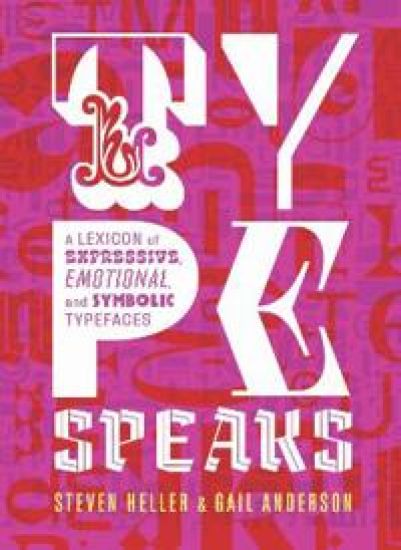
An essential resource to using contemporary typefaces for effective communication Type is the handwriting of the 21st century, lending its expressive voice to the language of all written communication. Type Speaks is the first book to explore type as a medium that conveys emotions, concepts, and ideas, filled with hundreds of new fonts available through digital foundries. Some exude joy, radiate serenity, or jangle the nerves; some sell or persuade or command or seduce. More than ever before, a great range of type choices, both conventional and unconventional, is available to graphic design professionals and nonprofessionals alike. In this new world, Type Speaks will be an essential reference for anyone crafting messages in words.
Design School Reader: A Course Companion for Students of Graphic Design
Steven Heller
Allworth
2020
nidottu
An Essential Collection of Essays and Musings on Graphic Design from One of the Field's Leading Educators In this wide-ranging compilation, art director, writer, and lecturer Steven Heller shares his passion for graphic design with readers, whom he invites to consider that design can be discerned in all things natural and manmade. Developed as content for a class devoted to reading, this collection is not overtly about conventional design, but about a variety of topics viewed through the lens of design. Offered as a primer for undergraduate and graduate students, Design School Reader presents more than forty essays on subjects such as: The role of design in politicsVisual culture and the social impact of designKey moments in the history of typographyTechnological innovationsThe power of branding and logosEthical considerations and dilemmasImportant figures in the design world Divided into five parts--Design Language; Design Dialects; Politics, Ideology, Design; Business and Commerce; and Inspiration and Discoveries--each section features a collection of essays culled from Heller's extensive publications from the past several decades. At the end of every essay, readers will find discussion points to prompt further lines of inquiry. As Heller notes, "The key is to read, discuss, and debate." Students, aficionados, and anyone with a healthy curiosity will thoroughly enjoy this illuminating and thought-provoking assemblage of perspectives on the practice.
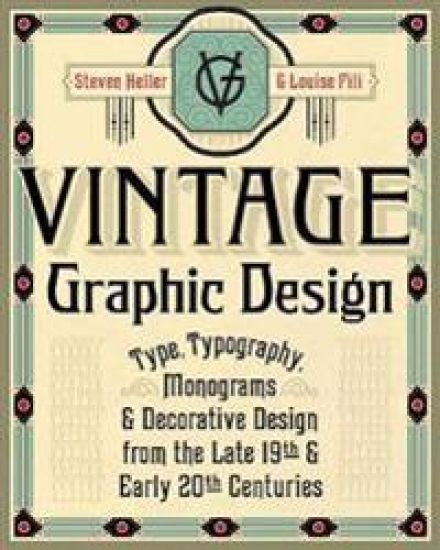
A Revival and Celebration of the Golden Age of Typography Any type user and enthusiast will doubtless derive joy from the letters and ornaments in Vintage Graphic Design, gathered from the rare and forgotten sources that authors Steven Heller and Louise Fili have collected over the years. As type gourmets, Heller and Fili savor type in many forms—especially the aesthetically idiosyncratic and the printed artifacts of which historical or retro typefaces are samples. A period of rapid innovation and growth in printing and type technology, the late 1800s and early 1900s saw type foundries in Europe and America burst into wellsprings for bold compositions and arresting typefaces However, this is not a history book; rather, it is a sampler of tasty typographic confections or so-called eye candy. The curated selection here reflects this era’s printing material, including stock pictorial cuts, filigree borders, and cartouches galore. These aesthetic gems are the fruit of Heller’s and Fili’s labors after spending decades scouring the antiquarian book and flea markets of Paris, Berlin, Rome, Florence, Barcelona, eastern Europe, and elsewhere online and in auction catalogs to find examples of graphic design worth preserving and reviving. These beautiful—yet often absurd—rarities represent historic typeface catalogs and specimen sheets from an age when craftsmanship was at its zenith and attention to manufacture was rigorous. Paired best with the authors’ 2011 book, Vintage Type & Graphics, this full color volume is not just about delectation for its own sake, but to prove beyond a drop-shadow of a doubt that just because a typeface or decorative device is “old” does not mean it is “old-fashioned.”
“Force[s] even the most sophisticated to rethink and rework their ideas of how images work in the world.” —School Library Journal This is a classic story, masterfully told, in a new, revised and expanded edition about how one graphic symbol can endure and influence life—for good and evil—for generations and never, even today, be redeemed. A nuanced examination of the most powerful symbol ever created, The Swastika and Symbols of Hate explores the rise and fall of the symbol, its mysteries, co-option, and misunderstandings. Readers will be fascinated by the twists and turns of the swastika’s fortunes, from its pre-Nazi spiritual-religious and benign commercial uses, to the Nazi appropriation and criminalization of the form, to its contemporary applications as both a racist, hate-filled logo and ignorantly hip identity. Once the mark of good fortune, during the twentieth century it was hijacked and perverted, twisted into the graphic embodiment of intolerance. If you want to know what the logo for hate looks like, go no further. The Nazi swastika is a visual obscenity and provokes deep emotions on all sides. The Nazis weaponized this design, first as a party emblem, then as a sign of national pride and, ultimately, as the trademark of Adolf Hitler’s unremitting malevolence in the name of national superiority. A skilled propagandist, Hitler and his accomplices understood how to stoke fear through mass media and through emblems, banners, and uniforms. Many contemporary hate marks are rooted in Nazi iconography both as serious homage and sarcastic digital bots and trolls. Given the increasing tolerance for supremacist intolerance tacitly and overtly shown by politicians the world over, this revised (and reconfigured) edition includes additional material on old and new hate logos as it examines graphic design’s role in far-right extremist ideology today.
Arrows, swashes, swooshes, globes, sunbursts and parallel, vertical and horizontal lines, words, letters, shapes and pictures. Logos are the most ubiquitous and essential of all graphic design devices, representing ideas, beliefs and, of course, things. They primarily identify products, businesses and institutions, but they are also associated, hopefully in a positive way, with the ethos or philosophy of those entities. The 50 logos in this book are examples of good ideas in the service of representation, reputation and identification.
100 Ideas that Changed Graphic Design
Steven Heller; Veronique Vienne
Laurence King Publishing
2019
nidottu
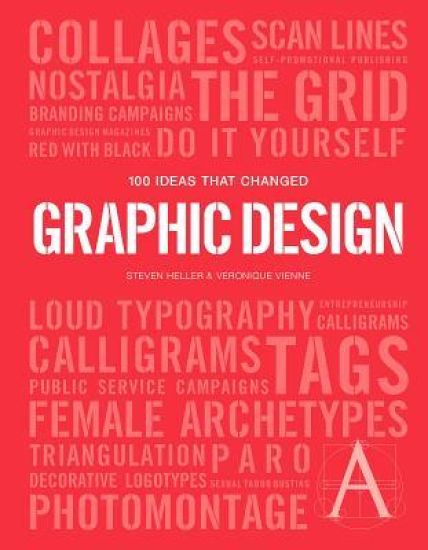
This accessible book demonstrates how ideas influenced and defined graphic design. Lavishly illustrated, it is both a great source of inspiration and a provocative record of some of the best examples of graphic design from the last hundred years. The entries, arranged broadly in chronological order, range from technical (overprinting, rub-on designs, split fountain); to stylistic (swashes on caps, loud typography, and white space); to objects (dust jackets, design handbooks); and methods (paper cut-outs, pixelation).
This book serves as an introduction to the key elements of good illustration. The Illustration Idea Book presents 50 of the most inspiring approaches used by masters of the field from across the world. Themes covered include creating characters, symbol and metaphor, illustrated lettering, inventing worlds and caricature. The result is an instantly accessible, inspiring and easy to understand guide to illustration using professional techniques.
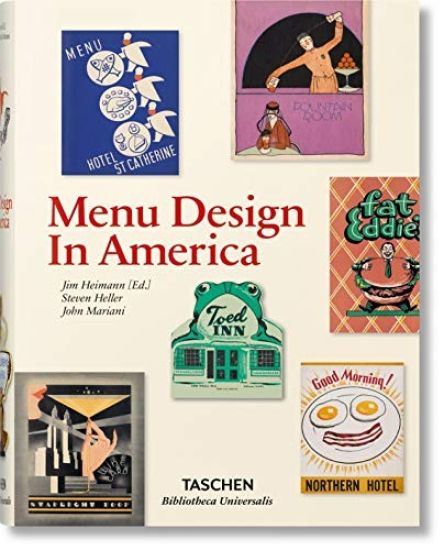
Until restaurants became commonplace in the late 1800s, printed menus for meals were rare commodities reserved for special occasions. As restaurants proliferated, the menu became more than just a culinary listing: it was an integral part of eating out, a clever marketing tool, and a popular keepsake.Menu Design is an omnibus showcasing the best examples of this graphic art. Illustrated in vibrant color, this compact volume not only gathers an extraordinary collection of paper ephemera but serves as a history of restaurants and dining out in America. Featuring both covers and interiors, the menus offer an epicurean tour and insight to more than a hundred years of dining out. An introduction on the history of menu design by graphic design writer Steven Heller and extended captions by culinary historian John Mariani accompany each piece throughout the book. Various photographs of restaurants round out this compendium that will appeal to anyone who enjoys dining out and its graphic and gastronomic history.
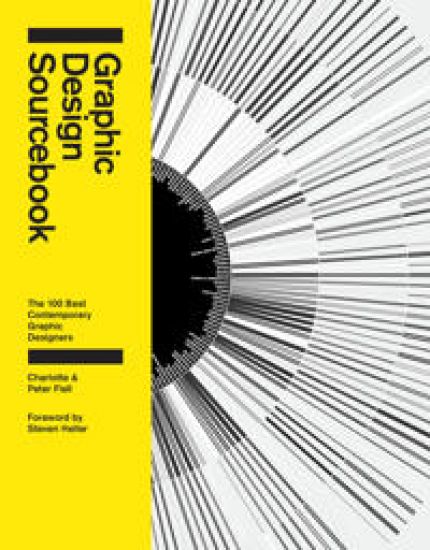
A stunning and thought-provoking round-up of today's most interesting visual communication projects, Graphic Design Sourcebook surveys the work of one hundred of the world's most exciting and groundbreaking practitioners. This informative guide to contemporary graphic design is illustrated with a wide variety of projects, from websites, apps, banner ads, packaging and infographics to exhibition design, social issue posters, corporate branding campaigns and interactive media design. Each designer's entry also includes detailed biographic information and a short précis on the designer's approach, written by the designers themselves. Graphic Design Sourcebook is an essential guide for anyone interested in the power of visual communication, and is an absolute must-have publication for students and professional practitioners alike.
From the Los Angeles riots to the Columbine High School massacre, Americans witnessed events and purchased items that reflected the best and worst of the decade. Bill Clinton’s presidency was in jeopardy, the digital age had erupted, and Silicon Valley was affecting everyone on the planet. Meanwhile nudity and sex ruled the pages of magazines, selling everything from haute couture to fragrances and microwave ovens. Nirvana entertained Generation X while the “Greatest Generation” considered purchasing a Probe and something called a Hummer. Super Soakers and the game consoles Game Boy and PlayStation were the new toys, as Super Mario World, Gran Turismo, and Sonic the Hedgehog were warping the minds of young people everywhere. Luxury brands were in demand: shoppers coveted a Gucci bag, a Louis Vuitton tote, a Hermes scarf, or a Prada frock. TWA and Continental Airlines still flew the airways and Volkswagen reimagined the Beetle. It was a decade that seemed safely benign, but was jammed with events and consumption on a grand scale, setting the stage for the 21st century. Featuring six chapters that cover a range of advertising, from food and fashion to entertainment and cars, a Desert Storm’s worth of advertising highlights makes All-American Ads of the ’90s a must-have compendium for every Beanie Babies–collecting, Simpsons-watching, pog-hoarding, and Harry Potter–loving citizen of 1990s consumerism.
In Free Hand: New Typography Sketchbooks, Steven Heller, respected graphic-design commentator, and Lita Talarico, design educator, offer glimpses inside the personal sketchbooks of more than 70 designers and typographers--including Philippe Apeloig, Ed Beguiat, Hoefler & Co., Henrik Kubel, Toshi Omagari, and Francesco Zorzi. Featuring a wealth of sketches, precision drawings, and computer-generated artwork, as well as a range of styles, concepts, languages, and alphabets, Free Hand illustrates the idiosyncratic creative processes behind the design of typefaces, logos, and word-images. A valuable resource for anyone who engages creatively with type--whether by hand or on a screen--this rich compendium emphasizes the power of typography in the digital age, while celebrating designers who continue to innovate in their practice of this time-honored craft.
Learn to paint gorgeous contemporary art by practicing watercolor technique directly in this instructional sketchbook. Through 100 different experiments, artist Sasha Prood teaches you traditional techniques like wet-on-dry, wet-on-wet, and flat washes, and also encourages you to play with the paint through colorful ombrés, unique bloom textures, and added elements like salt and sponging. Each experiment is accompanied by Sasha’s beautifully painted examples and space to practice your skills on the thick pages of the sketchbook. Sasha makes watercolors accessible by setting you up to paint a series of practice swatches before attempting to make final art and she emphasizes experimentation with color and technique so that you can learn to enjoy and embrace all the unique qualities of watercolor.
In The Moderns, we meet the men and women who invented and shaped Midcentury Modern graphic design in America. The book is made up of generously illustrated profiles, many based on interviews, of more than 60 designers whose magazine, book, and record covers; advertisements and package designs; posters; and other projects created the visual aesthetics of postwar modernity. Some were émigrés from Europe; others were homegrown—all were intoxicated by elemental typography, primary colors, photography, and geometric or biomorphic forms. Some are well-known, others are honored in this volume for the first time, and together they comprised a movement that changed our design world.
Typefaces come in thousands of shapes, sizes and styles. Like verbal language, with all its nuances, dialects, accents and tics, typography is not simply a container of meanings but a translator too. Different faces say distinct things to many people. Type projects authority and frivolity. Type is communication on so many different levels of perception and reception. Type Deck is a sampler of typographic personality and a primer of expressive visual communication. The letterforms are part of a shared language that have added to the diversity of graphic design. The Deck identifies characteristics and places particular forms in historical periods and aesthetic contexts.