Kirjojen hintavertailu. Mukana 12 137 136 kirjaa ja 12 kauppaa.

Kirjailija

Steven High

Kirjat ja teokset yhdessä paikassa: 10 kirjaa, julkaisuja vuosilta 2003-2026, suosituimpien joukossa The Politics of Industrial Closure. Vertaile teosten hintoja ja tarkista saatavuus suomalaisista kirjakaupoista.

10 kirjaa

Kirjojen julkaisuhaarukka 2003-2026.

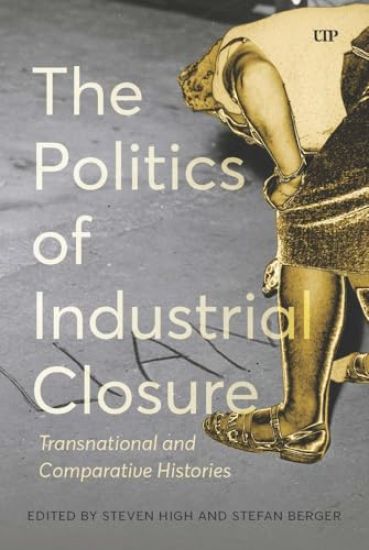
The Politics of Industrial Closure

The Politics of Industrial Closure

Steven High; Stefan Berger

UNIVERSITY OF TORONTO PRESS
2026
pokkari
The Politics of Industrial Closure explores how the political consequences of neoliberal globalization have led to the decline of industrial regions across Western Europe and North America. Co-editors and historians Steven High and Stefan Berger, and the team of contributors, depict that deindustrialization and its legacies have long-term impacts by diving into its ongoing manifestations and aftermaths. With collaboratively written chapters exploring Italy, France, Germany, the United Kingdom, the United States, and Canada, this volume examines the impacts of deindustrialization, demonstrating that it is an uneven geographical, spatial, and temporal process. This study transcends the local and regional investigations that often predominate deindustrialization studies, and the wider transnational and cross-national perspective of this work highlights the ways that geography matters in the deindustrialization process. This collection pursues diverse avenues of investigation into deindustrialization in hopes to understand the deep roots of recent, universal, and political phenomena. The Politics of Industrial Closure considers deindustrialization as yet another form of dispossession within global capitalism and seeks to break out of a unitary understanding of the problem of deindustrialization.
Deindustrializing Montreal

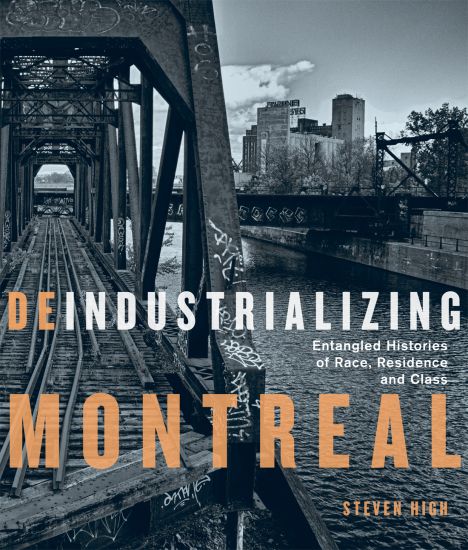
Deindustrializing Montreal

Steven High

MCGILL-QUEEN'S UNIVERSITY PRESS
2022
sidottu
Point Saint-Charles, a historically white working-class neighbourhood with a strong Irish and French presence, and Little Burgundy, a multiracial neighbourhood that is home to the city’s English-speaking Black community, face each other across Montreal’s Lachine Canal, once an artery around which work and industry in Montreal were clustered and by which these two communities were formed and divided.Deindustrializing Montreal challenges the deepening divergence of class and race analysis by recognizing the intimate relationship between capitalism, class struggles, and racial inequality. Fundamentally, deindustrialization is a process of physical and social ruination as well as part of a wider political project that leaves working-class communities impoverished and demoralized. The structural violence of capitalism occurs gradually and out of sight, but it doesn’t play out the same for everyone. Point Saint-Charles was left to rot until it was revalorized by gentrification, whereas Little Burgundy was torn apart by urban renewal and highway construction. This historical divergence had profound consequences in how urban change has been experienced, understood, and remembered. Drawing extensive interviews, a massive and varied archive of imagery, and original photography by David Lewis into a complex chorus, Steven High brings these communities to life, tracing their history from their earliest years to their decline and their current reality. He extends the analysis of deindustrialization, often focused on single-industry towns, to cities that have seemingly made the post-industrial transition.The urban neighbourhood has never been a settled concept, and its apparent innocence masks considerable contestation, divergence, and change over time. Deindustrializing Montreal thinks critically about locality, revealing how heritage becomes an agent of gentrification, investigating how places like Little Burgundy and the Point acquire race and class identities, and questioning what is preserved and for whom.
Going Public

Going Public

Elizabeth Miller; Edward Little; Steven High

University of British Columbia Press
2018
pokkari
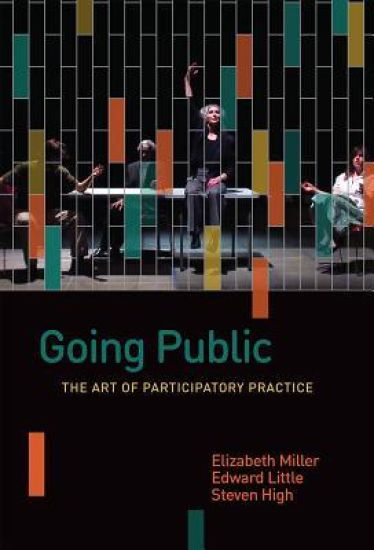
As researchers are increasingly taking their research from the campus to the public arena, what are the ethics of, and expectations for, social impact? Going Public responds to the urgent need to expand current thinking on what it means to co-create, to actively involve the public in research, and to reconceptualize research for public consumption.Drawing on conversations with over thirty practitioners across multiple cultures and disciplines, this book examines the ways in which oral historians, media producers, and theatre artists use art, stories, and participatory practices to engage creatively with their publics. The authors provide an overview of community-engaged practices and present case studies that grapple with issues of class struggle, gentrification, violence against women, and Indigenous rights.Going Public offers insights into long-standing concerns around voice, aesthetics, appropriation, privilege, power dynamics, and the ethics of participation. It reveals that the shift towards participatory research and creative practices requires a commitment to asking tough questions about oneself and the ways that people's stories are used.
One Job Town

One Job Town

Steven High

University of Toronto Press
2018
sidottu
There’s a pervasive sense of betrayal in areas scarred by mine, mill and factory closures. Steven High’s One Job Town delves into the long history of deindustrialization in the paper-making town of Sturgeon Falls, Ontario, located on Canada’s resource periphery. Much like hundreds of other towns and cities across North America and Europe, Sturgeon Falls has lost their primary source of industry, resulting in the displacement of workers and their families. One Job Town takes us into the making of a culture of industrialism and the significance of industrial work for mill-working families. One Job Town approaches deindustrialization as a long term, economic, political, and cultural process, which did not begin and simply end with the closure of the local mill in 2002. High examines the work-life histories of fifty paper mill workers and managers, as well as city officials, to gain an in-depth understanding of the impact of the formation and dissolution of a culture of industrialism. Oral history and memory are at the heart of One Job Town, challenging us to rethink the relationship between the past and the present in what was formerly known as the industrialized world.
One Job Town

One Job Town

Steven High

University of Toronto Press
2018
pokkari
There’s a pervasive sense of betrayal in areas scarred by mine, mill and factory closures. Steven High’s One Job Town delves into the long history of deindustrialization in the paper-making town of Sturgeon Falls, Ontario, located on Canada’s resource periphery. Much like hundreds of other towns and cities across North America and Europe, Sturgeon Falls has lost their primary source of industry, resulting in the displacement of workers and their families. One Job Town takes us into the making of a culture of industrialism and the significance of industrial work for mill-working families. One Job Town approaches deindustrialization as a long term, economic, political, and cultural process, which did not begin and simply end with the closure of the local mill in 2002. High examines the work-life histories of fifty paper mill workers and managers, as well as city officials, to gain an in-depth understanding of the impact of the formation and dissolution of a culture of industrialism. Oral history and memory are at the heart of One Job Town, challenging us to rethink the relationship between the past and the present in what was formerly known as the industrialized world.
Going Public

Going Public

Elizabeth Miller; Edward Little; Steven High

University of British Columbia Press
2017
sidottu
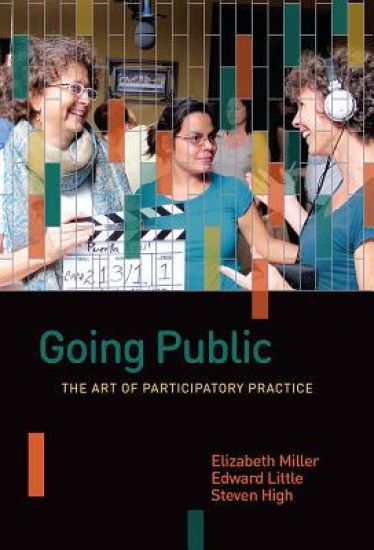
As researchers are increasingly taking their research from the campus to the public arena, what are the ethics of, and expectations for, social impact? Going Public responds to the urgent need to expand current thinking on what it means to co-create, to actively involve the public in research, and to reconceptualize research for public consumption.Drawing on conversations with over thirty practitioners across multiple cultures and disciplines, this book examines the ways in which oral historians, media producers, and theatre artists use art, stories, and participatory practices to engage creatively with their publics. The authors provide an overview of community-engaged practices and present case studies that grapple with issues of class struggle, gentrification, violence against women, and Indigenous rights.Going Public offers insights into long-standing concerns around voice, aesthetics, appropriation, privilege, power dynamics, and the ethics of participation. It reveals that the shift towards participatory research and creative practices requires a commitment to asking tough questions about oneself and the ways that people's stories are used.
Oral History at the Crossroads

Oral History at the Crossroads

Steven High

University of British Columbia Press
2015
pokkari
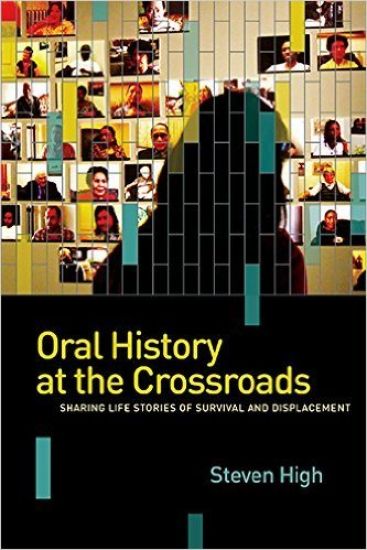
When hundreds of people displaced by mass violence volunteered to tell their stories to the Montreal Life Stories project, they challenged long-held beliefs about how oral stories should be recorded, collected, and shared.Using the Montreal Life Stories project as an example of collective storytelling, Oral History at the Crossroads rejects the idea that there must be "critical distance" between researchers and their subjects. Instead, it provides an alternative model to traditional research practice, one where community members "share authority" as equal partners in a project. More than a hundred photographs illustrate the experiences of those who participated in the project and highlight the intersections between oral history, digital media, and performance.A sustained reflection on collaborative research, Oral History at the Crossroads has methodological and ethical implications for scholars. And, as a contemporary model for curating oral and public history, it pushes the field in new directions.
Oral History at the Crossroads

Oral History at the Crossroads

Steven High

University of British Columbia Press
2014
sidottu
When hundreds of people displaced by mass violence volunteered to tell their stories to the Montreal Life Stories project, they challenged long-held beliefs about how oral stories should be recorded, collected, and shared.Using the Montreal Life Stories project as an example of collective storytelling, Oral History at the Crossroads rejects the idea that there must be "critical distance" between researchers and their subjects. Instead, it provides an alternative model to traditional research practice, one where community members "share authority" as equal partners in a project. More than a hundred photographs illustrate the experiences of those who participated in the project and highlight the intersections between oral history, digital media, and performance.A sustained reflection on collaborative research, Oral History at the Crossroads has methodological and ethical implications for scholars. And, as a contemporary model for curating oral and public history, it pushes the field in new directions.
Corporate Wasteland

Corporate Wasteland

Steven High; David W. Lewis

ILR Press
2007
pokkari
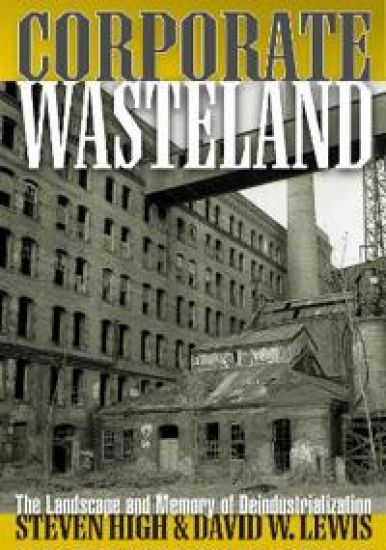
Deindustrialization is not simply an economic process, but a social and cultural one as well. The rusting detritus of our industrial past—the wrecked hulks of factories, abandoned machinery too large to remove, and now-useless infrastructures—has for decades been a part of the North American landscape. In recent years, however, these modern ruins have become cultural attractions, drawing increasing numbers of adventurers, artists, and those curious about a forgotten heritage. Through a unique blend of oral history, photographs, and interpretive essays, Corporate Wasteland investigates this fascinating terrain and the phenomenon of its loss and rediscovery. Steven High and David W. Lewis begin by exploring an emerging aesthetic they term the deindustrial sublime, explaining how the ritualized demolition of landmark industrial structures served as dramatic punctuations between changing eras. They then follow the narrative path blazed by urban spelunkers, explorers who infiltrate former industrial sites and then share accounts and images of their exploits in a vibrant online community. And to understand the ways in which geographic and emotional proximity affects how deindustrialization is remembered and represented, High and Lewis focus on Youngstown, Ohio, where residents and former steelworkers still live amid the reminders of more prosperous times. Corporate Wasteland concludes with photo essays of sites in Michigan, Ontario, West Virginia, and Pennsylvania that pair haunting images with the poignant testimonies of those who remember industrial sites as workplaces rather than monuments. Forcing readers to look beyond nostalgia, High and Lewis reinterpret our deindustrialized landscape as a historical and imaginative challenge to the ways in which we comprehend and respond to the profound disruptions wrought by globalization.
Industrial Sunset

Industrial Sunset

Steven High

University of Toronto Press
2003
pokkari
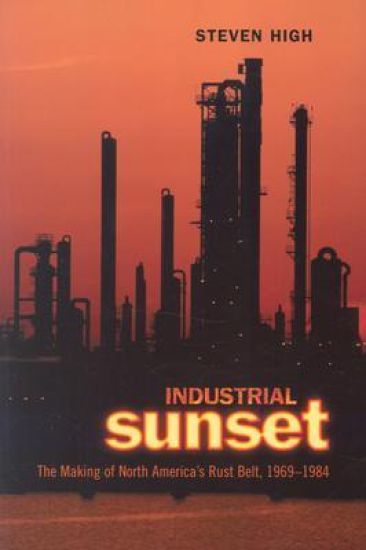
Plant shutdowns in Canada and the United States from 1969 to 1984 led to an ongoing and ravaging industrial decline of the Great Lakes Region. Industrial Sunset offers a comparative regional analysis of the economic and cultural devastation caused by the shutdowns, and provides an insightful examination of how mill and factory workers on both sides of the border made sense of their own displacement. The history of deindustrialization rendered in cultural terms reveals the importance of community and national identifications in how North Americans responded to the problem. Based on the plant shutdown stories told by over 130 industrial workers, and drawing on extensive archival and published sources, and songs and poetry from the time period covered, Steve High explores the central issues in the history and contemporary politics of plant closings. In so doing, this study poses new questions about group identification and solidarity in the face of often dramatic industrial transformation.