Kirjojen hintavertailu. Mukana 12 595 353 kirjaa ja 12 kauppaa.
Kirjailija
Steven Jacobs
Kirjat ja teokset yhdessä paikassa: 13 kirjaa, julkaisuja vuosilta 2009-2026, suosituimpien joukossa Sonia Delaunay. Vertaile teosten hintoja ja tarkista saatavuus suomalaisista kirjakaupoista.
A richly crafted tribute to the avant-garde artist and designer Sonia Delaunay, whose boundary-breaking approach is echoed in the volume’s interdisciplinarity and its inspired design Described as “the most significant contribution to Sonia Delaunay studies in a decade,” this catalogue sets a new standard for the study of this pioneering avant-garde artist, designer, and entrepreneur (1885–1979). Eschewing traditional chronological structures to better showcase groundbreaking research unifying the artist’s timeless oeuvre across mediums, this publication demonstrates Delaunay’s innate versatility and willingness to create without material limitation using her unique language of light and color. Textiles, fashion, interiors, book art, and more are highlighted across 26 chapters by leading international scholars to give new insight into Delaunay’s strategies of self-promotion, entrepreneurial endeavors, legacy-building efforts, and vast network of collaborators. These in-depth analyses, including previously underinvestigated material such as film, mosaics, tapestries, and interior design, offer a comprehensive perspective on Delaunay’s lifelong effort to unite art with life by harnessing the energy of technological advancement and the beauty of artisanal craftsmanship. Finally, an appendix provides a unique personal note—an epilogue by Patrick Raynaud, the last living member of Delaunay’s atelier—is a touching firsthand account of the artist’s working practices toward the end of her life. The design, by award-winning book creator Irma Boom, embraces Sonia Delaunay’s own approach to layout and typography, rendering a book that unites past and present to become a work of art in its own right. Distributed for the Bard Graduate Center Exhibition Schedule: Bard Graduate Center, New York (February 23–July 7, 2024)

This collection of academic essays written by friends and colleagues of Professor Zev Garber, is a long-overdue tribute to an outstanding scholar, teacher, and mentor. Each contribution was written especially for this volume; none have been previously published. The various sections into which these essays are divided reflect the areas in which Professor Garber has devoted his own prodigious teaching and writing energies: the Holocaust, Jewish-Christian relations, philosophy and theology, history, biblical interpretation. Also included is a full bibliography of Professor Garber's own writings: books, articles both scholarly and popular, opinion pieces, and the like. The introduction by his good friend Steven Jacobs introduces Professor Garber to those who do not know him and reminds those who do of his important contributions to scholarship.
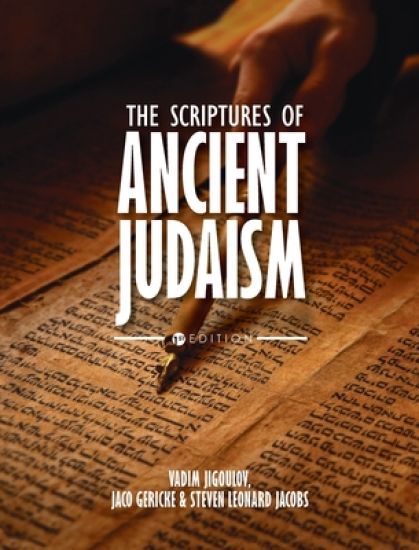
The Scriptures of Ancient Judaism: A Secular Introduction provides students with a scholarly exploration of the literature and themes of the Old Testament/Hebrew Bible and cognate Near Eastern materials. The text features diverse interdisciplinary and methodological points of view from secular biblical scholars, offering readers a comprehensive, thoughtful, and accessible point of entry to the study of the ancient world and the religious heritage of Judaism. The text approaches the scriptures of ancient Judaism without religious bias or dogmatic intent. Rather, the book is designed to ignite interest in the history and literature of the ancient world and to present the latest scholarship related to the Old Testament/Hebrew Bible. Students are introduced to Israelite religious traditions, their unique worldviews, and offered a primer on how to read ancient texts. Later chapters examine the histories and cultures of the ancient Near East and Jewish historiography. Legal texts, prophetic texts, biblical poetry and wisdom literature, and apocalyptic writings found within the Hebrew Bible and other related texts are analyzed. Providing students a rich and complete introduction, The Scriptures of Ancient Judaism is an ideal text for courses in biblical studies.Vadim Jigoulov holds a Ph.D. in Near Eastern studies from the University of Michigan. He is a lecturer in the Department of Philosophy & Religious Studies at Morgan State University.Steven Leonard Jacobs holds a D.D. and D.H.L from the Hebrew Union College-Jewish Institute of Religion. He is a professor of religious studies and the Aaron Aronov Endowed Chair in Judaic Studies at The University of Alabama.Jaco Gericke holds a Ph.D. in Old Testament studies from the University of Pretoria. He is an associate research professor at North West University.
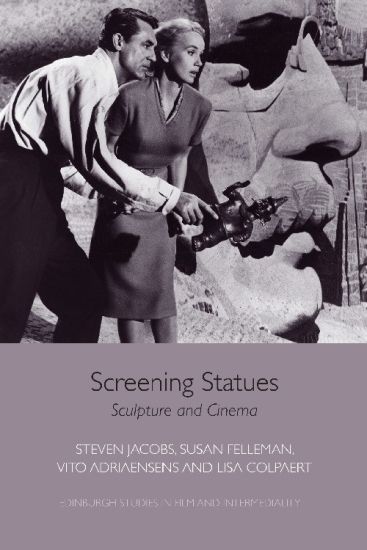
Screening Statues: Sculpture and Cinema is the first book to focus on the relationship between sculpture and the silver screen. It covers a broad range of magical, mystical and phenomenological interactions between the two media, from early film's eroticized tableaux vivants to enigmatic sculptures in modernist cinema. Sculptures are literally brought to life on the silver screen, while living people are turned into, or trapped inside, statuary. The book examines key sculptural motifs and cinematic sculpture in film history through a series of case studies and through an extensive reference gallery of 150 different films. Considering the work of directors like Georges Melies, Jean Cocteau and Alain Resnais, as well as films like House of Wax, Jason and the Argonauts and Clash of the Titans, this is an innovative exploration of two different media, their artistic traditions and their respective theoretical paradigms.
For courses in Human-Computer Interaction The Sixth Edition of Designing the User Interface provides a comprehensive, authoritative, and up-to-date introduction to the dynamic field of human-computer interaction (HCI) and user experience (UX) design. This classic book has defined and charted the astonishing evolution of user interfaces for three decades. Students and professionals learn practical principles and guidelines needed to develop high quality interface designs that users can understand, predict, and control. The book covers theoretical foundations and design processes such as expert reviews and usability testing. By presenting current research and innovations in human-computer interaction, the authors strive to inspire students, guide designers, and provoke researchers to seek solutions that improve the experiences of novice and expert users, while achieving universal usability. The authors also provide balanced presentations on controversial topics such as augmented and virtual reality, voice and natural language interfaces, and information visualisation. Updates include current HCI design methods, new design examples, and totally revamped coverage of social media, search and voice interaction. Major revisions were made to EVERY chapter, changing almost every figure (170 new colour figures) and substantially updating the references.
For courses in Human-Computer Interaction The Sixth Edition of Designing the User Interface provides a comprehensive, authoritative, and up-to-date introduction to the dynamic field of human-computer interaction (HCI) and user experience (UX) design. This classic book has defined and charted the astonishing evolution of user interfaces for three decades. Students and professionals learn practical principles and guidelines needed to develop high quality interface designs that users can understand, predict, and control. The book covers theoretical foundations and design processes such as expert reviews and usability testing. By presenting current research and innovations in human-computer interaction, the authors strive to inspire students, guide designers, and provoke researchers to seek solutions that improve the experiences of novice and expert users, while achieving universal usability. The authors also provide balanced presentations on controversial topics such as augmented and virtual reality, voice and natural language interfaces, and information visualization. Updates include current HCI design methods, new design examples, and totally revamped coverage of social media, search and voice interaction. Major revisions were made to EVERY chapter, changing almost every figure (170 new color figures) and substantially updating the references.
In this imaginative and scholarly book, Steven Jacobs explores the architectural elements of Alfred Hitchcock's films and the vital role they played in providing atmosphere and facilitating plot development. Hitchcock famously left nothing to chance, and from the Greenwich Village apartment that provided the set for Rear Window or the now-iconic Bates house in Psycho, every architectural entity plays a significant role both in setting the scene and in advancing the suspenseful narratives of which Hitchcock was master. Having worked as a set designer in the early 1920s, the director remained intimately involved with his films' sets throughout his entire career. With the help of reconstructed floor plans made specially for this book, the author explains how, for example, confined spaces reinforce vulnerable characters' sense of being powerless, while readers also learn of the importance of stairs and windows at key moments in Hitchcock's masterpieces.
Edinburgh Film Studies is a series of advanced textbooks which cover core aspects of film studies for undergraduate students while, at the same time, offering valuable material for the general reader and the expert. The series as a whole provide a comprehensive introduction to the subject. Each volume focuses on a key topic in film studies and is intended to produce a broad overview as well as a critical intervention. Each study, therefore, is not only informed but also analytical and controversial. Volumes are discursive, accessible and alert to recent developments in the field. They each contains suggestions for further reading, an extensive bibliography, and one or more case-study chapters in which a specific film (short, feature or documentary) is analysed in depth, with the book topic providing the wider framework.
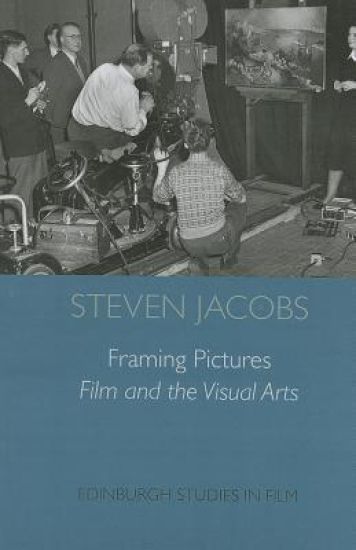
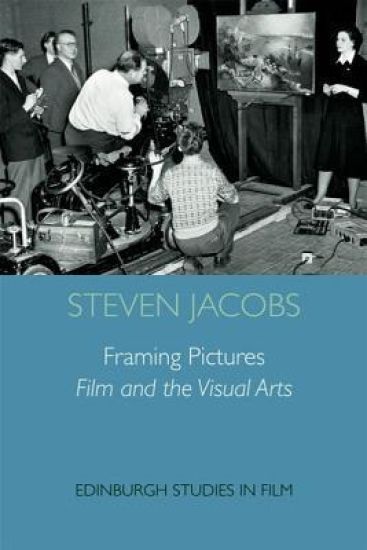
Through the feature films and documentaries of directors including Emmer, Erice, Godard, Hitchcock, Pasolini, Resnais, Rossellini and Storck, Jacobs examines the way films 'animate' artworks by means of cinematic techniques, such as camera movements and editing, or by integrating them into a narrative. He explores how this 'mobilization' of the artwork is brought into play in art documentaries and artist biopics, as well as in feature films containing key scenes situated in museums. The tension between stasis and movement is also discussed in relation to modernist cinema, which often includes tableaux vivants combining pictorial, sculptural and theatrical elements. This tension also marks the aesthetics of the film still, which have inspired prominent art photographers such as Cindy Sherman and Jeff Wall. Illustrated throughout, Jacobs' study of the presence of art in film, alongside the omnipresence of the filmic image in today's art museums, is an engaging work for students and scholars of film and art alike.
Supervisory Skills for the Technical Manager: A Guide to Success focuses exclusively on the dynamics of being a technical manager such as a scientist, programmer, or engineer. An R&D environment demands modified management techniques and this book explores how to do so. Drawing of years of experience to provide technical managers with various tools and ways to apply them in supervisory situation, this essential title includes exercises, templates and checklists to accelerate their uses and applications on the job. In addition, case studies are included throughout to thoroughly explain and explore the concepts discussed. Key topics include handing the transition to supervising others in research and development, the characteristics needed to motivate personnel in a R&D environment as compared to other areas of business are detailed. The pitfalls and challenges of managing technical personnel, how delegating can build an effective team that can produce superior results, and how to monitor the work of previously independent personnel are also discussed.