Kirjojen hintavertailu. Mukana 12 249 530 kirjaa ja 12 kauppaa.

Kirjailija

Steven Johnson

Kirjat ja teokset yhdessä paikassa: 53 kirjaa, julkaisuja vuosilta 2002-2025, suosituimpien joukossa Visión de futuro. Vertaile teosten hintoja ja tarkista saatavuus suomalaisista kirjakaupoista.

53 kirjaa

Kirjojen julkaisuhaarukka 2002-2025.

Farsighted

Farsighted

Steven Johnson

Riverhead Books,U.S.
2018
sidottu
A groundbreaking book about making once-in-a-lifetime decisions, from the bestselling author of How We Got to Now and Where Good Ideas Come From Plenty of books offer useful advice on how to get better at making quick-thinking, intuitive choices. But what about more consequential decisions, the ones that affect our lives for years, or centuries, to come? Our most powerful stories revolve around these kinds of decisions: where to live, whom to marry, what to believe, whether to start a company, how to end a war. Full of the beautifully crafted storytelling and novel insights that Steven Johnson's fans know to expect, Farsighted draws lessons from cognitive science, social psychology, military strategy, environmental planning, and great works of literature. Everyone thinks we are living in an age of short attention spans, but we've actually learned a lot about making long-term decisions over the past few decades. Johnson makes a compelling case for a smarter and more deliberative decision-making approach. He argues that we choose better when we break out of the myopia of single-scale thinking and develop methods for considering all the factors involved. There's no one-size-fits-all model for the important decisions that can alter the course of a life, an organization, or a civilization. But Farsighted explains how we can approach these choices more effectively, and how we can appreciate the subtle intelligence of choices that shaped our broader social history.
Farsighted

Farsighted

Steven Johnson

Penguin USA
2018
nidottu
Big, life-altering decisions matter so much more than the decisions we make every day, and they're also the most difficult: where to live, whom to marry, what to believe, whether to start a company, how to end a war. There's no one-size-fits-all approach for addressing these kinds of conundrums. Steven Johnson's classic Where Good Ideas Come From inspired creative people all over the world with new ways of thinking about innovation. In Farsighted, he uncovers powerful tools for honing the important skill of complex decision-making. While you can't model a once-in-a-lifetime choice, you can model the deliberative tactics of expert decision-makers. These experts aren't just the master strategists running major companies or negotiating high-level diplomacy. They're the novelists who draw out the complexity of their characters' inner lives, the city officials who secure long-term water supplies, and the scientists who reckon with future challenges most of us haven't even imagined. The smartest decision-makers don't go with their guts. Their success relies on having a future-oriented approach and the ability to consider all their options in a creative, productive way. Through compelling stories that reveal surprising insights, Johnson explains how we can most effectively approach the choices that can chart the course of a life, an organization, or a civilization. Farsighted will help you imagine your possible futures and appreciate the subtle intelligence of the choices that shaped our broader social history.

Wonderland

Wonderland

Steven Johnson

Pan Macmillan
2017
nidottu
'The book is a house of wonders' The New York Times'Steven Johnson is the Darwin of technology' Walter Issacson, author of Steve JobsWhat connects Paleolithic bone flutes to the invention of computer software? Or the Murex sea snail to the death of the great American city? How does the bag of crisps you hold in your hand help tell the story of humanity itself? In his brilliant new work on the history of innovation, international bestseller Steven Johnson argues that the pursuit of novelty and wonder has always been a powerful driver of world-shaping technological change. He finds that that throughout history, the cutting edge of innovation lies wherever people are working the hardest to keep themselves and others amused. Johnson's storytelling is just as delightful as the inventions he describes, full of surprising stops along the journey from simple concepts to complex modern systems. He introduces us to the colourful innovators of leisure: the explorers, proprietors, showmen, and artists who changed the trajectory of history with their luxurious wares, exotic meals, taverns, gambling tables, and magic shows.Johnson compellingly argues that observers of technological and social trends should be looking for clues in novel amusements. You'll find the future wherever people are having the most fun.
The Book on FMLA: What It Is and How to Prevent Abuse

The Book on FMLA: What It Is and How to Prevent Abuse

Steven Johnson

Instant Publishing Group
2016
nidottu
With this book, I want to help you learn about the Family and Medical Leave Act (FMLA) and to be more comfortable working with it, help you comply with the law, help your employees benefit from it, and help you guide your managers work with employees in using it. Most people who use FMLA need it for a legitimate reason, but some employees may be taking advantage of the law and claiming leave fraudulently. Inside, learn what is required of employers and employees, what qualifies for FMLA, and gain advice on preventing misuse and abuse of FMLA. This book can help you be more confident in administering FMLA, knowing you are complying with the law.
Die Erfindung der Zukunft

Die Erfindung der Zukunft

Steven Johnson

Springer-Verlag Berlin and Heidelberg GmbH Co. KG
2016
nidottu
Ein neuer Blick auf die Geschichte und Macht großer Ideen In dieser bebilderten Darstellung sechs großer technologischer Neuerungen, die unsere moderne Welt auf vielfältige Weise prägen, zeichnet Steven Johnson die Geschichte der Innovation über die Jahrhunderte nach, indem er bedeutsame Facetten des modernen Alltags (seien es Kühleinrichtungen, Uhren oder Brillengläser) von ihrer Erfindung durch Hobbyforscher, Amateure und Unternehmer bis zu ihren unerwarteten historischen Konsequenzen verfolgt.Das Buch steckt voller überraschender Schilderungen zufälliger genialer Entdeckungen und brillanter Fehlschläge - wie die Geschichte des französischen Verlegers, der den Phonographen schon vor Edison erfunden hatte, oder die des Hollywood-Stars, der zur Entwicklung der Technik hinter WLAN und Bluetooth beitrug. Dabei deckt Johnson immer wieder unerwartete Verbindungen zwischen scheinbar unzusammenhängenden Feldern auf: So ermöglichte die Erfindung der Klimatisierung gewaltige Wanderungsbewegungen von Menschen, nämlich in Millionenstädte wie Dubai oder Phoenix, die ansonsten praktisch unbewohnbar wären; Pendeluhren trugen dazu bei, die Industrielle Revolution auszulösen; sauberes Wasser erwies sich als Voraussetzung für die Produktion von Computer-Chips.Die Erfindung der Zukunft ist die Geschichte jener kollaborativen Netzwerke, die unsere moderne Welt schufen – informativ, oft provokativ und immer unterhaltsam.
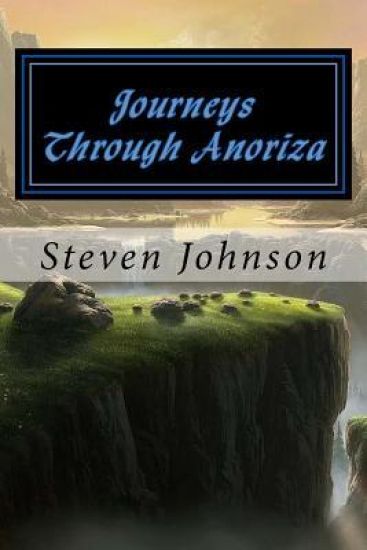
Journeys Through Anoriza: Book One

Journeys Through Anoriza: Book One

Steven Johnson

Createspace Independent Publishing Platform
2016
nidottu
Journeys Through Anoriza: Book One, the first installment of the series; is a tale about a half elf and half lycan (werewolf) warrior outlaw named Zero and his close friends Raven and Kamikaze. After Zero's family is brutally murdered, or so he thought, he and his friends journey through Anoriza fighting to protect and save their world.Unlike the rest of the people of Anoriza, Zero and his friends just want to live in peace and keep to themselves. Unfortunately, the leaders of the The Forsaken, a band of evil creatures trying to take over the world, have placed bounties and false criminal titles upon Zero, thus creating a never ending fight-for-your-life situation for Zero and his friends. Eventually Zero, Raven and Kamikaze come to terms with being dragged into this world war and join others in the cause for independence. Due to horrid circumstances brought upon the group, deeply hidden secrets were forced to be shared. By sharing these secrets Zero comes to find out the family he thought to have been slaughtered may still be alive. Along his journey, he forms some unlikely friendships, and united together with his hidden family, the group is able to form a militarized defense and strategize against The Forsaken.
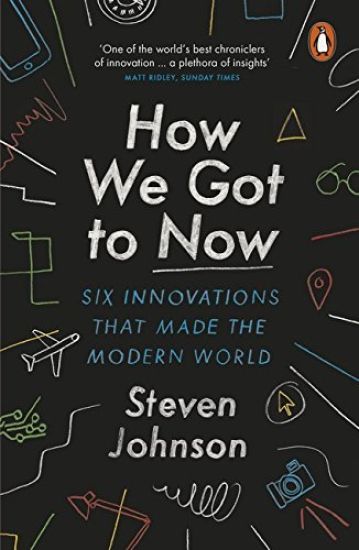
How We Got to Now

How We Got to Now

Steven Johnson

Penguin Books Ltd
2015
pokkari
From Steven Johnson, the bestselling author of Where Good Ideas Come From, comes How We Got to Now, the companion book to his six-part BBC One television series exploring the power and the legacy of great ideas.How did photography bring about social reform? What connects refrigeration to Hollywood? And how did our battle against dirt help create smartphones? In this story of ingenious breakthroughs and unsung heroes, Steven Johnson explores the essential innovations that changed the world and how we live in it.'A new Steven Johnson book is something not to be missed. The author has become the leading writer on how inventions happen' Daniel Finkelstein, The Times, Books of the Year'Graceful and compelling ... you'll find yourself exhilarated' The New York Times Book Review'Readable, entertaining, and a challenge to any jaded sensibility that has become inured to the everyday miracles all around us' Peter Forbes, Guardian'This nimble history of invention . . .is a many-layered delight' Nature
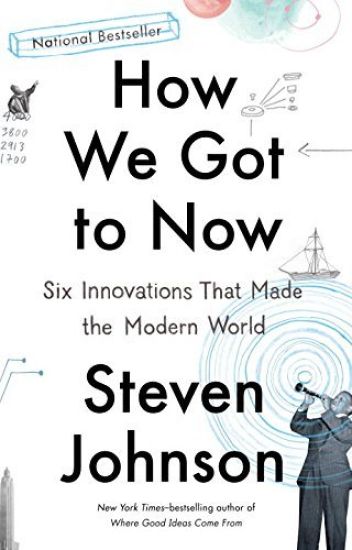
How We Got to Now: Six Innovations That Made the Modern World
From the New York Times-bestselling author of Where Good Ideas Come From and Unexpected Life, a new look at the power and legacy of great ideas.In this illustrated history, Steven Johnson explores the history of innovation over centuries, tracing facets of modern life (refrigeration, clocks, and eyeglass lenses, to name a few) from their creation by hobbyists, amateurs, and entrepreneurs to their unintended historical consequences. Filled with surprising stories of accidental genius and brilliant mistakes--from the French publisher who invented the phonograph before Edison but forgot to include playback, to the Hollywood movie star who helped invent the technology behind Wi-Fi and Bluetooth--How We Got to Now investigates the secret history behind the everyday objects of contemporary life. In his trademark style, Johnson examines unexpected connections between seemingly unrelated fields: how the invention of air-conditioning enabled the largest migration of human beings in the history of the species--to cities such as Dubai or Phoenix, which would otherwise be virtually uninhabitable; how pendulum clocks helped trigger the industrial revolution; and how clean water made it possible to manufacture computer chips. Accompanied by a major six-part television series on PBS, How We Got to Now is the story of collaborative networks building the modern world, written in the provocative, informative, and engaging style that has earned Johnson fans around the globe.
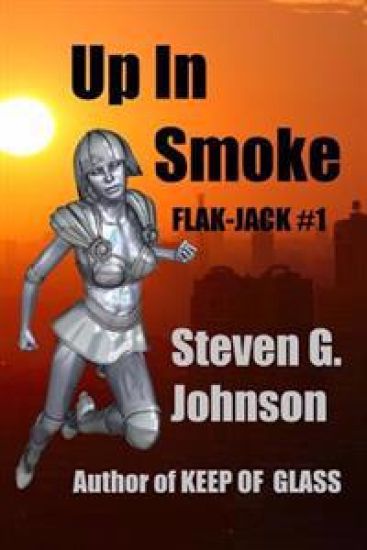
Up In Smoke: Flak-Jack #1

Up In Smoke: Flak-Jack #1

Steven Johnson

Createspace Independent Publishing Platform
2014
nidottu
The crooks and punks all have superpowers now -- they can fry you any time they like. Who'd stay on the police force in a town like this? Only the men who need to be heroes very, very badly.Marc Chaves looks up to the superheroes who battle evil in the skies above. But all he has is a badge and a flak jacket. Will it be enough? It better be, because ready or not, Marc's going into action as Flak-Jack, the Bulletproof Man
Advances in FDTD Computational Electrodynamics: Photonics and Nanotechnology

Advances in FDTD Computational Electrodynamics: Photonics and Nanotechnology

Steven Johnson; Ardavan Oskooi; Allen Taflove

Artech House Publishers
2013
sidottu
Advances in photonics and nanotechnology have the potential to revolutionize humanity's ability to communicate and compute. To pursue these advances, it is mandatory to understand and properly model interactions of light with materials such as silicon and gold at the nanoscale, i.e., the span of a few tens of atoms laid side by side. These interactions are governed by the fundamental Maxwell's equations of classical electrodynamics, supplemented by quantum electrodynamics. This book presents the current state-of-the-art in formulating and implementing computational models of these interactions. Maxwell's equations are solved using the finite-difference time-domain (FDTD) technique, pioneered by the senior editor, whose prior Artech House books in this area are among the top ten most-cited in the history of engineering. This cutting-edge resource helps readers understand the latest developments in computational modeling of nanoscale optical microscopy and microchip lithography, as well as nanoscale plasmonics and biophotonics.
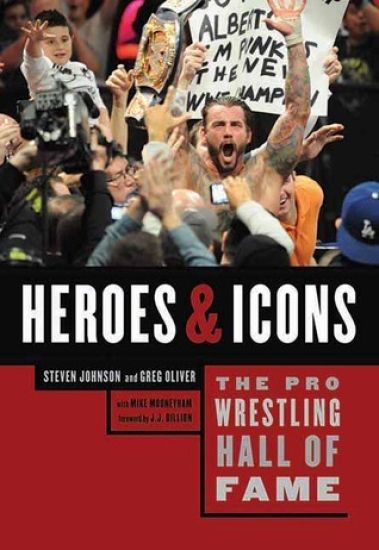
The Pro Wrestling Hall of Fame

The Pro Wrestling Hall of Fame

Steven Johnson; Greg Oliver

ECW Press,Canada
2012
nidottu
The good guys of professional wrestling take the spotlight in this comprehensive examination of the memorable characters who inspired fans, providing insight into what makes a great hero. Compiled using firsthand interviews with hundreds of wrestlers, managers, promoters, and historians, these entertaining profiles document wrestling's golden boys from the 1930s to today. It discusses the roles of wrestling superstars that include Hulk Hogan, Dusty Rhodes, and The Rock as well as lesser known figures, including Tiger Jeet Singh and Whitey Caldwell. With more than 100 action-packed photos, this engaging and informative book invites both devoted fans and newcomers to the sport to appreciate the rich history of these esteemed performers.
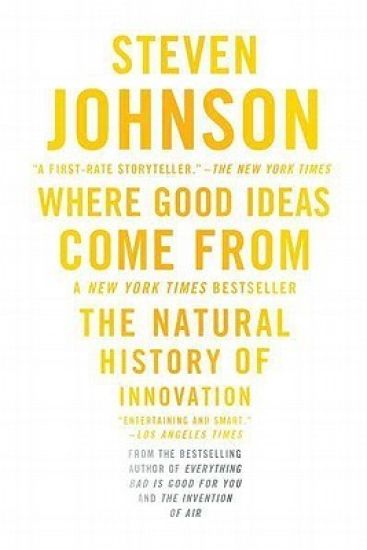
Where Good Ideas Come from: The Natural History of Innovation
A fascinating deep dive on innovation from the New York Times bestselling author of How We Got To Now and Unexpected Life The printing press, the pencil, the flush toilet, the battery--these are all great ideas. But where do they come from? What kind of environment breeds them? What sparks the flash of brilliance? How do we generate the breakthrough technologies that push forward our lives, our society, our culture? Steven Johnson's answers are revelatory as he identifies the seven key patterns behind genuine innovation, and traces them across time and disciplines. From Darwin and Freud to the halls of Google and Apple, Johnson investigates the innovation hubs throughout modern time and pulls out the approaches and commonalities that seem to appear at moments of originality.
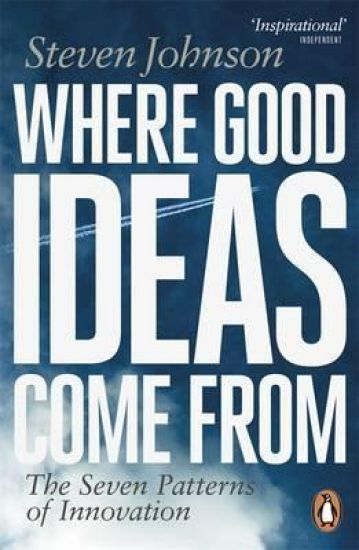
Where Good Ideas Come From

Where Good Ideas Come From

Steven Johnson

Penguin Books Ltd
2011
pokkari
From the author of Emergence and The Ghost Map, Steven Johnson's Where Good Ideas Come From: The Seven Patterns of Innovation identifies key principles that are the driving force of creativity. Learn how:A slow hunch can be much more valuable than a Eureka momentThe connected 'hive mind' is smarter than the lone thinkerWhere you think matters just as much as what you're thinkingThe best ideas come from building on the ideas and inventions of others From the Renaissance to satellites, medical breakthroughs to social media, Charles Darwin to Marconi, Steven Johnson shows how, by recognising where and how patterns of creativity occur, we can all discover the secrets of inspiration. 'Inspirational' - Independent 'Exhilarating ... An entirely new way of looking at almost everything' - Guardian 'A huge diversity of bright ideas' - Financial Times 'Johnson finds new and original things to say about the nature of innovation, and the different forms it can take' - Economist, Books of the Year 'An enthralling work full of counter-intuitive insights' - Daily Mail Steven Johnson is the author of the acclaimed books Everything Bad is Good for You, Mind Wide Open, Emergence and Interface Culture. His writing appeared in the Guardian, the New Yorker, Nation and Harper's, as well as the op-ed pages of The New York Times and the Wall Street Journal. He is a Distinguished Writer In Residence at NYU's School Of Journalism, and a Contributing Editor to Wired.
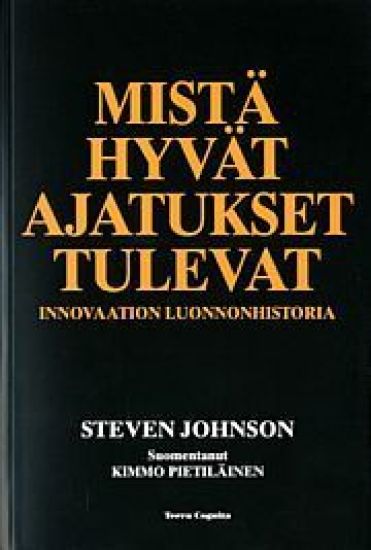
Mistä hyvät ajatukset tulevat

Mistä hyvät ajatukset tulevat

Steven Johnson

Terra Cognita
2011
nidottu
Hyvän idean tunnistaa, kun sen näkee. Kirjapaino, lyijykynä, vesivessa, paristo ja Google ovat hyviä ideoita. Mutta mistä ne tulevat?Millainen ympäristö parantaa hyvän idean saamisen todennäköisyyttä?Mikä käynnistää neronleimauksen?Miten tuotamme mullistavat ajatukset, jotka kehittävät uraamme, elämäämme, yhteiskuntaamme, kulttuuriamme?Tässä teoksessa Steven Johnson tarttuu näihin ongelmiin ja hänen vastauksensa ovat paljastavia ja vakuuttavia. Neurobiologiasta kaupunkitutkimukseen ja internetiin ulottuvilla havainnoilla hän tunnistaa aidon innovaation seitsemän keskeistä hahmoa ja kertoo niiden tarinan ajassa ja eri aloilla. Miten ne ovat vaikuttaneet siihen, että maailmamme on sellainen kuin on.Johnsonin havainnot poikkeavat vakiintuneesta innovaatioita koskevasta ajattelusta, joka Johnsonin löydösten perusteella on osittain virheellistä.Olennaista on, että innovaatiolla on keskuksensa, olosuhteensa ja fysikkaliset ympäristönsä. Ne voidaan tunnistaa ja niihin voidaan vaikuttaa suurten ajatusten ja niitä kehittävien ihmisten toiminnan helpottamiseksi.Steven Johnsonin aikaisemmin suomeksi ilmestynyt teos on Kaikki huono on hyväksi.
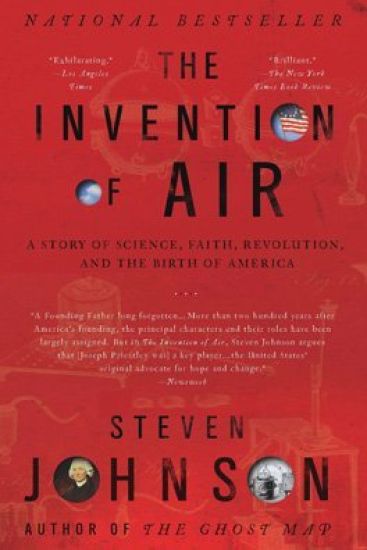
The Invention of Air: A Story of Science, Faith, Revolution, and the Birth of America
From the bestselling author of How We Got To Now, The Ghost Map and Farsighted, a new national bestseller: the "exhilarating"( Los Angeles Times) story of Joseph Priestley, "a founding father long forgotten"(Newsweek) and a brilliant man who embodied the relationship between science, religion, and politics for America's Founding Fathers. In The Invention of Air, national bestselling author Steven Johnson tells the fascinating story of Joseph Priestley--scientist and theologian, prot g of Benjamin Franklin, friend of Thomas Jefferson--an eighteenth-century radical thinker who played pivotal roles in the invention of ecosystem science, the discovery of oxygen, the uses of oxygen, scientific experimentation, the founding of the Unitarian Church, and the intellectual development of the United States. As he did so masterfully in The Ghost Map, Steven Johnson uses a dramatic historical story to explore themes that have long engaged him: innovative strategies, intellectual models, and the way new ideas emerge and spread, and the environments that foster these breakthroughs.
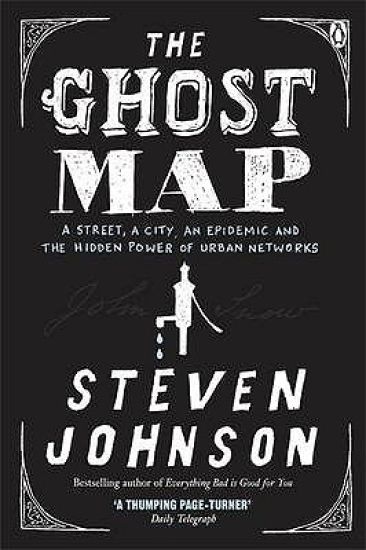
The Ghost Map

The Ghost Map

Steven Johnson

Penguin Books Ltd
2008
pokkari
From the bestselling author of Everything Bad is Good For You, Steven Johnson's The Ghost Map vividly recreates Victorian London to show how huge populations live together, how cities can kill - and how they can save us. Steven Johnson is one of today's most exciting writers about popular culture, urban living and new technology. In The Ghost Map he tells the story of the terrifying cholera epidemic that engulfed London in 1854, and the two unlikely heroes - anesthetist Doctor John Snow and affable clergyman Reverend Henry Whitehead - who defeated the disease through a combination of local knowledge, scientific research and map-making. In telling their extraordinary story, Steven Johnson also explores a whole world of ideas and connections, from urban terror to microbes, ecosystems to the Great Stink, cultural phenomena to street life. 'A wonderful book' Mail on Sunday 'A thumping page-turner' Daily Telegraph 'Enthralling ... vivid and gripping' New Statesman 'Exhilarating' Spectator 'It is a rattling scientific mystery, but in the hands of Steven Johnson it becomes something much richer ... a vast, interconnected picture about urban and bacterial life ... it is difficult to do justice to the exuberance of Johnson's ideas' Scotland on Sunday Steven Johnson is the author of the acclaimed books Everything Bad is Good for You, Mind Wide Open, Where Good Ideas Come From, Emergence and Interface Culture. His writing appeared in the Guardian, the New Yorker, Nation and Harper's, as well as the op-ed pages of The New York Times and the Wall Street Journal. He is a Distinguished Writer In Residence at NYU's School Of Journalism, and a Contributing Editor to Wired.