Kirjojen hintavertailu. Mukana 12 595 353 kirjaa ja 12 kauppaa.

Kirjailija

Steven Lukes

Kirjat ja teokset yhdessä paikassa: 16 kirjaa, julkaisuja vuosilta 1985-2026, suosituimpien joukossa Power. Vertaile teosten hintoja ja tarkista saatavuus suomalaisista kirjakaupoista.

16 kirjaa

Kirjojen julkaisuhaarukka 1985-2026.

Power

Power

Steven Lukes

BLOOMSBURY PUBLISHING PLC
2026
sidottu
Since its publication in 1974, Power has consolidated its reputation as a classic work and a major reference point within social and political theory by assessing the main debates about how to conceptualize and study power. New to the Revelations series, this revised edition presents a brand new introduction by Steven Lukes on the nature of the power debate in the world today. It includes the original text from the first and all subsequent editions, and is essential reading for anyone interested in the concept of power.
Power

Power

Steven Lukes

BLOOMSBURY PUBLISHING PLC
2026
nidottu
Since its publication in 1974, Power has consolidated its reputation as a classic work and a major reference point within social and political theory by assessing the main debates about how to conceptualize and study power. New to the Revelations series, this revised edition presents a brand new introduction by Steven Lukes on the nature of the power debate in the world today. It includes the original text from the first and all subsequent editions, and is essential reading for anyone interested in the concept of power.
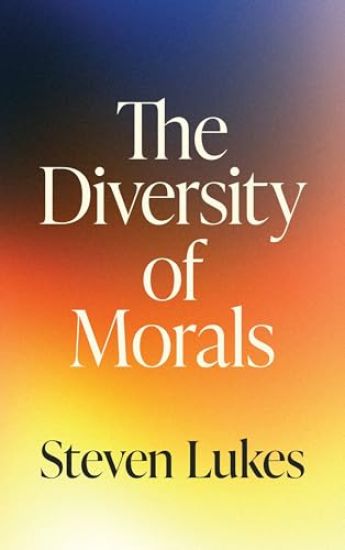
The Diversity of Morals

The Diversity of Morals

Steven Lukes

PRINCETON UNIVERSITY PRESS
2025
sidottu
How to make sense of the divergence between philosophers’ quest for a single morality and social scientists’ assumption that there are multiple moralitiesWhen we speak of morals, what are we speaking of? Is morality singular (as many philosophers tend to assume, even if they don’t agree on what it is) or are there multiple moralities (which social scientists, notably anthropologists, study)? In The Diversity of Morals, Steven Lukes brings together these differing perspectives. Drawing on philosophy, sociology, social anthropology, psychology, and political theory, Lukes considers what the moral domain includes and what it excludes; how what is moral differs from what is conventional or customary in different contexts; whether morality is unified or a series of fragments; and, if there is a diversity of morals, what that diversity consists of.Lukes looks both ways—toward philosophers’ quest for a single best answer to the question of morality and toward sociologists’ and anthropologists’ assumption that there are several, even many, even very many, answers—to make sense of their divergence. He traces the two approaches back to their beginnings, linking them to the differences between the ideas of David Hume, Johann Gottfried Herder, and Adam Smith. Lukes examines how we went from viewing the social world as “us” versus “them” to thinking of morality as universal, envisioning shared humanity and the sacredness of the human person, and what prevents this vision from being realized. Considering the breakdown of moral constraints in the perpetration of mass atrocities, Lukes asks if there are phenomena that are beyond moral justification. And he raises this crucial question: in light of the vast variation that history and the ethnographic record display, how wide and how deep is the diversity of morals?
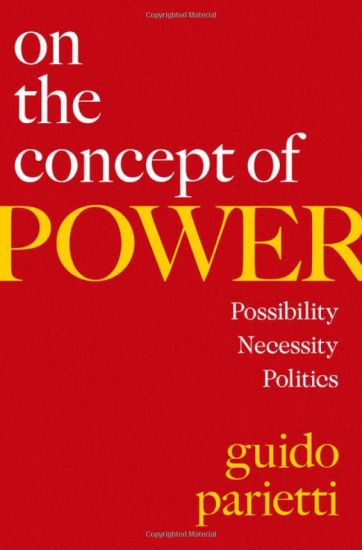
On the Concept of Power

On the Concept of Power

Guido Parietti; Steven Lukes

OXFORD UNIVERSITY PRESS INC
2022
sidottu
"Power" is the central organizing concept for politics. However, despite decades of debate across political science, sociology, and philosophy, scholars have not yet settled on a proper definition of power. Existing definitions fail because they are either circular or so far removed from the ordinary, quotidien meaning of power that they cannot credibly claim to be about the same concept. Political science has looked at how power works, but according to Guido Parietti, fails to define what power means. In On the Concept of Power, Parietti proposes a more proper definition of power--as the condition of having available possibilities and representing them as such--and examines its implications for the study of politics, both empirical and normative. By neglecting the category of possibility, significant portions of political science and philosophy become incapable of conceptualizing power, and therefore politics. Specifically, Parietti asserts that the main failure of political science is in obscuring power's correspondence to the category of possibility in favor of causality and probability; political philosophy, on the other hand, tends to prioritize various forms of a teleologically oriented normativity. All these approaches end up discarding possibility in favor of oriented potentialities, ultimately anchored to various forms of necessity, and are therefore incapable of properly conceptualizing power in accordance with its meaning in ordinary language. Bringing together different disciplinary discourses, On the Concept of Power concludes by examining the conditions for power to have an actual referent; in other words, for politics to appear in our world. In this original and ambitious critique of the prevailing approaches to political theory and political science, Parietti examines what it means to have power and what may endanger our access to and exercise of it.
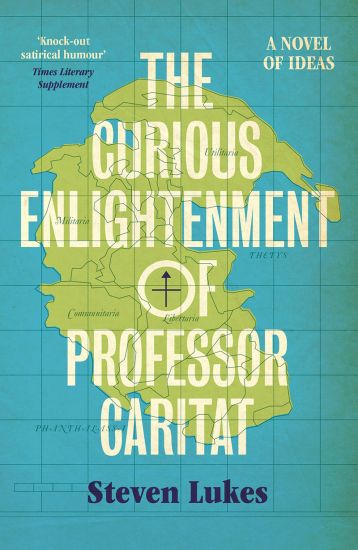
The Curious Enlightenment of Professor Caritat
The Curious Enlightenment of Professor Caritat is a brilliant fictional journey through Western political philosophy by one of our most original thinkers. Professor Caritat, a middle-aged Candide, walks naively through the neighbouring countries of Utilitaria, Communitaria and Libertaria, in his quest to find the best of all possible worlds. Cut loose from the confines of his ivory tower, this wandering professor is made to confront the perplexed state of modern thinking in this dazzling comedy of ideas.
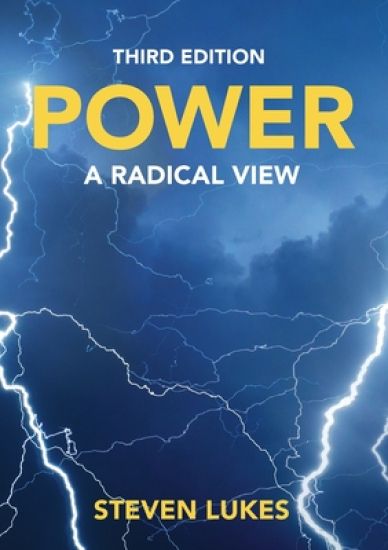
Power

Power

Steven Lukes

Red Globe Press
2021
nidottu
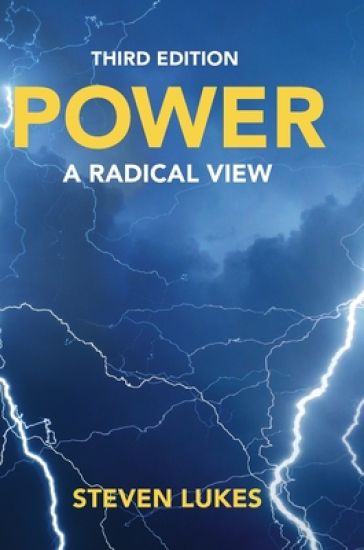
The third edition of this seminal work includes the original text, first published in 1974, the updates and reflections from the second edition and two groundbreaking new chapters. Power: A Radical View assesses the main debates about how to conceptualize and study power, including the influential contributions of Michel Foucault. The new material includes a development of Lukes's theory of power and presents empirical cases to exemplify this. Including a refreshed introduction, this third edition brings a book that has consolidated its reputation as a classic work and a major reference point within Social and Political Theory to a whole new audience. It can be used on modules across the Social and Political Sciences dealing with the concept of power and its manifestation in the world. It is also essential reading for all undergraduate and postgraduate students interested in the history of Social and Political Thought.New to this Edition:- A revised and refreshed introduction- Two new chapters on 'Domination and Consent' and 'Exploring the Third Dimension'
Power

Power

Steven Lukes

Red Globe Press
2021
sidottu
The third edition of this seminal work includes the original text, first published in 1974, the updates and reflections from the second edition and two groundbreaking new chapters. Power: A Radical View assesses the main debates about how to conceptualize and study power, including the influential contributions of Michel Foucault. The new material includes a development of Lukes's theory of power and presents empirical cases to exemplify this. Including a refreshed introduction, this third edition brings a book that has consolidated its reputation as a classic work and a major reference point within Social and Political Theory to a whole new audience. It can be used on modules across the Social and Political Sciences dealing with the concept of power and its manifestation in the world. It is also essential reading for all undergraduate and postgraduate students interested in the history of Social and Political Thought.New to this Edition:- A revised and refreshed introduction- Two new chapters on 'Domination and Consent' and 'Exploring the Third Dimension'
Liberals and Cannibals

Liberals and Cannibals

Steven Lukes

Verso Books
2017
nidottu
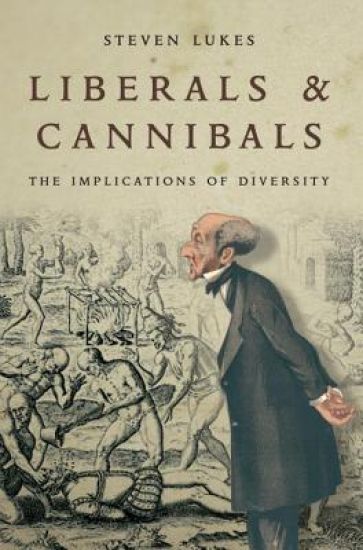
Can the tension between relativism and the moral universalism current in contemporary politics be resolved within the framework of liberalism? How is liberal society to interpret the diversity of morals? Is pluralism the appropriate response? How does pluralism differ from the widely condemned ethnocentric relativism-"liberalism for the Liberals, cannibalism for the cannibals"?Confronting liberal thought with its own limitations, Steven Lukes' work is more relevant than ever. While recognizing the dangers of moral imperialism, Lukes argues that a relativist position based on identifying clearly distinct cultural and moral communities is incoherent. Drawing on work in anthropology and philosophy, he examines the nature of social justice, the politics of identity and human rights theory.
Durkheim and the Law

Durkheim and the Law

Steven Lukes; Andrew Scull

Red Globe Press
2013
nidottu
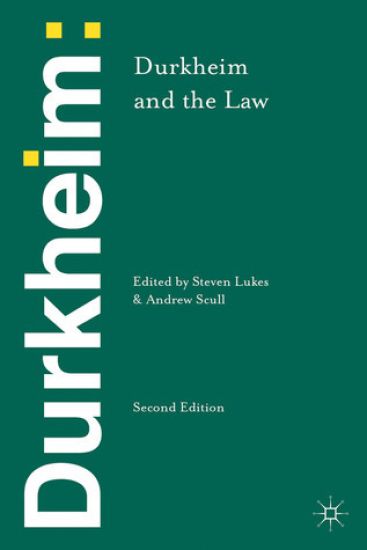
The law was central to Durkheim's sociological theory and to his efforts to establish sociology as a distinctive discipline. This revised and updated second edition of Durkheim and the Law brings together key texts which demonstrate the development of Durkheim's thinking on the sociology of law, several of them newly translated here. The editors, both world-renowned Durkheim scholars, provide a comprehensive analysis of the intellectual significance and distinctiveness of Durkheim's work on the subject. They show how his ideas evolved over time; how they contributed to the development of a distinctively Durkheimian vision of a science of society; and they provide a comprehensive assessment of the strengths and weaknesses of his theorizing about law, as well as its continuing relevance for contemporary sociology. Enriched with a new introduction and useful learning features, this book remains a major reference for students of socio-legal theory.
Durkheim and the Law

Durkheim and the Law

Steven Lukes; Andrew Scull

Red Globe Press
2013
sidottu
The law was central to Durkheim's sociological theory and to his efforts to establish sociology as a distinctive discipline. This revised and updated second edition of Durkheim and the Law brings together key texts which demonstrate the development of Durkheim's thinking on the sociology of law, several of them newly translated here. The editors, both world-renowned Durkheim scholars, provide a comprehensive analysis of the intellectual significance and distinctiveness of Durkheim's work on the subject. They show how his ideas evolved over time; how they contributed to the development of a distinctively Durkheimian vision of a science of society; and they provide a comprehensive assessment of the strengths and weaknesses of his theorizing about law, as well as its continuing relevance for contemporary sociology. Enriched with a new introduction and useful learning features, this book remains a major reference for students of socio-legal theory.
Maktens ansikten

Maktens ansikten

Steven Lukes

Bokförlaget Daidalos
2008
nidottu
Vi talar om makt i en rad olika sammanhang. För det mesta vet vi, eller tror vi oss veta, exakt vad vi menar. I vardagslivet såväl som i vetenskapliga arbeten diskuteras var makten finns, vilken omfattning den har, vem som har mer respektive mindre makt, hur man kan förvärva, motstå, erövra, utnyttja, säkra, tygla, dela, sprida, fördela, utjämna eller maximera makten, hur man kan se till att den fungerar effektivare och hur man kan begränsa eller undvika dess verkningar. I Power: A Radical View gav Steven Lukes för mer än trettio år sedan ett uppmärksammat svar på frågan om hur makt bör förstås och studeras. Denna volym innehåller Lukes nu klassiska lilla bok tillsammans med en introduktion som sätter in den i sitt sammanhang. »Ingen som intresserar sig för politik kan kosta på sig att gå miste om denna mästerliga utredning av makt som förmåga.» Ira Katznelson, Columbia University »Liksom den första utgåvan är detta en enastående bok. Den kommer under de kommande trettio åren att förbli en klassisk möjligen den klassiska behandlingen av makt på engelska.» Colin Hay, Birmingham University
Moral Relativism: Big Ideas/Small Books

Moral Relativism: Big Ideas/Small Books

Steven Lukes

St. Martins Press-3pl
2008
nidottu
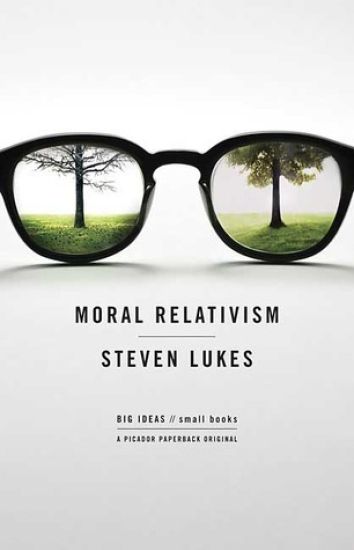
Moral relativism attracts and repels. What is defensible in it and what is to be rejected? Do we as human beings have no shared standards by which we can understand one another? Can we abstain from judging one another's practices? Do we truly have divergent views about what constitutes good and evil, virtue and vice, harm and welfare, dignity and humiliation, or is there some underlying commonality that trumps it all? These questions turn up everywhere, from Montaigne's essay on cannibals, to the UN Declaration of Human Rights, to the debate over female genital mutilation. They become ever more urgent with the growth of mass immigration, the rise of religious extremism, the challenges of Islamist terrorism, the rise of identity politics, and the resentment at colonialism and the massive disparities of wealth and power between North and South. Are human rights and humanitarian interventions just the latest form of cultural imperialism? By what right do we judge particular practices as barbaric? Who are the real barbarians? In this provocative new book, the distinguished social theorist Steven Lukes takes an incisive and enlightening look at these and other challenging questions and considers the very foundations of what we believe, why we believe it, and whether there is a profound discord between "us" and "them."
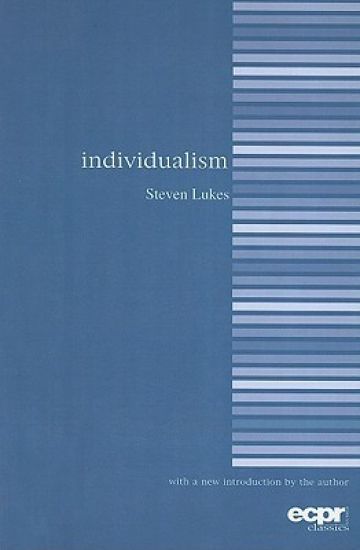
Individualism

Individualism

Steven Lukes

ECPR Press
2006
nidottu
Individualism embraces a wide diversity of meanings and is widely used by those who criticise and by those who praise Western societies and their culture, by historians and literary scholars in search of the emergence of 'the individual', by anthropologists claiming that there are different, culturally shaped conceptions of the individual or 'person', by philosophers debating what form social science explanations should take and by political theorists defending liberal principles. In this classic text, Steven Lukes discusses what 'individualism' has meant in various national traditions and across different provinces of thought, analysing it into its component unit-ideas and doctrines. He further argues that it now plays a malign ideological role, for it has come to evoke a socially-constructed body of ideas whose illusory unity is deployed to suggest that redistributive policies are neither feasible nor desirable and to deny that there are institutional alternatives to the market.
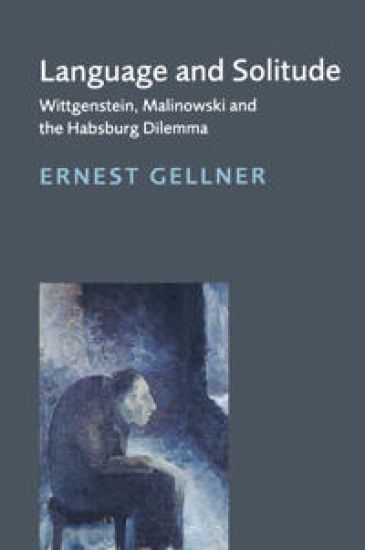
Language and Solitude

Language and Solitude

Ernest Gellner; Steven Lukes

Cambridge University Press
1998
pokkari
Ernest Gellner (1925–1995) has been described as ‘one of the last great central European polymath intellectuals’. His last book throws new light on two leading thinkers of their time. Wittgenstein, arguably the most influential and the most cited philosopher of the twentieth century, is famous for having propounded two radically different philosophical positions. Malinowski, the founder of modern British social anthropology, is usually credited with being the inventor of ethnographic fieldwork, a fundamental research method throughout the social sciences. In a highly original way, Gellner shows how the thought of both men grew from a common background of assumptions - widely shared in the Habsburg Empire of their youth - about human nature, society, and language. Tying together themes which preoccupied him throughout his working life, Gellner epitomizes his belief that philosophy - far from ‘leaving everything as it is’ - is about important historical, social and personal issues.
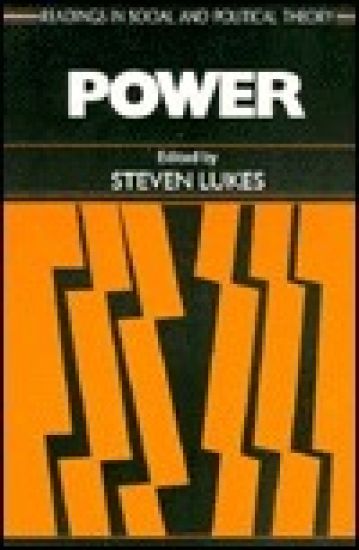
Power (Readings in Social and Political Theory, No. 4)

Power (Readings in Social and Political Theory, No. 4)

Steven Lukes

New York University Press
1986
pokkari
What is power? Is it, as Betrand Russell suggested, "the production of intended effects", or is it the capacity to produce them? And which effects count? Or is Max Weber's definition of power as "the probability that an actor in a social relationship will be in a position to carry out his own will despite resistance" more accurate. What are the outcomes of power and who holds it? These are some of the fundamental questions answered in this colection of classic views of power. Steven Luke's lucid and accessible introduction on the nature of power leads to pieces by Bertrand Russell, Max Weber, Robert Dahl, Hannah Arendt, Jurgen Habermas, Talcott Parsons, Nicos Polantzas, Alvin I. Goldman, Georg Simmel, J. K. Galbraith, Michel Foucault, Gerhard Lenski and Raymond Aron. The book thus provides students of politics and sociology with all the most important readings in a key area of political theory.
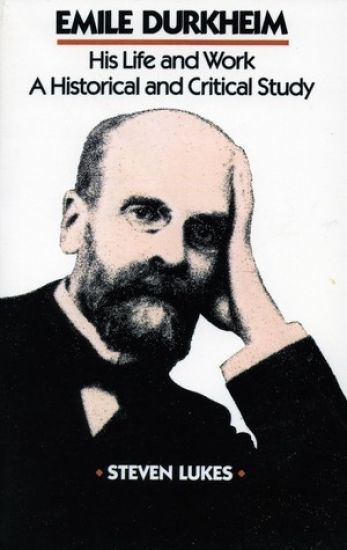
Emile Durkheim

Emile Durkheim

Steven Lukes

Stanford University Press
1985
pokkari
This study of Durkheim seeks to help the reader to achieve a historical understanding of his ideas and to form critical judgments about their value. To some extent these tow aims are contradictory. On the one hand, one seeks to understand: what did Durkheim really mean, how did he see the world, how did his ideas related to one another and how did they develop, how did they related to their biographical and historical context, how were they received, what influence did they have and to what criticism were they subjected, what was it like not to make certain distinctions, not to see certain errors, of fact or of logic, not to know what has subsequently become known? On the other hand, one seeks to assess: how valuable and how valid are the ideas, to what fruitful insights and explanations do they lead, how do they stand up to analysis and to the evidence, what is their present value? Yet it seems that it is only by inducing oneself not to see and only by seeing them that one can make a critical assessment. The only solution is to pursue both aims—seeing and not seeing—simultaneously. More particularly, this book has the primary object of achieving that sympathetic understanding without which no adequate critical assessment is possible. It is a study in intellectual history which is also intended as a contribution to sociological theory.