

Kirjailija
Steven Miller
Kirjat ja teokset yhdessä paikassa: 20 kirjaa, julkaisuja vuosilta 2000-2025, suosituimpien joukossa The Wicked Reborn. Vertaile teosten hintoja ja tarkista saatavuus suomalaisista kirjakaupoista.
20 kirjaa
Kirjojen julkaisuhaarukka 2000-2025.


Critical Care
Taylor Johnston; Steven Miller; Joseph Rumley
OXFORD UNIVERSITY PRESS INC
2023
sidottu
Critical Care: A Problem-Based Learning Approach provides a comprehensive review of the dynamic and ever-changing field of critical care. Its problem-based format incorporates a vast pool of practical, ABA board-exam-style multiple-choice questions for self-assessment, and is an ideal resource for exam preparation as well as ongoing clinical education among trainees and clinicians. Each of its 35 case-based chapters is accompanied by questions and answers, accessible online in a full practice exam. The cases presented are unique, as each chapter begins with a case description, usually a compilation of several actual cases; it then branches out through case-based questions, to increasingly complex situations. This structure is designed to create an authentic experience that mirrors that of working through the nuances of a complicated clinical scenario. The discussion sections that follow offer a comprehensive approach to the chapter's subject matter, thus creating a modern, complete, and up-to-date medical review of that topic.

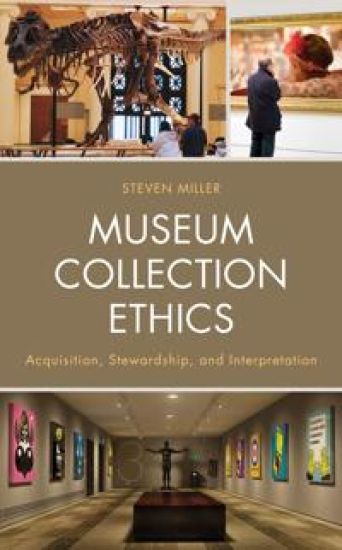
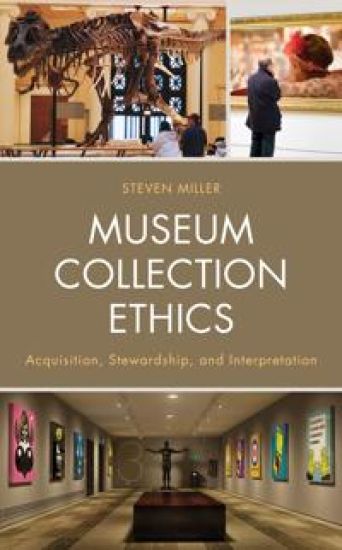
Collection ethics – the third rail of the museum profession. What are the encompassing issues museum face regarding how they acquire, keep and work with their collections? Museum Collection Ethics discusses the complexities inherent in preserving and interpreting the extraordinary range of culturally significant objects entrusted to museums. The book presents an encompassing look at every aspect of the intellectual and stewardship duties museums by definition assume. The differences between ethics, laws, customs, and expectations are discussed. They are not synonymous. Ethics vary widely and are fluid. Essential factors include: ·Defining a museum as an ethical pursuit ·The role of museum governing authorities regarding ethics ·The ethics of collection authority: who is responsible for collection truths ·How museums collect and how ethics influences that activity ·The ethics of assuring collection authenticity ·The ethical access to collections, be it physical or digital ·Ethics and conservation ·Exhibition ethics ·The ethics of collection removals be they voluntary or involuntary This is the first book devoted solely to the ethical concerns museums face regarding their collections.
Collection ethics – the third rail of the museum profession. What are the encompassing issues museum face regarding how they acquire, keep and work with their collections? Museum Collection Ethics discusses the complexities inherent in preserving and interpreting the extraordinary range of culturally significant objects entrusted to museums. The book presents an encompassing look at every aspect of the intellectual and stewardship duties museums by definition assume. The differences between ethics, laws, customs, and expectations are discussed. They are not synonymous. Ethics vary widely and are fluid. Essential factors include: ·Defining a museum as an ethical pursuit ·The role of museum governing authorities regarding ethics ·The ethics of collection authority: who is responsible for collection truths ·How museums collect and how ethics influences that activity ·The ethics of assuring collection authenticity ·The ethical access to collections, be it physical or digital ·Ethics and conservation ·Exhibition ethics ·The ethics of collection removals be they voluntary or involuntary This is the first book devoted solely to the ethical concerns museums face regarding their collections.
Finding a museum job is a highly competitive endeavor today. The unprecedented international growth of museums combined with a similar growth in programs to train staff for these unique institutions has vastly increased the number of qualified applicants for positions of all sorts. Finding work in museums now requires a broad understanding of how employees are sought and hired. This is especially true for those in the early stages of their careers. How to Get a Museum Job provides a detailed look at hiring in the museum job market today. It offers practical inside advice by a museum professional with nearly fifty years in the museum field - as both a seeker and provider of employment. Designed for those just entering or new to the museum field, those seeking to switch jobs or move up the ladder will also find valuable tips
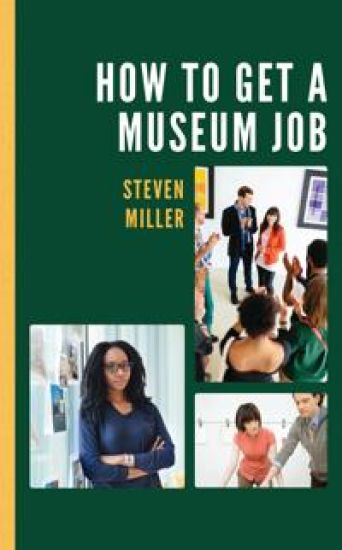
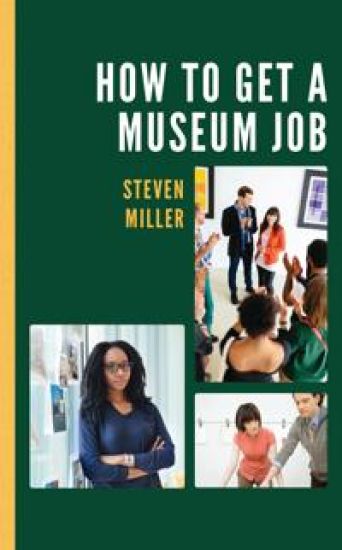
Finding a museum job is a highly competitive endeavor today. The unprecedented international growth of museums combined with a similar growth in programs to train staff for these unique institutions has vastly increased the number of qualified applicants for positions of all sorts. Finding work in museums now requires a broad understanding of how employees are sought and hired. This is especially true for those in the early stages of their careers. How to Get a Museum Job provides a detailed look at hiring in the museum job market today. It offers practical inside advice by a museum professional with nearly fifty years in the museum field - as both a seeker and provider of employment. Designed for those just entering or new to the museum field, those seeking to switch jobs or move up the ladder will also find valuable tips.
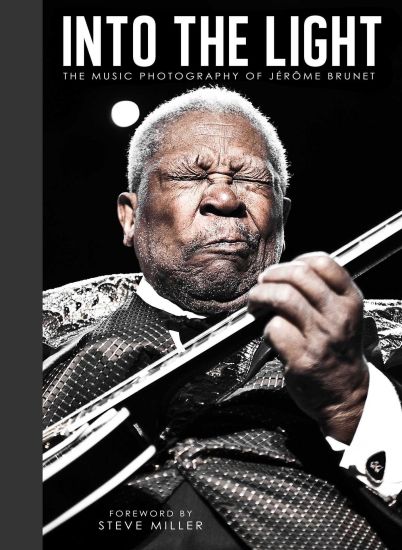
Into the Light: The Photography of Jérôme Brunet
Jérôme Brunet; Steven Miller
Insight Editions
2018
sidottu
In this stunning collection, Into the Light: The Photography of J r me Brunet, renowned music photographer J r me Brunet reflects on twenty years of photographing some of the world's biggest musicians. Brunet got his start in the music world early, playing cello at four years old and continuing on to the guitar in his teens. His early passion for music translated easily to another artistic pursuit--photography. At the Banlieues Bleues Festival in Paris in 1994, Brunet began a successful career as a music photographer, later shooting some of the most famous musicians of all time, including Carlos Santana, Tom Petty, Robert Cray, B.B. King, and Dave Grohl. Brunet's breathtaking style of shooting "contre-jour" or "into the light," in which the photographer shoots toward a light source, has earned him numerous accolades and awards, including a Worldwide Photography Gala Award in 2001, first place at the 2012 International Photo Awards, and the Graphis Photo Annual Silver Award in 2017. In Into the Light: The Photography of J r me Brunet, an intimate retrospective on the last twenty years, the photographer showcases his curated collection of visually arresting photography of the most important names in music.
Deaccessioning Today: Theory and Practice is a comprehensive international overview of deaccessioning. Author Steven Miller covers reasons for removing items from collections, looks at how and why deaccessioning occurs in museums around the world, and discusses recommended disposition procedures. Collections make museums unique. Getting and keeping physical evidence of the human and natural world, and doing so for the long term, is not done by any other organizations, entities, agencies, etc. This characteristic is essential to accept and understand regardless of a museum’s operations. It is especially important when considering what to subtract from collections. Features include: ·In-depth coverage of reasons for deaccessioning including ownership disputes, untenable conservation, redundancy, fakes and forgeries, source of income, safety reasons; ·Processes for both museum-initiated and externally-initiated deaccessions; ·Disposition options including sale, gift, exchange, demotion, destruction, and return; ·Controversies surrounding deaccessions; Deaccessioning Today is for museum professionals, those who are responsible for museums (such as trustees, volunteers, elected officials, and donors), as well as the general public with an interest in how museums operate and why.
Deaccessioning Today: Theory and Practice is a comprehensive international overview of deaccessioning. Author Steven Miller covers reasons for removing items from collections, looks at how and why deaccessioning occurs in museums around the world, and discusses recommended disposition procedures. Collections make museums unique. Getting and keeping physical evidence of the human and natural world, and doing so for the long term, is not done by any other organizations, entities, agencies, etc. This characteristic is essential to accept and understand regardless of a museum’s operations. It is especially important when considering what to subtract from collections. Features include: ·In-depth coverage of reasons for deaccessioning including ownership disputes, untenable conservation, redundancy, fakes and forgeries, source of income, safety reasons; ·Processes for both museum-initiated and externally-initiated deaccessions; ·Disposition options including sale, gift, exchange, demotion, destruction, and return; ·Controversies surrounding deaccessions; Deaccessioning Today is for museum professionals, those who are responsible for museums (such as trustees, volunteers, elected officials, and donors), as well as the general public with an interest in how museums operate and why.
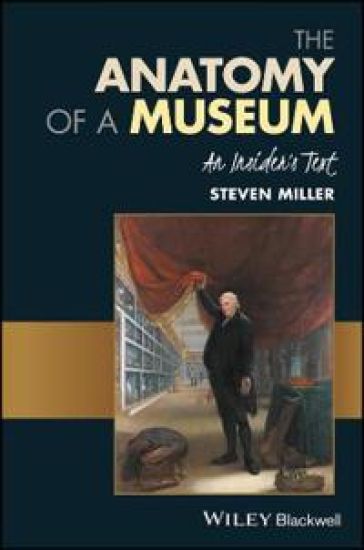
Written by a museum professional and based on a course taught for many years, The Anatomy of a Museum is an engaging and accessible volume that provides a unique insider’s guide to what museums are and how they operate. An insider’s view of the rarefied world of the museum that provides a refreshing and unique account of the reality of the workings of museum lifeThe material has been successfully tested in a course that the author has taught for 14 yearsMiller has extensive experience at all levels of museum work, from painting walls for exhibitions to museum directorshipClearly and engagingly written, the book covers all the component parts and various disciplines of museum operations, and opinions and perspectives are drawn from a deep knowledge of the fieldIncludes useful pedagogical material, including questions, discussion topics, and a range of anecdotes

Written by a museum professional and based on a course taught for many years, The Anatomy of a Museum is an engaging and accessible volume that provides a unique insider’s guide to what museums are and how they operate. An insider’s view of the rarefied world of the museum that provides a refreshing and unique account of the reality of the workings of museum lifeThe material has been successfully tested in a course that the author has taught for 14 yearsMiller has extensive experience at all levels of museum work, from painting walls for exhibitions to museum directorshipClearly and engagingly written, the book covers all the component parts and various disciplines of museum operations, and opinions and perspectives are drawn from a deep knowledge of the fieldIncludes useful pedagogical material, including questions, discussion topics, and a range of anecdotes


Juggalo: Insane Clown Posse and the World They Made is a vivid journey into the heart of a misunderstood subculture. Through firsthand reporting, including interviews with Violent J and Shaggy 2 Dope of the Insane Clown Posse, their friends and family, and numerous devoted fans, Juggalo explores the lives of the proud outsiders who are frequently labeled as a threat or dismissed as a joke. Author and journalist Steve Miller follows ICP across America, hanging out with Juggalos before and after shows, at the legendary annual Gathering of the Juggalos, and at work and home to share their stories. In addition, Juggalo dives deep into the FBI's misguided assault on Juggalo culture and the misidentification of this devoted group of horrorcore fans as a gang. Juggalo is also the chronicle of two hard-luck kids from Detroit who created an empire and became the unwitting stars of a uniquely American grassroots success story. Without the help of radio airplay and with little love from the music industry establishment, ICP went platinum and fostered one of America's most durable subcultures. Juggalo is required reading for the hardcore fan and pop culture buff alike, a scrupulously researched account of a subculture unlike any other -- one that so shook the establishment it launched a federal investigation -- as well as a window into the world of the Juggalos and the singular mythology of their underworld apocalypse.

Multipath Effects in GPS Receivers
Steven Miller; Xue Zhang; Andreas Spanias
Springer International Publishing AG
2015
nidottu
Autonomous vehicles use global navigation satellite systems (GNSS) to provide a position within a few centimeters of truth. Centimeter positioning requires accurate measurement of each satellite's direct path propagation time. Multipath corrupts the propagation time estimate by creating a time-varying bias. A GNSS receiver model is developed and the effects of multipath are investigated. MATLABtm code is provided to enable readers to run simple GNSS receiver simulations. More specifically, GNSS signal models are presented and multipath mitigation techniques are described for various multipath conditions. Appendices are included in the booklet to derive some of the basics on early minus late code synchronization methods. Details on the numerically controlled oscillator and its properties are also given in the appendix.

War after Death considers forms of violence that regularly occur in actual wars but do not often factor into the stories we tell about war, which revolve invariably around killing and death. Recent history demonstrates that body counts are more necessary than ever, but the fact remains that war and death is only part of the story—an essential but ultimately subordinate part. Beyond killing, there is no war without attacks upon the built environment, ecosystems, personal property, artworks, archives, and intangible traditions. Destructive as it may be, such violence is difficult to classify because it does not pose a grave threat to human lives. Nonetheless, the book argues that destruction of the nonhuman or nonliving is a constitutive dimension of all violence—especially forms of extreme violence against the living such as torture and rape; and it examines how the language and practice of war are transformed when this dimension is taken into account. Finally, War after Death offers a rethinking of psychoanalytic approaches to war and the theory of the death drive that underlies them.

War after Death considers forms of violence that regularly occur in actual wars but do not often factor into the stories we tell about war, which revolve invariably around killing and death. Recent history demonstrates that body counts are more necessary than ever, but the fact remains that war and death is only part of the story—an essential but ultimately subordinate part. Beyond killing, there is no war without attacks upon the built environment, ecosystems, personal property, artworks, archives, and intangible traditions. Destructive as it may be, such violence is difficult to classify because it does not pose a grave threat to human lives. Nonetheless, the book argues that destruction of the nonhuman or nonliving is a constitutive dimension of all violence—especially forms of extreme violence against the living such as torture and rape; and it examines how the language and practice of war are transformed when this dimension is taken into account. Finally, War after Death offers a rethinking of psychoanalytic approaches to war and the theory of the death drive that underlies them.
Acquired Brain Injury in the Fetus and Newborn
Michael Shevell; Steven Miller
Mac Keith Press
2012
sidottu
International Reviews of Child Neurology Series No. 13 Given the tremendous advances in the last five years in the understanding of acquired neonatal brain injury and in the care of affected newborn infants, this book provides a timely review for the practising neurologist, neonatologist and pediatrician. The editors take a pragmatic approach, focusing on specific populations encountered regularly by the clinician. They begin by addressing aspects of fetal neurology and the interpretation of fetal imaging studies. They then follow a “bench to bedside” approach to acquired brain injury in the preterm and term newborn infant in the next chapters. The contributors, all internationally recognized clinician scientists, provide the clinician reader with a state-of-the art review in their area of expertise. The final section of the book address special populations and concerns, areas that are largely overlooked in existing neurology textbooks. Each of these areas has seen considerable advances in the last five years and is of increasing relevance to the neurologist and neonatologist clinician. The comprehensive nature of each section (from basic science to acute clinical care to outcomes) should appeal broadly to scientists and allied health professionals working in neonatal neurology. Readership Paediatric neurologists, neonatologists, neurologists and paediatricians, clinicians in child development, child health researchers and allied health professionals (in physiotherapy, occupational therapy, speech therapy and psychology). Trainees in these areas.

Does the general public need to understand science? And if so, is it scientists' responsibility to communicate? Critics have argued that, despite the huge strides made in technology, we live in a "scientifically illiterate" society- one that thinks about the world and makes important decisions without taking scientific knowledge into account. But is the solution to this "illiteracy" to deluge the layman with scientific information? Or does science news need to be focused around specific issues and organized into stories that are meaningful and relevant to people's lives? In this unprecedented, comprehensive look at a new field, Jane Gregory and Steve Miller point the way to a more effective public understanding of science in the years ahead.