Kirjojen hintavertailu. Mukana 12 657 676 kirjaa ja 12 kauppaa.
Kirjailija
Steven Peterson
Kirjat ja teokset yhdessä paikassa: 9 kirjaa, julkaisuja vuosilta 1995-2020, suosituimpien joukossa Construction Accounting and Financial Management. Vertaile teosten hintoja ja tarkista saatavuus suomalaisista kirjakaupoista.
This book challenges the conventional idea of what constitutes the physical form of the contemporary city. Observing the absence of extended urban fabrics - the missing urbanism - in the new global cities developed today, it argues that these cities are merely statistical accumulations of density that lack the positive attributes of a genuine urban condition. Cities as urban places cannot be made by individual buildings alone but rather depend on the intertwined combination of an architecture that is bound to the creation of public spaces and streets, and engaged in the structure of urban blocks to form a complex field pattern of interactive solids and voids. Broad in scope, the book explores the nature of the fundamental relationship between architecture and urbanism as one of spatial formation. As an independently designed entity, the city forms the ordering framework in which architecture is partially subordinated to the mutual sustainability of the overall urban fabric. If a new urban architecture is to be an integral constituent of public place making, it must be composed using a radically different paradigm of positive, figurally constructed 'space' rather than the indefinite background of 'anti-space' as exemplified in the chapter on Mies van der Rohe's architectural quest for the ineffable modern void. These two different spatial models are explored in depth in the eponymous article, 'Space and Anti Space,' first published in the Harvard Architectural Review in 1980, which forms the core of the book and postulates that the underlying attitudes toward spatial formation, at both domestic and urban scales, determine our ability to shape place and human experience. In a series of essays, articles and urban projects extensively illustrated by plans, analytic diagrams, and dramatic images, this book makes a visual and verbal argument for the steps that need to be taken to re-urbanise the city in order to achieve an urbanity consisting of multiple discrete places that depend on the essential concept of contained geometrical space. These spatial ideas are illustrated in this book in three proposals: for Rome, in 'Roma Interrotta,' 1979; Paris, the 'Consultation Internationale pour L'Aménagement du Quartier des Halles,' 1980; and New York in the 'World Trade Center Site Innovative Design Study,' 2002.
For courses in construction accounting. The market’s most in-depth coverage of construction accounting and financeConstruction Accounting and Financial Management covers all of the key accounting and financial management principles needed by construction managers to profitably manage the finances of construction companies, as well as how to adapt these principles for the construction industry. The text introduces construction financial management, details the framework for a construction accounting system, describes the management of costs, profits, and cash flows, and provides tools for making financial decisions. The 4th edition includes new sections on topics such as cost segregation, the design-build process, and pertinent provisions of The Tax Cuts and Jobs Act passed in December 2017.
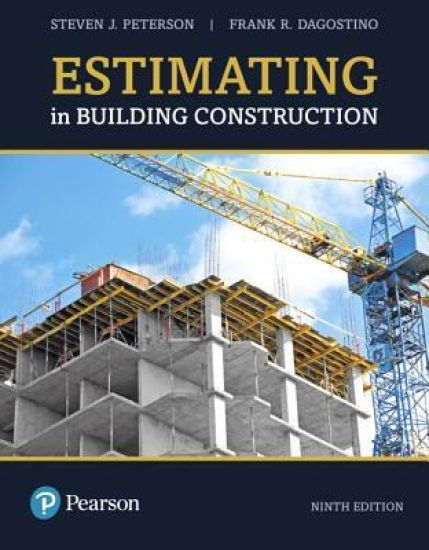
For beginning to intermediate courses in cost estimating and construction estimation.The only complete, up¿-to-¿date guide to estimating modern building construction projectsEstimating in Building Construction covers all the skills the beginning student needs to estimate simple to moderately complex commercial and residential buildings. Ideal for construction, architecture, and engineering students, the text covers bid preparation from the general contractor’s perspective, using a combination of theory and principles, step-¿by-¿step procedures, instructor resources, and practice problems.The 9th edition aligns the text with the learning outcomes of the major accreditation bodies ABET and ACCE, giving instructors measurable standards for gauging student success. It includes a new chapter on specialty contractors, two rewritten chapters, and reorganized appendices.
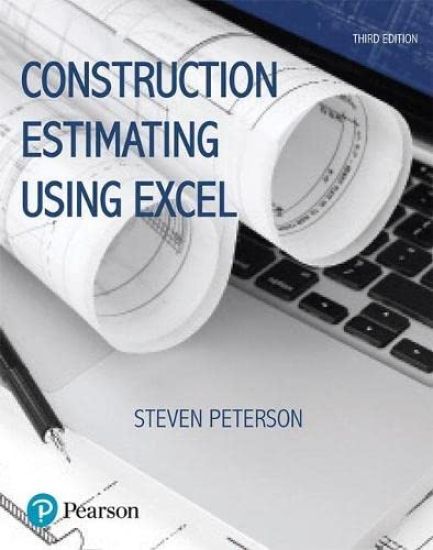
For beginning to intermediate courses in construction estimating in two- and four-year construction management programs. A step-by-step, hands-on introduction to commercial and residential estimating Construction Estimating with Excel, 3/e, introduces readers to the fundamental principles of estimating using drawing sets, real-world exercises, and examples. The book moves step-by-step through the estimating process, discussing the art of estimating, the quantity takeoff, how to put costs to the estimate, and how to finalize the bid. As students progress through the text they are shown how Microsoft Excel can be used to improve the estimating process. Because it introduces spreadsheets as a way of increasing estimating productivity and accuracy, the book can help both beginning and experienced estimators improve their skills. The Third Edition gives students a broader understanding of construction estimating with a new chapter discussing the role that estimating plays in different project delivery methods and in the design process and how to use data from RSMeans. To bring the book up to date, the material and equipment costs and labor rates have been updated to reflect current costs, and the discussion of Excel (including the figures) is based on Excel 2016. Additionally, content throughout the book has been updated to align to ACCE and ABET student learning outcomes. Student resources are available on the companion website www.pearsonhighered.com/careersresources/.
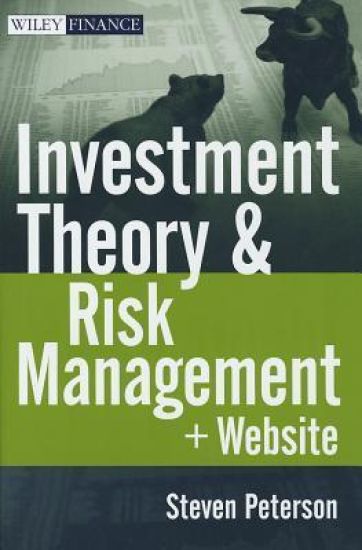
A unique perspective on applied investment theory and risk management from the Senior Risk Officer of a major pension fund Investment Theory and Risk Management is a practical guide to today's investment environment. The book's sophisticated quantitative methods are examined by an author who uses these methods at the Virginia Retirement System and teaches them at the Virginia Commonwealth University. In addition to showing how investment performance can be evaluated, using Jensen's Alpha, Sharpe's Ratio, and DDM, he delves into four types of optimal portfolios (one that is fully invested, one with targeted returns, another with no short sales, and one with capped investment allocations). In addition, the book provides valuable insights on risk, and topics such as anomalies, factor models, and active portfolio management. Other chapters focus on private equity, structured credit, optimal rebalancing, data problems, and Monte Carlo simulation. Contains investment theory and risk management spreadsheet models based on the author's own real-world experience with stock, bonds, and alternative assetsOffers a down-to-earth guide that can be used on a daily basis for making common financial decisions with a new level of quantitative sophistication and rigorWritten by the Director of Research and Senior Risk Officer for the Virginia Retirement System and an Associate Professor at Virginia Commonwealth University's School of Business Investment Theory and Risk Management empowers both the technical and non-technical reader with the essential knowledge necessary to understand and manage risks in any corporate or economic environment.
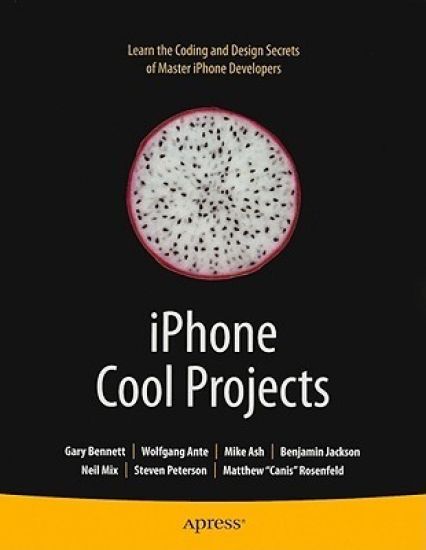
The iPhone and iPod touch have provided all software developers with a level playing field—developers working alone have the same access to consumers as multinational software publishers. Very cool indeed! To make your application stand out from the crowd, though, it has to have that something extra. You must learn the skills to take your apps from being App Store filler to download chart-topping blockbusters. Developers with years of experience helped write this book. Spend some time understanding their code and why they took the approach they did. You will find the writing, illustrations, code, and sample applications second to none. No matter what type of application you are writing, you will find something in this book to help you make your app that little bit cooler. The book opens with Wolfgang Ante, the developer behind the Frenzic puzzle game, showing how timers, animation, and intelligence are used to make game play engaging. It moves on to Rogue Amoeba's Mike Ash explaining how to design a network protocol using UDP, and demonstrating its use in a peer-to-peer application—a topic not normally for the faint of heart, but explained here in a way that makes sense to mere mortals. Gary Bennett then covers the important task of multithreading. Multithreading can be used to keep the user interface responsive while working on other tasks in the background. Gary demonstrates how to do this and highlights traps to avoid along the way. Next up, Canis Lupus (aka Matthew Rosenfeld) describes the development of the Keynote-controlling application Stage Hand, how the user interface has evolved, and the lessons he has learned from that experience. Benjamin Jackson then introduces two open source libraries: cocos2d, for 2D gaming; and Chipmunk, for rigid body physics (think “collisions”). He describes the development of ArcadeHockey, an air hockey game, and explains some of the code used for this. Neil Mix of Pandora Radio reveals the science behind processing streaming audio. How do you debug what you can't see? Neil guides you through the toughest challenges, sharing his experience of what works and what to watch out for when working with audio. Finally, Steven Peterson demonstrates a comprehensive integration of iPhone technologies. He weaves Core Location, networking, XML, XPath, and SQLite into a solid and very useful application. Software development can be hard work. Introductory books lay the foundation, but it can be challenging to understand where to go next. This book shows some of the pieces that can be brought together to make complete, cool applications.
This book provides a careful examination of the possible influence of birth order on political achievement and behavior. The authors look at American presidents, Supreme Court justices, United States senators and representatives, and the careers of an entire West Point class. For a comparative dimension, they also study British Prime Ministers, U.N. Secretaries General, post-Renaissance popes, leaders of the U.S.S.R., and great generals through the ages.
This book provides a careful examination of the possible influence of birth order on political achievement and behavior. The authors look at American presidents, Supreme Court justices, United States senators and representatives, and the careers of an entire West Point class. For a comparative dimension, they also study British Prime Ministers, U.N. Secretaries General, post-Renaissance popes, leaders of the U.S.S.R., and great generals through the ages. What the authors find is that there is no measurable relationship between birth order (and being first born) and political achievement and behavior. These findings cast considerable doubt on the long standing belief that birth order has an important impact on either achievement or behavior. The authors clarify that very few studies suggesting such a relationship do not stand up under careful scrutiny. This basic conclusion and other curious findings from the study make Birth Order And Political Behavior insightful reading for almost any behavioral scientist. The book will also be relevant to courses in child development, clinical psychology, psychiatry, political science, anthropology, and sociology.
This book's basic structure makes it readable and informative. In this edition, the authors review the 1988 and 1992 elections, the federal budget process, recent judicial decisions in civil liberties and civil rights, and address the politicization of the judicial appointment process.