Kirjojen hintavertailu. Mukana 12 595 353 kirjaa ja 12 kauppaa.
Kirjailija
Steven Shakespeare
Kirjat ja teokset yhdessä paikassa: 13 kirjaa, julkaisuja vuosilta 1998-2022, suosituimpien joukossa Revival: Kierkegaard, Language and the Reality of God (2001). Vertaile teosten hintoja ja tarkista saatavuus suomalaisista kirjakaupoista.
Reminiscent of Malcolm Guite’s bestselling Sounding the Seasons, this beautiful collection offers scripture-inspired poems for each of the major seasons of the Christian year. It includes: • The Call to Prayer (with poetry on the nature of prayer); • Advent, Christmas and Epiphany; • Lent, Easter and Pentecost (including Wings of Wounded Glory, a sequence for Holy Week); • Transforming Ordinary Time (including some feasts which fall outside the major seasons); • In the School of Mary (poetic reflections on Mary, see as a model for prayer, contemplation and prophecy). An introduction considers the relationship between prayer and poetry and offers suggestions for using the book in public and private worship settings, and a closing sequence contemplates Mary as a figure of prayers and witness.
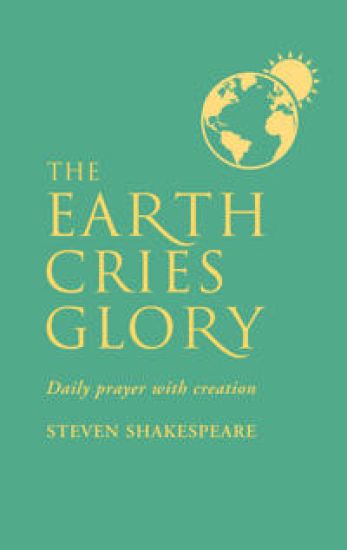
This beautifully crafted daily prayer companion is for everyone who wants to integrate spirituality with daily life. Rooted in one of the most pressing concerns of our age, it offers a fourfold pattern for prayer throughout the day to renew attention, understanding, compassion and delight towards creation. Part One offers eight sets of morning, midday, evening and night prayers where the seasons of the Christian year are paired with those of nature: • The Path of Shadows: Winter - Advent and Christmas • The Growing Light: Early Spring - Epiphany • The Seed of Promise: Spring - Lent • The Fire of Life: Beltane – Easter to Pentecost • The Greatest Light: Summer - Ordinary Time 1 • The Gift of First Fruits: Lammas – Harvest • The Time of Gathering: Autumn – Ordinary Time 2 • The Call of Memory- All Souls, All Saints
This title was first published in 2001: Debate about the reality of God risks becoming an arid stalemate. An unbridgeable gulf seems to be fixed between realists, arguing that God exists independently of our language and beliefs, and anti-realists for whom God-language functions to express human spiritual ideals, with no reference to a reality external to the faith of the believer. Soren Kierkegaard has been enlisted as an ally by both sides of this debate. Kierkegaard, Language and the Reality of God presents a new approach, exploring the dynamic nature of Kierkegaard's texts and the way they undermine neat divisions between realism and anti-realism, objectivity and subjectivity. Showing that Kierkegaard's understanding of language is crucial to his practice of communication, and his account of the paradoxes inherent in religious discourse, Shakespeare argues that Kierkegaard advances a form of 'ethical realism' in which the otherness of God is met in the making of liberating signs. Not only are new perspectives opened on Kierkegaard's texts, but his own contribution to ongoing debates is affirmed in its vital, creative and challenging significance.
Kierkegaard and the Refusal of Transcendence challenges the standard view that Kierkegaard's God is infinitely other than the world. It argues that his work immerses us in the paradoxical nature of existence itself, and opposes any flight into another world.
This title was first published in 2001: Debate about the reality of God risks becoming an arid stalemate. An unbridgeable gulf seems to be fixed between realists, arguing that God exists independently of our language and beliefs, and anti-realists for whom God-language functions to express human spiritual ideals, with no reference to a reality external to the faith of the believer. Soren Kierkegaard has been enlisted as an ally by both sides of this debate. Kierkegaard, Language and the Reality of God presents a new approach, exploring the dynamic nature of Kierkegaard's texts and the way they undermine neat divisions between realism and anti-realism, objectivity and subjectivity. Showing that Kierkegaard's understanding of language is crucial to his practice of communication, and his account of the paradoxes inherent in religious discourse, Shakespeare argues that Kierkegaard advances a form of 'ethical realism' in which the otherness of God is met in the making of liberating signs. Not only are new perspectives opened on Kierkegaard's texts, but his own contribution to ongoing debates is affirmed in its vital, creative and challenging significance.
Kierkegaard and the Refusal of Transcendence challenges the standard view that Kierkegaard's God is infinitely other than the world. It argues that his work immerses us in the paradoxical nature of existence itself, and opposes any flight into another world.
Essays and documents related to Hideous Gnosis, a symposium on black metal theory, which took place on December 12, 2009 in Brooklyn, NY. Expanded and Revised."Life is a hideous thing, and from the background behind what we know of it peer daemoniacal hints of truth which make it sometimes a thousandfold more hideous." - H.P. Lovecraft"Poison yourself . . . with thought" - ArizmendaCONTENTS: Steven Shakespeare, "The Light that Illuminates Itself, the Dark that Soils Itself: Blackened Notes from Schelling's Underground." Erik Butler, "The Counter-Reformation in Stone and Metal: Spiritual Substances." Scott Wilson, "BAsileus philosoPHOrum METaloricum." Hunter Hunt-Hendrix, "Transcendental Black Metal." Nicola Masciandaro, "Anti-Cosmosis: Black Mahapralaya." Joseph Russo, "Perpetue Putesco - Perpetually I Putrefy." Benjamin Noys, "'Remain True to the Earth ': Remarks on the Politics of Black Metal." Evan Calder Williams, "The Headless Horsemen of the Apocalypse." Brandon Stosuy, "Meaningful Leaning Mess." Aspasia Stephanou, "Playing Wolves and Red Riding Hoods in Black Metal." Anthony Sciscione, "'Goatsteps Behind My Steps . . .': Black Metal and Ritual Renewal." Eugene Thacker, "Three Questions on Demonology." Niall Scott, "Black Confessions and Absu-lution." DOCUMENTS: Lionel Maunz, Pineal Eye; Oyku Tekten, Symposium Photographs; Scott Wilson, "Pop Journalism and the Passion for Ignorance"; Karlynn Holland, Sin Eater I-V; Nicola Masciandaro and Reza Negarestani, Black Metal Commentary; Black Metal Theory Blog Comments; Letter from Andrew White; E.S.S.E, Murder Devour I.HTTP: //BLACKMETALTHEORY.BLOGSPOT.COM
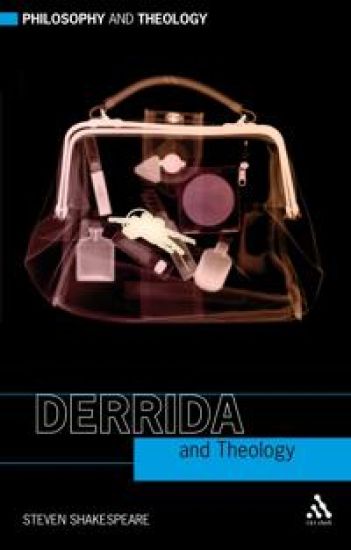
Jacques Derrida: a name to strike fear into the hearts of theologians. His ideas have been hugely influential in shaping postmodern philosophy, and its impact has been felt across the humanities from literary studies to architecture. However, he has also been associated with the specters of relativism and nihilism. Some have suggested he undermines any notion of objective truth and stable meaning. Derrida is now increasingly seen as a major contributor to thinking about the complexity of truth, responsibility and witnessing. Theologians and biblical scholars are engaging as never before with Derrida's own deep-rooted reflections on religious themes. From the nature of faith to the name of God, from Messianism to mysticism, from forgiveness to the impossible, he has broken new ground in thinking about religion in our time. His ideas and writing style remain highly complex, however, and can be a forbidding prospect for the uninitiated. This book examines his philosophical approach, his specific work on religious themes, and the ways in which theologians have interpreted, adopted, and disputed them.
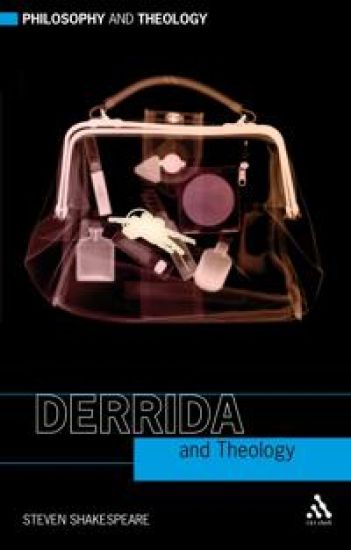
Jacques Derrida: a name to strike fear into the hearts of theologians. His ideas have been hugely influential in shaping postmodern philosophy, and its impact has been felt across the humanities from literary studies to architecture. However, he has also been associated with the specters of relativism and nihilism. Some have suggested he undermines any notion of objective truth and stable meaning. Derrida is now increasingly seen as a major contributor to thinking about the complexity of truth, responsibility and witnessing. Theologians and biblical scholars are engaging as never before with Derrida's own deep-rooted reflections on religious themes. From the nature of faith to the name of God, from Messianism to mysticism, from forgiveness to the impossible, he has broken new ground in thinking about religion in our time. His ideas and writing style remain highly complex, however, and can be a forbidding prospect for the uninitiated. This book examines his philosophical approach, his specific work on religious themes, and the ways in which theologians have interpreted, adopted, and disputed them.
Inclusive theology has gained huge momentum since the Inclusive Church Movement was formed in 2003. It now has 10,000 individual members and many affiliated organisations. "Prayers for an Inclusive church" is a significant new liturgical resource that is the first major contribution in this field since Janet Morley's "All Desires Known" published in 1992. This new collection, which is designed to be used with Common Worship, includes: a collect for every Sunday in the three year cycle, plus key festivals and for each season and major saint's day; a form of confession, an introduction to the peace, a eucharistic prayer, postcommunion prayers, and final blessings. An introduction sets out the theological rationale for the prayers and explores the processes of writing and using prayers with an inclusive theological basis. This collection draws on the rich biblical imagery of the lectionary readings to create prayers with poetic immediacy, theological depth and striking beauty.
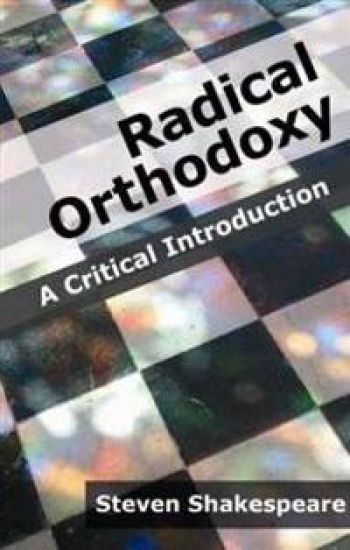
Radical Orthodoxy exploded on to the theological scene in the early 1990s. Since then, it has become a significant factor in how many Christian thinkers and future leaders are addressing the place of theology and the Church in the twenty-first century.
This short, accessible and compelling book argues that an inclusive vision of God lies at the heart of Christian theology. Since the 1960s liberal theology has been driven by social justice issues and an ethic of tolerance. This has not been enough to check the rise of neoconservative theologies that now predominate in the Churches. Liberal theology now needs to stake a claim for the very identity of Christianity itself, showing how mainstream and inclusive values have always been a central strand of Christian thinking and represent the majority view.
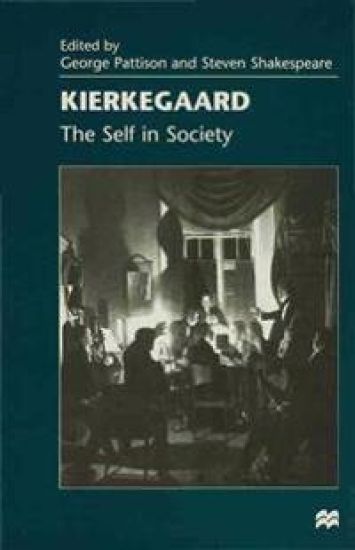
Kierkegaard: The Self in Society brings together scholars from a variety of disciplines to explore Kierkegaard's continuing relevance to political and social issues. Kierkegaard is often portrayed as an out-and-out individualist with no concern for interpersonal relations. These essays not only refute this caricature, they bring out the complex nature of Kierkegaard's engagements with questions of selfhood and society. What Kierkegaard has to say about love, the church, politics and justice is shown to test the limits of what we take for granted in the modern (and postmodern) world.