Kirjojen hintavertailu. Mukana 12 390 323 kirjaa ja 12 kauppaa.

Kirjailija

Steven Taylor

Kirjat ja teokset yhdessä paikassa: 19 kirjaa, julkaisuja vuosilta 1982-2026, suosituimpien joukossa It's Not All in Your Head. Vertaile teosten hintoja ja tarkista saatavuus suomalaisista kirjakaupoista.

19 kirjaa

Kirjojen julkaisuhaarukka 1982-2026.

It's Not All in Your Head

It's Not All in Your Head

Gordon J. G. Asmundson; Steven Taylor

Guilford Publications
2005
nidottu
Where do you go for help when no one believes you're really sick? The doctors can’t explain your symptoms, but you know there’s something wrong because you can sense it in your body. Living with the specter of an unresolved health issue isn't just painful, it's isolating. The preoccupation and stress it causes can disrupt your career or interfere with personal relationships. If you continually experience symptoms of illness, or worry a lot about disease, you may be suffering from health anxiety--a condition that can produce physical effects of its own, including muscle tension, nausea, and a quickened heart rate. In this compassionate and empowering book, noted psychologists Gordon J. G. Asmundson and Steven Taylor provide simple and accurate self-tests designed to help you understand health anxiety and the role it might be playing in how you feel. Concrete examples and helpful exercises show you how to change thought and behavior patterns that contribute to the aches, pains, and anxiety you're experiencing. The authors also explain how to involve friends and family--and when to seek professional help--as you learn to stay well without worry. Association for Behavioral and Cognitive Therapies (ABCT) Self-Help Book of Merit

Cold War Air Thieves

Cold War Air Thieves

Steven Taylor

PEN SWORD BOOKS LTD
2026
sidottu
The Cold War was a conflict defined by the battle for intelligence. And nowhere was this intelligence war more keenly fought than in the sphere of military aviation. Gaining information on the enemy’s latest warplanes and aviation-related hardware was a prime intelligence objective for both sides throughout the titanic ideological struggle that dominated the second half of the 20th century. Had the Cold War turned hot, the side possessing the greatest knowledge of its opponents’ combat aircraft would enjoy a crucial tactical advantage. Lagging behind the US and its NATO allies in many areas of aviation technology, the USSR also relied heavily on industrial espionage as a means of bridging the technological gap between East and West, shaving years and many millions of roubles off the development process in such key areas as the gas-turbine engine, long-range strategic bombers, air-to-air guided missiles, electronic countermeasures and stealth technology. Recruiting senior engineers and designers working in the opposing side’s aviation industries to spy for them, orchestrating the defection of pilots in their state-of-the-art aircraft, recovering shot-down aircraft wreckage from warzones like Korea, Vietnam and Afghanistan, even stealing components from under the noses of their enemies – nothing was off limits for the CIA, KGB, MI6 and Mossad in their relentless pursuit of aviation technology. Cold War Air Thieves explores in depth for the first time this hidden war fought by the intelligence services of both the capitalist and communist countries during the Cold War to obtain by any means necessary the secrets of some of the most potent warplanes ever to take to the skies.
The New Psychology of Pandemics

The New Psychology of Pandemics

Steven Taylor

OXFORD UNIVERSITY PRESS INC
2025
sidottu
Pandemics are global outbreaks of novel or re-emerging infectious diseases, and reveal aspects of humanity rarely seen in calmer times. Pandemics will likely become more prevalent in the coming years due to climate change, the growing global population, and other factors. Psychology plays an essential role in pandemics, in which people's beliefs, emotions, and behaviors influence the spreading and containment of infection. Uncertainty is an inherent aspect of pandemics; when faced with novel pathogens, people cope with these invisible, uncertain threats in various ways, including coping strategies that provide only an illusion of control, making people calmer but not safer. Other psychological phenomena observed during pandemics include polarized fear reactions (excessive alarm vs. undue disregard for the threat), fleeing, panic-buying, xenophobia, rumors and conspiracy theories, protests about wearing protective facemasks, anti-vaccination attitudes, lockdown protests, increases in mood and anxiety disorders, and other societal problems. Efforts to manage one problem (e.g., lockdown to stem the spread of infection) may worsen other problems (e.g., mental health). The New Psychology of Pandemics offers a comprehensive analysis of these and other issues concerning the psychology of pandemics, to prepare for future global outbreaks of infectious diseases. The book explores promising new directions for maintaining and improving mental health and enhancing adherence to pandemic mitigation measures such as social distancing, mask-wearing, and vaccination.
Combat in the Stratosphere

Combat in the Stratosphere

Steven Taylor

PEN SWORD BOOKS LTD
2024
sidottu
In the summer of 1940, a new German aircraft began appearing in the skies over the British Isles. Unlike the rest of the Luftwaffe’s fleet in the Battle of Britain, these aircraft were flying at a height of 40,000 feet and higher – way beyond the reach of the RAF’s defending fighters. These virtually untouchable intruders were examples of the Junkers Ju 86P. The world’s first operational combat aeroplane equipped with a pressurized cabin, they were able to reach a maximum altitude of 42,000 feet. The Ju 86P’s introduction ushered in a new era of aerial warfare, where combat would take place at previously unimaginable heights. The Ju 86P was just one of many high-altitude aircraft projects developed by both the Axis and Allied powers during the Second World War. Others included the Vickers Wellington Mk.VI, Vickers Windsor, Boeing B-29 Superfortress, Junkers Ju 388, Heinkel He 274 and Henschel Hs 130. With pressurized cabins, such aircraft offered obvious tactical advantages: bombers and reconnaissance aircraft could operate safely above the maximum ceiling of the opposing side’s fighters, prompting intense development – especially by the British and Germans – of pressurized interceptors to meet the threat they posed. Combat in the Stratosphere is the first book devoted exclusively to exploring the fascinating story of the development and operational history of aircraft designed specifically for high-altitude operations during the Second World War. But this is not a book solely about the machines themselves. It also focuses on the men who flew these revolutionary aircraft, both in the testing phase and in combat, and the physical challenges these courageous airmen faced, as they pushed themselves to the very edge of physical endurance in this desperate race to reach ever higher altitudes. Drawing on a wide range of sources, including air combat reports, British Cabinet files and Air Ministry documents, as well as first-hand accounts of aeronautical engineers and the pilots who flew these aircraft, Combat in the Stratosphere reveals the full story of this largely overlooked aspect of Second World War air warfare, high above the skies of Europe, North Africa, the Soviet Union and Japan.
Air War Northern Ireland

Air War Northern Ireland

Steven Taylor

PEN SWORD BOOKS LTD
2022
nidottu
Famously dubbed 'Bandit Country' by a UK government minister in 1975, South Armagh was considered the most dangerous part of Northern Ireland for the British Army and Royal Ulster Constabulary during the years of violence known as the 'Troubles' that engulfed the province in the last three decades of the twentieth century. This was also true for the helicopter crews of the RAF, Royal Navy and Army Air Corps who served there. Throughout the 'Troubles' the Provisional IRA's feared South Armagh brigade waged a relentless campaign against military aircraft operating in the region, where the threat posed by roadside bombs made the security forces highly dependent on helicopters to conduct day-to-day operations. From pot-shot attacks with Second World War-era rifles in the early days of the conflict to large scale, highly co-ordinated ambushes by PIRA active service units equipped with heavy machine guns, rocket-propelled grenade launchers and even shoulder-launched surface-to-air missiles (SAMs), the threat to British air operations by the late 1980s led to the arming of helicopters operating in the border regions of Northern Ireland. Drawing on a wide range of sources, including official records and the accounts of aircrew, this book tells the little-known story of the battle for control of the skies over Northern Ireland's 'Bandit Country'.
The Psychology of Pandemics

The Psychology of Pandemics

Steven Taylor

Cambridge Scholars Publishing
2019
sidottu
Pandemics are large-scale epidemics that spread throughout the world. Virologists predict that the next pandemic could occur in the coming years, probably from some form of influenza, with potentially devastating consequences. Vaccinations, if available, and behavioral methods are vital for stemming the spread of infection. However, remarkably little attention has been devoted to the psychological factors that influence the spread of pandemic infection and the associated emotional distress and social disruption. Psychological factors are important for many reasons. They play a role in nonadherence to vaccination and hygiene programs, and play an important role in how people cope with the threat of infection and associated losses. Psychological factors are important for understanding and managing societal problems associated with pandemics, such as the spreading of excessive fear, stigmatization, and xenophobia that occur when people are threatened with infection. This book offers the first comprehensive analysis of the psychology of pandemics. It describes the psychological reactions to pandemics, including maladaptive behaviors, emotions, and defensive reactions, and reviews the psychological vulnerability factors that contribute to the spreading of disease and distress. It also considers empirically supported methods for addressing these problems, and outlines the implications for public health planning.
Hope for Uncertain Times: Facing New Economic and Social Realities
To hope is human. We seem to be hardwired for hope - even the most pessimistic of us. However deeply buried, there is at least the slightest inkling that things just might get better. Some people brim with a sense of hope. They exude optimism because they are hopeful. Even against the backdrop of the general malaise that seems characteristic of our times, there is something within us that wants to reach forward to better times. We want to believe things will get better, but we are hard-pressed to point to any tangible and clear evidence to support such feelings. The reality check of economic uncertainty, military crises, violent natural disasters, and social and racial upheaval casts a gray shadow over our optimism. Our general hopefulness is a state of mind, rather than a fact of life.Real hope does not leave us pawns in the hands of circumstances, because true hope transcends circumstances. The ability to survive and thrive amidst uncertain times is solidly based on substantive hope, hope that is far more than wishful thinking and starry-eyed optimism. Hope without true substance is little more than a delusional perspective that denies reality. It is important that we set forth a working definition of hope. HOPE IS CONFIDENT EXPECTATION OF SOMETHING BETTER IN THE FUTURE. Hope without a foundation is mere wishful thinking. Real hope, however, is based on specifics. It confidently expects very tangible things in times to come, and visualizes the roadmap to realization. It is so real that we can touch, taste, see, smell, and feel it
Child Insanity in England, 1845-1907

Child Insanity in England, 1845-1907

Steven Taylor

Palgrave Macmillan
2018
nidottu
This book explores the treatment, administration, and experience of children and young people certified as insane in England during the nineteenth and early twentieth centuries. It uses a range of sources from Victorian institutions to explore regional differences, rural and urban comparisons, and categories of mental illness and mental disability. The discussion of diverse pathways in and out of the asylum offers an opportunity to reassess nineteenth-century child mental impairment in a broad social-cultural context, and its conclusions widen the parameters of a ‘mixed economy of care’ by introducing multiple sites of treatment and confinement. Through its expansive scope the analysis intersects with topics such as the history of childhood, institutional culture, urbanisation, regional economic development, welfare history, and philanthropy.
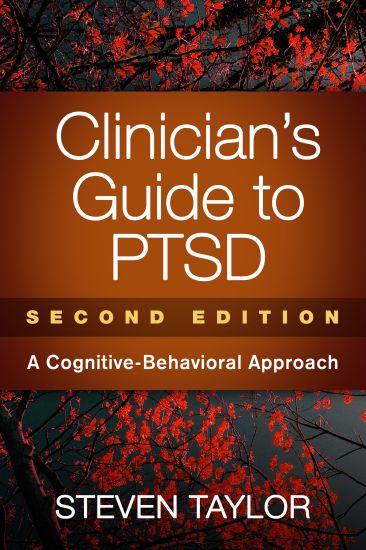
Clinician's Guide to PTSD, Second Edition

Clinician's Guide to PTSD, Second Edition

Steven Taylor

Guilford Press
2017
nidottu
This practitioner's guide, now thoroughly updated, examines the nature of posttraumatic stress disorder (PTSD) and provides a complete framework for planning and implementing cognitive-behavioral therapy (CBT). Steven Taylor addresses the complexities of treating people who have experienced different types of trauma and shows how to adapt empirically supported protocols to each client's needs. Rich case examples illustrate the nuts and bolts of cognitive interventions, exposure exercises, and adjunctive methods. Purchasers get access to a Web page where they can download and print the book's 14 reproducible handouts in a convenient 8 1/2" x 11" size. New to This Edition: *Chapter on pharmacotherapy--what CBT practitioners need to know when treating clients who are also taking medication. *Incorporates over a decade of advances in assessment and treatment techniques, outcome research, and neurobiological knowledge. *Updated for DSM-5.
Clinician's Guide to PTSD, Second Edition

Clinician's Guide to PTSD, Second Edition

Steven Taylor

Guilford Press
2017
sidottu
This practitioner's guide, now thoroughly updated, examines the nature of posttraumatic stress disorder (PTSD) and provides a complete framework for planning and implementing cognitive-behavioral therapy (CBT). Steven Taylor addresses the complexities of treating people who have experienced different types of trauma and shows how to adapt empirically supported protocols to each client's needs. Rich case examples illustrate the nuts and bolts of cognitive interventions, exposure exercises, and adjunctive methods. Purchasers get access to a Web page where they can download and print the book's 14 reproducible handouts in a convenient 8 1/2" x 11" size. New to This Edition: *Chapter on pharmacotherapy--what CBT practitioners need to know when treating clients who are also taking medication. *Incorporates over a decade of advances in assessment and treatment techniques, outcome research, and neurobiological knowledge. *Updated for DSM-5.
Parents with Intellectual Disabilities

Parents with Intellectual Disabilities

Steven Taylor

John Wiley Sons Inc
2010
nidottu
The first international, cross-disciplinary book to explore and understand the lives of parents with intellectual disabilities, their children, and the systems and services they encounter Presents a unique, pan-disciplinary overview of this growing field of studyOffers a human rights approach to disability and family lifeInformed by the newly adopted UN Convention on the Rights of Persons with Disabilities (2006)Provides comprehensive research-based knowledge from leading figures in the field of intellectual disability
Parents with Intellectual Disabilities

Parents with Intellectual Disabilities

Steven Taylor

John Wiley Sons Inc
2010
sidottu
The first international, cross-disciplinary book to explore and understand the lives of parents with intellectual disabilities, their children, and the systems and services they encounter Presents a unique, pan-disciplinary overview of this growing field of studyOffers a human rights approach to disability and family lifeInformed by the newly adopted UN Convention on the Rights of Persons with Disabilities (2006)Provides comprehensive research-based knowledge from leading figures in the field of intellectual disability
Acts of Conscience

Acts of Conscience

Steven Taylor

Syracuse University Press
2009
sidottu
In the mid- to late 1940s, a group of young men rattled the psychiatric establishment by beaming a public spotlight on the squalid conditions and brutality in our nation's mental hospitals and training schools for people with psychiatric and intellectual disabilities. Bringing the abuses to the attention of newspapers and magazines across the country, they led a reform effort to change public attitudes and to improve the training and status of institutional staff. Prominent Americans, including Eleanor Roosevelt, ACLU founder Roger Baldwin, author Pearl S. Buck, actress Helen Hayes, and African-American activist Mary McLeod Bethune, supported the efforts of the young men. These young men were among the 12,000 World War II conscientious objectors who chose to perform civilian public service as an alternative to fighting in what is widely regarded as America's 'good war.' Three thousand of these men volunteered to work at state institutions, where they found conditions appalling. Acting on conscience a second time, they challenged America's treatment of its citizens with severe disabilities. ""Acts of Conscience"" brings to light the extraordinary efforts of these courageous men, drawing upon extensive archival research, interviews, and personal correspondence. The World War II conscientious objectors were not the first to expose public institutions, and they would not be the last. What distinguishes them from reformers of other eras is that their activities have faded from professional and popular memory. Steven J. Taylor's moving account is an indispensable contribution to the historical record.
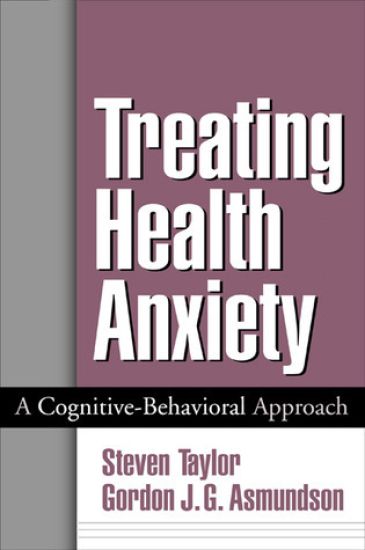
Treating Health Anxiety

Treating Health Anxiety

Steven Taylor; Gordon J. G. Asmundson

Guilford Publications
2004
sidottu
Grounded in current theory and treatment research, this highly practical book presents a comprehensive framework for assessing and treating health anxiety, including full-blown and milder (subclinical) forms of hypochondriasis. The current state of knowledge about these prevalent and costly problems is reviewed, and assessment methods and empirically supported treatments described. Clear, step-by-step recommendations are provided for engaging patients or clients, implementing carefully planned cognitive and behavioral interventions, and troubleshooting potential pitfalls. Important advances in pharmacotherapy for persons with health anxiety disorders are also discussed. Enhancing the utility of this clinician- and student-friendly resource are numerous case examples and sample dialogues, quick-reference tables and figures, and over 20 reproducible handouts and assessment forms.
Understanding and Treating Panic Disorder

Understanding and Treating Panic Disorder

Steven Taylor

John Wiley Sons Inc
2000
nidottu
This book is a comprehensive text and clinician’s guide which integrates theory, empirical findings, and treatment guidelines, to provide a framework for understanding and treating both routine and complex cases of panic disorder. The first Part of the book covers the theoretical foundations of cognitive-behavioural treatment (CBT) for panic disorder (with or without agoraphobia), and the relevant empirical findings. Other treatments for panic disorder, such as pharmacotherapies, are also reviewed, as a guide to selecting the most appropriate treatment. Important clinical outcomes, such as treatment dropout, response, and relapse, are also discussed. The second Part of the book describes the clinical protocols and procedures for cognitive-behavioural assessment and treatment. The author emphasizes a case formulation approach to treatment and includes treatment protocols for uncomplicated cases as well as guidelines and strategies for dealing with more difficult cases. The latter include cases of panic disorder that have failed to respond to conventional CBT approaches, and cases in which panic disorder is comorbid with other disorders (e.g., schizophrenia, posttraumatic stress disorder). Protocols are also described for implementing CBT in specific settings (e.g., emergency rooms, rural settings), specific populations (e.g., children, adolescents, the elderly), and particular cultural milieux (i.e., culture-specific aspects of treatment). Trainees and practitioners in clinical psychology, psychiatry, nursing and other mental health disciplines will welcome this comprehensive and evidence-based guide to concepts and treatment of panic disorder. This book appears in The Wiley Series in Clinical Psychology
Inside Out

Inside Out

Robert Bogdan; Steven Taylor; Seymour Sarason

University of Toronto Press
1982
pokkari
‘We have to assume that the mind is working no matter what it looks like on the outside. We can’t just judge by appearance…If you take away the label they are human beings.’ Ed Murphy What does it mean to be ‘mentally retarded’? Professors Bogdan and Taylor have interviewed two experts, ‘Ed Murphy’ and ‘Pattie Burt,’ for answers. Ed and Pattie, former inmates of institutions for the retarded, tell us in their own words. Their autobiographies are not always pleasant reading. They describe the physical, mental, and emotional abuses heaped upon them throughout their youth and young adulthood; being spurned, neglected, and ultimately abandoned by family and friends; being labelled and stigmatized by social service professionals armed with tests and preconceptions; being incarcerated and depersonalized by the state. Ed and Pattie survived these experiences-evidence, perhaps, of the indefatigable will of the human spirit to assert its essential humanity-but the wounds they have suffered, and the scars they bear, have not been overcome. They are now contributing, independent, members of society, but the stigma of ‘mental retardation’ remains. Their stories are both true and representative-powerful indictments of our knowledge of, our thinking about, and our ministrations to, the mentally handicapped. The interviewers argue that Ed and Pattie challenge the very concept of ‘mental retardation.’ Retardation, they assert, is an ‘imaginary disease’; our attempts to ‘cure’ it are a hoax. Read Ed’s and Pattie’s accounts and judge for yourself.