Kirjojen hintavertailu. Mukana 12 595 353 kirjaa ja 12 kauppaa.

Kirjailija

Steven Wood

Kirjat ja teokset yhdessä paikassa: 10 kirjaa, julkaisuja vuosilta 2005-2026, suosituimpien joukossa The Seed Saving Bible. Vertaile teosten hintoja ja tarkista saatavuus suomalaisista kirjakaupoista.

10 kirjaa

Kirjojen julkaisuhaarukka 2005-2026.

How to be a Dung Beetle (in association with the Royal Entomological Society)
Follow a newly hatched dung beetle as he learns to roll his own ball of dung, and visit a savannah teeming with fascinating bug characters along the way, in this first graphic novel. Roly loves living in a dung ball: it’s safe, warm, and comes with all the dung he can eat! But soon he starts to wonder about life outside the dung ball. As soon as Roly has grown into an adult dung beetle, he bursts out into the big wide world, where he learns how to avoid predators, how to roll his own dung ball, and where to find the best dung for his dinner. Soon, he’s on his own pooper scooper adventure to clean up as much dung as he can! Narrated by a wise old grasshopper, offering tips on how to be a dung beetle, and featuring laugh-out-loud moments, this tale of savannah life is a perfect introduction to dung beetles for bug-obsessed little ones. Made in collaboration with the Royal Entomological Society, facts are blended seamlessly into the action, while hilarious illustrations from Steven Wood will engage even the most reluctant reader.
The Real Wuthering Heights

The Real Wuthering Heights

Steven Wood; Peter Brears; Tony Robinson

Amberley Publishing
2016
nidottu
Top Withins farm on Stanbury Moor, West Yorkshire, is internationally famous as the inspiration for Emily Brontë’s Wuthering Heights and is visited by hundreds of thousands of people from all over the world every year. Apart from the Brontë connection, it stands on the Pennine Way and is one of the highlights for the many who walk it each year. As well as tracing the history of the Withins farms and their inhabitants from 1567 to the present day, this book looks at the everyday life of the farmers who lived there. It gives a full account of the building history, farming practices, textile production and domestic life over the years, illustrated by Peter Brears’ splendid reconstructions of the buildings and their interiors and of the tools and utensils used in farming, weaving and cooking. A walk from Stanbury to Top Withins and back to Haworth is described in detail, including the history of all the farms that are passed on the way. Many of these are now almost forgotten, but a surprising amount of information about them is included. The final chapter gives a full account of the life and work of Timmy Feather, the last of the handloom weavers on these moors. This book is the most complete and wide-ranging account of the life and work of a South Pennine hill farm ever attempted and is of relevance far beyond the small area with which it deals. It will appeal to all who are interested in the history of Yorkshire, to Brontë enthusiasts and to Pennine Way walkers.
Haworth, Oxenhope & Stanbury from Old Maps

Haworth, Oxenhope & Stanbury from Old Maps

Steven Wood

Amberley Publishing
2014
nidottu
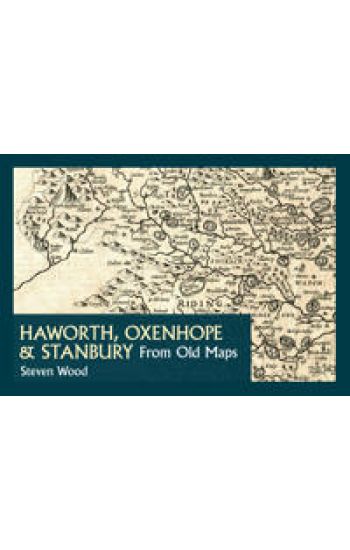
In his last two books, Haworth historian Steven Wood presented a collection of 600 old photographs of the villages of Haworth, Oxenhope and Stanbury. In this fascinating book, the first of a new series, he uses almost 100 old maps to portray further aspects of the history of the three villages. The oldest map dates from 1610 and the most recent from 1937 - a span of more than three centuries. Many different types of map are included: County maps, Ordnance Survey maps and plans, Board of Health plans, the Haworth tithe map, a Haworth village house repopulation plan, Oxenhope enclosure maps, estate and sale plans, Haworth parish church plans, Worth Walley waterworks plans, railway and road plans and building plans. Between them they and their accompanying text reveal many details of the history of the home of the Brontes and its neighbouring villages. They can also serve as a guide to the use of maps in local history studies. Central to this book is the Haworth house repopulation plan, which is published here for the first time. This very large scale plan of Haworth village shows exactly who lived where in 1851 and what they did for a living. It provides the most detailed view ever of the Haworth that the Brontes knew.
Haworth, Oxenhope & Stanbury From Old Photographs Volume 2
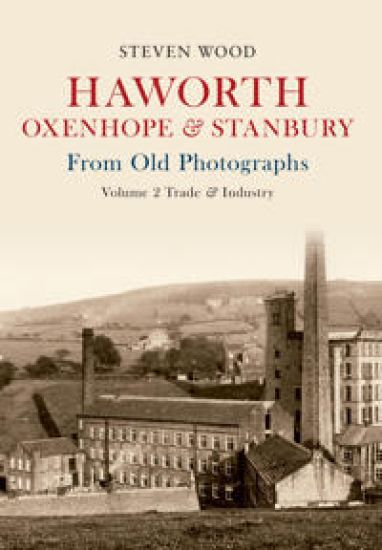
In this second volume of Haworth photographs carefully selected by local historian Steven Wood, the focus has shifted to trade and industry. These two companion volumes provide a comprehensive view of this Pennine settlement, and cover most aspects of the township. Many of these photographs have not been published before, and offer a unique and fascinating view of the area's history. Many are familiar with Haworth and its long association with the Brontes, but it was actually one of three villages that made up the township. These pages are full of the people, places and trades that lived here in the past, and is essential reading for anyone who knows and loves this popular and treasured part of Yorkshire.
Haworth, Oxenhope & Stanbury From Old Photographs Volume 1
Haworth is well-known throughout the world as the home of the Bronte sisters. It is less well-known as the largest village of three that make up the ancient township of Haworth. Here, and in the forthcoming companion volume, the whole township is represented in an extensive and wide-ranging collection of old photographs. There are the conventional photographs of 'Bronte Haworth', but also a great many of the pictures in these two books will be completely new to many readers. In this book, readers will find 300 photographs of the villages of Haworth, Oxenhope and Stanbury, of their streets, their houses, schools, churches and people; an exploration of the history of the ancient township of Haworth.
Oxenhope and Stanbury Through Time

Oxenhope and Stanbury Through Time

Steven Wood; Ian Palmer

Amberley Publishing
2009
nidottu
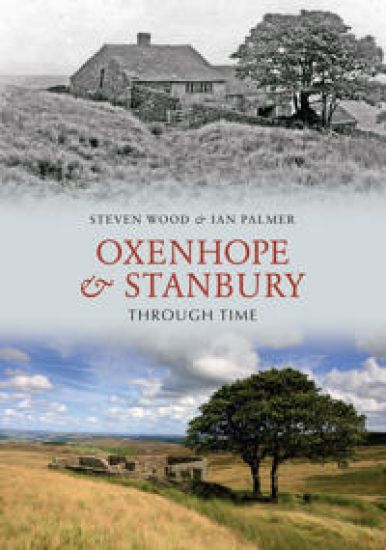
Oxenhope & Stanbury Through Time contains 180 photographs of Oxenhope and Stanbury, of which 90 are old photographs. Some printed in a sepia tone and some printed in full colour. These photographs are printed along side a contemporary full colour photograph which illustrates the same scene. The contrasting illustrations show how the area has changed and developed during the last 100 years. The photographs illustrate shops, schools, garages, churches, houses and street scenes, each photograph is captioned and the book has an introduction which gives a brief overview of the history of these villages. As you browse through the photographs, you will notice the increase in the number of vehicles on the road, shops that once sold new goods are now estate agents or charity shops. Green fields have been transformed into industrial estates, houses or ring roads.
Haworth

Haworth

Steven Wood

The History Press Ltd
2005
nidottu
The picturesque village of Haworth in West Yorkshire is known worldwide for its association with the Bronte family, who had their home here. A windswept land of heather and wild moors, it is hardly surprising that this region became the inspirisation for the classic works of the Bronte sisters. Haworth itself, however, is a fascinating village in its own right and richly repays time devoted to a study of its intriguing past.This book traces the history of the village, looking at its former farming, textile and stone quarrying industries, its house's, shops and inns, reservoirs and gasworks, and explorers some of the popular beliefs of the nineteenth century - including a cure for cattle afflicted by a witch's curse - and some less well-known aspects of the Brontes' connections with Haworth. The book will delight residents and visitors to Haworth with its fresh approach to the history of the village. Steven Wood is a respected local historian who lives in the village and has researched its history for nearly thirty years.