Kirjojen hintavertailu. Mukana 12 595 353 kirjaa ja 12 kauppaa.

Kirjailija

Stewart I. Donaldson

Kirjat ja teokset yhdessä paikassa: 11 kirjaa, julkaisuja vuosilta 2012-2025, suosituimpien joukossa PERMA+4. Vertaile teosten hintoja ja tarkista saatavuus suomalaisista kirjakaupoista.

Mukana myös kirjoitusasut: Stewart I Donaldson

11 kirjaa

Kirjojen julkaisuhaarukka 2012-2025.

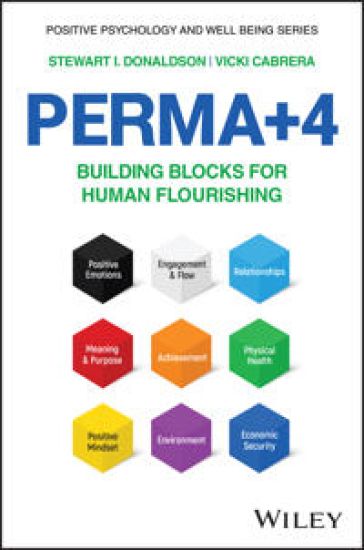
PERMA+4

PERMA+4

Stewart I. Donaldson; Vicki Cabrera

JOHN WILEY SONS INC
2025
nidottu
Provides the tools and knowledge to develop and nurture the essential building blocks of a thriving life Understanding how to thrive, not just survive, has never been more critical in today's world. Grounded in over 25 years of peer-reviewed research, PERMA +4: Pathways to Well-Being and Positive Functioning provides a comprehensive guide to the essential building blocks of flourishing. Authors Stewart Donaldson and Victoria Cabrera share the latest evidence while providing actionable insights on how positive psychology interventions can help cultivate happiness and resilience. With clear explanations of nine scientifically validated building blocks, including emotions, engagement, relationships, meaning, and accomplishment, PERMA +4 equips readers with tools to build their well-being while empowering others to do the same. The PERMA+4 framework extends foundational work by integrating new insights into areas such as physical health, mindset, and economic security. Each easy-to-read chapter is packed with practical activities, step-by-step guidance, informational charts and figures, full-color images, "Key Takeaways, " and reflection questions. Offering practical strategies for anyone eager to lead a more fulfilling life, PERMA +4: Introduces the PERMA+4 framework, extending Martin Seligman's foundational well-being theory with new evidenceExplains the science behind positive psychology interventions and why they workIntegrates findings from more than 1,000 research studies on flourishing and well-beingCovers practical applications for education, workplaces, healthcare, and personal growth Ideal for health practitioners, educators, workplace leaders, and well-being coaches, PERMA +4: Building Blocks for Human Flourishing is essential reading for undergraduate, graduate, and professional audiences. It is perfect for courses in positive psychology, public health, leadership, and organizational development, or as a reference for practitioners aiming to enhance well-being in diverse settings.
Flow 2.0

Flow 2.0

Stewart I. Donaldson; Matthew Dubin

JOHN WILEY SONS INC
2024
nidottu
How the pioneering co-founder of the field of positive psychology can help us navigate our increasingly complicated world Over the years since Mihaly Csikszentmihalyi first published Flow: The Psychology of Optimal Experience, the field of positive psychology has become a rigorous, evidence-based discipline. Dr. Csikszentmihalyi’s pioneering work on “flow,” a state in which one is completely absorbed in a task or activity, continues to make lasting, positive impacts on individuals, groups, organizations, and societies around the world. In Flow 2.0, authors Stewart I. Donaldson and Matthew Dubin show us how their colleague’s and mentor’s contributions can be extended to improve our lives in 2024 and beyond. With an accessible and engaging narrative, the authors share what they have learned about flow over two decades of empirical research and provide a new framework designed to help us be fully engaged in our lives and flourish in complex and dynamic environments. Seven concise chapters explore ways the world has changed since the concept of flow was first developed, introduce the basics of flow and optimal experience, examine how we in our complex social and work lives, identify the essential role of flow in the PERMA+4 framework for work-related well-being and performance, and more. Addressing modern life contexts such as the hybrid world of work and the increasingly digital future of society, Flow 2.0: Optimal Experience in a Complex World is a must-read for all those seeking to improve their own lives and the lives of those around them.
Theory Driven Positive Psychology

Theory Driven Positive Psychology

Stewart I. Donaldson; Meghana Rao

Routledge
2023
sidottu
Intended for courses in positive psychology, this theory-driven, evidence-based text provides students with a balanced introduction to the field. It describes the limitations of current research in positive psychology, provides relevant critiques, and advises on the extent to which research findings can be applied or generalized. Combining quantitative and qualitative methods, it also includes engaging case studies, making this book an easy-to-read and inspirational primer for anyone looking to learn about positive psychology.
Theory Driven Positive Psychology

Theory Driven Positive Psychology

Stewart I. Donaldson; Meghana Rao

Routledge
2023
nidottu
Intended for courses in positive psychology, this theory-driven, evidence-based text provides students with a balanced introduction to the field. It describes the limitations of current research in positive psychology, provides relevant critiques, and advises on the extent to which research findings can be applied or generalized. Combining quantitative and qualitative methods, it also includes engaging case studies, making this book an easy-to-read and inspirational primer for anyone looking to learn about positive psychology.
Well-Being and Success For University Students

Well-Being and Success For University Students

Jana Koci; Stewart I. Donaldson

TAYLOR FRANCIS LTD
2023
nidottu
Well-being and Success for University Students: Applying PERMA+4 is grounded in the science of well-being and positive psychology and teaches students how to strengthen their health and well-being, as well as to make their study journey more enjoyable and successful. Higher education has changed dramatically during the last few years, and given the massive growth of mental health challenges among students, universities and faculty have recognized the need to help students to strive, not only survive. Universities have a great potential and responsibility to promote the well-being of their students. This book provides students with information, motivation, and skills to build their own unique well-being and helps colleges to produce more well-being in the university culture. Students and faculty will be introduced to PERMA+4, an evidence-based framework for enhancing well-being and positive functioning, including academic performance. This book emphasizes practical applications of findings from the best available research to have students learn several steps they can take to strengthen their well-being and academic performance. Individual chapters talk about popular topics of positive psychology such as positive emotions, engagement, relationships, meaning, achievement, physical health, mindset, environment, and economic security. Each chapter summarizes the knowledge on specific topics, invites students to assess their well-being in the particular life domain, and encourages them to explore and try activities and evidence-based interventions to learn how to care for their own mental and overall health. This book not only serves as a guide for students but also as a useful tool for professors seeking to enhance their courses and programs with well-being promotion and student wellness centers across the world.
Well-Being and Success For University Students

Well-Being and Success For University Students

Jana Koci; Stewart I. Donaldson

TAYLOR FRANCIS LTD
2023
sidottu
Well-being and Success for University Students: Applying PERMA+4 is grounded in the science of well-being and positive psychology and teaches students how to strengthen their health and well-being, as well as to make their study journey more enjoyable and successful. Higher education has changed dramatically during the last few years, and given the massive growth of mental health challenges among students, universities and faculty have recognized the need to help students to strive, not only survive. Universities have a great potential and responsibility to promote the well-being of their students. This book provides students with information, motivation, and skills to build their own unique well-being and helps colleges to produce more well-being in the university culture. Students and faculty will be introduced to PERMA+4, an evidence-based framework for enhancing well-being and positive functioning, including academic performance. This book emphasizes practical applications of findings from the best available research to have students learn several steps they can take to strengthen their well-being and academic performance. Individual chapters talk about popular topics of positive psychology such as positive emotions, engagement, relationships, meaning, achievement, physical health, mindset, environment, and economic security. Each chapter summarizes the knowledge on specific topics, invites students to assess their well-being in the particular life domain, and encourages them to explore and try activities and evidence-based interventions to learn how to care for their own mental and overall health. This book not only serves as a guide for students but also as a useful tool for professors seeking to enhance their courses and programs with well-being promotion and student wellness centers across the world.
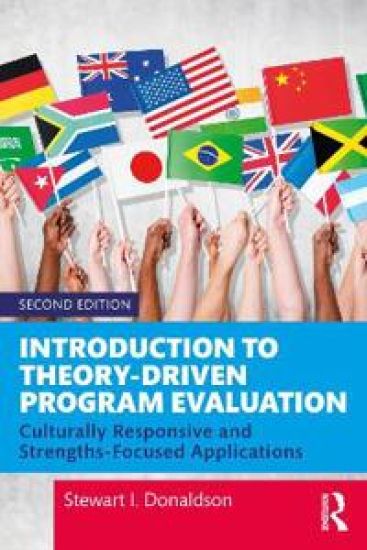
Introduction to Theory-Driven Program Evaluation
Introduction to Theory-Driven Program Evaluation provides a clear guide for practicing evaluation science, and numerous examples of how these evaluations actually unfold in contemporary practice. A special emphasis is placed how to conduct theory-driven program evaluations that are culturally responsive and strengths-focused.In this thoroughly revised new edition, author Stewart I. Donaldson provides a state-of-the art treatment of the basics of conducting theory-driven program evaluations. Each case follows a three-step model: developing program impact theory; formulating and prioritizing evaluation questions; and answering evaluation questions. The initial chapters discuss the evolution and popularity of theory-driven program evaluation, as well as step-by-step guide for culturally responsive and strengths-focused applications. Succeeding chapters provide actual cases and discuss the practical implications of theory-driven evaluation science. Reflections, challenges, and lessons learned across numerous cases from practices are discussed.The volume is of significant value to practicing evaluators, professors of introductory evaluation courses and their students, advanced undergraduate and graduate students, and serves as a text or a supplementary text for a wide range of evaluation and applied research courses. It is also of great interest to those interested in the connections between work and health, well-being, career development, human service organizations, and organizational improvement and effectiveness.
Introduction to Theory-Driven Program Evaluation
Introduction to Theory-Driven Program Evaluation provides a clear guide for practicing evaluation science, and numerous examples of how these evaluations actually unfold in contemporary practice. A special emphasis is placed how to conduct theory-driven program evaluations that are culturally responsive and strengths-focused.In this thoroughly revised new edition, author Stewart I. Donaldson provides a state-of-the art treatment of the basics of conducting theory-driven program evaluations. Each case follows a three-step model: developing program impact theory; formulating and prioritizing evaluation questions; and answering evaluation questions. The initial chapters discuss the evolution and popularity of theory-driven program evaluation, as well as step-by-step guide for culturally responsive and strengths-focused applications. Succeeding chapters provide actual cases and discuss the practical implications of theory-driven evaluation science. Reflections, challenges, and lessons learned across numerous cases from practices are discussed.The volume is of significant value to practicing evaluators, professors of introductory evaluation courses and their students, advanced undergraduate and graduate students, and serves as a text or a supplementary text for a wide range of evaluation and applied research courses. It is also of great interest to those interested in the connections between work and health, well-being, career development, human service organizations, and organizational improvement and effectiveness.
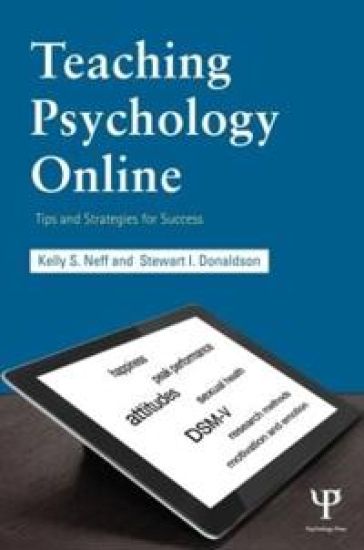
Teaching Psychology Online

Teaching Psychology Online

Kelly S. Neff; Stewart I. Donaldson

Psychology Press Ltd
2012
nidottu
Intended as a resource for psychology educators ranging from teaching assistants to experienced faculty, this book shows readers how to effectively create and manage an online psychology course. Guidelines for preparing courses, facilitating communication, and assigning grades are provided along with activities and assessments geared specifically towards psychology. Pedagogical theories and research are fused with the authors’ teaching experiences to help maximize the reader’s abilities as an online psychology instructor. The book focuses on psychology education at the undergraduate level but it also includes material appropriate for graduate students and professionals. Readers will find helpful examples from all the major content areas including introductory, social, developmental, biological, abnormal, and positive psychology, and human sexuality. Every chapter is organized around 3 sections. The Purpose part introduces the key concepts, theory, and research. The Implementation section reviews the ‘nuts and bolts’ of online teaching, and the Troubleshooting section addresses key problems and potential solutions. 'Text boxes' highlight important tips. The website http://www.TeachingPsychologyOnline.com provides additional tips, links to related articles and other resources, and examples of online psychology assignments from across the discipline. The book addresses: launching your online course; enhancing student/instructor communication; modes of multimedia and how to integrate them into your course including lecture videos, podcasting, blogging, wikis, and social networking sites; creating activities for online courses; assessment and grading; and online education trend including doctoral level education. Ideal for instructors teaching ANY psychology course, from introductory to upper-level undergraduate to graduate courses, this text can be used for developing on line courses in applied areas such as counseling, health, and industrial psychology as well as for courses in social, cognitive, and developmental psychology. Instructors of any technical skill level can use this book, including those familiar with Blackboard to those who are just getting started. Whether you are a seasoned pro or new to teaching psychology online, the tips in this book can help improve your instruction, reduce your prep time, and enhance your students’ success.
Teaching Psychology Online

Teaching Psychology Online

Kelly S. Neff; Stewart I. Donaldson

Psychology Press Ltd
2012
sidottu
Intended as a resource for psychology educators ranging from teaching assistants to experienced faculty, this book shows readers how to effectively create and manage an online psychology course. Guidelines for preparing courses, facilitating communication, and assigning grades are provided along with activities and assessments geared specifically towards psychology. Pedagogical theories and research are fused with the authors’ teaching experiences to help maximize the reader’s abilities as an online psychology instructor. The book focuses on psychology education at the undergraduate level but it also includes material appropriate for graduate students and professionals. Readers will find helpful examples from all the major content areas including introductory, social, developmental, biological, abnormal, and positive psychology, and human sexuality. Every chapter is organized around 3 sections. The Purpose part introduces the key concepts, theory, and research. The Implementation section reviews the ‘nuts and bolts’ of online teaching, and the Troubleshooting section addresses key problems and potential solutions. 'Text boxes' highlight important tips. The website http://www.TeachingPsychologyOnline.com provides additional tips, links to related articles and other resources, and examples of online psychology assignments from across the discipline. The book addresses: launching your online course; enhancing student/instructor communication; modes of multimedia and how to integrate them into your course including lecture videos, podcasting, blogging, wikis, and social networking sites; creating activities for online courses; assessment and grading; and online education trend including doctoral level education. Ideal for instructors teaching ANY psychology course, from introductory to upper-level undergraduate to graduate courses, this text can be used for developing on line courses in applied areas such as counseling, health, and industrial psychology as well as for courses in social, cognitive, and developmental psychology. Instructors of any technical skill level can use this book, including those familiar with Blackboard to those who are just getting started. Whether you are a seasoned pro or new to teaching psychology online, the tips in this book can help improve your instruction, reduce your prep time, and enhance your students’ success.