
Kirjailija
Stewart Lee
Kirjat ja teokset yhdessä paikassa: 15 kirjaa, julkaisuja vuosilta 2002-2026, suosituimpien joukossa Pea Green Boat. Vertaile teosten hintoja ja tarkista saatavuus suomalaisista kirjakaupoista.
15 kirjaa
Kirjojen julkaisuhaarukka 2002-2026.
The Versatile Presenter
Kirstie Hawkes; Stewart Lee; Richard Pascoe
Intellectual Perspective Press
2025
nidottu
Ready to elevate your presentation skills? The Versatile Presenter empowers you to be agile, to master 12 distinct presenting styles.The Versatile Presenter unlocks the secrets to becoming an adaptable, engaging, and memorable presenter. With twelve distinct presenting styles, this book equips you to tailor your approach for any scenario, whether you're informing, persuading, connecting, or directing. Packed with actionable tips and essential strategies, it covers everything from structuring content and using effective body language to mastering visuals and creating impactful staging.Endorsed by global leaders from Procter & Gamble, Mars, and Sainsbury's, The Versatile Presenter isn't just a book - it's your go-to guide for confidence and clarity in every presenting scenario. Learn to make beneficial choices, create lasting impact, and adapt to any audience with ease.Kirstie and Richard are global experts in presentation skills. They have been teaching and coaching together for over 20 years. They run courses, deliver executive coaching, and provide consultancy for clients across the globe, from Tokyo to Toronto, from Panama to Paris. They support a range of (mostly) corporate clients (including P&G, Carlsberg, and Mattel) in all aspects of advanced presentation skills: designing and delivering training, reviewing and redesigning content, and coaching executives and small teams.

In 1977, 17-year-old Steven Hamper was a stonemason in the dockyards of Chatham, Kent. His heart, however, beat in sync with the punk rock tremors of the era, seduced by its celebration of amateurism. So, in a gesture of revolutionary defiance, he took a 3lb club hammer and smashed his hand, vowing to never work again. In doing so, Steven Hamper metamorphosed into Billy Childish, a true renaissance man.Childish has since remained steadfastly true to punk's DIY cred, becoming one of the most recognisable and authentic voices in whichever artistic endeavour he undertakes. He has released over one hundred and fifty albums of raw rock and roll, punk, blues and folk, written many volumes of searing poetry as well as several autobiographical novels. But what he is perhaps best known for in recent years is his painting, for which he is now critically, commercially and internationally feted. He hasn't changed course in any of his disciplines, though. The world just caught up with the sheer volume of his brutally honest work.To Ease My Troubled Mind is a mosaic portrait collated over a year of interviews with Childish, as well as with close family, ex-girlfriends, bandmembers past and present, friends, foes, collaborators, even his therapist. It is an unflinching, yet frequently spiritual and funny portrait of an artist whose obstacle-strewn upbringing formed the backbone of his work: raised in a broken home and abused as a child, Childish was an undiagnosed dyslexic in remedial class at school who is nevertheless now Britain's most prolific and uncompromising creative force.
Everything was just so intense. There was an alienation and awkwardness about Josef K, but that was actually very true to life for me. Listening today I find really difficult because it brings back so many memories, so many ghosts and characters from the past. -- Paul Haig. A lot of what Josef K were about was as much to do with what not to play as what to play. Josef K could never have anything rootsy, no blues scale. We were always looking for the modern. -- Malcolm Ross. Josef K are the great lost post-punk band. Taking their name from the haunted protagonist of Franz Kafka s existentialist novel The Trial, they posed for photographs before brutalist and gothic architecture and produced visionary, often incendiary music that felt like the product of perpetual anxiety. And it really was. Through The Crack In The Wall is the first ever biography of the band, tracing their story from their origins in the leafy suburbs of Edinburgh through to their untimely implosion four years later. It s a tale of fun and frenzy, filled with highs and lows. From their thrilling live shows, which left onlookers spellbound, to more anxious occasions confronting a baying audience of rioting anarcho-punks in Brussels; from a brief spell as press darlings of the inkies to the fateful decision to pull their debut album just as pop stardom beckoned -- one that continues to haunt them today. Drawing extensively on new interviews with the band members and those around them as well as contemporary press articles, the book explores the band s inner workings and analyses their relationships with Postcard Records supremo Alan Horne, labelmates Orange Juice, and manager Allan Campbell. It re-evaluates their position in the pantheon of post-punk greats and considers how their music helped shape the UK independent scene of the eighties. More than anything else, though, the book s primary purpose is to celebrate the incredible music Josef K made and consider what makes it more vital today than ever.
In this book is a radical idea. By walking the ancient landscape of Britain and following the wheel of the year, we can reconnect to our shared folklore, to the seasons and to nature. Let this hauntological gazetteer guide you through our enchanted places and strange seasonal rituals: SPRING: Watch the equinox sunrise light up the floating capstone of Pentre Ifan and connect with the Cailleach at the shrine of Tigh nam Bodach in the remote Highlands SUMMER: Feel the resonance of ancient raves and rituals in the stone circles of southwest England's Stanton Drew, Avebury and the Hurlers AUTUMN: Bring in the harvest with the old gods at Coldrum Long Barrow, and brave the ghosts on misty Blakeney Point WINTER: Make merry at the Chepstow wassail, and listen out for the sunken church bells of the lost medieval city of Dunwich

Steve Beresford's polymathic activities have formed a prism for the UK improv scene since the 1970s. He is internationally known as a free improviser on piano, toy piano and electronics, composer for film and TV, and raconteur and Dadaist visionary. His résumé is filled with collaborations with hundreds of musicians and other artists, including such leading improvisers as Derek Bailey, Evan Parker and John Zorn, and he has given performances of works by John Cage and Christian Marclay. In this book, Beresford is heard in his own words through first-hand interviews with the author. Beresford provides compelling insight into an extensive range of topics, displaying the broad cultural context in which music is embedded. The volume combines chronological and thematic chapters, with topics covering improvisation and composition in jazz and free music; the connections between art, entertainment and popular culture; the audience for free improvisation; writing music for films; recording improvised music in the studio; and teaching improvisation. It places Beresford in the context of improvised and related musics – jazz, free jazz, free improvisation – in which there is growing interest. The linear narrative is broken up by 'interventions' or short pieces by collaborators and commentators.

Steve Beresford's polymathic activities have formed a prism for the UK improv scene since the 1970s. He is internationally known as a free improviser on piano, toy piano and electronics, composer for film and TV, and raconteur and Dadaist visionary. His résumé is filled with collaborations with hundreds of musicians and other artists, including such leading improvisers as Derek Bailey, Evan Parker and John Zorn, and he has given performances of works by John Cage and Christian Marclay. In this book, Beresford is heard in his own words through first-hand interviews with the author. Beresford provides compelling insight into an extensive range of topics, displaying the broad cultural context in which music is embedded. The volume combines chronological and thematic chapters, with topics covering improvisation and composition in jazz and free music; the connections between art, entertainment and popular culture; the audience for free improvisation; writing music for films; recording improvised music in the studio; and teaching improvisation. It places Beresford in the context of improvised and related musics – jazz, free jazz, free improvisation – in which there is growing interest. The linear narrative is broken up by 'interventions' or short pieces by collaborators and commentators.
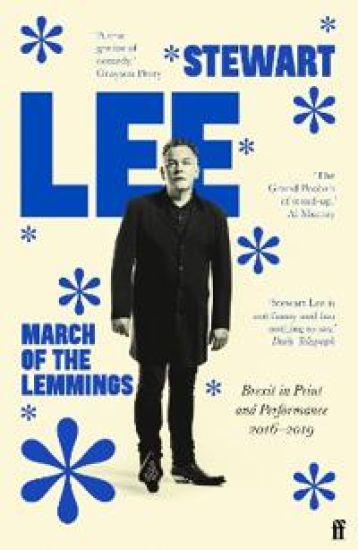
'A true genius of comedy' Grayson PerryAs a Metropolitan Elitist Snowflake, Stewart Lee was disappointed by the EU referendum result of 2016. But he knew how to weaponise his inconvenience - and the result is March of the Lemmings. Drawing on three years of newspaper columns, a complete transcript of the Content Provider stand-up show, and Lee's caustic footnote commentary, this is the scathing record the Brexit era deserves. With a riotous cast of characters (including a Lemming-obsessed Michael Gove), a dramatic chorus of online commenters and Kremlin bots, and Lee himself as our unreliable narrator-hero, this is the ultimate companion to the Brexit horror show.
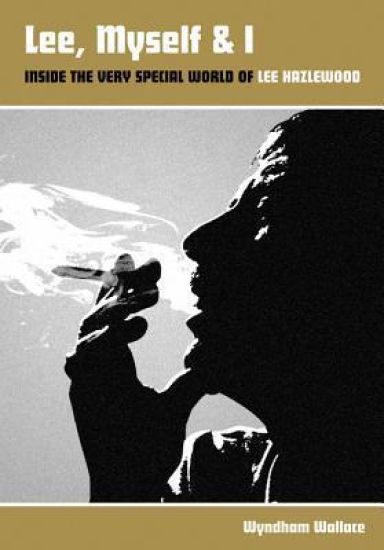
If I had a name like Wyndham Wallace I would not associate or correspond with anyone with a simple name like mine. However, since you have lowered yourself to such depths, how can my old Indian heart (west not east) not respond favourably. -Lee Hazlewood, fax message to the author, Valentine's Day 1999. Lee, Myself and I is an intimate portrait of the last years of Lee Hazlewood, the legendary singer and songwriter best known for 'These Boots Are Made For Walkin', the chart-topping hit he wrote and produced for Nancy Sinatra. It begins in 1999, when Hazlewood began his comeback after many years in the wilderness, and ends with his death in 2007. In the intervening years, the author, Wyndham Wallace, became Hazlewood's friend, confidante, de-facto manager, and more, even providing the lyrics for Lee's final recording, 'Hilli (At The Top Of The World'. In the light of reissues of Hazlewood's work by the esteemed Light In The Attic label-including There's A Dream I've Been Saving: Lee Hazlewood Industries 1966-1971, an acclaimed boxed set of his work with the label he founded, LHI, as well as further releases including liner notes by Wallace-interest in Hazlewood has never been greater. Lee, Myself and I is the first book to address his life and work. Through recollections of their lengthy conversations and adventures together, Wallace captures the complex personality-charming but cantankerous, blunt but poetic-of a reclusive icon whose work helped shape the American pop cultural landscape, and who still influences countless artists today. He also sheds light on often overlooked or more obscure aspects of Hazlewood's career, including his pioneering work with Duane Eddy and Phil Spector, and the outstanding recordings he made during his self-imposed exile to Sweden in the 1970s. Lee, Myself and I is a tale of validation: both the author's and Hazlewood's. It's the story of what it's like to meet your hero, befriend him, and then watch him die.

101 Things Birmingham Gave the World
Liz Cooke; Stewart Lee; Jon Hickman
Paradise Circus
2014
pokkari
This is the book that proves that Birmingham is not just the crucible of the Industrial Revolution, but the cradle of civilisation. From the team behind hit Birmingham miscellany, Paradise Circus, comes the definitive guide to the 101 things that made the world what it is today - and all of them were made in Birmingham. Read how Birmingham gave the world the wonders of tennis, nuclear war, the Beatles, 'that smell of eggs' and many more... 97 more. "101 Things Birmingham Gave The World, is not a Birmingham of the memory. It is a living breathing thing, wrestling with the city's contradictions, press-ganging the typically arch and understated humour of the Brummie, and an army of little-known facts, both trivial and monumental, into reshaping its confusing reputation." Stewart Lee
The Art of Smallfilms
Oliver Postgate; Peter Firmin; Stewart Lee; Jonny Trunk
Four Corners Books
2014
sidottu
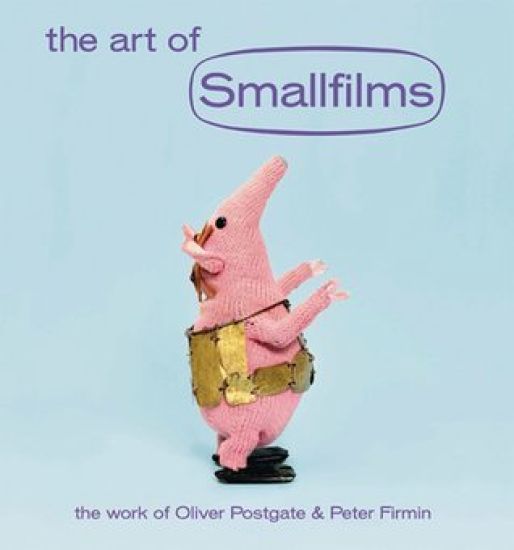
Working from a cowshed on a farm in Kent, Oliver Postgate (1925-2008) and Peter Firmin (born 1928) produced some of the best-loved British children's animated television of the 1960s and 1970s. Their iconic productions include Bagpuss (originally aired in 1974), The Clangers (1969-74), Ivor The Engine (1975-77), Pogles' Wood (1966-68) and Noggin The Nog (1959-65). Postgate and Firmin worked together from 1959 through the 1980s, creating popular, beloved characters that appealed to children and their parents alike, like the whistling, mousy Clangers (knitted by Firmin's wife Joan in bright pink wool) in outer space, the saggy, baggy cloth cat Bagpuss and the mild-mannered Viking boy Prince Noggin. Firmin painted the backdrops and created the models, and Postgate wrote scripts, did the stop-motion filming and frequently recorded the kindly, avuncular narration. This book, which includes a preface by Postgate's son Daniel, presents the Smallfilms archive: the puppets and cutouts from these shows (including some of the characters who didn't quite make the cut), along with insights into how they were created. The emphatically handmade models and painstakingly drawn illustrations that came to life in the Smallfilms productions are captured here in attentive, detailed photographs. The archive is presented like "a collection of artifacts in an exhibition detailing some much-admired twentieth-century art movement, like Fluxus or Dada," as acclaimed English stand-up comedian Stewart Lee notes in his introduction. The Art of Smallfilms, full of pipe cleaners, cotton balls, wire and ping-pong balls, celebrates the imagination and ingenuity of two artists who shaped a generation's childhood.

Stewart Lee! The 'If You Prefer a Milder Comedian Please Ask For One' EP
Stewart Lee
Faber Faber
2012
pokkari
Following his hugely acclaimed TV come-back Comedy Vehicle, Lee finds himself in search of ideas for a new Edinburgh show. On a long walk across London, he endures a coffee shop humiliation involving a loyalty card which suggests itself as a framing device. Later that month, thanks to Jeremy Clarkson's casual slur against Gordon Brown and the appearance of a well-meaning young comedian in an advert, a show is born. Featuring a transcript of the show fully annotated with footnotes, the If You Prefer A Milder Comedian EP confirms Stewart Lee as the most original, daring and brilliant comedian of his generation.
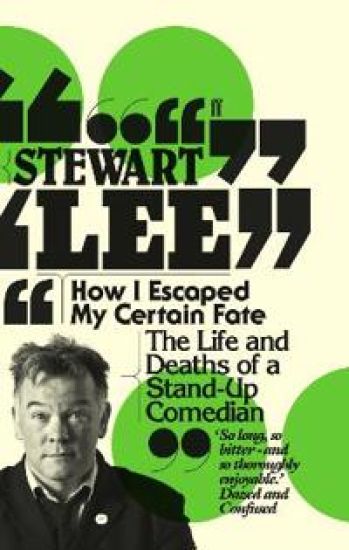
Experience how it feels to be the subject of a blasphemy prosecution! Find out why 'wool' is a funny word! See how jokes work, their inner mechanisms revealed, before your astonished face! In 2001, after over a decade in the business, Stewart Lee quit stand-up, disillusioned and drained, and went off to direct a loss-making musical, Jerry Springer: The Opera. Nine years later, How I Escaped My Certain Fate details his return to live performance, and the journey that took him from an early retirement to his position as the most critically acclaimed stand-up in Britain, the winner of BAFTAs and British Comedy Awards, and the affirmation of being rated the 41st best stand up ever. Here is Stewart Lee's own account of his remarkable comeback, told through transcripts of the three legendary full-length shows that sealed his reputation. Astonishingly frank and detailed in-depth notes reveal the inspiration and inner workings of his act. With unprecedented access to a leading comedian's creative process, this book tells us just what it was like to write these shows, develop the performance and take them on tour. How I Escaped My Certain Fate is everything we have come to expect from Stewart Lee: fiercely intelligent, unsparingly honest and very, very funny.
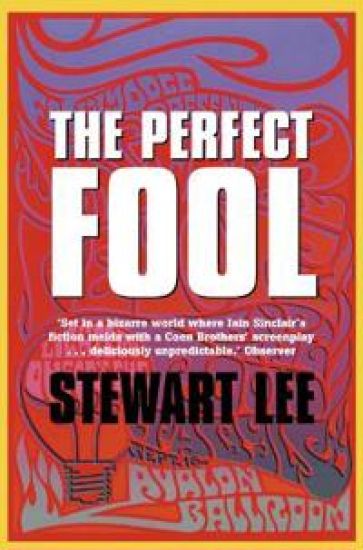
â??The Perfect Foolâ? charts the progress of a collection of misfits, spread across the wide open spaces of Arizona and the narrow streets of South London, all unwittingly caught up in a quest for the Holy Grail.