Kirjojen hintavertailu. Mukana 12 595 353 kirjaa ja 12 kauppaa.

Kirjailija

Stuart A Raymond

Kirjat ja teokset yhdessä paikassa: 7 kirjaa, julkaisuja vuosilta 2015-2024, suosituimpien joukossa Tracing Your Poor Ancestors. Vertaile teosten hintoja ja tarkista saatavuus suomalaisista kirjakaupoista.

Mukana myös kirjoitusasut: Stuart A. Raymond

7 kirjaa

Kirjojen julkaisuhaarukka 2015-2024.

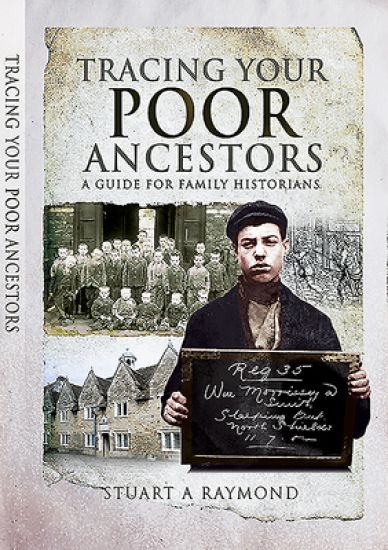
Tracing Your Poor Ancestors

Tracing Your Poor Ancestors

Stuart A Raymond

Pen Sword Family History
2020
nidottu
Many people in the past - perhaps a majority - were poor. Tracing our ancestors amongst them involves consulting a wide range of sources. Stuart Raymond's handbook is the ideal guide to them. He examines the history of the poor and how they survived. Some were supported by charity. A few were lucky enough to live in an almshouse. Many had to depend on whatever the poor law overseers gave them. Others were forced into the Union workhouse. Some turned to a life of crime. Vagrants were whipped and poor children were apprenticed by the overseers or by a charity. Paupers living in the wrong place were forcibly removed' to their parish of settlement. Many parishes and charities offered them the chance to emigrate to North America or Australia. As a result there are many places where information can be found about the poor. Stuart Raymond describes them all: the records of charities, of the poor law overseers, of poor law unions, of Quarter Sessions, of bankruptcy, and of friendly societies. He suggests many other potential sources of information in record offices, libraries, and on the internet.
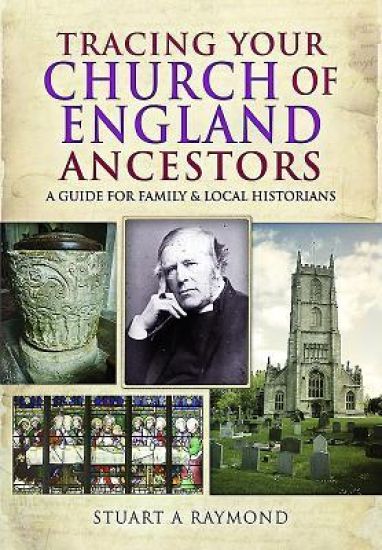
Tracing Your Church of England Ancestors

Tracing Your Church of England Ancestors

Stuart A. Raymond

Pen Sword Family History
2017
nidottu
In his latest handbook on the records of the major Christian religions, Stuart Raymond focuses on the Church of England. He identifies the available sources, comments on their strengths and weaknesses and explains how to make the best use of them. The history of the Church of England is covered, from the Reformation in the mid-sixteenth century until the present day. Anyone who has a family connection with the Church of England or a special interest in the local history of the church will find his book to be a mine of practical information and an essential aid for their research. A sequence of short, accessible chapters gives an insight into the relevant records and demonstrates how much fascinating genealogical information can be gleaned from them. After providing a brief history of the Church of England, and a description of its organization, Stuart Raymond explores the wide range of records that researchers can consult. Among them are parish registers, bishops transcripts, marriage licences, churchwardens accounts, vestry minutes, church magazines, tithe records and the records of the ecclesiastical courts and Anglican charities and missions. A wealth of research material is available and this book is the perfect introduction to it.
Tracing Your Nonconformist Ancestors

Tracing Your Nonconformist Ancestors

Stuart A. Raymond

Pen Sword Family History
2017
nidottu
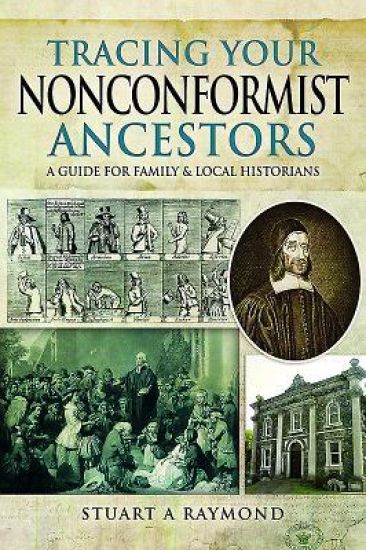
We all have Nonconformist ancestors. In the mid-nineteenth century almost half of the English population were Nonconformists. And there were very few villages where there was not at least one Nonconformist chapel. Local and family historians need to be aware of the diversity of Nonconformity, and of the many sources which will enable them to trace the activities of Nonconformist forebears. Stuart Raymond's handbook provides an overview of those sources. He identifies the numerous websites, libraries and archives that local and family historians need to consult. These are described in detail, their strengths and weaknesses are pointed out, and the contribution currently made by the internet is highlighted. Most Nonconformist denominations are discussed not just the mainstream Presbyterians, Congregationalists, Quakers and Methodists, but also obscure sects such as the Muggletonians and Glasites, and even the two groups who regularly appear on our doorsteps today Jehovah s Witnesses and the Mormons. The religious activities of our Nonconformist ancestors tell us a great deal about them, and provide fascinating insights into their lives.
Tracing Your Ancestors' Parish Records

Tracing Your Ancestors' Parish Records

Stuart A. Raymond

Pen Sword Books Ltd
2015
nidottu
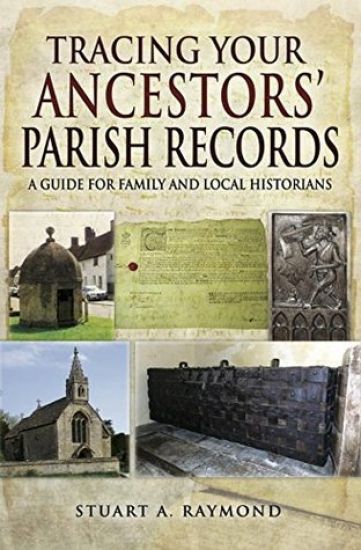
Parish records are essential sources for family and local historians, and Stuart Raymond's handbook is an invaluable guide to them. He explores and explains the fascinating and varied historical and personal information they contain. His is the first thoroughgoing survey of these resources to be published for over three decades. In a concise, easy-to-follow text he describes where these important records can be found and demonstrates how they can be used. Records relating to the poor laws, apprentices, the church, tithes, enclosures and charities are all covered. The emphasis throughout is on understanding their original purpose and on revealing how relevant they are for researchers today. Compelling insights into individual lives and communities in the past can be gleaned from them, and they are especially useful when they are combined with other major sources, such as the census. Your Ancestors' Parish is an excellent introduction to this key area of family and local history research - it is a book that all family and local historians should have on their
Avebury without the Stones

Avebury without the Stones

Stuart A Raymond

HOBNOB PRESS
2024
pokkari
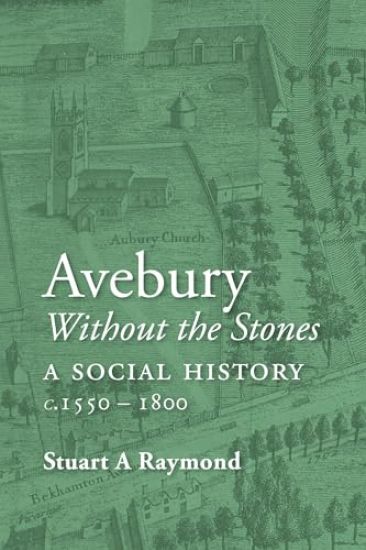
Avebury is a village in Wiltshire at the heart of the Marlborough Downs. In Avebury the prehistoric stone circle, together with the manor house, receive most of the attention. But what about the history of the ordinary people of the parish? Their story is just as interesting, but is rarely mentioned and little studied. This book sets out to tell their stories: the story of the local gentry and yeomen, the schoolmasters, the carpenters, the masons, the agricultural labourers, the poor. It paints a lively picture of Avebury in the early modern period - its government, its landowners and tenants, its agriculture, its occupations, its living conditions, its religion. It demonstrates that there is much more to Avebury than just its archaeology.
Researching Local History

Researching Local History

Stuart A Raymond

PEN SWORD BOOKS LTD
2022
nidottu
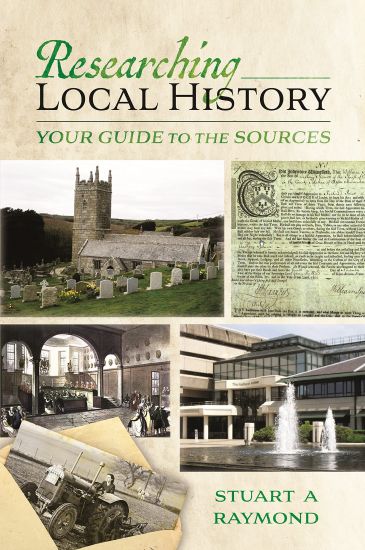
How has the place we live in changed, developed, and grown over the centuries? That is the basic question local historians seek to answer. The answer is to be found in the sources of information that previous generations have left us. The records of parish, county, and diocesan administration, of the courts, of the national government, and of private estates, all have something to tell us about the history of the locality we are interested in. So do old newspapers and other publications. All of these sources are readily available, but many have been little used. Local historians come from a wide diversity of backgrounds. But whether you are a student researching a dissertation, a family historian interested in the wider background history of your family, a teacher, a librarian, an archivist, an academic, or are merely interested in the history of your own area, this book is for you. If you want to research local history, you need a detailed account of the myriad sources readily available. This book provides a comprehensive overview of those sources, and its guidance will enable you to explore and exploit their vast range. It poses the questions which local historians ask, and identifies the specific sources likely to answer those questions.
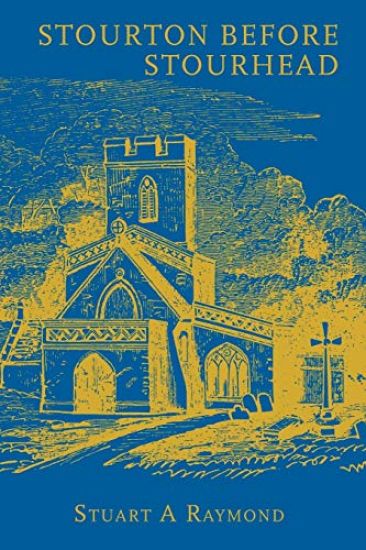
Stourton before Stourhead

Stourton before Stourhead

Stuart A Raymond

Hobnob Press
2019
pokkari
The gardens at Stourhead in south-west Wiltshire are amongst the best known in England. But what was there before they were planted? This book aims to show that the parish of Stourton had a fascinating history long before Stourhead was conceived. For example, it is one of the few places in England which sustained a Roman Catholic congregation throughout the early modern period (and indeed until the 20th century). The author pays particular attention to the histories of Stourton families, both Catholic and non-Catholic - not just the wealthy Stourtons and Hoares, but also the small farmers and tradesmen, and the paupers. This book will interest everyone who visits Stourhead, or who has any connection with 17th and 18th century Stourton.