Kirjojen hintavertailu. Mukana 12 595 353 kirjaa ja 12 kauppaa.

Kirjailija

Stuart A. Wolf

Kirjat ja teokset yhdessä paikassa: 5 kirjaa, julkaisuja vuosilta 1990-2013, suosituimpien joukossa Superconducting State. Vertaile teosten hintoja ja tarkista saatavuus suomalaisista kirjakaupoista.

5 kirjaa

Kirjojen julkaisuhaarukka 1990-2013.

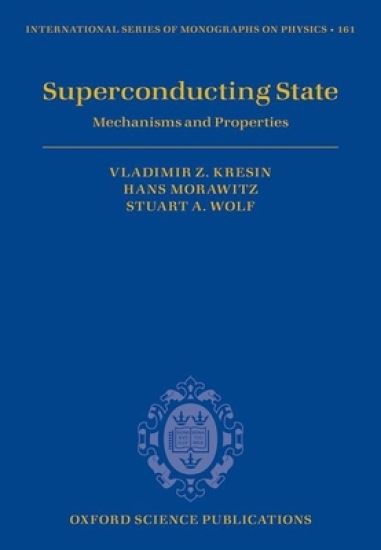
Superconducting State

Superconducting State

Vladimir Z. Kresin; Hans Morawitz; Stuart A. Wolf

Oxford University Press
2013
sidottu
'Superconducting State' provides a very detailed theoretical treatment of the key mechanisms of superconductivity, including the current state of the art (phonons, magnons, and plasmons). A very complete description is given of the electron-phonon mechanism responsible for superconductivity in the majority of superconducting systems, and the history of its development, as well as a detailed description of the key experimental techniques used to study the superconducting state and determine the mechanisms. In addition, there are chapters describing the discovery and properties of the key superconducting compounds that are of the most interest for science, and applications including a special chapter on the cuprate superconductors. It provides detailed treatments of some very novel aspects of superconductivity, including multiple bands (gaps), the "pseudogap" state, novel isotope effects beyond BCS, and induced superconductivity.
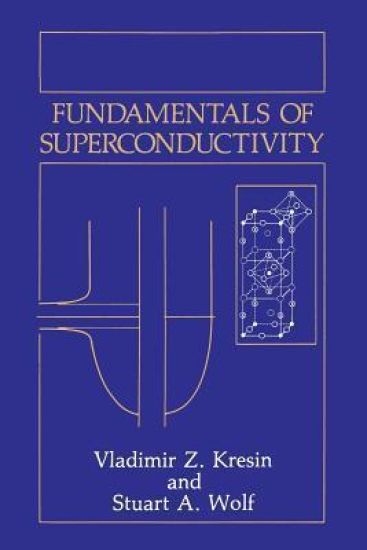
Fundamentals of Superconductivity

Fundamentals of Superconductivity

Vladimir Z. Kresin; Stuart A. Wolf

Springer-Verlag New York Inc.
2013
nidottu
The recent discovery of high-temperature superconductivity has resulted in a remarkable growth in the amount of research and the number of researchers working in this exciting field. Superconductivity is not a new phenomenon: in 1991 it will be 80 years old. Even though it was the newer discoveries which motivated us to write this book, the book itself is mainly a description of the fundamentals of the phenomenon. The book is written for a very broad audience, including students, engin­ eers, teachers, scientists, and others who are interested in learning about this exciting frontier of science. We have focused on the qualitative aspects, so that the reader can develop a basic understanding of the fundamental physics without getting bogged down in the details. Because of this approach, our list of refer­ ences is not comprehensive, and it is supplemented with a summary of additional reading consisting of monographs and selected review articles. (The articles we have referenced were either not reflected in the review articles on monographs or were milestones in the development of the field. ) In addition, some of the sections which can be skipped during the first reading have been marked with asterisks (*). Until recently, superconductivity was considered to belong to the field of low-temperature physics. This field was born, simultaneously with quantum physics, at the beginning of this century. Initially these two contemporaneous fields developed independently, but they soon became strongly coupled.
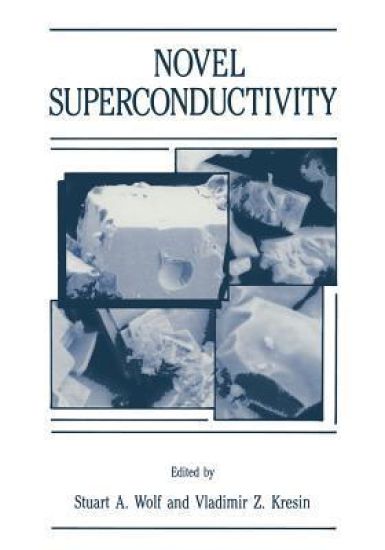
Novel Superconductivity

Novel Superconductivity

Stuart A. Wolf; Vladimir Z. Kresin

Springer-Verlag New York Inc.
2011
nidottu
The Novel Mechanisms of Superconductivity Conference was initially conceived in the early part of 1986 as a small, 2-1/2 day workshop of 40-70 scientists, both theorists and experimentalists interested in exploring the possible evidence for exotic, non phononic superconductivity. Of course, the historic discoveries of high temperature oxide superconductors by Bednorz and Mftller and the subsequent enhancements by the Houston/Alabama groups made such a small conference impractical. The conference necessarily had to expand, 2-1/2 days became 4-1/2 days and superconductivity in the high Tc oxides became the largest single topic in the workshop. In fact, this conference became the first major conference on this topic and thus, these proceedings are also the first maj or publication. However, heavy fermion, organic and low carrier concentration superconductors remained a very important part of this workshop and articles by the leaders in these fields are included in these proceedings. Ultimately the workshop hosted rearly 400 scientists, students and media including representatives from the maj or research groups in the U.S., Europe, Japan and the Soviet Union.
Mechanisms of Conventional and High Tc Superconductivity

Mechanisms of Conventional and High Tc Superconductivity

Vladimir Z. Kresin; Hans Morawitz; Stuart A. Wolf

Oxford University Press Inc
1993
sidottu
Superconductivity has become one of the most intensely studied physical phenomena of our times, with tremendous potential to revolutionize fields as diverse as computing and transportation. This book describes the methods, established results, and recent advances in the field. The goal is to present recently developed theoretical models in light of the long-sought aim of achieving the effect at very high temperatures. The book includes a detailed review of various mechanisms, including phononic, magnetic, and electronic models. The authors focus on the phenomenon of induced superconductivity in the high-temperature oxides, particularly the high-transition-temperature cuprates. They also discuss a variety of low-temperature superconducting systems in conventional materials and organics. The book links the crucial experiments with the most current theories, offering a unified description of the phenomenon. All researchers (and graduate-level) students involved with work in superconductivity will find this an invaluable resource, including solid-state and condensed-matter physicists and chemists, and materials scientists.
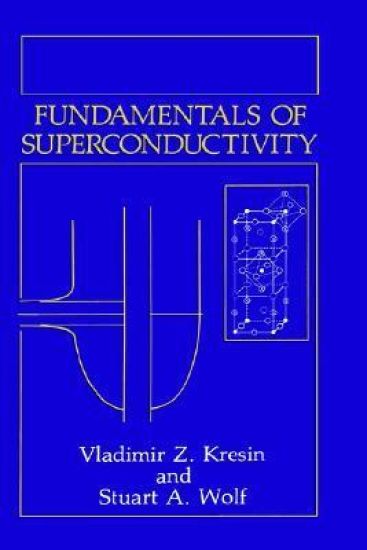
Fundamentals of Superconductivity

Fundamentals of Superconductivity

Vladimir Z. Kresin; Stuart A. Wolf

Kluwer Academic/Plenum Publishers
1990
sidottu
The recent discovery of high-temperature superconductivity has resulted in a remarkable growth in the amount of research and the number of researchers working in this exciting field. Superconductivity is not a new phenomenon: in 1991 it will be 80 years old. Even though it was the newer discoveries which motivated us to write this book, the book itself is mainly a description of the fundamentals of the phenomenon. The book is written for a very broad audience, including students, engin­ eers, teachers, scientists, and others who are interested in learning about this exciting frontier of science. We have focused on the qualitative aspects, so that the reader can develop a basic understanding of the fundamental physics without getting bogged down in the details. Because of this approach, our list of refer­ ences is not comprehensive, and it is supplemented with a summary of additional reading consisting of monographs and selected review articles. (The articles we have referenced were either not reflected in the review articles on monographs or were milestones in the development of the field. ) In addition, some of the sections which can be skipped during the first reading have been marked with asterisks (*). Until recently, superconductivity was considered to belong to the field of low-temperature physics. This field was born, simultaneously with quantum physics, at the beginning of this century. Initially these two contemporaneous fields developed independently, but they soon became strongly coupled.