Kirjojen hintavertailu. Mukana 12 595 353 kirjaa ja 12 kauppaa.

Kirjailija

Stuart Carroll

Kirjat ja teokset yhdessä paikassa: 5 kirjaa, julkaisuja vuosilta 2005-2025, suosituimpien joukossa Enmity and Violence in Early Modern Europe. Vertaile teosten hintoja ja tarkista saatavuus suomalaisista kirjakaupoista.

5 kirjaa

Kirjojen julkaisuhaarukka 2005-2025.

Enmity and Violence in Early Modern Europe

Enmity and Violence in Early Modern Europe

Stuart Carroll

Cambridge University Press
2025
pokkari
In this original study Stuart Carroll transforms our understanding of Europe between 1500 and 1800 by exploring how ordinary people felt about their enemies and the violence it engendered. Enmity, a state or feeling of mutual opposition or hostility, became a major social problem during the transition to modernity. He examines how people used the law, and how they characterised their enmities and expressed their sense of justice or injustice. Through the examples of early modern Italy, Germany, France and England, we see when and why everyday animosities escalated and the attempts of the state to control and even exploit the violence that ensued. This book also examines the communal and religious pressures for peace, and how notions of good neighbourliness and civil order finally worked to underpin trust in the state. Ultimately, enmity is not a relic of the past; it remains one of the greatest challenges to contemporary liberal democracy.

Enmity and Violence in Early Modern Europe

Enmity and Violence in Early Modern Europe

Stuart Carroll

Cambridge University Press
2023
sidottu
In this original study Stuart Carroll transforms our understanding of Europe between 1500 and 1800 by exploring how ordinary people felt about their enemies and the violence it engendered. Enmity, a state or feeling of mutual opposition or hostility, became a major social problem during the transition to modernity. He examines how people used the law, and how they characterised their enmities and expressed their sense of justice or injustice. Through the examples of early modern Italy, Germany, France and England, we see when and why everyday animosities escalated and the attempts of the state to control and even exploit the violence that ensued. This book also examines the communal and religious pressures for peace, and how notions of good neighbourliness and civil order finally worked to underpin trust in the state. Ultimately, enmity is not a relic of the past; it remains one of the greatest challenges to contemporary liberal democracy.
Hiking Tennessee

Hiking Tennessee

Stuart Carroll; Kelley Roark

ROWMAN LITTLEFIELD
2022
pokkari
Hiking Tennessee features concise descriptions and detailed maps for more than 50 easy-to-follow trails in the Volunteer state that allow hikers of all levels to enjoy beautiful views, get fit in the outdoors, and learn about the region's history.
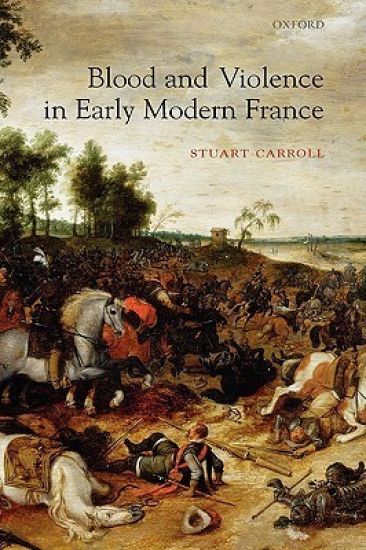
Blood and Violence in Early Modern France

Blood and Violence in Early Modern France

Stuart Carroll

Oxford University Press
2006
sidottu
The rise of civilized conduct and behaviour has long been seen as one of the major factors in the transformation from medieval to modern society. Thinkers and historians alike argue that violence progressively declined as men learned to control their emotions. The feud is a phenomenon associated with backward societies, and in the West duelling codified behaviour and channelled aggression into ritualised combats that satisfied honour without the shedding of blood. French manners and codes of civility laid the foundations of civilized Western values. But as this original work of archival research shows we continue to romanticize violence in the era of the swashbuckling swordsman. In France, thousands of men died in duels in which the rules of the game were regularly flouted. Many duels were in fact mini-battles and must be seen not as a replacement of the blood feud, but as a continuation of vengeance-taking in a much bloodier form. This book outlines the nature of feuding in France and its intensification in the wake of the Protestant Reformation, civil war and dynastic weakness, and considers the solutions proposed by thinkers from Montaigne to Hobbes. The creation of the largest standing army in Europe since the Romans was one such solution, but the militarization of society, a model adopted throughout Europe, reveals the darker side of the civilizing process.
Noble Power during the French Wars of Religion

Noble Power during the French Wars of Religion

Stuart Carroll

Cambridge University Press
2005
pokkari
Noble affinities were the essence of power in sixteenth-century France. This is the first book to analyse the development of a noble following during the whole course of the Wars of Religion and the first substantial study of the Guise - the most powerful family of the period - to appear for over a century. The Guise, champions of the catholic cause, were the largest landowners in the province and used Normandy as a base for their support of catholicism in the British Isles. The family exploited religious dissension to build a formidable ultra-catholic party in Normandy which ultimately challenged the monarchy. This study breaks new ground by illuminating the relationship between high politics and popular confessional solidarities, especially the rise of radical catholicism. It exploits new archival sources to consider all groups in political society, reinterpreting court politics and discussing groups usually excluded from the traditional political narrative, such as the peasantry.