Kirjojen hintavertailu. Mukana 12 152 606 kirjaa ja 12 kauppaa.

Kirjailija

Stuart Elden

Kirjat ja teokset yhdessä paikassa: 24 kirjaa, julkaisuja vuosilta 2002-2024, suosituimpien joukossa Foucault. Vertaile teosten hintoja ja tarkista saatavuus suomalaisista kirjakaupoista.

24 kirjaa

Kirjojen julkaisuhaarukka 2002-2024.

Mitra-Varuna - An Essay on Two Indo-European Representations of Sovereignty

Mitra-Varuna - An Essay on Two Indo-European Representations of Sovereignty

Georges Dumezil; Stuart Elden; Derek Coltman

HAU Society Of Ethnographic Theory
2024
nidottu
A classic text that develops one prong of Dumezil's tripartite hypothesis of Indo-European tribes: the sacred sovereign. Georges Dumezil's fascination with the myths and histories of India, Rome, Scandinavia, and the Celts yielded an idea that became his most influential scholarly legacy: the tripartite hypothesis, which divides Indo-European societal functions into three classes: the sacred sovereign, the warrior, and the producer. Mitra-Varuna, originally published in 1940, concentrates on the first function, that of sovereignty. Dumezil identifies two types of rulers, the first judicial and worldly, the second divine and supernatural. These figures, both priestly, are oppositional but complementary. The title nods to these roles, referring to the gods Mitra, a rational mediator, and Varuna, an awesome religious figure. Stuart Elden's critical edition, based on the 1988 English translation by Derek Coltman, identifies variations between the first and second French editions and completes-and in places corrects-Dumezil's references. The editor's detailed introduction situates Mitra-Varuna within Dumezil's career, outlines how his treatment of its themes developed over time, and relates the book to the political controversy around his ideas. Two new appendices contain passages that did not appear in the second French edition.

The Archaeology of Foucault

The Archaeology of Foucault

Stuart Elden

JOHN WILEY AND SONS LTD
2022
sidottu
On 20 May 1961 Foucault defended his two doctoral theses; on 2 December 1970 he gave his inaugural lecture at the Collège de France. Between these dates, he published four books, travelled widely, and wrote extensively on literature, the visual arts, linguistics, and philosophy. He taught both psychology and philosophy, beginning his explorations of the question of sexuality. Weaving together analyses of published and unpublished material, this is a comprehensive study of this crucial period. As well as Foucault’s major texts, it discusses his travels to Brazil, Japan, and the USA, his time in Tunisia, and his editorial work for Critique and the complete works of Nietzsche and Bataille. It was in this period that Foucault developed the historical-philosophical approach he called ‘archaeology’ – the elaboration of the archive – which he understood as the rules that make possible specific claims. In its detailed study of Foucault’s archive the book is itself an archaeology of Foucault in another sense, both excavation and reconstruction. This book completes a four-volume series of major intellectual histories of Foucault. Foucault’s Last Decade was published by Polity in 2016; Foucault: The Birth of Power followed in 2017; and The Early Foucault in 2021.
The Archaeology of Foucault

The Archaeology of Foucault

Stuart Elden

JOHN WILEY AND SONS LTD
2022
nidottu
On 20 May 1961 Foucault defended his two doctoral theses; on 2 December 1970 he gave his inaugural lecture at the Collège de France. Between these dates, he published four books, travelled widely, and wrote extensively on literature, the visual arts, linguistics, and philosophy. He taught both psychology and philosophy, beginning his explorations of the question of sexuality. Weaving together analyses of published and unpublished material, this is a comprehensive study of this crucial period. As well as Foucault’s major texts, it discusses his travels to Brazil, Japan, and the USA, his time in Tunisia, and his editorial work for Critique and the complete works of Nietzsche and Bataille. It was in this period that Foucault developed the historical-philosophical approach he called ‘archaeology’ – the elaboration of the archive – which he understood as the rules that make possible specific claims. In its detailed study of Foucault’s archive the book is itself an archaeology of Foucault in another sense, both excavation and reconstruction. This book completes a four-volume series of major intellectual histories of Foucault. Foucault’s Last Decade was published by Polity in 2016; Foucault: The Birth of Power followed in 2017; and The Early Foucault in 2021.
The Early Foucault

The Early Foucault

Stuart Elden

Polity Press
2021
nidottu
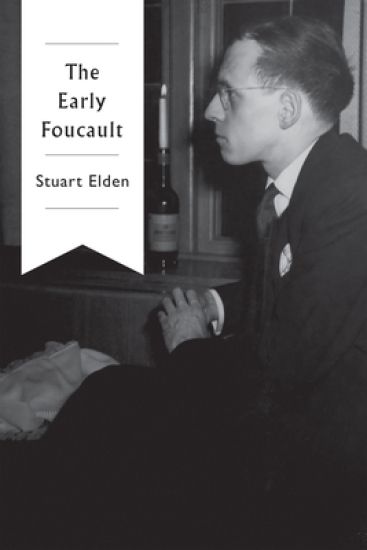
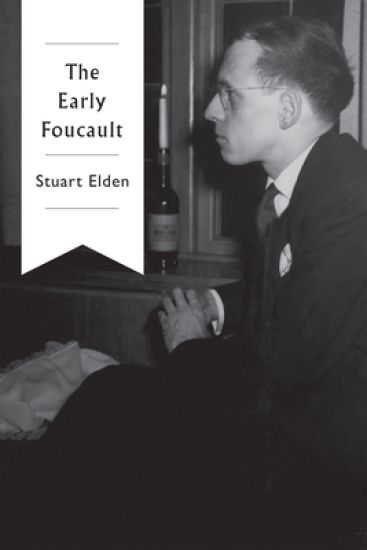
It was not until 1961 that Foucault published his first major book, History of Madness. He had already been working as an academic for a decade, teaching in Lille and Paris, writing, organizing cultural programmes and lecturing in Uppsala, Warsaw and Hamburg. Although he published little in this period, Foucault wrote much more, some of which has been preserved and only recently become available to researchers. Drawing on archives in France, Germany, Switzerland, Sweden and the USA, this is the most detailed study yet of Foucault’s early career. It recounts his debt to teachers including Louis Althusser, Jean Hyppolite, Maurice Merleau-Ponty and Jean Wahl; his diploma thesis on Hegel; and his early teaching career. It explores his initial encounters with Georges Canguilhem, Jacques Lacan, and Georges Dumézil, and analyses his sustained reading of Friedrich Nietzsche, Edmund Husserl and Martin Heidegger. Also included are detailed discussions of his translations of Ludwig Binswanger, Victor von Weizsäcker, and Immanuel Kant; his clinical work with Georges and Jacqueline Verdeaux; and his cultural work outside of France. Investigating how Foucault came to write History of Madness, Stuart Elden shows this great thinker’s deep engagement with phenomenology, anthropology and psychology. An outstanding, meticulous work of intellectual history, The Early Foucault sheds new light on the formation of a major twentieth-century figure.
The Early Foucault

The Early Foucault

Stuart Elden

Polity Press
2021
sidottu
It was not until 1961 that Foucault published his first major book, History of Madness. He had already been working as an academic for a decade, teaching in Lille and Paris, writing, organizing cultural programmes and lecturing in Uppsala, Warsaw and Hamburg. Although he published little in this period, Foucault wrote much more, some of which has been preserved and only recently become available to researchers. Drawing on archives in France, Germany, Switzerland, Sweden and the USA, this is the most detailed study yet of Foucault’s early career. It recounts his debt to teachers including Louis Althusser, Jean Hyppolite, Maurice Merleau-Ponty and Jean Wahl; his diploma thesis on Hegel; and his early teaching career. It explores his initial encounters with Georges Canguilhem, Jacques Lacan, and Georges Dumézil, and analyses his sustained reading of Friedrich Nietzsche, Edmund Husserl and Martin Heidegger. Also included are detailed discussions of his translations of Ludwig Binswanger, Victor von Weizsäcker, and Immanuel Kant; his clinical work with Georges and Jacqueline Verdeaux; and his cultural work outside of France. Investigating how Foucault came to write History of Madness, Stuart Elden shows this great thinker’s deep engagement with phenomenology, anthropology and psychology. An outstanding, meticulous work of intellectual history, The Early Foucault sheds new light on the formation of a major twentieth-century figure.
Canguilhem

Canguilhem

Stuart Elden

Polity Press
2019
nidottu
Georges Canguilhem (1904–95) was an influential historian and philosopher of science, as renowned for his teaching as for his writings. He is best known for his book The Normal and the Pathological, originally his doctoral thesis in medicine, but he also wrote a thesis in philosophy on the concept of the reflex, supervised by Gaston Bachelard. He was the sponsor of Michel Foucault’s doctoral thesis on madness. However, his work extends far beyond what is suggested by his association with these thinkers. Canguilhem also produced a series of important works on the natural sciences, including studies of evolution, psychology, vitalism and mechanism, experimentation, monstrosity and disease. Stuart Elden discusses the whole of this important thinker’s complex work, including recently rediscovered texts and archival materials. Canguilhem always approached questions historically, examining how it was that we came to a significant moment in time, outlining tensions, detours and paths not taken. The first comprehensive study in English, this book is a crucial guide for those coming to terms with Canguilhem’s important contributions, and will appeal to researchers and students from a range of fields.
Canguilhem

Canguilhem

Stuart Elden

Polity Press
2019
sidottu
Georges Canguilhem (1904–95) was an influential historian and philosopher of science, as renowned for his teaching as for his writings. He is best known for his book The Normal and the Pathological, originally his doctoral thesis in medicine, but he also wrote a thesis in philosophy on the concept of the reflex, supervised by Gaston Bachelard. He was the sponsor of Michel Foucault’s doctoral thesis on madness. However, his work extends far beyond what is suggested by his association with these thinkers. Canguilhem also produced a series of important works on the natural sciences, including studies of evolution, psychology, vitalism and mechanism, experimentation, monstrosity and disease. Stuart Elden discusses the whole of this important thinker’s complex work, including recently rediscovered texts and archival materials. Canguilhem always approached questions historically, examining how it was that we came to a significant moment in time, outlining tensions, detours and paths not taken. The first comprehensive study in English, this book is a crucial guide for those coming to terms with Canguilhem’s important contributions, and will appeal to researchers and students from a range of fields.
Shakespearean Territories

Shakespearean Territories

Stuart Elden

University of Chicago Press
2018
sidottu
Shakespeare was an astute observer of contemporary life, culture, and politics. The emerging practice of territory as a political concept and technology did not elude his attention. In Shakespearean Territories, Stuart Elden reveals just how much Shakespeare's unique historical position and political understanding can teach us about territory. Shakespeare dramatized a world of technological advances in measuring, navigation, cartography, and surveying, and his plays open up important ways of thinking about strategy, economy, the law, and colonialism, providing critical insight into a significant juncture in history. Shakespeare's plays explore many territorial themes: from the division of the kingdom in King Lear, to the relations among Denmark, Norway, and Poland in Hamlet, to questions of disputed land and the politics of banishment in Richard II. Elden traces how Shakespeare developed a nuanced understanding of the complicated concept and practice of territory and, more broadly, the political-geographical relations between people, power, and place. A meticulously researched study of over a dozen classic plays, Shakespearean Territories will provide new insights for geographers, political theorists, and Shakespearean scholars alike.
Shakespearean Territories

Shakespearean Territories

Stuart Elden

University of Chicago Press
2018
pokkari
Shakespeare was an astute observer of contemporary life, culture, and politics. The emerging practice of territory as a political concept and technology did not elude his attention. In Shakespearean Territories, Stuart Elden reveals just how much Shakespeare's unique historical position and political understanding can teach us about territory. Shakespeare dramatized a world of technological advances in measuring, navigation, cartography, and surveying, and his plays open up important ways of thinking about strategy, economy, the law, and colonialism, providing critical insight into a significant juncture in history. Shakespeare's plays explore many territorial themes: from the division of the kingdom in King Lear, to the relations among Denmark, Norway, and Poland in Hamlet, to questions of disputed land and the politics of banishment in Richard II. Elden traces how Shakespeare developed a nuanced understanding of the complicated concept and practice of territory and, more broadly, the political-geographical relations between people, power, and place. A meticulously researched study of over a dozen classic plays, Shakespearean Territories will provide new insights for geographers, political theorists, and Shakespearean scholars alike.
Foucault

Foucault

Stuart Elden

Polity Press
2017
nidottu
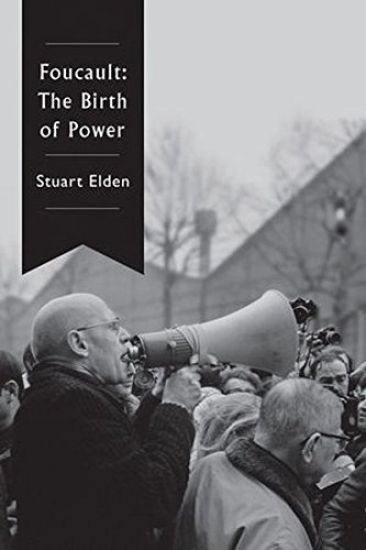
Michel Foucault's The Archaeology of Knowledge was published in March 1969; Discipline and Punish in February 1975. Although only six years apart, the difference in tone is stark: the former is a methodological treatise, the latter a call to arms. What accounts for the radical shift in Foucault's approach? Foucault's time in Tunisia had been a political awakening for him, and he returned to a France much changed by the turmoil of 1968. He taught at the experimental University of Vincennes and then moved to a prestigious position at the Collège de France. He quickly became involved in activist work concerning prisons and health issues such as abortion rights, and in his seminars he built research teams to conduct collaborative work, often around issues related to his lectures and activism. Foucault: The Birth of Power makes use of a range of archival material, including newly available documents at the Bibliothèque nationale de France, to provide a detailed intellectual history of Foucault as writer, researcher, lecturer and activist. Through a careful reconstruction of Foucault's work and preoccupations, Elden shows that, while Discipline and Punish may be the major published output of this period, it rests on a much wider range of concerns and projects.
Foucault

Foucault

Stuart Elden

Polity Press
2017
sidottu
Michel Foucault's The Archaeology of Knowledge was published in March 1969; Discipline and Punish in February 1975. Although only six years apart, the difference in tone is stark: the former is a methodological treatise, the latter a call to arms. What accounts for the radical shift in Foucault's approach? Foucault's time in Tunisia had been a political awakening for him, and he returned to a France much changed by the turmoil of 1968. He taught at the experimental University of Vincennes and then moved to a prestigious position at the Collège de France. He quickly became involved in activist work concerning prisons and health issues such as abortion rights, and in his seminars he built research teams to conduct collaborative work, often around issues related to his lectures and activism. Foucault: The Birth of Power makes use of a range of archival material, including newly available documents at the Bibliothèque nationale de France, to provide a detailed intellectual history of Foucault as writer, researcher, lecturer and activist. Through a careful reconstruction of Foucault's work and preoccupations, Elden shows that, while Discipline and Punish may be the major published output of this period, it rests on a much wider range of concerns and projects.
Foucault's Last Decade

Foucault's Last Decade

Stuart Elden

Polity Press
2016
sidottu
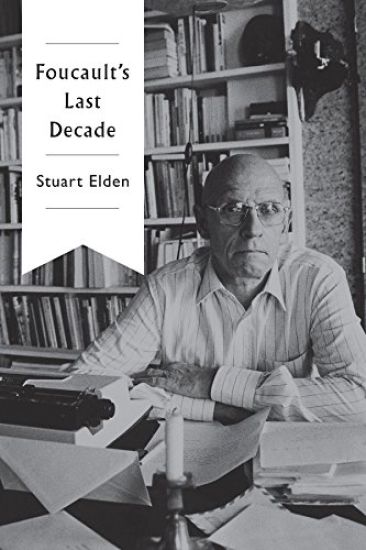
On 26 August 1974, Michel Foucault completed work on Discipline and Punish, and on that very same day began writing the first volume of The History of Sexuality. A little under ten years later, on 25 June 1984, shortly after the second and third volumes were published, he was dead.This decade is one of the most fascinating of his career. It begins with the initiation of the sexuality project, and ends with its enforced and premature closure. Yet in 1974 he had something very different in mind for The History of Sexuality than the way things were left in 1984. Foucault originally planned a thematically organised series of six volumes, but wrote little of what he promised and published none of them. Instead over the course of the next decade he took his work in very different directions, studying, lecturing and writing about historical periods stretching back to antiquity.This book offers a detailed intellectual history of both the abandoned thematic project and the more properly historical version left incomplete at his death. It draws on all Foucault’s writings in this period, his courses at the Collège de France and lectures elsewhere, as well as material archived in France and California to provide a comprehensive overview and synthetic account of Foucault’s last decade.
Foucault's Last Decade

Foucault's Last Decade

Stuart Elden

Polity Press
2016
nidottu
On 26 August 1974, Michel Foucault completed work on Discipline and Punish, and on that very same day began writing the first volume of The History of Sexuality. A little under ten years later, on 25 June 1984, shortly after the second and third volumes were published, he was dead.This decade is one of the most fascinating of his career. It begins with the initiation of the sexuality project, and ends with its enforced and premature closure. Yet in 1974 he had something very different in mind for The History of Sexuality than the way things were left in 1984. Foucault originally planned a thematically organised series of six volumes, but wrote little of what he promised and published none of them. Instead over the course of the next decade he took his work in very different directions, studying, lecturing and writing about historical periods stretching back to antiquity.This book offers a detailed intellectual history of both the abandoned thematic project and the more properly historical version left incomplete at his death. It draws on all Foucault’s writings in this period, his courses at the Collège de France and lectures elsewhere, as well as material archived in France and California to provide a comprehensive overview and synthetic account of Foucault’s last decade.
The Birth of Territory

The Birth of Territory

Stuart Elden

University of Chicago Press
2013
nidottu
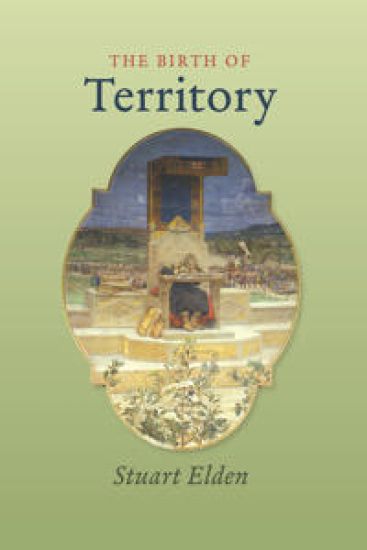
Territory is one of the central political concepts of the modern world and, indeed, functions as the primary way the world is divided and controlled politically. Yet territory has not received the critical attention afforded to other crucial concepts such as sovereignty, rights, and justice. While territory continues to matter politically, and territorial disputes and arrangements are studied in detail, the concept of territory itself is often neglected today. Where did the idea of exclusive ownership of a portion of the earth's surface come from, and what kinds of complexities are hidden behind that seemingly straightforward definition? The Birth of Territory provides a detailed account of the emergence of territory within Western political thought. Looking at ancient, medieval, Renaissance, and early modern thought, Stuart Elden examines the evolution of the concept of territory from ancient Greece to the seventeenth century to determine how we arrived at our contemporary understanding. Elden addresses a range of historical, political, and literary texts and practices, as well as a number of key players - historians, poets, philosophers, theologians, and secular political theorists - and in doing so sheds new light on the way the world came to be ordered and how the earth's surface is divided, controlled, and administered.
The Birth of Territory

The Birth of Territory

Stuart Elden

University of Chicago Press
2013
sidottu
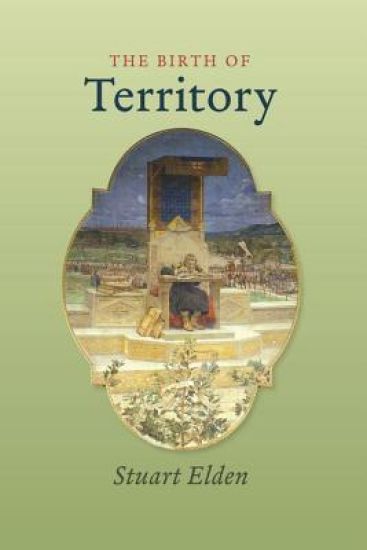
Territory is one of the central political concepts of the modern world and, indeed, functions as the primary way the world is divided and controlled politically. Yet territory has not received the critical attention afforded to other crucial concepts such as sovereignty, rights, and justice. While territory continues to matter politically, and territorial disputes and arrangements are studied in detail, the concept of territory itself is often neglected today. Where did the idea of exclusive ownership of a portion of the earth's surface come from, and what kinds of complexities are hidden behind that seemingly straightforward definition? The Birth of Territory provides a detailed account of the emergence of territory within Western political thought. Looking at ancient, medieval, Renaissance, and early modern thought, Stuart Elden examines the evolution of the concept of territory from ancient Greece to the seventeenth century to determine how we arrived at our contemporary understanding. Elden addresses a range of historical, political, and literary texts and practices, as well as a number of key players - historians, poets, philosophers, theologians, and secular political theorists - and in doing so sheds new light on the way the world came to be ordered and how the earth's surface is divided, controlled, and administered.
Sloterdijk Now

Sloterdijk Now

Stuart Elden

Polity Press
2011
nidottu
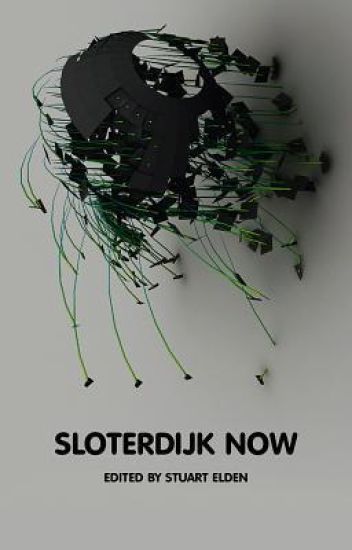
Peter Sloterdijk is one of the most challenging and contentious thinkers currently working within the European tradition. This is the first collection devoted to his work for English-language audiences and will act as an introduction to his work, set an agenda for engagement with his ideas, and relate his writings to a range of political, theoretical and practical contexts. Since his philosophical bestseller Critique of Cynical Reason (1983), Sloterdijk has exercised an important influence over German and other European thought and recently interest in his diverse oeuvre has grown considerably. The past few years have seen a number of his books translated into English, with many more to come. The book seeks to do justice to the breadth of Sloterdijk’s work throughout his career, orientated around the central topics of cynicism, ressentiment, the posthuman, space and world, art and literature, language, social science and his role as a public intellectual. Contributors include Babette Babich, Sjoerd van Tuinen, Eduardo Mendieta, Marie-Eve Morin, Efrain Kristol, Wieland Hoban, Nigel Thrift, Jean-Pierre Couture, and Sloterdijk himself. An explicitly interdisciplinary project, Sloterdijk Now is a crucial introduction to the work of this central thinker, in its complexity, variety and notoriety. It is set to spark debate amongst students and scholars across the humanities and social sciences.
Sloterdijk Now

Sloterdijk Now

Stuart Elden

Polity Press
2011
sidottu
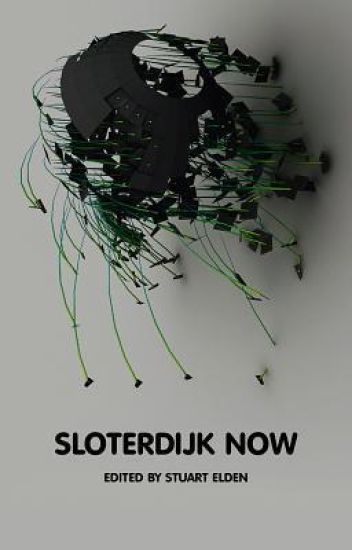
Peter Sloterdijk is one of the most challenging and contentious thinkers currently working within the European tradition. This is the first collection devoted to his work for English-language audiences and will act as an introduction to his work, set an agenda for engagement with his ideas, and relate his writings to a range of political, theoretical and practical contexts. Since his philosophical bestseller Critique of Cynical Reason (1983), Sloterdijk has exercised an important influence over German and other European thought and recently interest in his diverse oeuvre has grown considerably. The past few years have seen a number of his books translated into English, with many more to come. The book seeks to do justice to the breadth of Sloterdijk’s work throughout his career, orientated around the central topics of cynicism, ressentiment, the posthuman, space and world, art and literature, language, social science and his role as a public intellectual. Contributors include Babette Babich, Sjoerd van Tuinen, Eduardo Mendieta, Marie-Eve Morin, Efrain Kristol, Wieland Hoban, Nigel Thrift, Jean-Pierre Couture, and Sloterdijk himself. An explicitly interdisciplinary project, Sloterdijk Now is a crucial introduction to the work of this central thinker, in its complexity, variety and notoriety. It is set to spark debate amongst students and scholars across the humanities and social sciences.
Terror and Territory

Terror and Territory

Stuart Elden

University of Minnesota Press
2009
nidottu
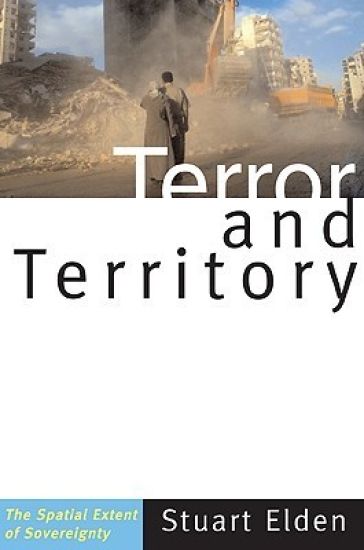
Today's global politics demands a new look at the concept of territory. From so-called deterritorialized terrorist organizations such as al-Qaeda to U.S.-led overthrows of existing regimes in the Middle East, the relationship between territory and sovereignty is under siege. Unfolding an updated understanding of the concept of territory, Stuart Elden shows how the contemporary "war on terror" is part of a widespread challenge to the connection between the state and its territory.Although the importance of territory has been disputed under globalization, territorial relations have not come to an abrupt end. Rather, Elden argues, the territory/sovereignty relation is being reconfigured. Traditional geopolitical analysis is transformed into a critical device for interrogating hegemonic geopolitics after the Cold War, and is employed in the service of reconsidering discourses of danger that include "failed states," disconnection, and terrorist networks.Looking anew at the "war on terror"; the development and application of U.S. policy; the construction and demonization of rogue states; events in Lebanon, Somalia, and Pakistan; and the wars continuing in Afghanistan and Iraq, Terror and Territory demonstrates how a critical geographical analysis, informed by political theory and history, can offer an urgently needed perspective on world events.
Space, Knowledge and Power

Space, Knowledge and Power

Stuart Elden

Ashgate Publishing Limited
2007
nidottu
Michel Foucault’s work is rich with implications and insights concerning spatiality, and has inspired many geographers and social scientists to develop these ideas in their own research. This book, the first to engage Foucault’s geographies in detail from a wide range of perspectives, is framed around his discussions with the French geography journal Hérodote in the mid 1970s. The opening third of the book comprises some of Foucault’s previously untranslated work on questions of space, a range of responses from French and English language commentators, and a newly translated essay by Claude Raffestin, a leading Swiss geographer. The rest of the book presents specially commissioned essays which examine the remarkable reception of Foucault’s work in English and French language geography; situate Foucault’s project historically; and provide a series of developments of his work in the contemporary contexts of power, biopolitics, governmentality and war. Contributors include a number of key figures in social/spatial theory such as David Harvey, Chris Philo, Sara Mills, Nigel Thrift, John Agnew, Thomas Flynn and Matthew Hannah. Written in an open and engaging tone, the contributors discuss just what they find valuable - and frustrating - about Foucault’s geographies. This is a book which will both surprise and challenge.
Space, Knowledge and Power

Space, Knowledge and Power

Stuart Elden

Ashgate Publishing Limited
2007
sidottu
Michel Foucault’s work is rich with implications and insights concerning spatiality, and has inspired many geographers and social scientists to develop these ideas in their own research. This book, the first to engage Foucault’s geographies in detail from a wide range of perspectives, is framed around his discussions with the French geography journal Hérodote in the mid 1970s. The opening third of the book comprises some of Foucault’s previously untranslated work on questions of space, a range of responses from French and English language commentators, and a newly translated essay by Claude Raffestin, a leading Swiss geographer. The rest of the book presents specially commissioned essays which examine the remarkable reception of Foucault’s work in English and French language geography; situate Foucault’s project historically; and provide a series of developments of his work in the contemporary contexts of power, biopolitics, governmentality and war. Contributors include a number of key figures in social/spatial theory such as David Harvey, Chris Philo, Sara Mills, Nigel Thrift, John Agnew, Thomas Flynn and Matthew Hannah. Written in an open and engaging tone, the contributors discuss just what they find valuable - and frustrating - about Foucault’s geographies. This is a book which will both surprise and challenge.