Kirjojen hintavertailu. Mukana 12 152 606 kirjaa ja 12 kauppaa.

Kirjailija

Stuart Lister

Kirjat ja teokset yhdessä paikassa: 4 kirjaa, julkaisuja vuosilta 2003-2007, suosituimpien joukossa The use and impact of dispersal orders. Vertaile teosten hintoja ja tarkista saatavuus suomalaisista kirjakaupoista.

4 kirjaa

Kirjojen julkaisuhaarukka 2003-2007.

The use and impact of dispersal orders

The use and impact of dispersal orders

Adam Crawford; Stuart Lister

Policy Press
2007
nidottu
The dispersal order - one of a variety of new powers introduced by the government to help police and local authorities address problems of disorder and incivilities - gives police powers to disperse groups of two or more from designated areas. Yet, controversially, these powers raise concerns regarding infringements of individual rights. This report provides the first in-depth study of the use and impact of dispersal orders. The report draws on extensive sources of data, including interviews with policy-makers and practitioners involved in implementing schemes across the UK; two detailed city-wide reviews; and two in-depth case studies. It explores the manner in which dispersal orders were experienced and interpreted by local adults and youths and considers their implications for local social relations. The authors assess the balance between enforcement and preventive approaches to local problems and the growing salience of public perceptions in policing. They also provide important insights into local best practice and implications for future policy development. This report will be a vital resource for all those interested in developing strategies to enhance community safety or keen to understand the impact of policing reforms. It will be particularly relevant to researchers and students of policing, policy-makers, police, community safety officers, anti-social behaviour practitioners, and those working with young people.
Bouncers

Bouncers

Dick Hobbs; Philip Hadfield; Stuart Lister; Simon Winlow

Oxford University Press
2005
nidottu
In recent years, the expansion of night-time leisure has emerged as a key indicator of post-industrial urban prosperity, attracting investment, creating employment and re-generating the built environment. These leisure economies are youth-dominated, focusing upon the sale and consumption of alcohol. Unprecedented numbers of young people now flock to town centres that are crammed with bars, pubs and clubs, and the resulting violent disorder has over run police resources that remain geared to the drinking patterns and alcohol cultures of previous generations. Post-industrial re-structuring has spawned an increasingly complex mass of night-time leisure options through which numerous licit and illicit commercial opportunities flow. Yet, regardless of the fashionable and romantic notions of many contemporary urban theorists, it is alcohol, mass intoxication and profit rather than 'cultural regeneration,' which lies at the heart of this rapidly expanding dimension of post-industrial urbanism. Private security in the bulky form of bouncers fills the void left by the public police. These men (only 7% are women), whose activities are barely regulated by the State, are dominated by a powerful subculture rooted in routine violence and intimidation. Using ethnography, participant observation and extensive interviews with all the main players, this controversial book charts the emergence of the bouncer as one of the most graphic symbols in the iconography of post industrial Britain.
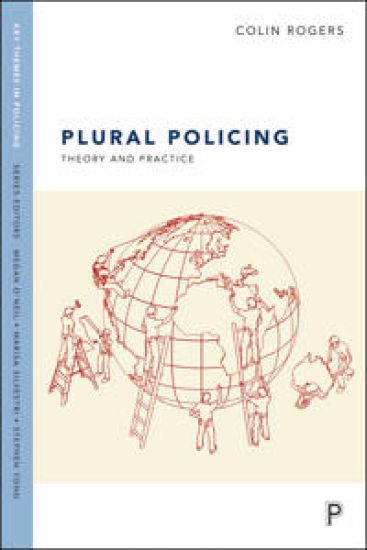
Plural policing

Plural policing

Adam Crawford; Stuart Lister; Sarah Blackburn; Jon Burnett

Policy Press
2005
nidottu
This timely and important report draws together the findings of an extensive two-year study of developments in the provision of visible policing in England and Wales. Exploring the dynamic relations between different public and private providers, it combines an overview of national developments with a detailed analysis of six focused case studies, including two city centres, one out-of-town shopping centre, an industrial park and two residential areas. The report considers the role of community support officers, neighbourhood wardens and private security guards, amongst other plural policing personnel and outlines the policy implications of the research findings, particularly with regard to the Government's current police reform agenda. It also provides important insights and recommendations regarding the organisation, co-ordination and regulation of the future mixed economy of visible security patrols. Plural policing will be of special interest to academics, researchers, policy makers, police and security managers and students of criminology and policing, as well as all those interested in community safety and the changing face of modern policing.
Bouncers

Bouncers

Dick Hobbs; Philip Hadfield; Stuart Lister; Simon Winlow

Oxford University Press
2003
sidottu
In recent years, the expansion of night-time leisure has emerged as a key indicator of post-industrial urban prosperity, attracting investment, creating employment, and re-generating the built environment. These leisure economies are youth-dominated, focusing upon the sale and consumption of alcohol. Unprecedented numbers of young people now flock to town centres that are crammed with bars, pubs, and clubs, and the resulting violent disorder has over run police resources that remain geared to the drinking patterns and alcohol cultures of previous generations. Post-industrial re-structuring has spawned an increasingly complex mass of night-time leisure options through which numerous licit and illicit commercial opportunities flow. Yet, regardless of the fashionable and romantic notions of many contemporary urban theorists, it is alcohol, mass intoxication, and profit rather than 'cultural regeneration,' which lies at the heart of this rapidly expanding dimension of post-industrial urbanism. Private security in the bulky form of bouncers fills the void left by the public police. These men (only 7% are women), whose activities are barely regulated by the State, are dominated by a powerful subculture rooted in routine violence and intimidation. Using ethnography, participant observation, and extensive interviews with all the main players, this controversial book charts the emergence of the bouncer as one of the most graphic symbols in the iconography of post-industrial Britain.