Kirjojen hintavertailu. Mukana 12 288 744 kirjaa ja 12 kauppaa.

Kirjailija

Stuart Reid

Kirjat ja teokset yhdessä paikassa: 44 kirjaa, julkaisuja vuosilta 1987-2022, suosituimpien joukossa Crown Covenant and Cromwell: The Civil Wars in Scotland 1639-1651. Vertaile teosten hintoja ja tarkista saatavuus suomalaisista kirjakaupoista.

44 kirjaa

Kirjojen julkaisuhaarukka 1987-2022.

Queen Victoria’s Highlanders

Queen Victoria’s Highlanders

Stuart Reid

Osprey Publishing
2007
nidottu
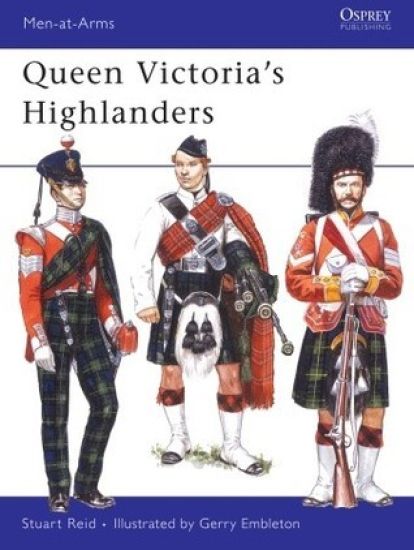
This book is not only a tribute to the proud Highlander regiments who have served with distinction for over two centuries but will also be an insightful study of the period in which they made their name. As the British Empire dominated every corner of the globe, Queen Victoria's Highlanders served in a variety of campaigns from the Indian subcontinent to Africa. This title will study their organization, histories, and evolution of uniforms. Each of the famous regiments - including the Black Watch, the Gordons, the Argylls, the Camerons - will be covered and the full glory of their romantic, tartan uniforms revealed.
All the King's Armies

All the King's Armies

Stuart Reid

Spellmount Publishers Ltd
2007
nidottu
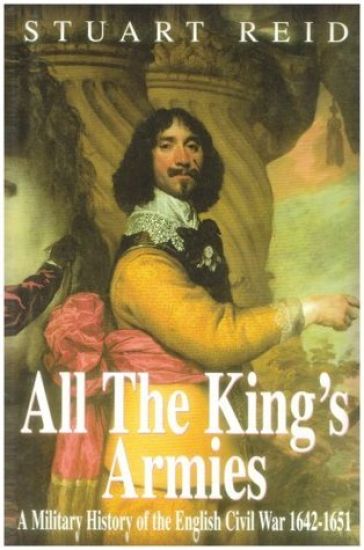
On 23 September 1642 Prince Rupert’s cavalry triumphed outside Worcester in the first major clash on the English Civil War. Almost precisely nine years later, on 3 September 1651, that war was won by Oliver Cromwell’s famous Ironsides outside the same city and in part upon the same ground. Stuart Reid provides a detailed yet readable new military history – the first to be published for over twenty years – of the three conflicts between 1642 and 1651 known as the English Civil War. Prince Rupert, Oliver Cromwell Patrick Ruthven, Alexander Leslie and Sir Thomas Fairfax all play their parts in this fast-moving narrative. At the heart of the book are fresh interpretations, not only of the key battles such as Marston Moor in 1644, but also of the technical and economic factors which helped shape strategy and tactics, making this a truly comprehensive study of one of the most famous conflicts in British history. This book is a must for all historians and enthusiasts of seventeenth-century English history.
The Scottish Jacobite Army 1745–46

The Scottish Jacobite Army 1745–46

Stuart Reid

Osprey Publishing
2006
nidottu
This book is the story of Bonnie Prince Charlie's army at Culloden. Beginning with initial recruitment, it will strip away the myth and expose the realities of life in the Jacobite rebellion army, a force which included volunteers, 'pressed men', mercenaries and French forces, sent over to assist as part of the 'Auld Alliance'. Unit organization, weapons and tactics are discussed in depth, as well as the vicious battles that were fought to secure the crown. The wonderful colour plates and rare images illustrate the variety of uniforms that were worn ranging from tartan to regular army dress. This is an essential introductory guide to the Jacobite Armies as well as a definitive guide to the uniforms and weaponry of the period.
Old Kent Inns

Old Kent Inns

Stuart Reid

The History Press Ltd
2006
nidottu
Accompanied by over 100 illustrations this volume takes the reader on a tour around the inns, taverns and pubs of Kent, exploring their fascinating history. This book will appeal to all those interested in the history of Kent, and particularly those with a fondness for the area’s drinking establishments.
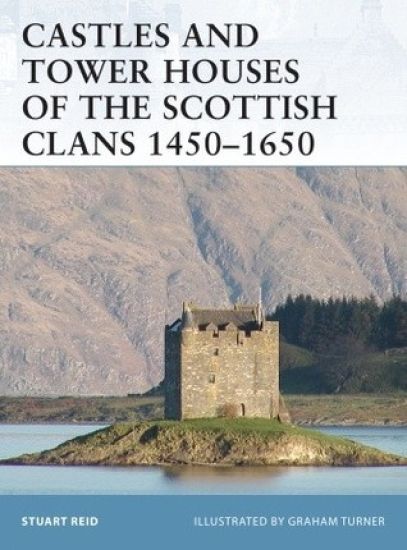
Castles and Tower Houses of the Scottish Clans 1450–1650
Scottish castles and Tower Houses evolved as fortified dwellings that were erected in an environment of weak royal authority and feuding between rival clans. They demonstrated a strong and highly successful design that formed the core of many larger structures. Many of them continued to be inhabited long after the threat of unwanted visitors had diminished and remain excellently preserved for visitors and historians. This book examines these castles and Tower Houses, focusing on their distinctive style that flourished in Scotland in the 16th and 17th centuries.
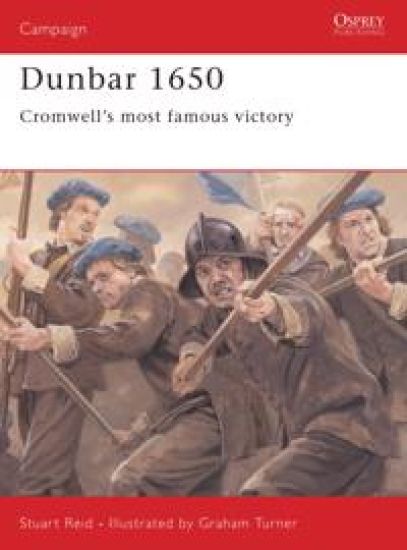
Dunbar 1650

Dunbar 1650

Stuart Reid

Osprey Publishing
2004
nidottu
When Charles Stuart was crowned King of Scotland, Cromwell led the English army north to counter the threat he now posed. Their march on Edinburgh was opposed by Leslie's Scottish army who used guerrilla tactics to force them back as far as Dunbar. Battle ensued on 3 September 1650, and the Scots fought with great determination until Cromwell led his cavalry against their right wing. The Scots army crumbled from right to left, and was driven from the field. Leslie retreated and Cromwell captured Edinburgh, although the war continued for another year after this crushing English victory.
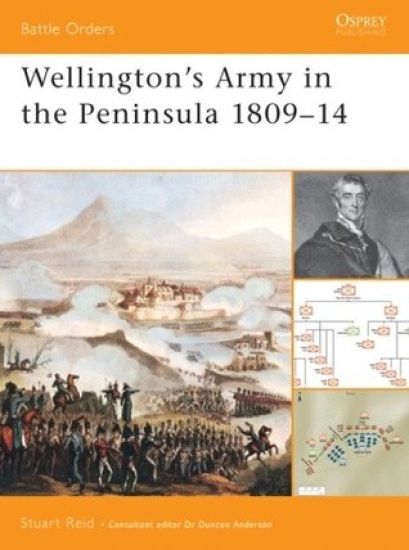
Wellington's Army in the Peninsula 1809–14
The gallant stand of the Gordon Highlanders at Maya in 1813 epitomises the dogged fighting of the British soldier, and this book shows how he actually fought. This highly detailed study sets out a clear technical account of how British armies actually functioned in the field during the Napoleonic period, with unprecedented detail of doctrine, training, tactics and equipment. It also provides a comprehensive Order of Battle for Wellington's army in the Peninsular 1809-14. Clear and accurate map, unit trees and TOEs are included in this detailed title.
Battles of the Scottish Lowlands

Battles of the Scottish Lowlands

Stuart Reid

Pen Sword Books Ltd
2004
pokkari
This historical guide retells, in graphic detail, the story of nine of the most important battles to be fought in Scotland south of the Highland Line. By skilful use of maps, diagrams and photographs the author explains the complex sequence of events that makes these encounters so fascinating. He provides a detailed tour of each battleground as it appears to the visitor in the present day and rediscovers the lanes and by-ways tramped by soldiers hundreds of years ago.
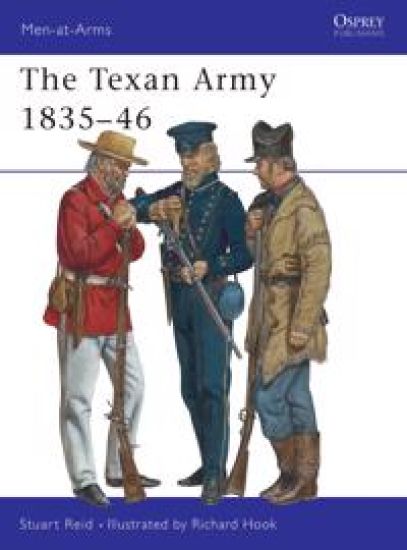
The Texan Army 1835–46

The Texan Army 1835–46

Stuart Reid

Osprey Publishing
2003
nidottu
For ten extraordinary years following its successful revolution and independence from Mexico, Texas was a sovereign republic with its own army and navy. It fought not only to defend itself against Indians and Mexicans, but also to extend its frontiers to the Pacific. This absorbing text tells the little-known story of the armies of the Texan Revolution and the independent Republic of Texas and is illustrated with many rare images that add colour to this insightful book.
Auldearn 1645

Auldearn 1645

Stuart Reid

Osprey Publishing
2003
nidottu
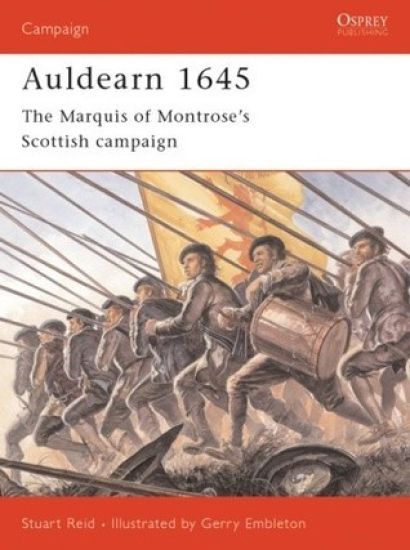
Scotland in the 17th century was an independent country whose king was the King of England. Charles' proposed remodelling of the Scottish Kirk succeeded in alienating the Protestant population. In 1638 a National Covenant was signed throughout the country, opposing the King's reforms. In 1639 and 1640 two brief wars saw King Charles defeated and Scotland's independence re-asserted. However, one of the leaders, Montrose, was eclipsed by his rivals and in 1644 Montrose raised a Royalist rebellion. In the course of a year he won a string of victories that left him in momentary control of Scotland. The battle of Auldeam was the centrepiece of this campaign. This book details the remarkable Scottish campaign waged by the Marquis of Montrose.
Quebec 1759

Quebec 1759

Stuart Reid

Osprey Publishing
2003
nidottu
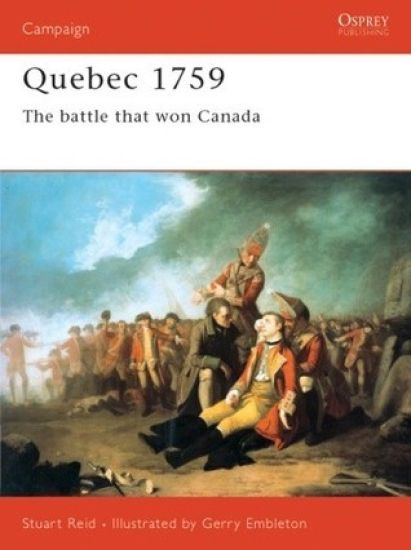
'What a scene!' wrote Horace Walpole. 'An army in the night dragging itself up a precipice by stumps of trees to assault a town and attack an enemy strongly entrenched and double in numbers!' It was indeed a drama, as Major-General James Wolfe's army scaled the cliffs above St. Lawrence to stand with the French Canadian capital before them; and in one short sharp exchange of fire, tumble the Marquis de Montcalm's French army into bloody ruin. Sir John Fortescue famously described it as the 'most perfect volley ever fired on a battlefield', and this book explores how in just a few hectic minutes, one of the British Army's most consummate professionals decided the fate of a continent.
Culloden Moor 1746

Culloden Moor 1746

Stuart Reid

Osprey Publishing
2002
nidottu
The final demise of the Jacobite cause on Culloden Moor in April 1746 concluded one of the most famous battles in British military history. In this detailed modern account the author combines a thorough knowledge of 18th century tactics, an intimate knowledge of the battlefield itself and a scandalously underused archive of contemporary material to provide a balanced and accurate account of this controversial encounter. This book demonstrates that the British, and the Duke of Cumberland in particular, had a very pro-active role in the battle - not merely staving off defeat, but seizing victory with a series of well-timed and well-coordinated counterattacks.
Redcoat Officer

Redcoat Officer

Stuart Reid

Osprey Publishing
2002
nidottu
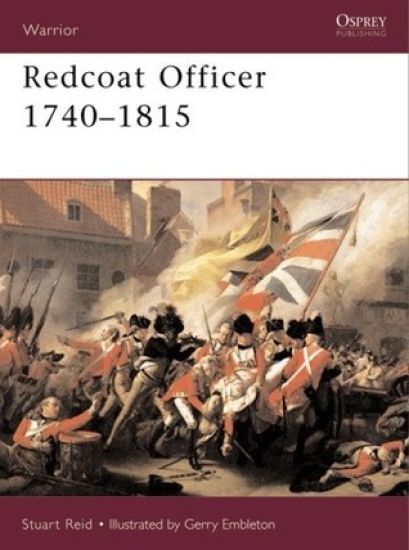
The commissioned officer ranks in the British Army from 1740-1815 were almost entirely composed of the affluent and educated - the sons of the landed gentry, the wealthy, and other professional people. This title looks at the enlistment, training, daily life and combat experiences of the typical British officer in the crucial periods of the North American conflicts, the Revolution, and the Napoleonic Wars. It compliments the author's previous treatments in Warrior 19 British Redcoat 1740-93 and Warrior 20 British Redcoat (2) 1793-1815, which deal exclusively with the common infantryman, and balances these discussions through a look at the 'fellows in silk stockings'. Particular emphasis is placed on the experiences and activities in North America in the late 18th century.
1745

1745

Stuart Reid

Spellmount Publishers Ltd
2000
nidottu
With this work, the author contends that the Highland rebellion was not a despairing last stand by a Celtic civilisation, and that Jacobite loyalties were not solely determined by the Highland line, Gaelic culture, or religion.
Wolfe

Wolfe

Stuart Reid

Spellmount Publishers Ltd
2000
nidottu
This military biography examines Wolfe's career from the early years through to the Battle of Quebec, to give insight into what made Wolfe such an effective soldier.
Scots Armies of the English Civil Wars

Scots Armies of the English Civil Wars

Stuart Reid

Osprey Publishing
1999
nidottu
In the summer of 1642 the First Civil War between king and parliament had broken out in England. Initially both sides were confident of victory, but after the first campaigns ended in stalemate they began looking for allies. The meddling of the Stuart Kings with Scotland's religious traditions provoked the National Covenant, and later the Solemn League and Covenant. Yet many Scots continued to support the King, and after his execution, his exiled son.This compact volume by Stuart Reid examines the Scots armies who fought in the English Civil Wars, and features numerous illustrations and photographs, including full page colour plates by Graham Turner.
All the Kings's Armies

All the Kings's Armies

Stuart Reid

Spellmount Publishers Ltd
1998
sidottu
A military history of the English Civil War which offers a detailed and lucid examination of the principal campaigns and battles; commenting upon the development of tactics and the extent to which in the King's armies both strategy and tactics were moulded by a chronic shortage of ammunition.
Highland Clansman 1689–1746

Highland Clansman 1689–1746

Stuart Reid

Osprey Publishing
1997
nidottu
The Scottish clans were comprised of an agricultural peasantry dominated by a warrior aristocracy. The author details the development of this clan system and their interaction with one another, which often led to conflict. The rise and fall of the Jacobite cause under Bonny Prince Charlie in the 1745 rebellion is extensively covered, and their battle tactics at Culloden are analyzed as to why they were so utterly defeated.
British Redcoat 1793-1815

British Redcoat 1793-1815

Stuart Reid

Osprey Publishing
1997
nidottu
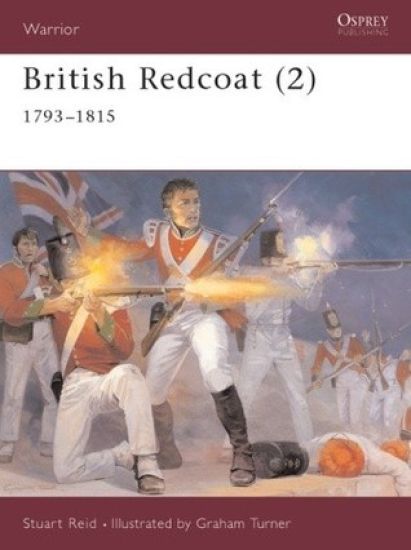
In 1783 the British army struggled home from North America in a shattered condition. It had acquitted itself well, but its regiments were now woefully understrength, and it was not until 1789 that they were again fit for service. Little more than three years later, Republican France declared war, and, apart from two short periods, the army was to be heavily engaged around the globe for the next 23 years. Beginning where Warrior 19 British Redcoat 1740-93 ends, Stuart Reid shows how the army was re-organised, re-equipped, re-trained and led from the bitter struggle in the West Indies to the final reckoning at Waterloo.
King George’s Army 1740 - 93 (3)

King George’s Army 1740 - 93 (3)

Stuart Reid

Osprey Publishing
1996
nidottu
The 18th century was marked by a steady growth in central control of the British Army and a corresponding decrease in the influence enjoyed by individual commanding officers. The most obvious sign of this process was the increasing uniformity of the clothing issued each year to the soldiers. Nevertheless, as far as those who devised the Clothing Regulations were concerned, it was a constant, and invariably quite uphill struggle to enforce compliance. This companion volume to Men-at-Arms 285 and Men-at-Arms 289 examines the organization and uniforms of King George's cavalry and artillery together with those of the Board of Ordnance.