

Kirjailija
Stuart Robson
Kirjat ja teokset yhdessä paikassa: 7 kirjaa, julkaisuja vuosilta 1995-2021, suosituimpien joukossa Desawarnana. Vertaile teosten hintoja ja tarkista saatavuus suomalaisista kirjakaupoista.
7 kirjaa
Kirjojen julkaisuhaarukka 1995-2021.
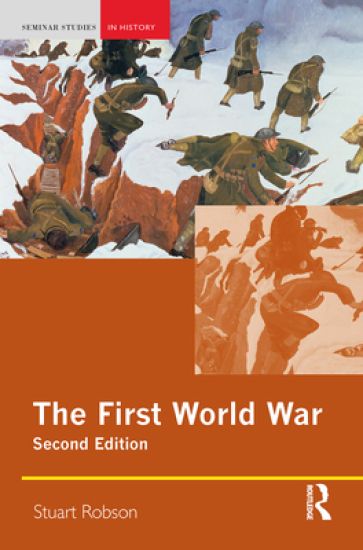
This is a compelling account of the First World War. It offers clear analysis of the war on land, sea, and air, and considers the impact of the war on Europe's civilian population. Issues addressed include the relationship between war and industrialisation, trench warfare, the long term effects of the war on changing social structures, and economic and demographic consequences. The main text is supplemented by a rich selection of primary source material (from songs, soldiers' slang, to diary accounts).
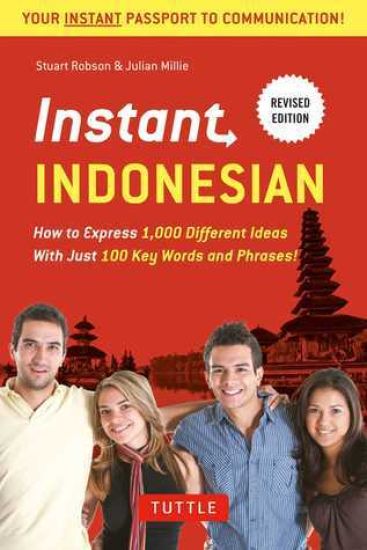
It's amazing how 100 key words and phrases provide instant communication!Do you want to speak simple Indonesian but are too busy to study it? Are you visiting Indonesia for a short time and want an Indonesian phrase book to help you communicate? If so, this Indonesian phrasebook is for you—it's the easiest and quickest way to learn Indonesian. It's tiny 0.4 x 4.1 x 5.9 inches size makes it incredibly convenient to travel with but without losing the most essential content for communication. The idea of Instant Indonesian is simple—learn 100 words and phrases and say 1,000 things. The trick is knowing which 100 words to learn, but the authors Stuart Robson and Julian Millie have solved the problem, choosing only those words you'll hear again and again. Even with a vocabulary this small, you'll be surprised how quickly and fluently you too can communicate in the Indonesian language. Words are repeated in different combinations, building familiarity without effort. A brief guide to pronunciation allows the user to say the phrases correctly and an Indonesian dictionary allows for quick reference. Here's a sample of what you'll be able to do with this Indonesian phrasebook: Meet people. Go shopping. Ask directions. Ride the subway. Order food and drinks. And much more.
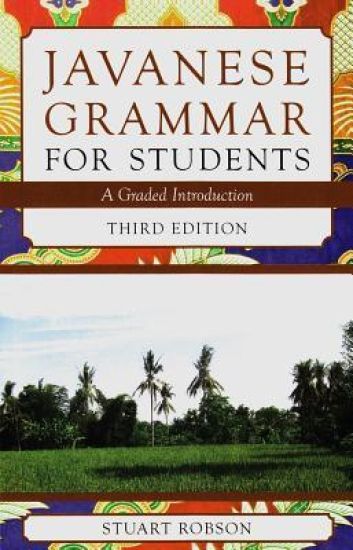
This is the third, revised edition of Stuart Robson's highly successful guide to the grammar of the Javanese language, which is spoken by around 80,000,000 speakers on the island of Java. The book progresses from simple to more complex topics, facilitating a steady increase in language proficiency. Fresh examples have been added, as well as a section entitled "How Do You Say It In Javanese?" arranged under 120 headwords and taking the viewpoint of speakers of English wanting an equivalent to an English idiom. There is an introduction and a note on the language levels of Javanese, important for social interaction. The book will be of interest to students of Indonesian studies who want a deeper knowledge of communication on the island of Java, researchers considering fieldwork in Java, linguists making comparative studies of Indonesian languages, and outsiders undertaking employment in Java. Subject: Language, Linguistics, Indonesian Studies]
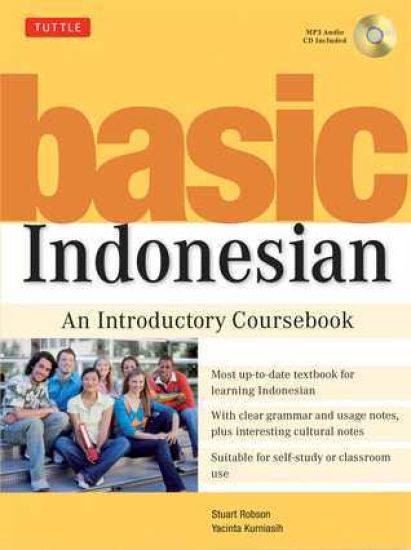
This is a user-friendly and comprehensive beginner Indonesian book and a great way to learn Indonesian.Divided into 28 graded lessons, Basic Indonesian provides fill-in-the-blank exercises, quizzes, word puzzles and question-and-answer practices to reinforce Indonesian language learning. Extensive cultural notes are provided along with detailed tips on etiquette and appropriate cultural behavior in the world's largest Islamic society. It has been made to fill the need for a one-volume Indonesian course book which can be used for either self-study or classroom use by those who are keen to make a start on mastering the Indonesian language. The users might be students in universities or schools outside Indonesia, or expatriates living in Indonesia. The stories are set in Jakarta (apart from an excursion to Yohyakarta), are original and describe realistic situations, contain some interesting cultural sidelights, and display a lively mix of narrative and dialogue. Chapters include clear Language notes, which, help explain the grammar and build a solid foundation for further steps forward in the study of Indonesian. The audio recordings are to be used along with the book and reinforce pronunciation while building stronger listening comprehension. Key features of Basic Indonesian are: 28 graded lessons. Multiple types of accompanying exercises. Entertaining stories and dialogues in manga-style cartoon strips. Clear grammar and usage notes. Interesting cultural notes.Accompanying online audio filesAll media content is accessible on the Tuttle Publishing website.
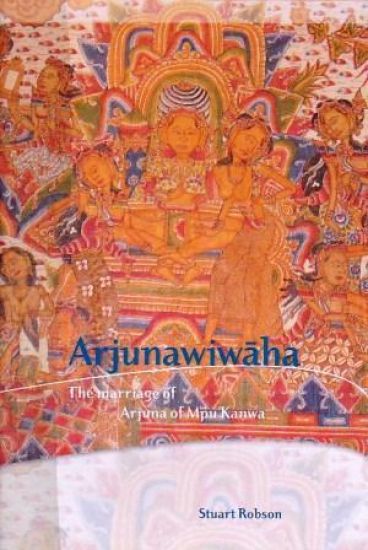
The Arjunawiwāha is one of the best known of the Old Javanese classics. This volume presents a new text, based on Balinese manuscripts, with a complete translation, building on the work done by earlier writers. An introduction provides ample background information, as well as an original interpretation of the significance of the text, within its historical and cultural setting. This poem was written by Mpu Kanwa in around A.D. 1030 under King Airlangga, who ruled in East Java. It is Mpu Kanwa's only known work, and is the second oldest example in the genre of kakawin. The poem is a narrative, but also contains passages of description, philosophical or religious teaching of great interest, as well as remarkable erotic scenes. Parts of the tale have been depicted on early temple reliefs and in paintings, and the text is still recited in Bali by literary clubs and in temple ceremonies.
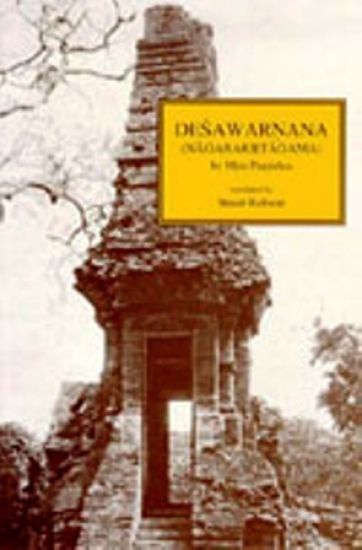
It is just over a century since the first manuscript of D sawarnana (also known as the Nagarakrtagama) was rescued from the sack of the palace at Cakranagara in Lombok. Once its importance for Javanese history was recognized, its place was assured: our picture of the greatness of the Javanese kingdom of Majapahit in the second half of the 14th century is based largely on the evidence of this one text, and it is true to say that this picture has formed an inspiration for modern Indonesians as well. The text is not a literary masterpiece, and it is not typical of its genre; in fact it is unique. One of the reasons for this is the fact that here and there its author, Mpu Prapanca, tells us something about himself, in particular when he accompanies his king as Superintendent of Buddhist Affairs on a long journey through the countryside of East Java in 1359.