Kirjojen hintavertailu. Mukana 12 595 353 kirjaa ja 12 kauppaa.

Kirjailija

Stuart Sim

Kirjat ja teokset yhdessä paikassa: 27 kirjaa, julkaisuja vuosilta 1992-2025, suosituimpien joukossa Post-Marxism. Vertaile teosten hintoja ja tarkista saatavuus suomalaisista kirjakaupoista.

27 kirjaa

Kirjojen julkaisuhaarukka 1992-2025.

The Eighteenth-century Novel and Contemporary Social Issues
This study introduces readers to the eighteenth-century novel through a consideration of contemporary social issues. Eighteenth-century authors grappled with very similar problems to the ones we face today such as: what motivates a fundamentalist terrorist? What are the justifiable limits of state power? What dangers lie in wait for us when we create life artificially? The book discusses key authors from Aphra Behn in the late seventeenth century to James Hogg in the 1820s, covering the 'long' eighteenth century. It guides readers through the main genres of the period from Realism, Gothic romance and historical romance to proto-science fiction. It also introduces a range of debates around race relations, anti-social behaviour, family values and born-again theology as well as the power of the media, surveillance, political sovereignty and fundamentalist terrorism. Each novel is shown to be directly relevant to some of the most urgent moral issues of our own time. Key Features *Relates the novels of the eighteenth century to current social and political debates *Accessibly and engagingly written for non-specialists *Covers the key authors and texts of the period including Robinson Crusoe, Gulliver's Travels, Pamela, Northanger Abbey, Tristram Shandy and Frankenstein
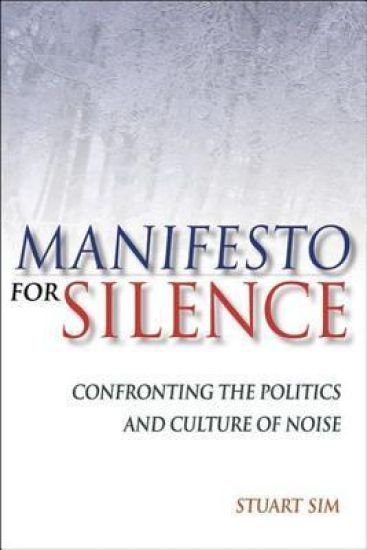
Manifesto for Silence

Manifesto for Silence

Stuart Sim

Edinburgh University Press
2007
sidottu
This book makes an urgent demand for silence. The ability to think, to reflect, and to create are all highly dependent on regular access to silence. Yet in today's noisy, 24/7 society silence and quiet are under threat. And the business world only makes this worse with cynical marketing strategies abusing the power of noise: ever-diminishing oases of calm are hard to find. Stuart Sim argues that we need more, not less, silence. He explains why silence matters, where it matters - in our environment, in religion, philosophy, the arts, literature and science - and why the human race will suffer if we do not make space for it. The confrontation between the politics of noise and the politics of silence affects all of us profoundly: we cannot stay neutral on this issue. Key Features: *From noisy neighbours to ASBOs and MTV via the forest and the local library: noise versus silence is one of the main cultural conflicts of our time. *Provides a new and provocative take on the marketing strategies of the business world. *Demonstrates why and where silence matters in our lives, and why we should protect it. *Written by a hugely experienced author, Manifesto for Silence is a pleasure to read.
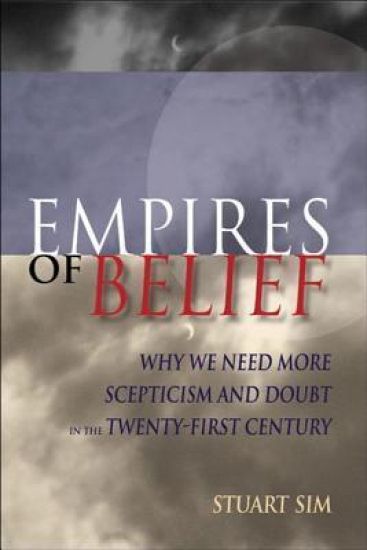
Empires of Belief

Empires of Belief

Stuart Sim

Edinburgh University Press
2006
sidottu
This book challenges all forms of fundamentalism and unexamined belief systems from a philosophical and sceptical viewpoint. Is unquestioning belief making a global comeback? The growth of religious fundamentalism seems to suggest so. For the sceptically minded, this is a deeply worrying trend, not just confined to religion. Political, economic, and scientific theories can demand the same unquestioning obedience from the general public. Stuart Sim outlines the history of scepticism in both the Western and Islamic cultural traditions, and from the Enlightenment to postmodernism. Setting out what a sceptical politics might be like, Empires of Belief argues that we need less belief and more doubt: an engaged scepticism to replace the pervasive dogmatism that threatens our democracies. Key Features: *New book from the author of the highly successful Fundamentalist World. *Questions belief systems, including science and technology. *Intervenes in current debates around terrorism and fundamentalism. *Explores sceptical thought within different cultural traditions, especially Islam. *Suggests that scepticism can play a greater role in public and political life.
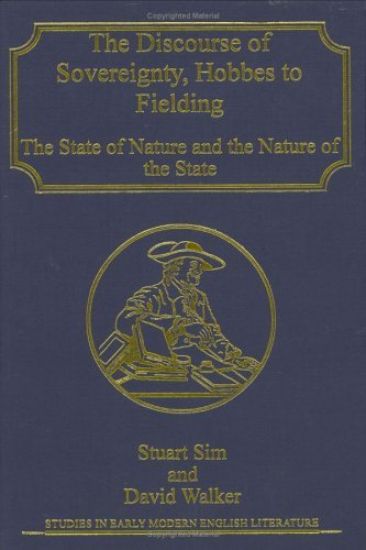
The Discourse of Sovereignty, Hobbes to Fielding

The Discourse of Sovereignty, Hobbes to Fielding

Stuart Sim; David Walker

Ashgate Publishing Limited
2003
sidottu
In this new study the authors examine a range of theories about the state of nature in seventeenth- and eighteenth-century England, considering the contribution they made to the period's discourse on sovereignty and their impact on literary activity. Texts examined include Leviathan, Oceana, Paradise Lost, Discourses Concerning Government, Two Treatises on Government, Don Sebastian, Oronooko, The New Atalantis, Robinson Crusoe, Dissertation upon Parties, David Simple, and Tom Jones. The state of nature is identified as an important organizing principle for narratives in the century running from the Civil War through to the second Jacobite Rebellion, and as a way of situating the author within either a reactionary or a radical political tradition. The Discourse of Sovereignty provides an exciting new perspective on the intellectual history of this fascinating period.
Post-Marxism

Post-Marxism

Stuart Sim

Routledge
2000
sidottu
This book traces the crystallisation of post-Marxism as a specific theoretical position in its own right and considers the role played in its development by post-structuralism, postmodernism and second-wave feminism. It examines the history of dissenting tendencies within the Marxist tradition and considers what the future prospects of post-Marxism are likely to be.
Post-Marxism

Post-Marxism

Stuart Sim

Edinburgh University Press
1998
nidottu
This is the first source-book for this cross-disciplinary area. It takes students through a wide range of readings from philosophy, politics, and sociology, to human geography, international relations, and feminist studies. Bringing together statements from leading twentieth-century thinkers such as Derrida, Lyotard, Baudrillard, and Laclau and Mouffe, and with the editor's substantial introduction, this is an ideal teaching text, inspiring debate about the future of Marxism as a cultural theory.