Kirjojen hintavertailu. Mukana 12 151 381 kirjaa ja 12 kauppaa.

Kirjailija

Sue Black

Kirjat ja teokset yhdessä paikassa: 14 kirjaa, julkaisuja vuosilta 2008-2026, suosituimpien joukossa Luuhun kirjoitettu. Vertaile teosten hintoja ja tarkista saatavuus suomalaisista kirjakaupoista.

14 kirjaa

Kirjojen julkaisuhaarukka 2008-2026.

Luuhun kirjoitettu

Luuhun kirjoitettu

Sue Black

WSOY
2024
sidottu
"Liha unohtaa, luut muistavat."Aikuisen ihmisen luuranko koostuu yli 200 luusta, joista jokaisella on oma tarinansa kerrottavana. Vain taitava ja sinnikäs tutkija osaa maanitella ne paljastamaan salaisuutensa.Oikeusantropologi Sue Black tutkii työkseen ihmisen luita oikeuslääketieteen tarpeisiin. Kirjassaan Luuhun kirjoitettu hän tarkastelee luurankoa pala kerrallaan, luku luvulta, päästä jalkoihin, ja paljastaa, miten elämämme kokemukset on kirjoitettu luihimme. Kaikki tekemämme - se mitä söimme, kuinka liikuimme, onnettomuudet joihin jouduimme - jättää jäljen luihimme. Sue Black rekonstruoi tapauskertomusten kautta herkkätunteisesti ja kunnioittaen niin rikokset kuin oudoimmat kuolintapaukset ja paljastaa piiloon jääneet tarinamme. Hän näyttää lukijalle, miten poikkeuksellisia tapahtumia luut auttavat selvittämään."Sue Blackin teos (...) on täynnä mukaansatempaavia tapauskertomuksia (...) ja kuivaa huumoria." - IndependentBrittiläinen professori Sue Black (s. 1961) on maailman johtavia oikeusantropologeja. Hän on osallistunut kotimaassaan lukuisten korkean profiilin rikostapausten selvittämiseen ja toimi Kosovon sotarikostutkinnan johtavana oikeusantropologina. Blackiltä on aiemmin julkaistu omaelämäkerrallinen kirja Kaikki mitä jäljelle jää.
An Expert Witness

An Expert Witness

Sue Black

TRANSWORLD PUBLISHERS LTD
2026
sidottu
Pioneering forensic scientist, anatomist and anthropologist, Professor Dame Sue Black takes the reader into our criminal courts’ witness box from the perspective of an expert witness, the forensic scientist, explaining exactly what that job is, what it demands, how the role evolved, and its likely future. The expert witness sits at the crux of the relationship between law enforcement, science and the legal system. When that relationship works well, it makes for compelling fiction, television and movies. When it works less well, it makes for compelling and explosive news headlines. In Dissection of an Expert Witness, Sue Black puts the relationship between these different institutions, and how they affect and are affected by the expert witness, under the microscope. Using shocking landmark cases that expose both the strengths and weaknesses of the interconnection between disciplines - she probes: In which cases did we get it right? In which did we get it wrong? And if we had done it differently, might the pendulum of justice have swung another way? Incisive and compelling, following the impact of advances in technology to changes in funding and the effect of our gladiatorial system, Sue Black tracks the journey of this most intriguing of sciences through to its inevitable conclusion - and the toll it may take not only on experts but ultimately how justice plays out.
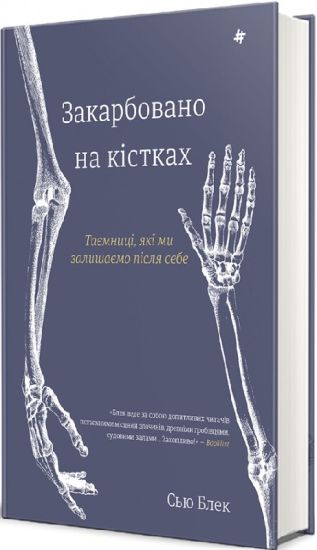
Zakarbovano na kistkakh. Tajemnitsi, jaki mi zalishajemo pislja sebe
Kistki - movchazni svidki ljudskogo zhittja. Kozhna chastina nashogo tila mozhe rozpovisti istoriju. Te, scho mi jimo, use, scho robimo, zalishaje slidi - povidomlennja, jaki terpljache chekajut misjatsjami, rokami i navit stolittjami, doki sudovo-medichnij antropolog jikh rozshifruje. Vsesvitno vidoma sudova antropologinja i profesorka Sju Blek zaproshuje chitachiv u zakhoplivu podorozh ljudskim tilom, vid makivki do stop, doslidzhujuchi kistki golovi, tuluba j kintsivok ta rozpovidajuchi istoriji ljudej, jakim tsi kistki nalezhali. "Nam tsikavo, jakoju bula ljudina, scho prozhila tse zhittja. Mi khochemo vidnajti zakarbovane na kistkakh, schob rozpovisti istoriji til, a mozhlivo, navit povernuti zagiblim imena". Popri serjoznist temi knizhka napisana z gumorom. Kozhna istorija avtorki spovnena povagi do ljudej i ljubovi do vlasnoji spravi... Perekladach Olena Zamojska
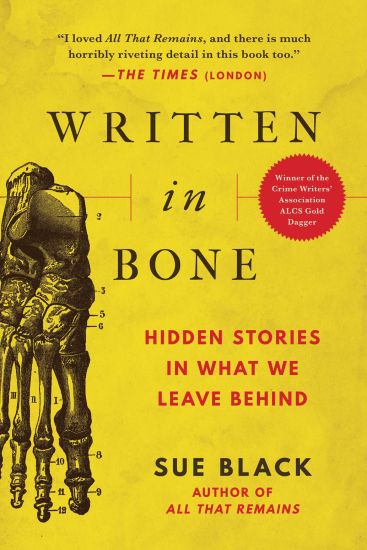
Written in Bone: Hidden Stories in What We Leave Behind
Winner of the Crime Writers' Association ALCS Gold Dagger for Nonfiction--A tour through the human skeleton and the secrets our bones reveal, from the author of All That Remains In her memoir All That Remains, internationally renowned forensic anthropologist and human anatomist Dame Sue Black recounted her life lived eye to eye with the Grim Reaper. During the course of it, she offered a primer on the basics of identifying human remains, plenty of insights into the fascinating processes of death, and a sober, compassionate understanding of its inescapable presence in our existence, all leavened with her wicked sense of humor. In her new book, Sue Black builds on the first, taking us on a guided tour of the human skeleton and explaining how each person's life history is revealed in their bones, which she calls "the last sentinels of our mortal life to bear witness to the way we lived it." Her narrative follows the skeleton from the top of the skull to the small bones in the foot. Each step of the journey includes an explanation of the biology--how the bone is formed in a person's development, how it changes as we age, the secrets it may hold--and is illustrated with anecdotes from the author's career helping solve crimes and identifying human remains, whether recent or historical. Written in Bone is full of entertaining stories that read like scenes from a true-life CSI drama, infused with humor and no-nonsense practicality about the realities of corpses and death.
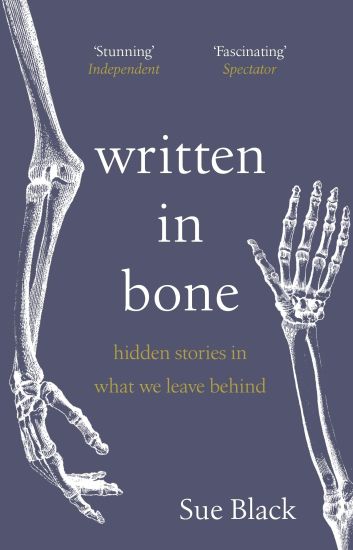
Written In Bone

Written In Bone

Sue Black

TRANSWORLD PUBLISHERS LTD
2022
pokkari
WINNER OF THE CWA GOLD DAGGER FOR NON-FICTION'Gripping from the start, Written in Bone is superb' - Dr Richard Shepherd, author of Unnatural Causes'No Scientist communicates better than Sue Black' - Val McDermid, author of Still Life'Macabre, authoritative and fascinating.' - The Sunday TimesOur bones are the silent witnesses to the lives we lead. Our stories are marbled into their marrow.Drawing upon her years of research and a wealth of remarkable experience, the world-renowned forensic anthropologist Professor Dame Sue Black takes us on a journey of revelation. From skull to feet, via the face, spine, chest, arms, hands, pelvis and legs, she shows that each part of us has a tale to tell. What we eat, where we go, everything we do leaves a trace, a message that waits patiently for months, years, sometimes centuries, until a forensic anthropologist is called upon to decipher it.Some of this information is easily understood, some holds its secrets tight and needs scientific cajoling to be released. But by carefully piecing together the evidence, the facts of a life can be rebuilt.Limb by limb, case by case - some criminal, some historical, some unaccountably bizarre - Sue Black reconstructs with intimate sensitivity and compassion the hidden stories in what we leave behind.Praise for Sue Black:'Sue Black has a rare ability to make blood and bones come alive. A marvellous writer. Ruth Davidson, SMP'The corpse whisperer ... Is it okay for Black, or us, to enjoy this quite so much?''Fascinating' - Spectator'Gripping' - Guardian'Moving' - Scotsman'Engrossing' - Financial Times
Written in Bone: Hidden Stories in What We Leave Behind
Winner of the Crime Writers' Association ALCS Gold Dagger for Nonfiction-- A tour through the human skeleton and the secrets our bones reveal, from the author of All That Remains In her memoir All That Remains, internationally renowned forensic anthropologist and human anatomist Dame Sue Black recounted her life lived eye to eye with the Grim Reaper. During the course of it, she offered a primer on the basics of identifying human remains, plenty of insights into the fascinating processes of death, and a sober, compassionate understanding of its inescapable presence in our existence, all leavened with her wicked sense of humor. In her new book, Sue Black builds on the first, taking us on a guided tour of the human skeleton and explaining how each person's life history is revealed in their bones, which she calls "the last sentinels of our mortal life to bear witness to the way we lived it." Her narrative follows the skeleton from the top of the skull to the small bones in the foot. Each step of the journey includes an explanation of the biology--how the bone is formed in a person's development, how it changes as we age, the secrets it may hold--and is illustrated with anecdotes from the author's career helping solve crimes and identifying human remains, whether recent or historical. Written in Bone is full of entertaining stories that read like scenes from a true-life CSI drama, infused with humor and no-nonsense practicality about the realities of corpses and death.
All That Remains: A Renowned Forensic Scientist on Death, Mortality, and Solving Crimes
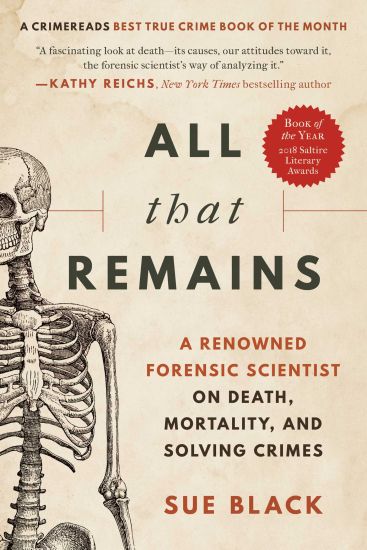
Book of the Year, Saltire Literary Awards A CrimeReads Best True Crime Book of the Month For fans of Caitlin Doughty, Mary Roach, Kathy Reichs, and CSI shows, a renowned forensic scientist on death and mortality. Dame Sue Black is an internationally renowned forensic anthropologist and human anatomist. She has lived her life eye to eye with the Grim Reaper, and she writes vividly about it in this book, which is part primer on the basics of identifying human remains, part frank memoir of a woman whose first paying job as a schoolgirl was to apprentice in a butcher shop, and part no-nonsense but deeply humane introduction to the reality of death in our lives. It is a treat for CSI junkies, murder mystery and thriller readers, and anyone seeking a clear-eyed guide to a subject that touches us all. Cutting through hype, romanticism, and clich , she recounts her first dissection; her own first acquaintance with a loved one's death; the mortal remains in her lab and at burial sites as well as scenes of violence, murder, and criminal dismemberment; and about investigating mass fatalities due to war, accident, or natural disaster, such as the 2004 Indian Ocean tsunami. She uses key cases to reveal how forensic science has developed and what her work has taught her about human nature. Acclaimed by bestselling crime writers and fellow scientists alike, All That Remains is neither sad nor macabre. While Professor Black tells of tragedy, she also infuses her stories with a wicked sense of humor and much common sense.
All That Remains

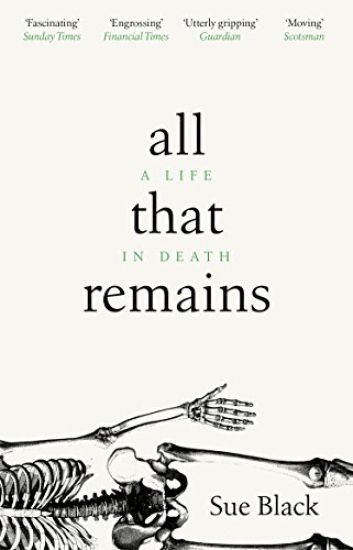
All That Remains

Sue Black

Black Swan
2019
pokkari
'Utterly gripping' - The Guardian 'Fascinating' - The Sunday Times 'Moving' - Scotsman 'Engrossing' - Financial Times Sue Black confronts death every day. As a Professor of Anatomy and Forensic Anthropology, she focuses on mortal remains in her lab, at burial sites, at scenes of violence, murder and criminal dismemberment, and when investigating mass fatalities due to war, accident or natural disaster. In All That Remains she reveals the many faces of death she has come to know, using key cases to explore how forensic science has developed, and examining what her life and work has taught her. Do we expect a book about death to be sad? Macabre? Sue's book is neither. There is tragedy, but there is also humour in stories as gripping as the best crime novel. Part memoir, part science, part meditation on death, her book is compassionate, surprisingly funny, and it will make you think about death in a new light. ________ SUE BLACK'S NEW BOOK, WRITTEN IN BONE, IS OUT NOW _________ 'One might expect [this book] to be a grim read but it absolutely isn't. I found it invigorating!' (Andrew Marr, BBC Radio 4 'Start the Week') 'Black's utterly gripping account of her life and career as a professor of anatomy and forensic anthropology manages to be surprisingly life-affirming. As she herself says, it is "as much about life as about death"' (PD Smith Guardian) 'An engrossing memoir . . . an affecting mix of personal and professional' (Erica Wagner, Financial Times) 'A model of how to write about the effect of human evil without losing either objectivity or sensitivity . . . Heartening and anything but morbid . . . Leaves you thinking about what kind of human qualities you value, what kinds of people you actually want to be with' (Rowan Williams, New Statesman) 'For someone whose job is identifying corpses, Sue Black is a cheerful soul . . . All That Remains feels like every episode of 'Silent Witness', pre-fictionalised. Except, you know, really good' (Helen Rumbelow, The Times)
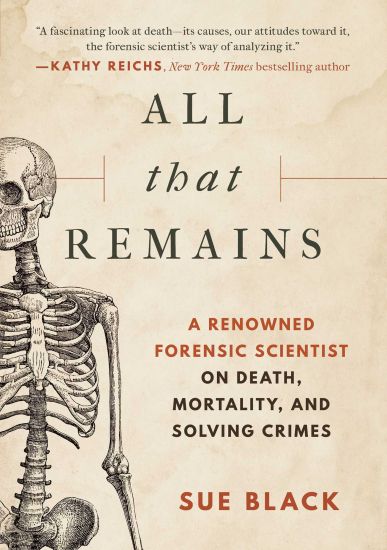
All That Remains: A Renowned Forensic Scientist on Death, Mortality, and Solving Crimes
Book of the Year, 2018 Saltire Literary Awards A CrimeReads Best True Crime Book of the Month For fans of Caitlin Doughty, Mary Roach, Kathy Reichs, and CSI shows, a renowned forensic scientist on death and mortality. Dame Sue Black is an internationally renowned forensic anthropologist and human anatomist. She has lived her life eye to eye with the Grim Reaper, and she writes vividly about it in this book, which is part primer on the basics of identifying human remains, part frank memoir of a woman whose first paying job as a schoolgirl was to apprentice in a butcher shop, and part no-nonsense but deeply humane introduction to the reality of death in our lives. It is a treat for CSI junkies, murder mystery and thriller readers, and anyone seeking a clear-eyed guide to a subject that touches us all. Cutting through hype, romanticism, and clich , she recounts her first dissection; her own first acquaintance with a loved one's death; the mortal remains in her lab and at burial sites as well as scenes of violence, murder, and criminal dismemberment; and about investigating mass fatalities due to war, accident, or natural disaster, such as the 2004 Indian Ocean tsunami. She uses key cases to reveal how forensic science has developed and what her work has taught her about human nature. Acclaimed by bestselling crime writers and fellow scientists alike, All That Remains is neither sad nor macabre. While Professor Black tells of tragedy, she also infuses her stories with a wicked sense of humor and much common sense.
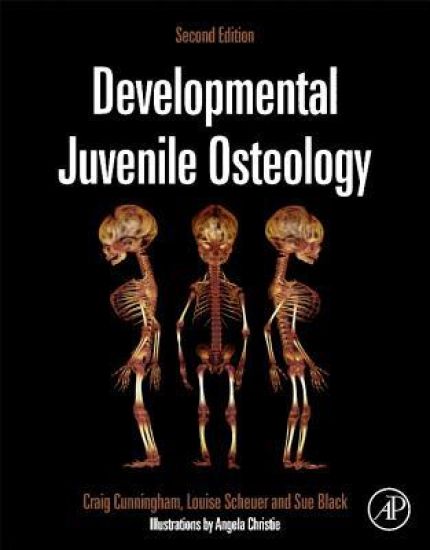
Developmental Juvenile Osteology

Developmental Juvenile Osteology

Craig Cunningham; Louise Scheuer; Sue Black

Academic Press Inc
2016
sidottu
Developmental Juvenile Osteology was created as a core reference text to document the development of the entire human skeleton from early embryonic life to adulthood. In the period since its first publication there has been a resurgence of interest in the developing skeleton, and the second edition of Developmental Juvenile Osteology incorporates much of the key literature that has been published in the intervening time. The main core of the text persists by describing each individual component of the human skeleton from its embryological origin through to its final adult form. This systematic approach has been shown to assist the processes of both identification and age estimation and acts as a core source for the basic understanding of normal human skeletal development. In addition to this core, new sections have been added where there have been significant advances in the field.
Saving Bletchley Park

Saving Bletchley Park

Sue Black

Unbound Digital
2016
sidottu
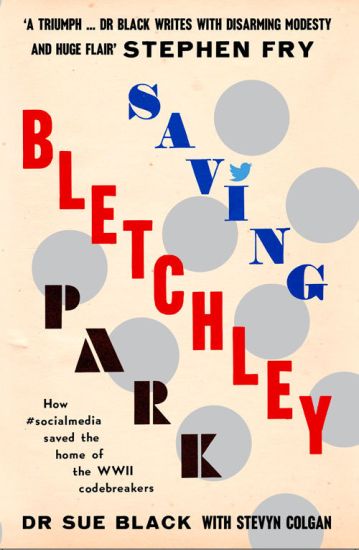
In 1939, Alan Turing’s bombe machine—the most advanced method used to crack the Nazis’ Enigma code—was born at Bletchley Park. But at the turn of the 21st century, the only cracks were the ones running through the walls, and the huts where teams of codebreakers had changed the course of WWII were crumbling to the ground.At the most crucial turning point of the war, Britain’s bravest and most inspiring citizens were the lifeblood that pulsed through the veins of Bletchley Park. Here, thousands of men and women contributed to the effort that saved our nation and inspired future generations with their work in the fields of computing and technology.As Dr Sue Black walked through its fast-disappearing huts and hallways, she asked herself one question: who would save Bletchley Park?This question galvanised Sue and hundreds of volunteers to use technology in a remarkable new way, sparking a social media campaign that would help bring recognition to its veterans, secure its future and transform it into a world-class heritage centre.This is the story of the campaign that saved Bletchley Park and an inspirational testament to the remarkable men and women whose work made it a place worth rescuing.
Juvenile Osteology

Juvenile Osteology

Louise Scheuer; Sue Black; Maureen C. Schaefer

Academic Press Inc
2008
nidottu
The need for a laboratory and field manual to assist with the evaluation of juvenile skeletal material is long overdue. This resource is essential for the practising osteoarchaeologist and forensic anthropologist who requires a quick, reliable and easy-to-use reference to aid in the identification, siding and aging of juvenile osseous material. While excellent reference books on juvenile osteology are currently available, no pre-existing source adequately fills this particular niche in the market. This field manual is designed with practicality as its primary directive. Descriptions of each bone contain 1) morphological characteristics useful for identification, 2) other elements with which the bone may be confused, 2) tips for siding, 3) illustrations of varying developmental phases, 4) data useful for ageing, and 5) a summary of developmental timings. Concise, bullet-style descriptions assist with quick retrieval of information. Unique to this manual is the presentation of data collected from a variety of populations, utilizing a range of observational methods, as an alternative to providing one overall aging summary that is derived from a compilation of many individual sources. This manual provides a host of data on a variety of populations to enable the user to select the reference most applicable to their needs. The final chapter combines information from each bone to provide a summary of developmental changes occurring at different life stages to act as an immediate 'ready reckoner' for the knowledgeable practitioner. It also provides forms useful for documenting juvenile material and diagrams to help with the recognition of commingled juvenile remains. The manual is a must for anyone responsible for the evaluation of juvenile osseous material through dry bone assessment, radiographs, sonograms, and or CT scans.