Kirjojen hintavertailu. Mukana 12 595 353 kirjaa ja 12 kauppaa.

Kirjailija

Sue Campbell

Kirjat ja teokset yhdessä paikassa: 9 kirjaa, julkaisuja vuosilta 1999-2025, suosituimpien joukossa Our Faithfulness to the Past. Vertaile teosten hintoja ja tarkista saatavuus suomalaisista kirjakaupoista.

9 kirjaa

Kirjojen julkaisuhaarukka 1999-2025.

Conversations in Heaven

Conversations in Heaven

Sue Campbell

River Birch Press
2025
pokkari
Five heavenly travellers. What will they discover in the City of God?Five individuals from diverse backgrounds die and go to heaven. Their earthly life stories are shared as they explore the heavenly realm with Wisdom, their guardian angel and one of God's hierarchical angels. Wisdom will educate Julie, a sixty-seven-year-old pizza shop owner; Rashid, a twenty-five-year-old Taliban soldier; Tiny, a forty-six-year-old partner in an accounting firm; and Sophia, a fifty-four-year-old Jewish stand-up comic about the workings and glories of heaven.Beginning with their arrival at Transformation Station, they continue their journey through the garden of Tranquility and stroll down Disciples Walkway where they encounter Jesus. They then cross over the Sea of Reconciliation to the Other Side, where each is reunited with family and friends and honored at a huge homecoming celebration.Atop Mt. Transfiguration, the highest mountain in heaven, they behold the City of God, a spectacular bejeweled city designed and inhabited by God, where they will experience their next exciting adventure.
The Parental Leave Playbook

The Parental Leave Playbook

Amy Beacom; Sue Campbell

John Wiley Sons Inc
2022
sidottu
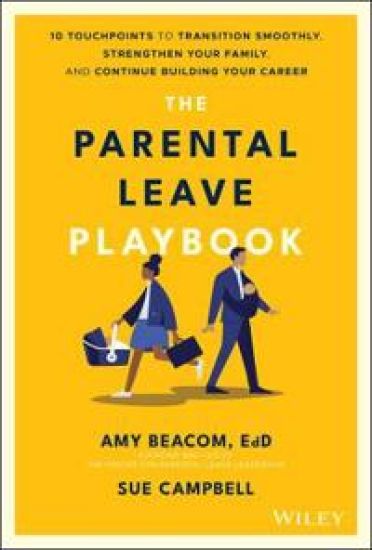
Support your growing family without losing professional ground—a proven approach The Parental Leave Playbook helps parents take control of their leave and make the most of what's considered a career timeout, but is actually a vital "time-in" for your life. If you're an expecting or new parent concerned about how your leave and return plans will affect your visibility, candidacy for promotion, work relationships, and performance (not to mention your identity and home life), this book will guide you into the smoothest transition possible. Most importantly, this book will help you as you grow and strengthen yourself and your family while remaining a professional. In The Parental Leave Playbook, you'll learn Dr. Amy Beacom's innovative R.E.T.A.I.N. framework and the three-phase, ten-touchpoint model, to coach yourself through the leave process. Beacom identifies the critical points before, during, and after leave where parents and managers must work together, and explains how parents can facilitate success by finessing the way they approach their manager and colleagues. These models are supported by case studies from the author's work in the field with leading organizations like Microsoft, and supplemented by resources such as the evidence-based Parental Leave Transition Assessment (PLTA) sample report, leave action plan templates, reflection prompts, and development exercises to enhance self-awareness and skills. You'll learn how to: Communicate your parental leave plans effectively and at the right timeSet expectations with managers and colleagues to ensure a smooth transitionLearn how to maintain visibility, avoid being replaced, and continue your upward career trajectory during your parental leave and beyondGrow and strengthen your family without sacrificing your professional gains All working parents-to-be can benefit from the ideas and proven tools in this direct and practical book.
The Cat, the Cash, the Leap, and the List

The Cat, the Cash, the Leap, and the List

Sue Campbell

Root Word Books
2019
pokkari
Ten-year-old Martha has leadership skills. At least, that's what her parents say. Her cousins, Sanjay and Anand, say she's bossy. When Martha secretly adopts a very pregnant cat from a garage sale free box right before her cousins come for a long visit, it puts a serious kink in her carefully laid plans for summer. That kink grows even bigger when the cat runs away. Still, Martha's determined to give her cousins forty-two days of fun, Portland, Oregon style. But ten-year-old Sanjay and eight-year-old Anand face troubles of their own. Anand must get strong enough to conquer the Tarzan rope that looms across the neighborhood swimming pool. And Sanjay has a big secret stashed in Martha's attic. Can they all work together to find Martha's cat and newborn kittens? Or will the urban coyotes get them first?The Cat, the Cash, the Leap, and the List is a new take on the classic summer adventure story for middle grade readers.If you like books with humor, heart, and action like The Penderwicks, let Sue Campbell take you on a delightful romp through Portland in the summertime.Buy The Cat, the Cash, the Leap, and the List today to start your summer adventure.
Our Faithfulness to the Past

Our Faithfulness to the Past

Sue Campbell

Oxford University Press Inc
2014
nidottu
This volume brings together essays -- three of them previously unpublished -- on the epistemology, ethics, and politics of memory by the late feminist philosopher Sue Campbell. The essays in Part I diagnose contemporary skepticism about personal memory, and develop an account of good remembering that is better suited to contemporary (reconstructive) theories of memory. Campbell argues that being faithful to the past requires both accuracy and integrity, and is both an epistemic and an ethical achievement. The essays in Part II focus on the activities and practices through which we explore and negotiate the shared significance of our different recollections of the past, and the importance of sharing memory for constituting our identities. Views about self, identity, relation, and responsibility (all influenced by traditions in feminist philosophy) are examined through the lens of Campbell's relational conception of memory. She argues that remaining faithful to our past sometimes requires us to re-negotiate the boundaries between ourselves and the collectives to which we belong. In Part III, Campbell uses her relational theory of memory to address the challenges of sharing memory and renewing selves in contexts that are fractured by moral and political difference, especially those arising from a history of injustice and oppression. She engages in detail Canada's Indian Residential Schools Truth and Reconciliation Commission, where survivor memories have the potential to illuminate the significance of the past for a shared future. The study of memory brings together philosophers, psychologists, historians, anthropologists, legal theorists, and political theorists and activists. Sue Campbell demonstrates a singular ability to put these many different areas of scholarship and activism into fruitful conversation with each other while also adding an original and powerful voice to the discussion.
Our Faithfulness to the Past

Our Faithfulness to the Past

Sue Campbell

Oxford University Press Inc
2014
sidottu
This volume brings together essays -- three of them previously unpublished -- on the epistemology, ethics, and politics of memory by the late feminist philosopher Sue Campbell. The essays in Part I diagnose contemporary skepticism about personal memory, and develop an account of good remembering that is better suited to contemporary (reconstructive) theories of memory. Campbell argues that being faithful to the past requires both accuracy and integrity, and is both an epistemic and an ethical achievement. The essays in Part II focus on the activities and practices through which we explore and negotiate the shared significance of our different recollections of the past, and the importance of sharing memory for constituting our identities. Views about self, identity, relation, and responsibility (all influenced by traditions in feminist philosophy) are examined through the lens of Campbell's relational conception of memory. She argues that remaining faithful to our past sometimes requires us to re-negotiate the boundaries between ourselves and the collectives to which we belong. In Part III, Campbell uses her relational theory of memory to address the challenges of sharing memory and renewing selves in contexts that are fractured by moral and political difference, especially those arising from a history of injustice and oppression. She engages in detail Canada's Indian Residential Schools Truth and Reconciliation Commission, where survivor memories have the potential to illuminate the significance of the past for a shared future. The study of memory brings together philosophers, psychologists, historians, anthropologists, legal theorists, and political theorists and activists. Sue Campbell demonstrates a singular ability to put these many different areas of scholarship and activism into fruitful conversation with each other while also adding an original and powerful voice to the discussion.
Relational Remembering

Relational Remembering

Sue Campbell

Rowman Littlefield Publishers
2003
sidottu
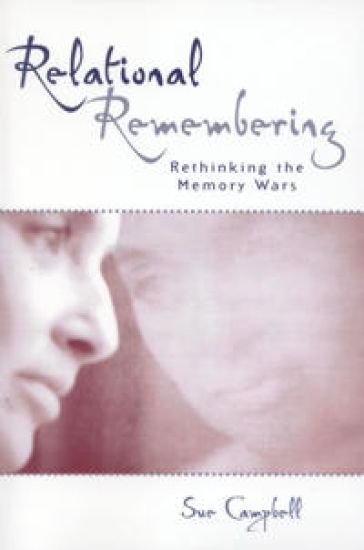
Tracing the impact of the "memory wars" on science and culture, Relational Remembering offers a vigorous philosophical challenge to the contemporary skepticism about memory that is their legacy. Campbell's work provides a close conceptual analysis of the strategies used to challenge women's memories, particularly those meant to provoke a general social alarm about suggestibility. Sue Campbell argues that we cannot come to an adequate understanding of the nature and value of memory through a distorted view of rememberers. The harmful stereotypes of women's passivity and instability that have repopulated discussions of abuse have led many theorists to regard the social dimensions of remembering only negatively, as a threat or contaminant to memory integrity. Such models of memory cannot help us grasp the nature of harms linked to oppression, as these models imply that changed group understandings of the past are incompatible with the integrity of personal memory. Campbell uses the false memory debates to defend a feminist reconceptualization of personal memory as relational, social, and subject to politics. Memory is analyzed as a complex of cognitive abilities and social/narrative activities where one's success or failure as a rememberer is both affected by one's social location and has profound ramifications for one's cultural status as a moral agent.
Relational Remembering

Relational Remembering

Sue Campbell

Rowman Littlefield Publishers
2003
nidottu
Tracing the impact of the 'memory wars' on science and culture, Relational Remembering offers a vigorous philosophical challenge to the contemporary skepticism about memory that is their legacy. Campbell's work provides a close conceptual analysis of the strategies used to challenge women's memories, particularly those meant to provoke a general social alarm about suggestibility. Sue Campbell argues that we cannot come to an adequate understanding of the nature and value of memory through a distorted view of rememberers. The harmful stereotypes of women's passivity and instability that have repopulated discussions of abuse have led many theorists to regard the social dimensions of remembering only negatively, as a threat or contaminant to memory integrity. Such models of memory cannot help us grasp the nature of harms linked to oppression, as these models imply that changed group understandings of the past are incompatible with the integrity of personal memory. Campbell uses the false memory debates to defend a feminist reconceptualization of personal memory as relational, social, and subject to politics. Memory is analyzed as a complex of cognitive abilities and social/narrative activities where one's success or failure as a rememberer is both affected by one's social location and has profound ramifications for one's cultural status as a moral agent.
Racism and Philosophy

Racism and Philosophy

Susan E. Babbitt; Sue Campbell

Cornell University Press
1999
pokkari
By definitively establishing that racism has broad implications for how the entire field of philosophy is practiced—and by whom—this powerful and convincing book puts all members of the discipline on notice that racism concerns them. It simultaneously demonstrates to race theorists the significance of philosophy for their work.A distinguished cast of authors takes a stand on the importance of race, focusing on the insights that analyses of race and racism can make to philosophy—not just to ethics and political philosophy but also to the more abstract debates of metaphysics, philosophy of mind, and epistemology. Contemporary philosophy, the authors argue, continues to evade racism and, as a result, often helps to promote it. At the same time, anti-racist theorists in many disciplines regularly draw on crucial notions of objectivity, rationality, agency, individualism, and truth without adequate knowledge of philosophical analyses of these very concepts. Racism and Philosophy demonstrates the impossibility of talking thoughtfully about race without recourse to philosophy. Written to engage readers with a wide variety of interests, this is an essential book for all theorists of race and for all philosophers.