Kirjojen hintavertailu. Mukana 12 494 971 kirjaa ja 12 kauppaa.

Kirjailija

Sujit Kumar

Kirjat ja teokset yhdessä paikassa: 17 kirjaa, julkaisuja vuosilta 2019-2024, suosituimpien joukossa Fisiologia do sono. Vertaile teosten hintoja ja tarkista saatavuus suomalaisista kirjakaupoista.

17 kirjaa

Kirjojen julkaisuhaarukka 2019-2024.

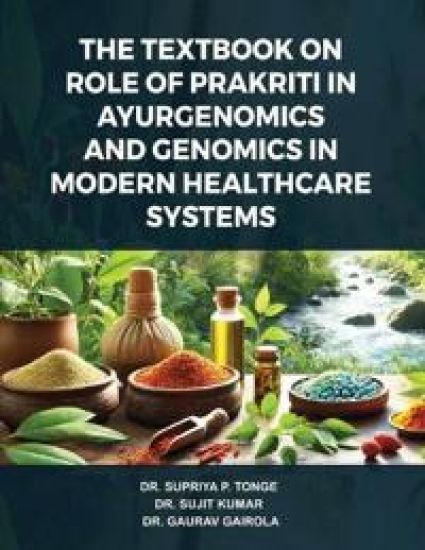
The Textbook on Role of Prakriti in Ayurgenomics and Genomics in Modern Healthcare Systems
The intricate interplay between traditional wisdom and modern scientific advancements has paved the way for innovative approaches to healthcare. The concept of Prakriti, deeply rooted in Ayurveda, offers a unique perspective on individualized medicine by emphasizing the innate constitution of an individual. Ayurgenomics, an emerging field that bridges Ayurveda and genomics, is redefining how we perceive health, disease, and therapeutic strategies in the modern healthcare system.This work delves into the profound role of Prakriti in Ayurgenomics and its implications for genomics in contemporary healthcare. By integrating the Ayurvedic principle of individualized constitution with genomic science, this interdisciplinary field seeks to establish a personalized approach to disease prevention, diagnosis, and treatment. The ability to correlate Prakriti with genomic variations and metabolic profiles has immense potential to revolutionize our understanding of precision medicine.This book provides an in-depth exploration of the theoretical and practical aspects of Prakriti and its scientific validation in Ayurgenomics. The initial chapters present a detailed review of the classical Ayurvedic concept of Prakriti, its classification, and its relevance in determining predispositions to various diseases. Subsequent sections highlight the integration of genomic technologies in decoding the genetic basis of Prakriti and its applications in identifying biomarkers for diseases, drug metabolism, and therapeutic efficacy.Furthermore, the book emphasizes the transformative role of Ayurgenomics in bridging traditional healthcare systems with modern medicine, showcasing its applications in clinical settings. It also discusses the challenges and prospects of incorporating Ayurveda into mainstream healthcare, underscoring the need for interdisciplinary collaborations to validate and expand this promising field.The insights presented in this book aim to foster a deeper understanding of how ancient wisdom can complement modern scientific methodologies. It is intended for researchers, clinicians, students, and anyone interested in the confluence of Ayurveda, genomics, and personalized medicine.We hope this work inspires further exploration and innovation in the field of Ayurgenomics, contributing to a holistic and integrated approach to healthcare.
Fizjologia snu

Fizjologia snu

Sujit Kumar; Samir Gupta

Wydawnictwo Bezkresy Wiedzy
2020
pokkari
Ta książka daje zwięzle spojrzenie na fizjologię snu oraz na to, jak zmienia się dlugośc życia danej osoby. Ludzie spędzają okolo 33% swojego życia drzemiąc. Istnieją dwa rodzaje snu, nie szybki ruch oka (NREM) odpoczynek i szybki ruch oka (REM) sen. NREM Sen jest izolowany w etapach 1, 2, 3 i 4, m wiąc do kontinuum względnej glębi. Każdy z rodzaj w atrybut w zawierających odmiany w projektach fal m zgowych, rozwoju oka i tonu mięśni. Circadian rytm w, codziennie rytmy w fizjologii i prowadzenia, kierowac cyklu snu wake. Ponadto, struktura snu wake jest uważany za kontrolowany przez wymianę dw ch znaczących procedur, jeden, kt ry rozwija odpoczynku i jeden, kt ry dba o uwagę.
A Short Communication on Human Blood & Digestive Enzymes

A Short Communication on Human Blood & Digestive Enzymes

Deepika Mehra; Sujit Kumar; Ravi Pandya

Scholars' Press
2019
pokkari
The Blood is comprised of fluid and solids. The fluid part, called plasma, is made of water, salts, and protein. Over portion of your blood is plasma. The strong piece of your blood contains red platelets, white platelets, and platelets.Red platelets (RBC) convey oxygen from your lungs to your tissues and organs. White platelets (WBC) battle contamination and are a piece of your safe framework. Platelets help blood to clump when you have a cut or wound. Bone marrow, the supple material inside your bones, makes fresh recruits cells. Platelets always kick the bucket and your body makes new ones. Red platelets live around 120 days, and platelets live around 6 days. Some white platelets live not exactly a day, however others live any longer.The different types of chemical supplementation utilized clinically in stomach related and ingestion issue. Protein supplementation assumes an indispensable job in the administration of different stomach related issue, especially with respect to exocrine pancreatic deficiency. Be that as it may, use of chemicals may likewise be gainful for different conditions related with poor assimilation including lactose narrow mindedness.
The Physiology of Human Female Breast

The Physiology of Human Female Breast

Sujit Kumar

Scholars' Press
2019
pokkari
As indicated by Sushrutha, stanyakshaya happens because of mental state of mother (Krodha, Shoka, Bhaya, Irsha and Avatsalyatwa), Diet system of mother and physiological condition. Bhumikushmanda is medication of decision for Stanya janana and is financially savvy, tasteful, no reactions and assimilation is extremely quick. The medication has Madhura Rasa, Guru, Snigdha Guna, Sheeta Virya and Madhura Vipaka, in this manner by samanya siddhanta it increments stanya. Breast milk is the ideal nourishment for an ordinary neonate. It is the best blessing a mother can give her infant. Breast sustaining is the perfect type of newborn child bolstering and is critical for deep rooted wellbeing and prosperity.
Structure Based Drug Design for Malaria

Structure Based Drug Design for Malaria

Sujit Kumar; Sumit Pal

LAP Lambert Academic Publishing
2019
pokkari
Bioinformatics now entails the creation and advancement of database, algorithms, computational and statistical techniques and theory to solve formal and practical problems arising from the management and analysis of biological data. Malaria is a mosquito-borne infectious disease caused by a eukaryotic protist of the genus Plasmodium. It is prevalent in tropical and subtropical regions, including parts of the America (USA), Asia and Africa. Each year, there are approximately 300-450 million cases of malaria, killing between one and four million people, the majority of whom are young children in Sub-Saharan Africa. Drug Chloroquine (- 476.114k.cal/mol) performing more docking than Quinine (- 488.416k.cal/mol).