Kirjojen hintavertailu. Mukana 12 390 323 kirjaa ja 12 kauppaa.

Kirjailija

Sumangala Damodaran

Kirjat ja teokset yhdessä paikassa: 4 kirjaa, julkaisuja vuosilta 2014-2024, suosituimpien joukossa Gauging and Engaging Deviance, 1600–2000. Vertaile teosten hintoja ja tarkista saatavuus suomalaisista kirjakaupoista.

4 kirjaa

Kirjojen julkaisuhaarukka 2014-2024.

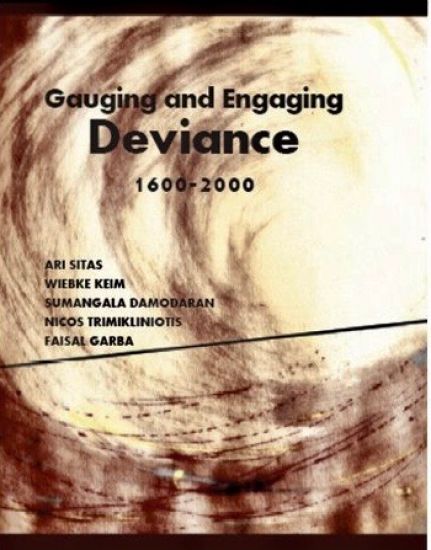
Gauging and Engaging Deviance, 1600–2000

Gauging and Engaging Deviance, 1600–2000

Ari Sitas; Wiebke Keim; Sumangala Damodaran; Nicos Trimikiniotis; Faisal Garba

Tulika
2014
sidottu
Gauging and Engaging Deviance is at once a creative and challenging work. It is not just a critique of the sociological canon, but an imaginative reconstruction that is generous to all nooks and crannies of the planet. It is also a memorial to modernity's victims, whether they were perceived to be deviant or not. Its broad historical range, its geographical spread, and its attention to race and power create a conceptual grammar through which we can speak of the key challenges, traumas and violence of the contemporary period. Through its pages the Maroon and the Pirate meet Don Quixote, the Thug and the Apostate in a journey that takes the reader through slave factories, plantations, prisons, and extermination camps, gauging the price of what it has meant to struggle to be contrary or free.
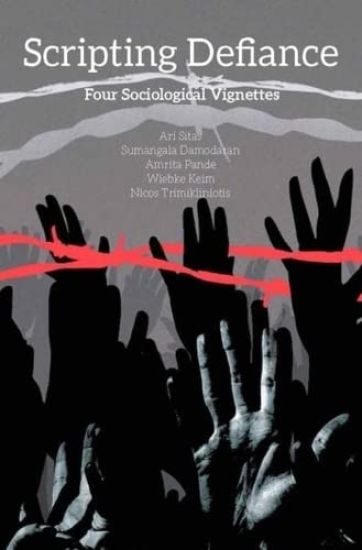
Scripting Defiance – Four Sociological Vignettes

Scripting Defiance – Four Sociological Vignettes

Ari Sitas; Sumangala Damodaran; Amrita Pande; Wiebke Keim; Nicos Trimikliniotis

Tulika Books
2022
sidottu
This is the second volume from the authors (along with several others) of Gauging and Engaging Deviance, which is positioned between the ideas of deviance and defiance and attempts to uncover scripts through which notions of deviance as well as acts of defiance unravel. It argues that instead of the monologue about the binary of European modernity and its traditional backwoods, the contours are to be found in another archive, one that is made up of significant scripts or narratives of defiance that endure through subaltern people's cultural formations despite and in response to dominant ideas and ideologies. Such scripts within this archive will help sociology reconstitute itself away from its original mandate: to be part of the fixers, to help the maintenance of social order, to predict and control aberrant behaviour and to create functional individuals and ensembles. The chapters look at specific figures of discontent: the worker, the woman, the student, the artist, the migrant and refugee, the prisoner, and, as a counter-voice, the movements of reaction to their discontent, the movements of authoritative restoration.
The Radical Impulse – Music in the Tradition of the Indian People`s Theatre Association
The period from the mid-1930s to the end of the 1950s in India saw the cultural expression of a wide range of political sentiments and positions around imperialism, fascism, nationalism, and social transformation. It was a period that covered a crucial transitional phase: from colonialism to a postcolonial context. This transitional period in India coincided with a vibrant radical ethos in many other parts of the world where, among numerous political issues, the aesthetics-politics relationship came to be articulated and debated in unprecedented ways. No history of this period can be written without giving an account of the departures, inventions, and reinventions made by the Indian People's Theatre Association (IPTA) in the fields of drama, music, and dance. Yet music, a very important part of the IPTA's creations as well as the connecting link between the various artistic forms, has not been studied as part of the history of the IPTA movement. This book attempts to fill this gap in knowledge about the vast musical repertoire of the IPTA. It is about the IPTA tradition's music in a national as well as specifically regional contexts (Bengali, Malayalam, Telugu, Assamese, and Hindu/Urdu in particular), situated within the overall cultural and political context of the transitional period in India, and in the context of a radical impulse emergent in many parts of the world from the beginning of the twentieth century. The book is the culmination of an archiving-cum-documentation project of music in the IPTA tradition undertaken by the author. It can also be read as a songbook, including lyrics and musical scores, revivifying the songs and music of a radical impulse in South Asia.