Kirjojen hintavertailu. Mukana 12 390 323 kirjaa ja 12 kauppaa.

Kirjailija

Sumit Ganguly

Kirjat ja teokset yhdessä paikassa: 30 kirjaa, julkaisuja vuosilta 1997-2023, suosituimpien joukossa Indian Foreign Policy (Revised Edition). Vertaile teosten hintoja ja tarkista saatavuus suomalaisista kirjakaupoista.

Mukana myös kirjoitusasut: Šumit Ganguly

30 kirjaa

Kirjojen julkaisuhaarukka 1997-2023.

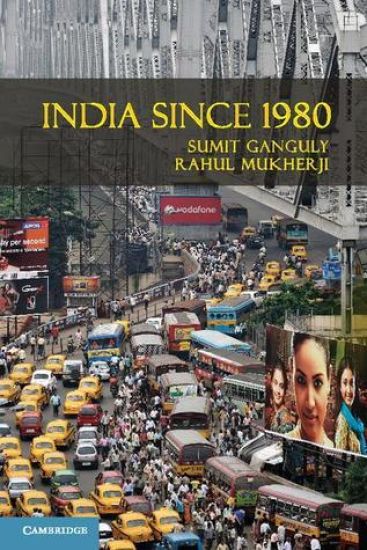
India Since 1980

India Since 1980

Sumit Ganguly; Rahul Mukherji

Cambridge University Press
2011
pokkari
This book considers the remarkable transformations that have taken place in India since 1980, a period that began with the assassination of the formidable Prime Minister Indira Gandhi. Her death, and that of her son Rajiv seven years later, marked the end of the Nehru-Gandhi era. Although the country remains one of the few democracies in the developing world, many of the policies instigated by these earlier regimes have been swept away to make room for dramatic alterations in the political, economic and social landscape. Sumit Ganguly and Rahul Mukherji, two leading political scientists of South Asia, chart these developments with particular reference to social and political mobilization, the rise of the BJP and its challenge to Nehruvian secularism and the changes to foreign policy that, in combination with its meteoric economic development, have ensured India a significant place on the world stage.
India, Pakistan, and the Bomb

India, Pakistan, and the Bomb

Sumit Ganguly; S. Paul Kapur

Columbia University Press
2010
sidottu
In May 1998, India and Pakistan put to rest years of speculation as to whether they possessed nuclear technology and openly tested their weapons. Some believed nuclearization would stabilize South Asia; others prophesized disaster. Authors of two of the most comprehensive books on South Asia's new nuclear era, Sumit Ganguly and S. Paul Kapur, offer competing theories on the transformation of the region and what these patterns mean for the world's next proliferators. Ganguly begins with an outcome-based approach emphasizing the results of militarized conflict. In his opinion, nuclear weapons have prevented Indo-Pakistani disputes from blossoming into full-scale war. Kapur counters with a process-based approach stressing the specific pathways that lead to conflict and escalation. From his perspective, nuclear weapons have fueled a violent cycle of Pakistani provocation and Indian response, giving rise to a number of crises that might easily have spun into chaos. Kapur thus believes nuclear weapons have been a destabilizing force in South Asia and could similarly affect other parts of the world. With these two major interpretations, Ganguly and Kapur tackle all sides of an urgent issue that has profound regional and global consequences. Sure to spark discussion and debate, India, Pakistan, and the Bomb thoroughly maps the potential impact of nuclear proliferation.
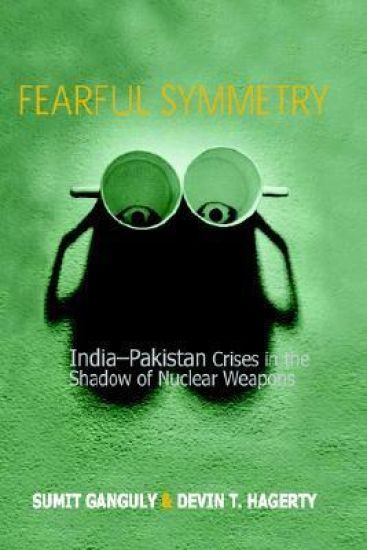
Fearful Symmetry

Fearful Symmetry

Sumit Ganguly; Devin T. Hagerty

University of Washington Press
2006
pokkari
With the nuclearization of the Indian subcontinent, Indo-Pakistani crisis behavior has acquired a deadly significance. The past two decades have witnessed no fewer than six crises against the backdrop of a vigorous nuclear arms race. Except for the Kargil war of 1998-9, all these events were resolved peacefully.Nuclear war was avoided despite bitter mistrust, everyday tensions, an intractable political conflict over Kashmir, three wars, and the steady refinement of each side's nuclear capabilities. Sumit Ganguly and Devin T. Hagerty carefully analyze each crisis, reviewing the Indian and Pakistani domestic political systems and key decisions during the relevant period.This lucid and comprehensive study of the two nations' crisis behavior in the nuclear age is the first work on Indo-Pakistani relations to take systematic account of the role played by the United States in South Asia's security dynamics over the past two decades in the context of unipolarization, and formulates a blueprint for American policy toward a more positive and productive India-Pakistan relationship.
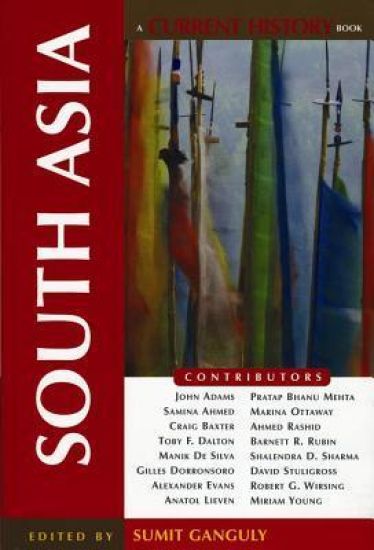
South Asia

South Asia

Sumit Ganguly

New York University Press
2006
sidottu
In recent years the world's focus on South Asia has increased dramatically. With the events of 9/11, the detonation of atomic weapons by both India and Pakistan, the discovery of an illicit nuclear proliferation network based in Islamabad, regime change in an unstable Afghanistan, and the rise of India as an economic power, global interest in the region has reached perhaps an all-time high. Leading experts analyze the key strategic, political, and economic issues touching on South Asia and its role in the world in the essays that make up this inaugural volume in the Current History Books Series. Focusing on modern South Asia, including India, Pakistan, Afghanistan, Bangladesh, and Sri Lanka, this authoritative volume provides an overview of the events and trends that have rocked this increasingly volatile region over the past decade. Edited and with an introduction by Sumit Ganguly, a leading expert on the region, this volume provides a critical introduction to South Asia. South Asia also contains current maps as well as a "Recent Chronology of Events" that provides a decade's worth of information on the region, organized by year and by country. This timely and comprehensive collection of essays provides a definitive account of modern South Asia.
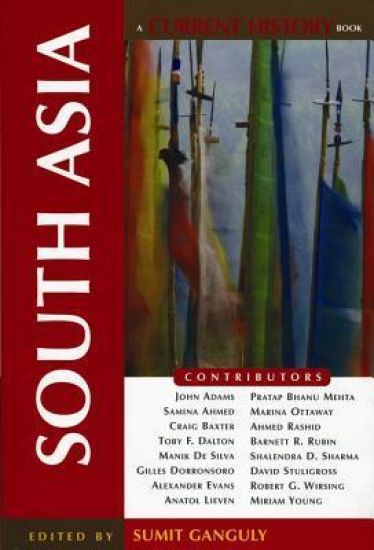
South Asia

South Asia

Sumit Ganguly

New York University Press
2006
pokkari
In recent years the world's focus on South Asia has increased dramatically. With the events of 9/11, the detonation of atomic weapons by both India and Pakistan, the discovery of an illicit nuclear proliferation network based in Islamabad, regime change in an unstable Afghanistan, and the rise of India as an economic power, global interest in the region has reached perhaps an all-time high. Leading experts analyze the key strategic, political, and economic issues touching on South Asia and its role in the world in the essays that make up this inaugural volume in the Current History Books Series. Focusing on modern South Asia, including India, Pakistan, Afghanistan, Bangladesh, and Sri Lanka, this authoritative volume provides an overview of the events and trends that have rocked this increasingly volatile region over the past decade. Edited and with an introduction by Sumit Ganguly, a leading expert on the region, this volume provides a critical introduction to South Asia. South Asia also contains current maps as well as a "Recent Chronology of Events" that provides a decade's worth of information on the region, organized by year and by country. This timely and comprehensive collection of essays provides a definitive account of modern South Asia.
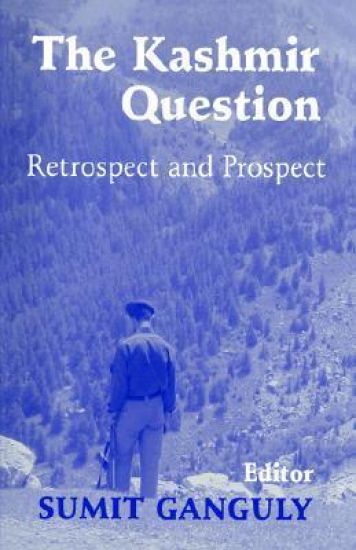
The Kashmir Question

The Kashmir Question

Sumit Ganguly

Routledge
2003
nidottu
India, which had been created as a civic polity, initially sought to hold on to this Muslim-majority state to demonstrate its secular credentials. Pakistan, in turn, had laid claim to Kashmir because it had been created as the homeland for the Muslims of South Asia. After the break-up of Pakistan in 1971 the Pakistani irredentist claim to Kashmir lost substantial ground. If Pakistan could not cohere on the basis of religion alone it had few moral claims on its co-religionists in Kashmir. Similarly, in the 1980s, as the practice of Indian secularism was eroded, India's claim to Kashmir on the grounds of secularism largely came apart. Today their respective claims to Kashmir are mostly on the basis of statecraft. This title provides a comprehensive assessment of a number of different facets of the on-going dispute over Kashmir between India and Pakistan. Among other matters, it examines the respective endgames of both states, the evolution of American policy toward the dispute, the dangers of nuclear esculation in the region and the state of the insurgency in the Indian-controlled portion of the disputed state.
Conflict Unending

Conflict Unending

Sumit Ganguly

Columbia University Press
2002
sidottu
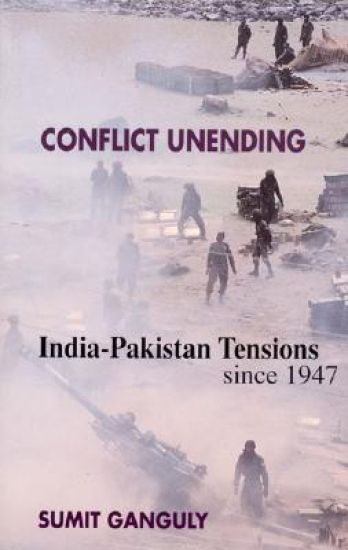
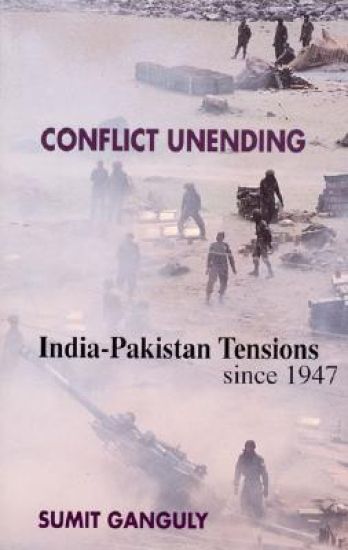
The escalating tensions between India and Pakistan have received renewed attention of late. Since their genesis in 1947, the nations of India and Pakistan have been locked in a seemingly endless spiral of hostility over the disputed territory of Kashmir. Ganguly asserts that the two nations remain mired in conflict due to inherent features of their nationalist agendas. Indian nationalist leadership chose to hold on to this Muslim-majority state to prove that minorities could thrive in a plural, secular polity. Pakistani nationalists argued with equal force that they could not part with Kashmir as part of the homeland created for the Muslims of South Asia. Ganguly authoritatively analyzes why hostility persists even after the dissipation of the pristine ideological visions of the two states and discusses their dual path to overt acquisition of nuclear weapons, as well as the current prospects for war and peace in the region.
Conflict Unending

Conflict Unending

Sumit Ganguly

Columbia University Press
2002
pokkari
The escalating tensions between India and Pakistan have received renewed attention of late. Since their genesis in 1947, the nations of India and Pakistan have been locked in a seemingly endless spiral of hostility over the disputed territory of Kashmir. Ganguly asserts that the two nations remain mired in conflict due to inherent features of their nationalist agendas. Indian nationalist leadership chose to hold on to this Muslim-majority state to prove that minorities could thrive in a plural, secular polity. Pakistani nationalists argued with equal force that they could not part with Kashmir as part of the homeland created for the Muslims of South Asia. Ganguly authoritatively analyzes why hostility persists even after the dissipation of the pristine ideological visions of the two states and discusses their dual path to overt acquisition of nuclear weapons, as well as the current prospects for war and peace in the region.
The Crisis in Kashmir

The Crisis in Kashmir

Šumit Ganguly

Cambridge University Press
1999
pokkari
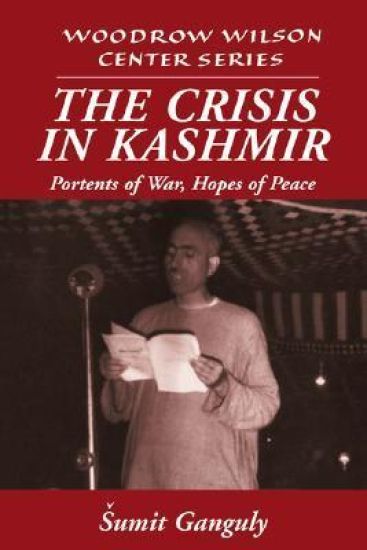
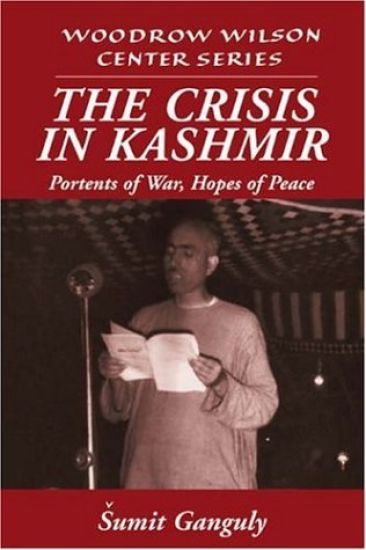
This book traces the origins of the insurgency that has wracked the Indian-controlled portion (about two-thirds) of Jammu and Kashmir since 1989. The most complete, and the first theoretically grounded account, it is based on extensive interviews. Professor Ganguly’s central argument is that the insurgency can be explained by the interlinked processes of political mobilisation and institutional decay. In an attempt to woo the citizens of India’s only Muslim-majority state, the national government dramatically helped expand literacy, mass media, and higher education in Jammu and Kashmir. These processes produced a generation of Kashmiris who were politically knowledgeable and sophisticated. Simultaneously, the national government in New Delhi, fearful of potential secessionist proclivities amongst the Kashmiris, systematically stultified the development of political institutions in the state. Unable to express dissent in an institutional context, this new generation of Kashmiris resorted to violence.
The Crisis in Kashmir

The Crisis in Kashmir

Šumit Ganguly

Cambridge University Press
1997
sidottu
This book traces the origins of the insurgency that has wracked the Indian-controlled portion (about two-thirds) of Jammu and Kashmir since 1989. The most complete, and the first theoretically grounded account, it is based on extensive interviews. Professor Ganguly's central argument is that the insurgency can be explained by the interlinked processes of political mobilisation and institutional decay. In an attempt to woo the citizens of India's only Muslim-majority state, the national government dramatically helped expand literacy, mass media, and higher education in Jammu and Kashmir. These processes produced a generation of Kashmiris who were politically knowledgeable and sophisticated. Simultaneously, the national government in New Delhi, fearful of potential secessionist proclivities amongst the Kashmiris, systematically stultified the development of political institutions in the state. Unable to express dissent in an institutional context, this new generation of Kashmiris resorted to violence.