Kirjojen hintavertailu. Mukana 12 390 323 kirjaa ja 12 kauppaa.

Kirjailija

Suprakas Sinha Ray

Kirjat ja teokset yhdessä paikassa: 17 kirjaa, julkaisuja vuosilta 2013-2025, suosituimpien joukossa Smart Polymers. Vertaile teosten hintoja ja tarkista saatavuus suomalaisista kirjakaupoista.

17 kirjaa

Kirjojen julkaisuhaarukka 2013-2025.

Smart Polymers

Smart Polymers

Dipankar Chattopadhyay; Adrija Ghosh; Jonathan Tersur Orasugh; Suprakas Sinha Ray

TAYLOR FRANCIS LTD
2025
sidottu
This book covers the analysis of drug bioavailability, site-targeted therapeutics, as well as visual analytics of release profile at the delivery site as possible uses for nanotheranostics therapies following the route of smart polymers. It discusses pH as well as temperature-sensitive polymers and their recent and relevant applications as biomaterials in drug delivery and tissue engineering including dual-stimuli smart polymers.FeaturesInforms about the main challenges and prospects of nanotheranostics and smart polymersCovers biomedical application of smart polymers in imaging and therapyIncludes a wide description of the different polymer structures, from hydrogel, core-shell to foams and nanofibersIntroduces different types of emerging smart polymeric systemsDiscusses available potential of nanotheranostics and smart polymers towards commercializationThis book is aimed at researchers and graduate students in nanodrug delivery, polymeric delivery, bioimaging, and smart polymers.
Graphene-Bearing Polymer Composites

Graphene-Bearing Polymer Composites

Suprakas Sinha Ray; Lesego Tabea Temane; Jonathan Tersur Orasugh

Springer International Publishing AG
2025
nidottu
This book explores recent developments in electrically conducting graphene-containing polymer composites for electromagnetic interference (EMI) shielding and flame-retardant applications. It emphasizes the exceptional performance of graphene and graphene-based materials in these composites. The comprehensive overview covers the fundamental principles of EMI shielding, flame retardancy, and polymer composite processing, addressing critical aspects related to the development of advanced graphene-containing materials. The book aims to fill the gap in reviews that specifically focus on EMI shielding and flame retardancy fundamentals, processing techniques, and application-specific developments.An important aspect discussed is the customization of electrical properties through blend morphology modification and selective localization of graphene-based nanofillers. This aspect has not been adequately covered in previous articles or books. By addressing this research gap,the book becomes an essential resource for researchers seeking a deeper understanding of molecular aspects and result interpretation. With a focus on processing advanced functional composite materials for EMI shielding and flame retardancy, the book promotes a molecular understanding of the subject matter. It is expected to pave the way for future advancements in advanced polymer composites. Researchers and scholars will find this book invaluable as it provides a holistic overview of fundamental concepts and insights into ongoing research intricacies.
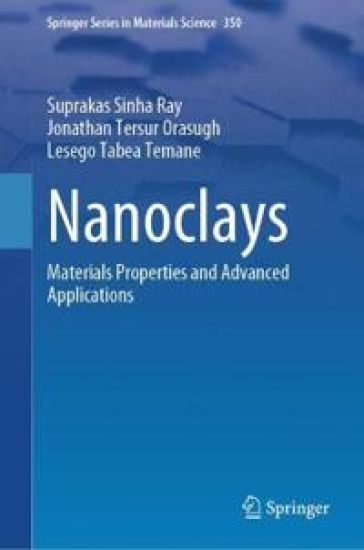
Nanoclays

Nanoclays

Suprakas Sinha Ray; Jonathan Tersur Orasugh; Lesego Tabea Temane

Springer International Publishing AG
2025
sidottu
This book covers natural and synthetic nanoclays, focusing on the fundamentals of nanoclay-chemistry and applications in advanced technologies. For millennia, clay has been an indispensable part of human civilization, playing an especially fundamental role in modern society in the form of e.g. porcelain, ceramics, bricks, and tiles, as well as being an essential constituent for plastics, paints, paper, rubber, cosmetics, sensors, and medicinal products.The book introduces the reader to nanoclays, most commonly referred to as layered silicates, which take the form of layered or sheet-like structures with nanometer-scale dimensions. It describes the structure and materials properties of both natural and synthetic nanoclays, and covers their applications in diverse areas such as paint formulations, water purification, cosmetics, biomedical applications, and energy storage. Authored by experts with long-standing experience in industry and academic research, this book serves as a useful reference not only for students and academics interested in this exciting new field, but also industrial researchers and R&D managers wishing to bring nanoclay-based advanced products to market.
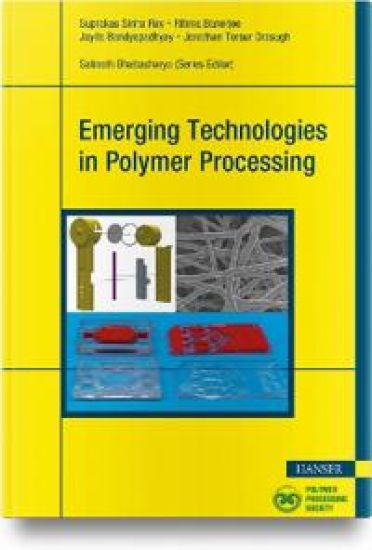
Emerging Technologies in Polymer Processing

Emerging Technologies in Polymer Processing

Suprakas Sinha Ray; Ritima Banerjee; Jayita Bandyopadhyay; Jonathan Tersur Orasugh

Hanser Publications
2024
sidottu
This book integrates fundamental knowledge about computational modeling, rheology, and characterization of polymeric materials with a thorough and critical overview of advanced and emerging manufacturing techniques in polymer processing, including significant past and recent advances. All concepts are illustrated with case studies, so as to enable the reader to correlate theory with practical applications. It is intended for students, researchers, and R&D professionals engaged in developing advanced polymeric materials and products. Conventional polymer processing has been revolutionized by technologies such as computational modeling, machine learning, and advanced machine design. On the other hand, newer advanced manufacturing techniques such as 3D printing, 4D printing, electrospinning, and nanocellular foaming have emerged to enable manufacture of products that would impossible to produce by conventional methods. This book covers both of these aspects, as well as application-specific polymer processing techniques employed in the field of tissue engineering. Furthermore, it addresses fundamental issues related to advanced and emerging processing techniques of sustainable polymeric materials and their nanocomposites, which could shape future research and industrial application of these materials for sustainable future development.
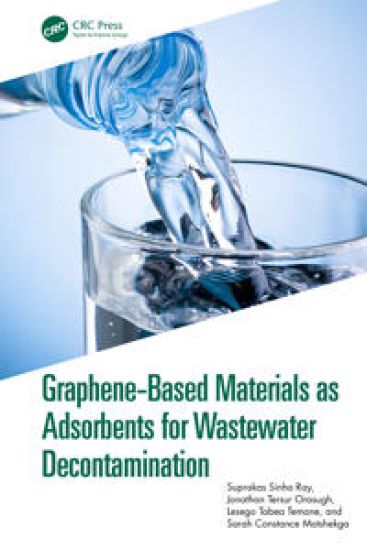
Graphene-Based Materials as Adsorbents for Wastewater Decontamination

Graphene-Based Materials as Adsorbents for Wastewater Decontamination

Suprakas Sinha Ray; Jonathan Tersur Orasugh; Lesego Tabea Temane; Sarah Constance Motshekga

TAYLOR FRANCIS LTD
2024
sidottu
This book aims to provide a fundamental grasp of graphene-based materials (GAMs) and their adsorption process. The effect of diverse process parameters, including pH, temperature, agitation, competing ions, etc., on the adsorption performance of GAMs as well as their recent and relevant applications in biomedical fields, are discussed. The current challenges and future outlook have been addressed as an independent chapter, and the recyclability of these adsorbent materials has also been covered.Features:Focuses on graphene-based materials as adsorbents to remove contaminants from wastewater.Includes detailed computational and statistical analyses and cost comparison points.Compares the performance of graphene-based materials as adsorbents in the context of various other reported adsorbents, including other 2D materials, such as WS2 and BN.Provides fundamental comprehension of the graphene-based materials’ adsorption process.Discusses the recyclable nature of graphene-based materials, as well as approaches used.This book has been aimed at graduate students and researchers in wastewater treatment, environmental, materials, and chemical engineering.
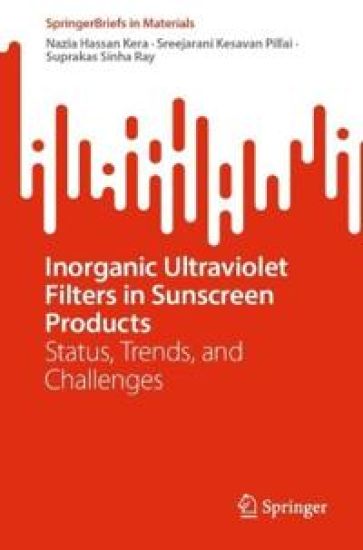
Inorganic Ultraviolet Filters in Sunscreen Products

Inorganic Ultraviolet Filters in Sunscreen Products

Nazia Hassan Kera; Sreejarani Kesavan Pillai; Suprakas Sinha Ray

Springer International Publishing AG
2024
nidottu
This book offers a comprehensive overview of recent developments in inorganic ultraviolet (UV) filters utilized for photoprotection applications. It evaluates the performance of the two approved inorganic UV filters for sunscreen use, titanium dioxide (TiO2) and zinc oxide (ZnO), examining their physicochemical properties in relation to various factors such as efficacy in UVR attenuation, formulation considerations including product aesthetics and stability, safety aspects, potential risks to human health, and their environmental fate and effects. The regulations governing the use of TiO2 and ZnO in sunscreens are also addressed. Furthermore, the book assesses different modification strategies employed to mitigate the undesirable properties of ZnO and TiO2. It also presents various inorganic materials studied as alternatives to ZnO and TiO2, evaluating their potential for use as UV filters. This book is tailored for chemists, material scientists, researchers, engineers (both chemical and biomedical), as well as undergraduate and postgraduate students interested in this dynamic research field. Additionally, it serves as a valuable resource for industrial researchers and R&D managers aiming to develop and market advanced inorganic UV filter-based sunscreen products.
Stimuli-Responsive Hydrogels for Ophthalmic Drug Delivery

Stimuli-Responsive Hydrogels for Ophthalmic Drug Delivery

Dipankar Chattopadhyay; Jonathan Tersur Orasugh; Anjan Adhikari; Suprakas Sinha Ray

ELSEVIER SCIENCE PUBLISHING CO INC
2024
nidottu
Stimuli-Responsive Hydrogels for Ophthalmic Drug Delivery covers fundamental aspects in the preparation of polymeric in-situ, stimuli-responsive hydrogels, including properties, characterization, chemistry, and fabrication of these hydrogels. The book will help the reader select the most appropriate material and design for the desired application. The book goes on to review applications in ophthalmic drug delivery, covering in vitro and in vivo models, animal models, preclinical testing, patents, and more. This is a must-have reference for researchers and academics in the fields of materials science, biomaterials, pharmacology and polymer science, with an interest in clinical aspects of hydrogel design and application.
Graphene-Bearing Polymer Composites

Graphene-Bearing Polymer Composites

Suprakas Sinha Ray; Lesego Tabea Temane; Jonathan Tersur Orasugh

Springer International Publishing AG
2024
sidottu
This book explores recent developments in electrically conducting graphene-containing polymer composites for electromagnetic interference (EMI) shielding and flame-retardant applications. It emphasizes the exceptional performance of graphene and graphene-based materials in these composites. The comprehensive overview covers the fundamental principles of EMI shielding, flame retardancy, and polymer composite processing, addressing critical aspects related to the development of advanced graphene-containing materials. The book aims to fill the gap in reviews that specifically focus on EMI shielding and flame retardancy fundamentals, processing techniques, and application-specific developments.An important aspect discussed is the customization of electrical properties through blend morphology modification and selective localization of graphene-based nanofillers. This aspect has not been adequately covered in previous articles or books. By addressing this research gap,the book becomes an essential resource for researchers seeking a deeper understanding of molecular aspects and result interpretation. With a focus on processing advanced functional composite materials for EMI shielding and flame retardancy, the book promotes a molecular understanding of the subject matter. It is expected to pave the way for future advancements in advanced polymer composites. Researchers and scholars will find this book invaluable as it provides a holistic overview of fundamental concepts and insights into ongoing research intricacies.
Process-Induced Phase Separation in Polymer Blends

Process-Induced Phase Separation in Polymer Blends

Suprakas Sinha Ray; Amanuel Geberekrstos; Tanyaradzwa Sympathy Muzata; Jonathan Tersur Orasugh

Hanser Publications
2023
sidottu
Phase separation in polymer blends has achieved a tremendous techno-commercial importance. Most of the applications of polymer blends, such as tissue engineering, membrane technology, electromagnetic shielding, energy harvesting, structural materials, packaging, smart multiphase polymer coatings, depend on the morphologies developed during processing.This book outlines the fundamental aspects of polymer blend thermodynamics, the state-of-the-art processing techniques for specific polymer blend systems currently in use, and the design and fabrication of multiphasic polymeric materials, which will present a multiplicity of opportunities in the water remediation, packaging, and electronic industries, to mention a few. It emphasizes recent research developments, processing techniques, characterization methods, factors influencing phase separation temperature in phase-separated, including partially miscible, polymer blends, and key research challenges in the development of phase-separated polymers materials.With unique and systematic coverage of the journey from fundamentals to applications in polymer blends, this book is ideal for polymer scientists and engineers, material scientists, researchers, engineers, and under- and post-graduate students who are interested in this exciting field of research. It will help industrial researchers and R&D managers bring advanced phase-separated polymer materials/products to the market.
Sustainable Polylactide-Based Composites

Sustainable Polylactide-Based Composites

Suprakas Sinha Ray; Ritima Banerjee

Elsevier - Health Sciences Division
2023
nidottu
Sustainable Polylactide-Based Composites integrates fundamental knowledge pertaining to manufacturing and characterization of polymer composites with a thorough and critical overview of the state-of-the-art in PLA-based composites, including significant past and recent advances. The book begins with insights into the basics of polymer composites, with special reference to sustainable composites, as well as fundamental knowledge related to PLA. This is followed by chapters on manufacturing methods, morphological characterization techniques, and the mechanical models used for polymer composites. A comprehensive overview of the state-of-the-art in PLA-based sustainable composites of all extensively used fillers is then presented. After providing fundamental knowledge related to PLA and polymer composites, including structure-property-processing relationship, the book focuses on recent research efforts and key research challenges in the development of PLA-based composites, as well as lifecycle assessment and recycling.
Sustainable Polylactide-Based Blends

Sustainable Polylactide-Based Blends

Suprakas Sinha Ray; Ritima Banerjee

Elsevier - Health Sciences Division
2022
nidottu
Sustainable Polylactide-Based Blends provides a critical overview of the state-of-the-art in polylactide (PLA)-based blends, addressing the latest advances, innovative processing techniques and fundamental issues that persist in the field. Sections cover the fundamentals of sustainable polymeric materials, polylactide and polymer blends, current and upcoming processing technologies, structure and morphology characterization techniques for PLA and PLA-based blends, and the processing, morphology development, and properties of polylactide-based blends. Final chapters focus on current and future applications, market potential, key challenges and future outlooks. Throughout the book, theoretical modeling of immiscible polymer blends helps to establish structure-property relationships in various PLA-based polymer blends. With in-depth coverage of fundamentals and processing techniques, the book aims to support the selection of each processing method, along with an understanding of surface chemistry to achieve improved compatibility between phases.
Foamability of Thermoplastic Polymeric Materials

Foamability of Thermoplastic Polymeric Materials

Suprakas Sinha Ray; Ritima Banerjee

Elsevier - Health Sciences Division
2021
nidottu
Foamability of Thermoplastic Polymeric Materials presents a cutting-edge approach to thermoplastic polymeric foams, drawing on the latest research and guiding the reader through the fundamental science, foamability, structure-property-processing relationship, multi-phase polymeric materials, degradation characteristics of biodegradable foams and advanced applications. Sections provide detailed information on foam manufacturing technologies and the fundamental science behind foaming, present insights on the factors affecting foamability, cover ways of enhancing the foamability of various polymeric materials, with special focus on multi-phase systems, discuss the degradation of biodegradable foams and special morphology development for scaffolds, packaging, acoustic and super-insulation applications, as well as cell seeding studies in scaffolds. Each application has specific requirements in terms of desired properties. This in-depth coverage and analysis helps those looking to move forward with microcellular processing and polymer foaming. This is an ideal resource for researchers, advanced students and professionals interested in the microcellular processing of polymeric materials in the areas of polymer foaming, polymer processing, plastics engineering and materials science.
Halogen-Free Flame-Retardant Polymers

Halogen-Free Flame-Retardant Polymers

Suprakas Sinha Ray; Malkappa Kuruma

Springer Nature Switzerland AG
2021
nidottu
This book presents an overview of recent academic and industrial research efforts concerning halogen-free flame-retardant (FR) polymers and their nanocomposites. It summarizes the synthesis methods for various types of halogen-free FR polymers and their nanocomposites, and critically reviews their flame-retardant behavior, toxic-gas evolution during combustion, and inhibition methods. In turn, the book discusses the importance of metal oxide nanoparticles, nanoclay, and graphene in flame inhibition and addresses the FR properties of various FR compounds containing polymers, their FR mechanisms, and fire toxicant releasing and inhibition methods in detail. It systematically covers the synergetic effects between different FR compounds, and explains the significance of thermal stability and melt dripping for polymers’ FR properties.The fundamental concepts described here are essential to understanding the FR behaviors of various polymers and their nanocomposites, andto developing efficient, environmentally friendly FR polymers and nanocomposites for a wide range of applications. This book is ideally suited for researchers in the fields of polymer science and engineering, and for graduate students in chemistry and materials science.
Carbon Nanomaterial-Based Adsorbents for Water Purification

Carbon Nanomaterial-Based Adsorbents for Water Purification

Suprakas Sinha Ray; Rashi Gusain; Neeraj Kumar

Elsevier Science Publishing Co Inc
2020
nidottu
The deterioration of water quality and unavailability of drinkable water are pressing challenges worldwide. The removal of toxic organic and inorganic pollutants from water is vital for a clean environment, as a response to water scarcity. Adsorption-based water technologies are among the most widely used because of their high efficiency and low cost, without relying on a complex infrastructure. In recent years, carbon nanomaterials (CNMs), such as graphene and derivatives, carbon nanotubes, carbon nanofibers, nanoporous carbon, fullerenes, graphitic carbon nitride, and nanodiamonds have been extensively exploited as adsorbents due to their extraordinary surface properties, ease of modification, large surface area, controlled structural varieties, high chemical stability, porosity, low density, ease of regeneration, and reusability. This book provides a thorough overview of the state of the art in carbon nanomaterials as they are used for adsorption applications in water purifications, as well as addressing their toxicological challenges. This volume primarily explores the fundamentals of adsorption, its mechanical aspects, synthesis and properties of CNMs, and adsorption performances of CNMs and their nanocomposites with organic and inorganic materials. Structural engineering and activation processes produce materials with enhanced adsorptive properties and separation efficiencies. Furthermore, the formation of CNMs with 2D and 3D macro-and microstructures and high porosities is a potential approach to improve adsorption performances and extend CNM use at the industrial level. The book also addresses important issues regarding these adsorbents that potentially affect future research and industrial applications of carbon-based nanoadsorbents in water security.
Halogen-Free Flame-Retardant Polymers

Halogen-Free Flame-Retardant Polymers

Suprakas Sinha Ray; Malkappa Kuruma

Springer Nature Switzerland AG
2020
sidottu
This book presents an overview of recent academic and industrial research efforts concerning halogen-free flame-retardant (FR) polymers and their nanocomposites. It summarizes the synthesis methods for various types of halogen-free FR polymers and their nanocomposites, and critically reviews their flame-retardant behavior, toxic-gas evolution during combustion, and inhibition methods. In turn, the book discusses the importance of metal oxide nanoparticles, nanoclay, and graphene in flame inhibition and addresses the FR properties of various FR compounds containing polymers, their FR mechanisms, and fire toxicant releasing and inhibition methods in detail. It systematically covers the synergetic effects between different FR compounds, and explains the significance of thermal stability and melt dripping for polymers’ FR properties.The fundamental concepts described here are essential to understanding the FR behaviors of various polymers and their nanocomposites, andto developing efficient, environmentally friendly FR polymers and nanocomposites for a wide range of applications. This book is ideally suited for researchers in the fields of polymer science and engineering, and for graduate students in chemistry and materials science.
Nanostructured Immiscible Polymer Blends

Nanostructured Immiscible Polymer Blends

Suprakas Sinha Ray; Reza Salehiyan

Elsevier Science Publishing Co Inc
2019
nidottu
Nanostructured Immiscible Polymer Blends: Migration and Interface covers a wide range of nanoparticle types, emphasizing the mechanisms and parameters involved in the migration of nanofillers inside immiscible polymer blends. This book explores the influence of nanoparticle migration on the localization, and hence, morphology development, electrical conductivity, and met-rheological properties of blended composite materials. As the influence of solid particles, ranging in size from several hundred nanometers to a few microns in immiscible polymer blends has been extensively studied for use as compatibilizers, morphology stabilizers, and reinforcement agents, this book is a timely resource.
Environmentally Friendly Polymer Nanocomposites

Environmentally Friendly Polymer Nanocomposites

Suprakas Sinha Ray

Woodhead Publishing Ltd
2013
sidottu
Concerns about global warming and the depletion of oil reserves have led to significant research into more sustainable composite materials made from natural materials. Recently, research has focussed on the development of nanoscale reinforcements for this new group of composites, significantly improving and extending their range of desirable properties. Environmentally friendly polymer nanocomposites summarises this wealth of research and its practical implications.After an introduction to the subject, part one looks at matrix and reinforcement materials as well as their characterisation. Part two reviews key properties such as tensile and dynamic mechanical properties and thermal stability. It also considers issues such as barrier properties, biodegradability, rheology, electrical and thermal conductivity. The book concludes by reviewing potential applications.This book is ideal for polymer and material scientists, researchers and engineers. It will also help industrial researchers and R&D managers who want to bring advanced eco-friendly polymer composite-based products into the market.