Kirjojen hintavertailu. Mukana 12 595 353 kirjaa ja 12 kauppaa.

Kirjailija

Surekha Paneerselvam

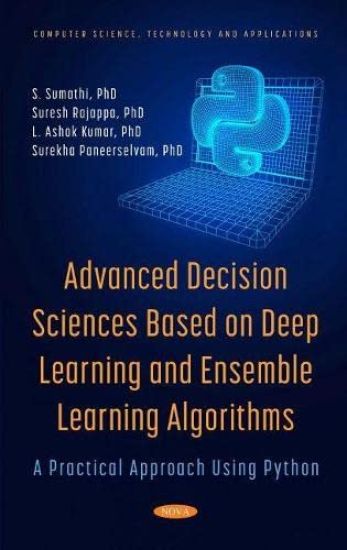
Kirjat ja teokset yhdessä paikassa: 5 kirjaa, julkaisuja vuosilta 2010-2024, suosituimpien joukossa Advanced Decision Sciences Based on Deep Learning and Ensemble Learning Algorithms. Vertaile teosten hintoja ja tarkista saatavuus suomalaisista kirjakaupoista.

5 kirjaa

Kirjojen julkaisuhaarukka 2010-2024.

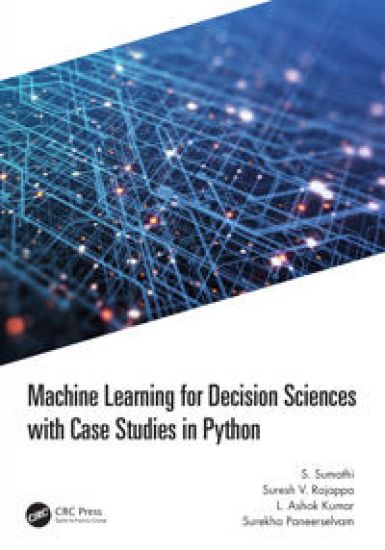
Machine Learning for Decision Sciences with Case Studies in Python

Machine Learning for Decision Sciences with Case Studies in Python

S. Sumathi; Suresh Rajappa; L Ashok Kumar; Surekha Paneerselvam

TAYLOR FRANCIS LTD
2024
nidottu
This book provides a detailed description of machine learning algorithms in data analytics, data science life cycle, Python for machine learning, linear regression, logistic regression, and so forth. It addresses the concepts of machine learning in a practical sense providing complete code and implementation for real-world examples in electrical, oil and gas, e-commerce, and hi-tech industries. The focus is on Python programming for machine learning and patterns involved in decision science for handling data. Features: Explains the basic concepts of Python and its role in machine learning. Provides comprehensive coverage of feature engineering including real-time case studies. Perceives the structural patterns with reference to data science and statistics and analytics. Includes machine learning-based structured exercises. Appreciates different algorithmic concepts of machine learning including unsupervised, supervised, and reinforcement learning.This book is aimed at researchers, professionals, and graduate students in data science, machine learning, computer science, and electrical and computer engineering.
Machine Learning for Decision Sciences with Case Studies in Python

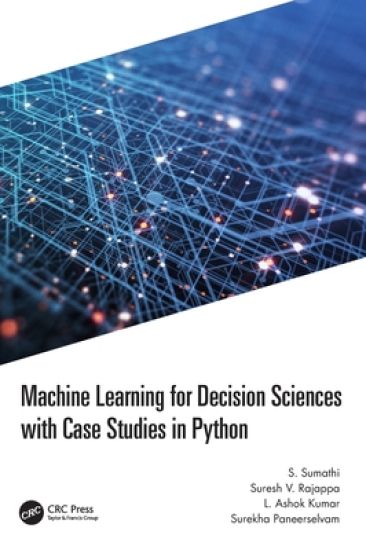
Machine Learning for Decision Sciences with Case Studies in Python

S. Sumathi; Suresh Rajappa; L Ashok Kumar; Surekha Paneerselvam

TAYLOR FRANCIS LTD
2022
sidottu
This book provides a detailed description of machine learning algorithms in data analytics, data science life cycle, Python for machine learning, linear regression, logistic regression, and so forth. It addresses the concepts of machine learning in a practical sense providing complete code and implementation for real-world examples in electrical, oil and gas, e-commerce, and hi-tech industries. The focus is on Python programming for machine learning and patterns involved in decision science for handling data. Features: Explains the basic concepts of Python and its role in machine learning. Provides comprehensive coverage of feature engineering including real-time case studies. Perceives the structural patterns with reference to data science and statistics and analytics. Includes machine learning-based structured exercises. Appreciates different algorithmic concepts of machine learning including unsupervised, supervised, and reinforcement learning.This book is aimed at researchers, professionals, and graduate students in data science, machine learning, computer science, and electrical and computer engineering.
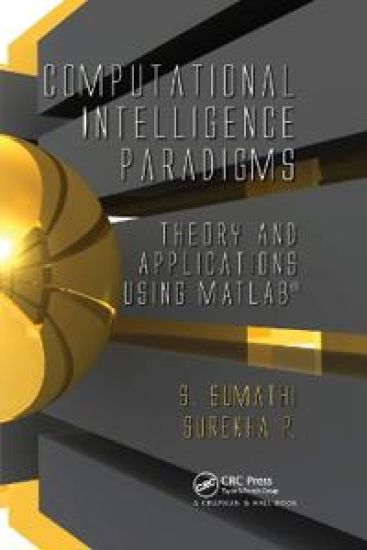
Computational Intelligence Paradigms

Computational Intelligence Paradigms

S. Sumathi; Surekha Paneerselvam

CRC Press
2019
nidottu
Offering a wide range of programming examples implemented in MATLAB®, Computational Intelligence Paradigms: Theory and Applications Using MATLAB® presents theoretical concepts and a general framework for computational intelligence (CI) approaches, including artificial neural networks, fuzzy systems, evolutionary computation, genetic algorithms and programming, and swarm intelligence. It covers numerous intelligent computing methodologies and algorithms used in CI research. The book first focuses on neural networks, including common artificial neural networks; neural networks based on data classification, data association, and data conceptualization; and real-world applications of neural networks. It then discusses fuzzy sets, fuzzy rules, applications of fuzzy systems, and different types of fused neuro-fuzzy systems, before providing MATLAB illustrations of ANFIS, classification and regression trees, fuzzy c-means clustering algorithms, fuzzy ART map, and Takagi–Sugeno inference systems. The authors also describe the history, advantages, and disadvantages of evolutionary computation and include solved MATLAB programs to illustrate the implementation of evolutionary computation in various problems. After exploring the operators and parameters of genetic algorithms, they cover the steps and MATLAB routines of genetic programming. The final chapter introduces swarm intelligence and its applications, particle swarm optimization, and ant colony optimization.Full of worked examples and end-of-chapter questions, this comprehensive book explains how to use MATLAB to implement CI techniques for the solution of biological problems. It will help readers with their work on evolution dynamics, self-organization, natural and artificial morphogenesis, emergent collective behaviors, swarm intelligence, evolutionary strategies, genetic programming, and the evolution of social behaviors.
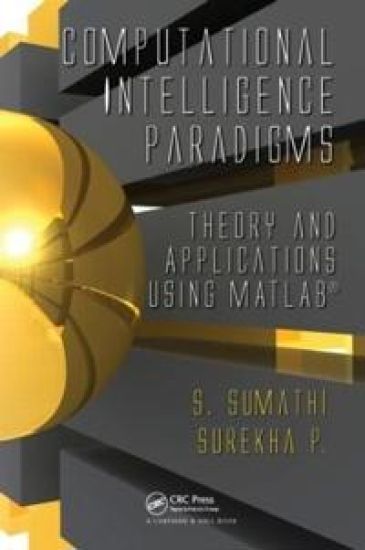
Computational Intelligence Paradigms

Computational Intelligence Paradigms

S. Sumathi; Surekha Paneerselvam

CRC Press Inc
2010
sidottu
Offering a wide range of programming examples implemented in MATLAB®, Computational Intelligence Paradigms: Theory and Applications Using MATLAB® presents theoretical concepts and a general framework for computational intelligence (CI) approaches, including artificial neural networks, fuzzy systems, evolutionary computation, genetic algorithms and programming, and swarm intelligence. It covers numerous intelligent computing methodologies and algorithms used in CI research. The book first focuses on neural networks, including common artificial neural networks; neural networks based on data classification, data association, and data conceptualization; and real-world applications of neural networks. It then discusses fuzzy sets, fuzzy rules, applications of fuzzy systems, and different types of fused neuro-fuzzy systems, before providing MATLAB illustrations of ANFIS, classification and regression trees, fuzzy c-means clustering algorithms, fuzzy ART map, and Takagi–Sugeno inference systems. The authors also describe the history, advantages, and disadvantages of evolutionary computation and include solved MATLAB programs to illustrate the implementation of evolutionary computation in various problems. After exploring the operators and parameters of genetic algorithms, they cover the steps and MATLAB routines of genetic programming. The final chapter introduces swarm intelligence and its applications, particle swarm optimization, and ant colony optimization.Full of worked examples and end-of-chapter questions, this comprehensive book explains how to use MATLAB to implement CI techniques for the solution of biological problems. It will help readers with their work on evolution dynamics, self-organization, natural and artificial morphogenesis, emergent collective behaviors, swarm intelligence, evolutionary strategies, genetic programming, and the evolution of social behaviors.