Kirjojen hintavertailu. Mukana 12 595 353 kirjaa ja 12 kauppaa.

Kirjailija

Susan A Resetar

Kirjat ja teokset yhdessä paikassa: 14 kirjaa, julkaisuja vuosilta 2008-2024, suosituimpien joukossa Strategies to Mitigate the Risk to the National Critical Functions Generated by Climate Change. Vertaile teosten hintoja ja tarkista saatavuus suomalaisista kirjakaupoista.

Mukana myös kirjoitusasut: Susan A. Resetar

14 kirjaa

Kirjojen julkaisuhaarukka 2008-2024.

Strategies to Mitigate the Risk to the National Critical Functions Generated by Climate Change

Strategies to Mitigate the Risk to the National Critical Functions Generated by Climate Change

Andrew Lauland; Liam Regan; Susan A Resetar; Joie D Acosta; Rahim Ali; Edward W Chan; Richard H Donohue; Liisa Ecola; Timothy R Gulden; Chelsea Kolb; Kristin J Leuschner; Michelle E Miro; Tobias Sytsma; Patricia A Stapleton; Michael T Wilson; Chandler Sachs

RAND Corporation
2024
pokkari
This report examines climate adaptation strategies for 25 National Critical Functions (NCFs) at risk of disruption from climate change. The focus is on impact pathways, each of which is a combination of climate drivers (such as drought and flooding) and impact mechanisms (such as physical damage and workforce shortages) affecting a given NCF. The emphasis is on strategies that owner-operators of critical functions might implement.
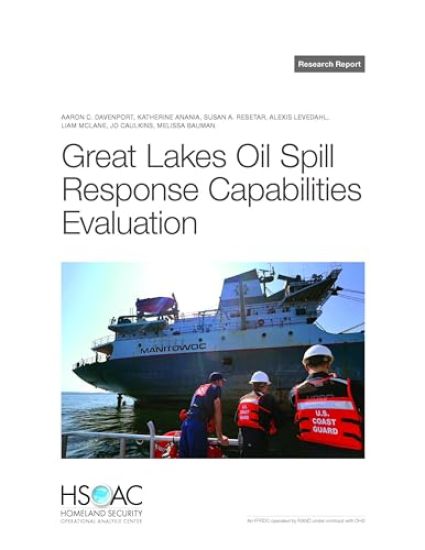
Great Lakes Oil Spill Response Capabilities Evaluation

Great Lakes Oil Spill Response Capabilities Evaluation

Aaron C Davenport; Katherine Anania; Susan A Resetar

RAND Corporation
2024
pokkari
In this report, authors provide an assessment of the ability of government agencies and the private sector on both sides of the U.S.-Canadian border to collectively respond to Great Lakes oil spill scenarios. They assess the scope of current oil spill risks in the region; the roles, capabilities, and capacities of oil-spill response partners; and any gaps and potential mitigation strategies around oil-spill response in fresh water and ice.
Mitigating Risk That Climate Change Poses to the National Critical Functions

Mitigating Risk That Climate Change Poses to the National Critical Functions

Susan A Resetar; Andrew Lauland; Michelle E Miro

RAND Corporation
2024
pokkari
This report reviews strategies to mitigate the risk that climate changes poses to four National Critical Functions: Maintain Supply Chains, Provide Insurance Services, Prepare for and Manage Emergencies, and Provide Public Safety. Such strategies can reduce a function's vulnerability to or the consequences it would experience from direct or indirect effects of climate change.
Assessing Risk to National Critical Functions as a Result of Climate Change

Assessing Risk to National Critical Functions as a Result of Climate Change

Michelle E Miro; Susan A Resetar; Andrew Lauland

RAND Corporation
2024
pokkari
Researchers assessed the risk that eight climate hazards--drought, extreme cold, extreme heat, flooding, sea-level rise, severe storm systems, tropical cyclones and hurricanes, and wildfire--will pose to National Critical Functions by 2050 and 2100 under current and higher emissions scenarios, as well as potential for cascading risk due to interdependencies between these functions.
Incorporating Environmental Considerations Into Defense Acquisition Practices

Incorporating Environmental Considerations Into Defense Acquisition Practices

Jeffrey A Drezner; Megan McKernan; Gabriel Leonard; Gwen Mazzotta; Shane Manuel; Susan A Resetar; Sydne J Newberry

RAND Corporation
2023
pokkari
The impacts of climate change and other environmental threats are increasingly perceived by the U.S. Department of Defense (DoD) as a national security threat. RAND researchers assess the knowledge, tools, and capabilities needed by the acquisition workforce to infuse environmental considerations into DoD requirements, acquisition, and resource allocation decisionmaking.
Climate and Readiness

Climate and Readiness

Katharina Ley Best; Scott R Stephenson; Susan A Resetar; Paul W Mayberry; Emmi Yonekura; Rahim Ali; Joshua Klimas; Stephanie Stewart; Jessica Arana; Inez Khan; Vanessa Wolf

RAND Corporation
2023
pokkari
Climate hazards adversely affect the physical environment in which the U.S. Department of Defense must operate, thereby adversely affecting the performance of the joint force. Acknowledging that climate effects will likely become more severe as global temperatures rise, the authors of this report discuss findings from a study they conducted to develop links between climate and force readiness.
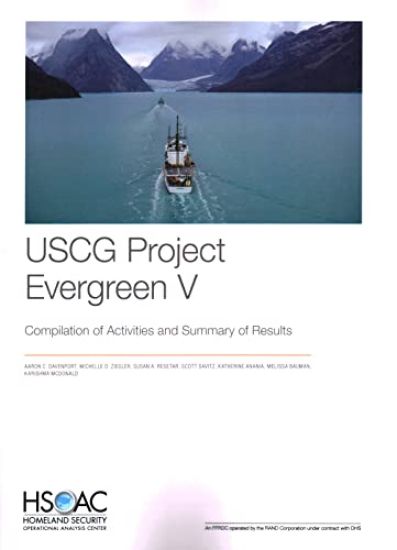
USCG Project Evergreen V

USCG Project Evergreen V

Aaron C Davenport; Michelle D Ziegler; Susan A Resetar; Scott Savitz; Katherine Anania; Melissa Bauman; Karishma McDonald

RAND Corporation
2023
pokkari
This report summarizes the findings of Evergreen V, the most recent iteration of an ongoing scenario-based strategic foresight initiative that aims to help the U.S. Coast Guard identify issues, areas of opportunity, and potential challenges that it will likely face in the coming decades, so that senior leadership can better bridge the gap between near- and long-term planning and prepare the service to meet future demands.
Recovery Planning for Natural Resources and Parks in Puerto Rico

Recovery Planning for Natural Resources and Parks in Puerto Rico

Susan A Resetar; Abbie Tingstad; Joshua Mendelsohn

RAND
2020
nidottu
Hurricanes Irma and Maria stressed and destroyed significant areas of Puerto Rico's natural resources, many of which were already strained by anthropogenic effects. This report presents information on the benefits of these resources, hurricane damage, and 25 recommended courses of action for restoring natural resources, managing solid waste, renewing parks, and improving economic opportunities.
Air Force Manpower Determinants

Air Force Manpower Determinants

Albert A Robbert; Lisa M Harrington; Louis T Mariano; Susan A Resetar; David Schulker; John S Crown; Paul Emslie; Sean Mann; Gary Massey

RAND
2020
nidottu
The authors examine the process the Air Force uses to determine manpower requirements, compare it with processes used in other services and organizations, and evaluate options for increasing the efficiency of the Air Force process.
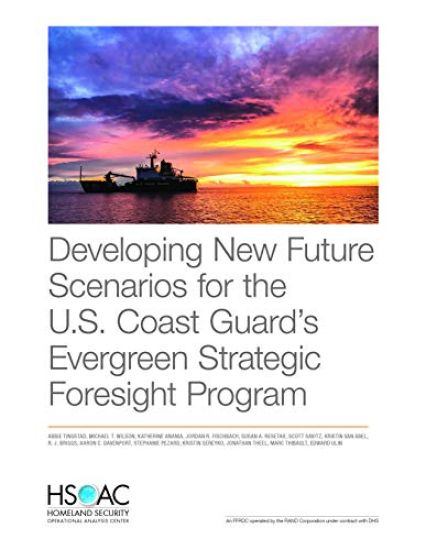
Developing New Future Scenarios for the U.S. Coast Guard's Evergreen Strategic Foresight Program

Developing New Future Scenarios for the U.S. Coast Guard's Evergreen Strategic Foresight Program

Abbie Tingstad; Michael T Wilson; Katherine Anania; Jordan R Fischbach; Susan A Resetar; Scott Savitz; Kristin Van Abel; R J Briggs; Aaron C Davenport; Stephanie Pezard; Kristin Sereyko; Jonathan Theel; Marc Thibault; Edward Ulin

RAND
2020
nidottu
The U.S. Coast Guard's motto is Semper Paratus--always ready. But for what? This report describes an approach to developing scenarios to aid in decisionmaking under deep uncertainty through the Evergreen strategic foresight initiative. The scenarios presented here focus on readiness, but the approach can be adapted for other contexts.
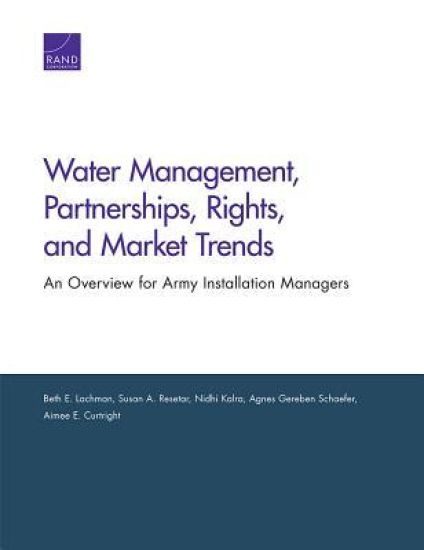
Water Management, Partnerships, Rights, and Market Trends

Water Management, Partnerships, Rights, and Market Trends

Beth E. Lachman; Susan A. Resetar; Nidhi Kalra; Agnes Gereben Schaefer; Aimee E. Curtright

RAND
2016
pokkari
This report assesses water management, partnerships, rights, and market trends and opportunities, and how Army installations can potentially use them to improve programs and investments in water and wastewater systems. It provides examples from across the United States, along with detailed case studies of two states and two Army installations, and recommends ways to improve installation water security, programs, and infrastructure investments.
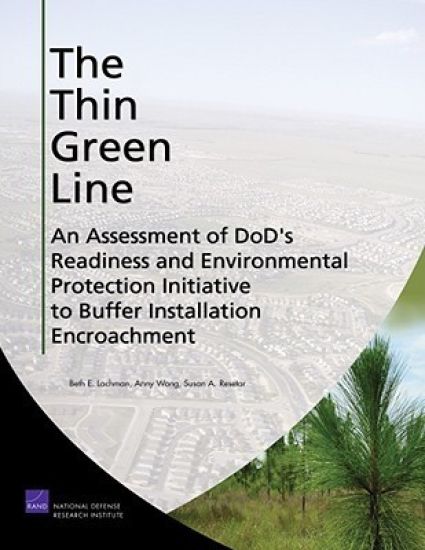
The Thin Green Line

The Thin Green Line

Beth E. Lachman; Anny Wong; Susan A. Resetar

RAND
2008
pokkari
This monograph assesses the effectiveness of DoD's Readiness and Environmental Protection Initiative to help testing and training installations deal with encroachment from sprawl and other sources.The authors identify the main causes of encroachment; detail the benefits, both to the military and local communities, of buffering areas near installations with REPI projects; and provide recommendations for how to improve REPI's effectiveness.It assesses the effectiveness of DoD's Readiness and Environmental Protection Initiative in helping military installations develop partnerships to address encroachment with buffering projects on non-military lands.