Kirjojen hintavertailu. Mukana 12 595 353 kirjaa ja 12 kauppaa.
Kirjailija
Susan Armitage
Kirjat ja teokset yhdessä paikassa: 5 kirjaa, julkaisuja vuosilta 1984-2007, suosituimpien joukossa Women and the Journey. Vertaile teosten hintoja ja tarkista saatavuus suomalaisista kirjakaupoista.
This ground-breaking book was many years in the making by some of the country's leading women scholars.Until the present century, few people thought of travel as a female pursuit. Men traveled; women stayed at home. But women have always journeyed, for many reasons, as this important book demonstrates."There is almost nothing on women and travel," notes Susan Armitage, editor of the acclaimed The Women's West and a contributor to Women and the Journey. "It has been taken for granted that men are adventurers and explorers, but what this does is wipe out the stories of women travelers. As we looked at how women's senses of their journeys differed from those of men, we felt like explorers ourselves."The eleven essays in Women and the Journey, as well as the original artwork by Jo Hockenhull, approach the theme of women and travel from a variety of perspectives, including literature, history, foreign languages, fine arts, and women's studies. Over several years the contributors worked on this project as a team, sharing research, reading one another's work, uniting in the process of creating a unique book together. Like quilt making, "that most female of activities," note McLeod and Frederick in their prologue, "each of us had some say in how the final product was put together."Women and the Journey is destined to become a women's studies classic. Contributors include Susan Armitage, Joan Burbick, Susanna Finnell, Bonnie Frederick, Diane Gillespie, Jo Hockenhull, Virginia Hyde, Birgitta Ingemanson, Susan McLeod, Sheila Ruzycki O'Brien, Louise Schleiner, Marina Tolmacheva, and Annette White-Parks.
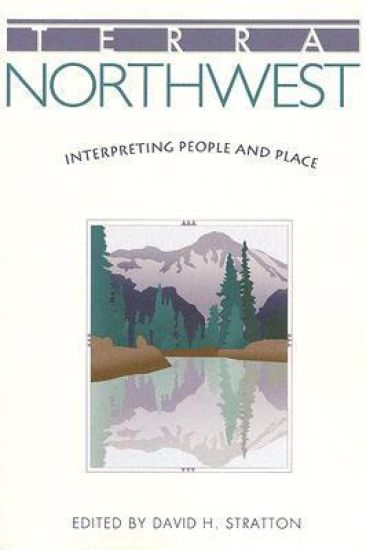
Susan Armitage; Kenneth S. Coates; James M. Dolliver; Gordon Hirabayashi; Alvin M. Josephy Jr.; Howard R. Lamar; John McClelland Jr.; E. Mark Moreno; Quintard Taylor
Eleven thought-provoking experts from the United States and Canada explore society, culture, and change in the great, resource-laden Northwest. Essays examine the European exploration of the Pacific coast, American and Canadian comparative development, the political and constitutional foundations, economic globalization, gendered and class history, and perspectives on the Native American, black, Asian American, and Hispanic citizenry.Included are contributions by Susan Armitage, Kenneth S. Coates, James M. Dolliver, Gordon Hirabayashi, Alvin M. Josephy Jr., Howard R. Lamar, John McClelland Jr., E. Mark Moreno, Quintard Taylor, David J. Weber, and Donald Worster. Terra Northwest continues the Sherman and Mabel Smith Pettyjohn Lecture Series of publications examining the essential aspects of Northwest history.
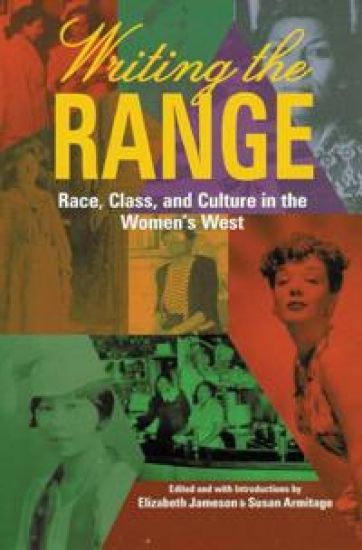
A major goal of the New Western History is to chronicle the vast diversity of western experience. In this pathbreaking anthology, coeditors Elizabeth Jameson and Susan Armitage-who brought us ""The Women's West in 1987""-meet that challenge by bringing together twenty-nine essays that present women of all races as actors in their own lives and in the history of the American West and locate them in a framework that connects gender, race, and class.In mythic sagas of the American West, the wide western range offered boundless opportunity to a limited cast of white men. Buffalo roamed, deer and antelope played, and women's voices were never heard. Writing the Range allows us to hear many long-silenced women: Spanish-Mexican settlers and American Indians on New Spain's northern frontiers; Chinese, Basque, Japanese, Korean, Vietnamese, Slavic, and Irish immigrants; film stars Dolores del Rio and Lupe Velez; Navajos and African Americans who moved to western cities during World War II; and the activist Mothers of East Los Angeles, who organized to resist environmental dangers to their community.A valuable introduction to the rapidly changing field of western history, Writing the Range explains clearly how race, class, and culture are constructed and connected. The first section examines issues raised by more than a decade of multicultural western women's histories; following are six chronological sections spanning four centures. Each section offers a short introduction connecting is essays and placing them in analytic and historical perspective. Clearly written and accessible, Writing the Range makes a major contribution in ethnic history, women's history, and interpretations of the American West.
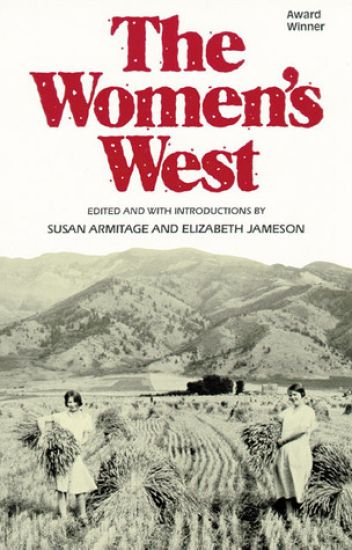
The American West looms large in popular imagination-a place where men were rugged and independent, violent and courageous. In this mythic West all the men were white, and the women were largely absent. The few female actors played supporting roles around the edges of the drama. Molded by the Victorian Cult of True Womanhood, they were passive, dependent, reluctant, and out of place. Men ""won"" the West. Women, against their better judgement, followed them to this ""newly discovered"" place and tried to re-create the amenities of the urban East.Or so the myth goes. The Women's West challenges this picture as racist, sexist, and romantic and rejects the customary emphasis of traditional western history on the nineteenth-century frontier, discovered and defined by Anglo men. In its place The Women's West begins the construction of a new western history as complex and varied as the people who lived it.This collection of twenty-one articles creates a multidimensional portrait of western women. The pioneer women presented here were actors in their own lives, not passive participants in their husbands' ventures. They were hardy seekers who came west, sometimes alone, in search of jobs, freedom, or land to homestead. They were political activists who worked tirelessly to win the right to vote and to hold political office. They adapted in practical ways to their own and their families' economic and personal needs in a new environment.
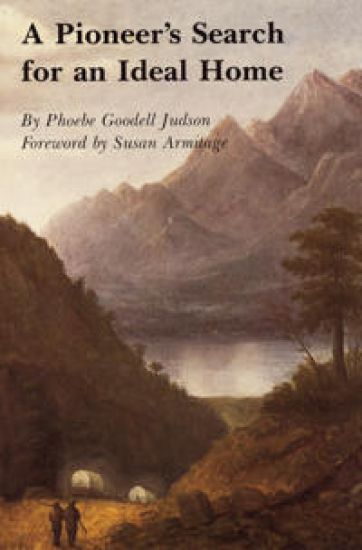
Phoebe Judson was a young bride in 1853 when she and her husband crossed the plains from Ohio to the Puget Sound area of Washington Territory. She was ninety-five when this book was first published in 1925. The years between were spent in "a pioneer's search for an ideal home" and in living there, when it was finally found at the head of the Nooksack River, almost on the Canadian border. Phoebe Judson's account of the journey west is based on daily diary entries detailing her fear, excitement, and exhaustion. At the end of the trail, the Judsons encountered hardships aplenty, causing them to abandon a farm and business in Olympia before their arrival in the Nooksack Valley. During the Indian Wars they holed up in a fort at Claquato. In time, Phoebe overcame her fear of the Indians, learned the Chinook language, and won their friendship. All this is told in vivid detail by a woman of great dignity and charm whom readers will long remember. In a foreword, Susan Armitage, professor of history at Washington State University, calls A Pioneer's Search for an Ideal Home a "classic pioneering account," important for its woman's point of view.