Kirjojen hintavertailu. Mukana 12 595 353 kirjaa ja 12 kauppaa.

Kirjailija

Susan Blackmore

Kirjat ja teokset yhdessä paikassa: 14 kirjaa, julkaisuja vuosilta 2000-2024, suosituimpien joukossa Bewusstsein. Vertaile teosten hintoja ja tarkista saatavuus suomalaisista kirjakaupoista.

14 kirjaa

Kirjojen julkaisuhaarukka 2000-2024.

Consciousness

Consciousness

Susan Blackmore; Emily T. Troscianko

TAYLOR FRANCIS LTD
2024
sidottu
Now in its fourth edition, this highly popular text is the definitive introduction to consciousness, exploring the key theories and evidence in consciousness studies ranging from neuroscience and psychology to quantum theories and philosophy.Written by mother and daughter author team Susan Blackmore and Emily Troscianko, the book examines why the term ‘consciousness’ has no recognised definition. It also provides an opportunity to delve into personal intuitions about the self, mind, and consciousness. Featuring comprehensive coverage of all core topics in the field, the book explains why the problem of consciousness is so hard. Theories of attention and free will, altered states of consciousness, and the differences between conscious and unconscious are all explored. Written with students of psychology, neuroscience, and philosophy in mind, this edition has been thoroughly updated throughout, and includes expanded coverage of panpsychism, illusionism, predictive processing, adversarial collaboration, psychedelics, and AI.Complete with key concept boxes, profiles of well-known thinkers, and questions and activities designed for both independent study and group work, Consciousness provides a complete introduction to this fascinating field, and is essential reading for students of psychology, philosophy, and neuroscience.
Consciousness

Consciousness

Susan Blackmore; Emily T. Troscianko

TAYLOR FRANCIS LTD
2024
nidottu
Now in its fourth edition, this highly popular text is the definitive introduction to consciousness, exploring the key theories and evidence in consciousness studies ranging from neuroscience and psychology to quantum theories and philosophy.Written by mother and daughter author team Susan Blackmore and Emily Troscianko, the book examines why the term ‘consciousness’ has no recognised definition. It also provides an opportunity to delve into personal intuitions about the self, mind, and consciousness. Featuring comprehensive coverage of all core topics in the field, the book explains why the problem of consciousness is so hard. Theories of attention and free will, altered states of consciousness, and the differences between conscious and unconscious are all explored. Written with students of psychology, neuroscience, and philosophy in mind, this edition has been thoroughly updated throughout, and includes expanded coverage of panpsychism, illusionism, predictive processing, adversarial collaboration, psychedelics, and AI.Complete with key concept boxes, profiles of well-known thinkers, and questions and activities designed for both independent study and group work, Consciousness provides a complete introduction to this fascinating field, and is essential reading for students of psychology, philosophy, and neuroscience.
Seeing Myself

Seeing Myself

Susan Blackmore

Robinson
2020
pokkari
Essential reading for anyone seeking to understand their own mind and to find a spiritual path that is compatible with scienceAs an impressionable young student, Susan Blackmore had an intense, dramatic and life-changing experience, seeming to leave her body and travel the world. With no rational explanation for her out-of-body experience (OBE) she turned to astral projection and the paranormal, but soon despaired of finding answers. Decades later, a Swiss neurosurgeon accidentally discovered the spot in the brain that can induce OBEs and everything changed; this crucial spot is part of the brain's self-system and when disturbed so is our experience of self. Blackmore leaped back into OBE research and at last began to unravel what had happened to her. Seeing Myself describes her long quest for answers through spirituality, religion, drugs, meditation, philosophy and neuroscience.Anyone can have an OBE, indeed 15 per cent of us have. Even more have experienced sleep paralysis, lucid dreaming and the creepy sense of an invisible presence. At last, with the advent of brain stimulation, fMRI scanning and virtual reality, all these phenomena are beginning to make sense. Long relegated to the very fringes of research, the new science of out-of-body experiences is now contributing to our understanding of consciousness and our very selves.
30-Second Theories

30-Second Theories

Martin Rees; Paul Parsons; Susan Blackmore

Icon Books Ltd
2018
nidottu
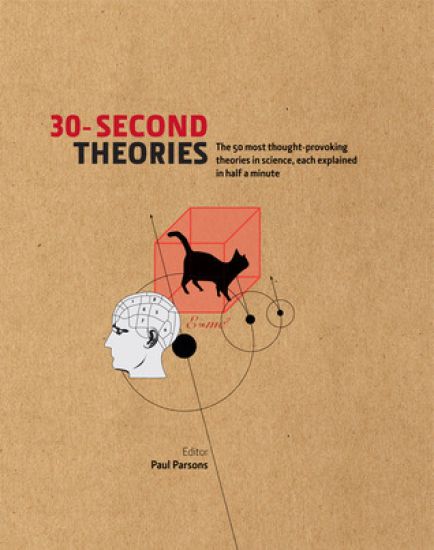
When it comes to big science, very few things are conclusively known. From Quantum Mechanics to Natural Selection, what we have instead are theories - ideas explain why things happen the way they do. We don't know for certain these are correct - no one ever saw the Big Bang - but with them we can paint beautiful, breathtaking pictures of everything from human behaviour to what the future may hold. Profiling the key scientists behind each theory, "30-Second Theories" presents each entry in a unique, eye-catching full-colour design, with thought-provoking extras and stylish illustrations. It is essential for anyone keen on expanding their mind with science's most thrilling ideas.
Consciousness

Consciousness

Susan Blackmore

Oxford University Press
2017
nidottu
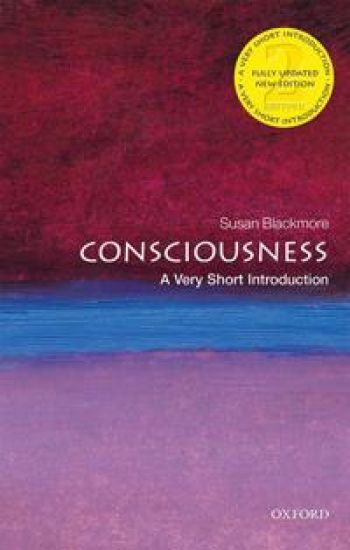
Consciousness, 'the last great mystery for science', remains a hot topic. How can a physical brain create our experience of the world? What creates our identity? Do we really have free will? Could consciousness itself be an illusion? Exciting new developments in brain science are continuing the debates on these issues, and the field has now expanded to include biologists, neuroscientists, psychologists, and philosophers. This controversial book clarifies the potentially confusing arguments, and the major theories, whilst also outlining the amazing pace of discoveries in neuroscience. Covering areas such as the construction of self in the brain, mechanisms of attention, the neural correlates of consciousness, and the physiology of altered states of consciousness, Susan Blackmore highlights our latest findings. ABOUT THE SERIES: The Very Short Introductions series from Oxford University Press contains hundreds of titles in almost every subject area. These pocket-sized books are the perfect way to get ahead in a new subject quickly. Our expert authors combine facts, analysis, perspective, new ideas, and enthusiasm to make interesting and challenging topics highly readable.
Consciousness

Consciousness

Susan Blackmore

Oxford University Press Inc
2011
nidottu
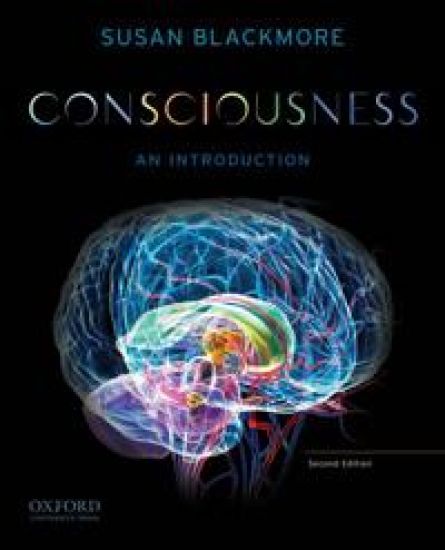
Now in a new edition, this innovative text is the first volume to bring together all the major theories of consciousness studies--from those rooted in traditional Western philosophy to those coming out of neuroscience, quantum theory, and Eastern philosophy. Broadly interdisciplinary, Consciousness: An Introduction, Second Edition, is divided into nine sections that examine such topics as how subjective experiences arise from objective brain processes, the basic neuroscience and neuropathology of consciousness, altered states of consciousness, mystical experiences and dreams, and the effects of drugs and meditation. It also discusses the nature of self, the possibility of artificial consciousness in robots, and the question of whether or not animals are conscious.PEDAGOGICAL FEATURES * Profiles of important philosophers, psychologists, neuroscientists, and biologists involved in consciousness studies * "Concept" text boxes that elucidate specific aspects of consciousness * "Practice" and "Activity" text boxes that encourage students to engage in practical exercises in class and at home * Bold marginal quotations that emphasize key ideas, and suggestions for further reading NEW TO THIS EDITION * Cutting-edge coverage of out-of-body experiences (Chapter 24), meditation (Chapter 26), and machine consciousness (Section 6) * A revised and enhanced art program featuring more than 230 photos, illustrations, and tables * A Companion Website at www.oup.com/us/blackmore offering links to online resources and new and emerging research; self-assessment exercises for students and instructors; and more information on the book's practices and exercises
Zen and the Art of Consciousness

Zen and the Art of Consciousness

Susan Blackmore

Oneworld Publications
2011
nidottu
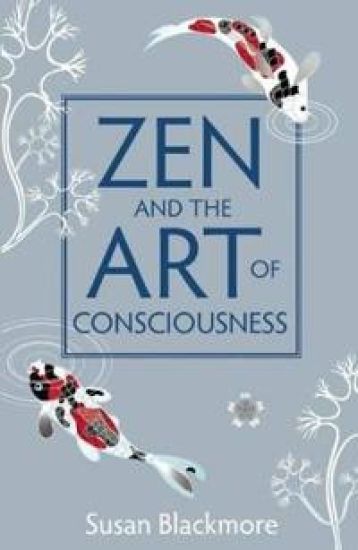
Susan Blackmore combines the latest scientific theories about mind, self, and consciousness with a lifetime’s practice of Zen. Framed by ten critical questions that are derived from Zen’s teachings, Zen and the Art of Consciousness explores how intellectual enquiry and meditation can expand your understanding and experience of consciousness and tackle some of today’s greatest scientific mysteries.
30-Second Theories

30-Second Theories

Martin Rees; Paul Parsons; Susan Blackmore

Icon Books Ltd
2010
sidottu
When it comes to big science, very few things are conclusively known. From Quantum Mechanics to Natural Selection, what we have instead are theories - ideas explain why things happen the way they do. We don't know for certain these are correct - no one ever saw the Big Bang - but with them we can paint beautiful, breathtaking pictures of everything from human behaviour to what the future may hold. Profiling the key scientists behind each theory, "30-Second Theories" presents each entry in a unique, eye-catching full-colour design, with thought-provoking extras and stylish illustrations. It is essential for anyone keen on expanding their mind with science's most thrilling ideas.
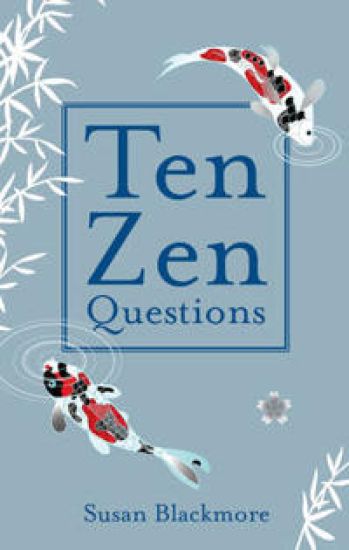
Ten Zen Questions

Ten Zen Questions

Susan Blackmore

Oneworld Publications
2009
sidottu
Using Zen meditation to unravel the mysteries of consciousness. The calming and de-stressing benefits of Zen meditation have long been known, but scientists are now considering its huge potential to influence our ability to understand and experience consciousness – though few will say it! Susan Blackmore is about to change all that: she’s a world expert in brain science who has also been practising Zen meditation for over twenty-five years. In this revolutionary book, she doesn’t push any religious or spiritual agenda but simply presents the methods used in Zen as an aid to help us understand consciousness and identity – concepts which have stumped scientists and philosophers – in an exciting new way. Each chapter takes as its starting point one of Zen’s - and science's - most intriguing questions such as, "Am I conscious now?" and "How does thought arise?"
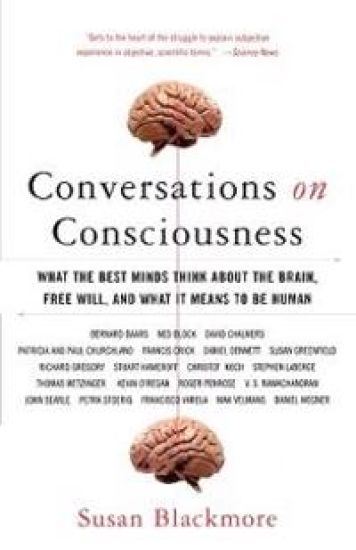
Conversations on Consciousness: What the Best Minds Think about the Brain, Free Will, and What It Means to Be Human
In Conversations on Consciousness, Susan Blackmore interviews some of the great minds of our time, a who's who of eminent thinkers, all of whom have devoted much of their lives to understanding the concept of consciousness. The interviewees, ranging from major philosophers to renowned scientists, talk candidly with Blackmore about some of the key philosophical issues confronting us in a series of conversations that are revealing, insightful, and stimulating. They ruminate on the nature of consciousness (is it something apart from the brain?) and discuss if it is even possible to understand the human mind. Some of these thinkers say no, but most believe that we will pierce the mystery surrounding consciousness, and that neuroscience will provide the key. Blackmore goes beyond the issue of consciousness to ask other intriguing questions: Is there free will? (A question which yields many conflicted replies, with most saying yes and no.) If not, how does this effect the way you live your life; and more broadly, how has your work changed the way you live?Paired with an introduction and extensive glossary that provide helpful background information, these provocative conversations illuminate how some of the greatest minds tackle some of the most difficult questions about human nature.
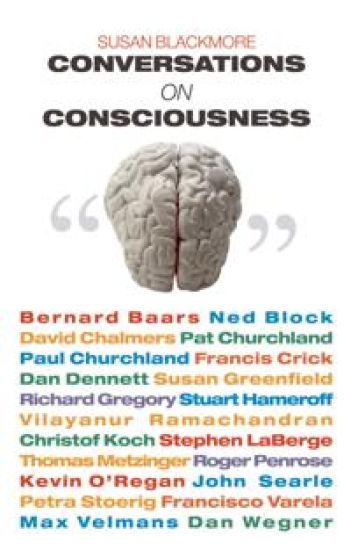
Conversations on Consciousness

Conversations on Consciousness

Susan Blackmore

Oxford University Press
2006
nidottu
Conversations on Consciousness is just that - a series of twenty lively and challenging conversations between Sue Blackmore and some of the world's leading philosophers and scientists. Written in a colloquial and engaging style the book records the conversations Sue had when she met these influential thinkers, whether at conferences in Arizona or Antwerp, or in their labs or homes in Oxford or San Diego. The conversations bring out their very different personalities and styles and reveal a wealth of fascinating detail about their theories and beliefs. Why is consciousness such a special and difficult issue for twenty-first century science? Sue, herself a researcher into this controversial and difficult topic, begins by asking each of her colleagues this simple question and is immediately plunged into the depths of the debate: How do the subjective experiences we call consciousness arise from the physical brain? Is this even the right question to ask? Can zombies - people who behave outwardly just like others but have no inner mental life - exist? What can dreams tell us about consciousness? Should we all be learning to meditate? Do we have free will, and if not is it possible to live without it? With an introduction setting out the broad structure of the debate on consciousness, and an extensive glossary, this book provides an engaging and accessible account of the most challenging problem of all, through the words of some of the leading figures involved in seeking to solve it.
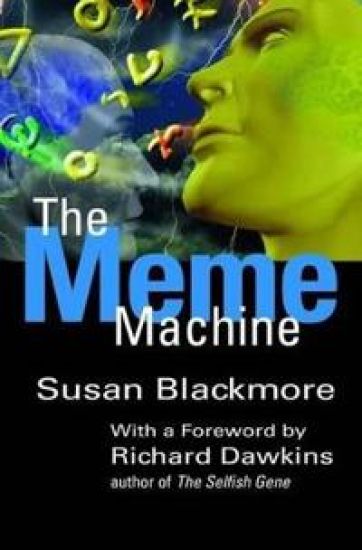
The Meme Machine

The Meme Machine

Susan Blackmore

Oxford University Press
2000
nidottu
Humans are extraordinary creatures, with the unique ability among animals to imitate and so copy from one another ideas, habits, skills, behaviours, inventions, songs, and stories. These are all memes, a term first coined by Richard Dawkins in 1976 in his book The Selfish Gene. Memes, like genes, are replicators, and this enthralling book is an investigation of whether this link between genes and memes can lead to important discoveries about the nature of the inner self. Confronting the deepest questions about our inner selves, with all our emotions, memories, beliefs, and decisions, Susan Blackmore makes a compelling case for the theory that the inner self is merely an illusion created by the memes for the sake of replication.