Kirjojen hintavertailu. Mukana 12 595 353 kirjaa ja 12 kauppaa.

Kirjailija

Susan Broomhall

Kirjat ja teokset yhdessä paikassa: 29 kirjaa, julkaisuja vuosilta 2002-2026, suosituimpien joukossa Gender and the Glove in Early Modern England. Vertaile teosten hintoja ja tarkista saatavuus suomalaisista kirjakaupoista.

29 kirjaa

Kirjojen julkaisuhaarukka 2002-2026.

Gender and the Glove in Early Modern England

Gender and the Glove in Early Modern England

James Daybell; Susan Broomhall

AMSTERDAM UNIVERSITY PRESS
2026
sidottu
This book explores how gloves shaped and reflected gender relations in early modern society. By examining the cultural, economic, and political significance of gloves, it reveals how these everyday objects both reinforced and challenged gender ideologies of the time. The study demonstrates that gloves were far more than simple accessories—they were powerful symbols that helped construct social hierarchies and express various forms of authority and agency. Through their material presence and symbolic meaning, gloves participated in complex dialogues about gender, power, and identity. Drawing on methodologies from history, archaeology, anthropology, geography, art history, material culture studies, performance studies, and disability studies, this interdisciplinary approach examines how physical objects and bodily practices intersected to create meaning. The analysis focuses on the tangible relationships between people, objects, and power structures, showing how material culture actively shaped social relations rather than simply reflecting them. This work contributes to our understanding of how gender operated in early modern contexts, demonstrating that power relations were constructed through everyday interactions with material objects like gloves.
Early Modern Women in the Low Countries

Early Modern Women in the Low Countries

Susan Broomhall; Jennifer Spinks

TAYLOR FRANCIS LTD
2024
nidottu
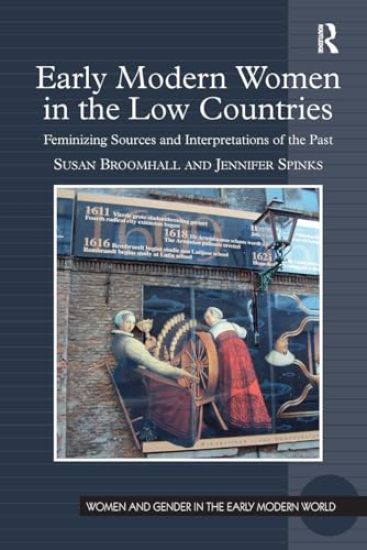
Combining historical, historiographical, museological, and touristic analysis, this study investigates how late medieval and early modern women of the Low Countries expressed themselves through texts, art, architecture and material objects, how they were represented by contemporaries, and how they have been interpreted in modern academic and popular contexts. Broomhall and Spinks analyse late medieval and early modern women's opportunities to narrate their experiences and ideas, as well as the processes that have shaped their representation in the heritage and cultural tourism of the Netherlands and Belgium today. The authors study female-authored objects such as familial and political letters, dolls' houses, account books; visual sources, funeral monuments, and buildings commissioned by female patrons; and further artworks as well as heritage sites, streetscapes, souvenirs and clothing with gendered historical resonances. Employing an innovative range of materials from written sources to artworks, material objects, heritage sites and urban precincts, the authors argue that interpretations of late medieval and early modern women's experiences by historians and art scholars interact with presentations by cultural and heritage tourism providers in significant ways that deserve closer interrogation by feminist researchers.
Police Courts in Nineteenth-Century Scotland, Volume 2

Police Courts in Nineteenth-Century Scotland, Volume 2

David G. Barrie; Susan Broomhall

TAYLOR FRANCIS LTD
2024
nidottu
Volume 2 of this two-volume companion study into the administration, experience, impact and representation of summary justice in Scotland explores the role of police courts in moulding cultural ideas, social behaviours and urban environments in the nineteenth century. Whereas Volume 1, subtitled Magistrates, Media and the Masses, analysed the establishment, development and practice of police courts, Volume 2, subtitled Boundaries, Behaviours and Bodies, examines, through themed case studies, how these civic and judicial institutions shaped conceptual, spatial, temporal and commercial boundaries by regulating every-day activities, pastimes and cultures. As with Volume 1, Boundaries, Behaviours and Bodies is attentive to the relationship between magistrates, the police, the media and the wider community, but here the main focus of analysis is on the role and impact of the police courts, through their practice, on cultural ideas, social behaviours and environments in the nineteenth-century city. By intertwining social, cultural, institutional and criminological analyses, this volume examines police courts’ external impact through the matters they treated, considering how concepts such as childhood and juvenile behaviour, violence and its victims, poverty, migration, health and disease, and the regulation of leisure and trade, were assessed and ultimately affected by judicial practice.
Police Courts in Nineteenth-Century Scotland, Volume 1

Police Courts in Nineteenth-Century Scotland, Volume 1

David G. Barrie; Susan Broomhall

TAYLOR FRANCIS LTD
2024
nidottu
Taking the form of two companion volumes, Police Courts in Nineteenth-Century Scotland represents the first major investigation into the administration, experience, impact and representation of summary justice in Scottish towns, c.1800 to 1892. Each volume explores diverse, but complementary, themes relating to judicial practices, relationships, experiences and discourses through the lens of the same subject matter: the police court. Volume 1, with the subtitle Magistrates, Media and the Masses, provides an institutional, social and cultural history of the establishment, development and practice of police courts. It explores their rise, purpose and internal workings, and how justice was administered and experienced by those who attended them in a variety of roles. Special attention is given to examining how courtroom discourse was represented in print culture, the role of the media in providing a discursive commentary on summary justice, and the ways in which magistrates and the police engaged in a law and order dialogue with the press. Throughout, consideration is given to uncovering the relationship between magistrates, the courts, the police and the wider community, and to charting the implications of the rise of summary justice and the ’police-man’ state for the urban masses (as evidenced through prosecution, conviction and punishment patterns). Volume 2, with the subtitle Boundaries, Behaviours and Bodies, explores, through themed case studies, how police courts shaped conceptual, spatial, temporal and commercial boundaries by regulating every-day activities, pastimes and cultures.
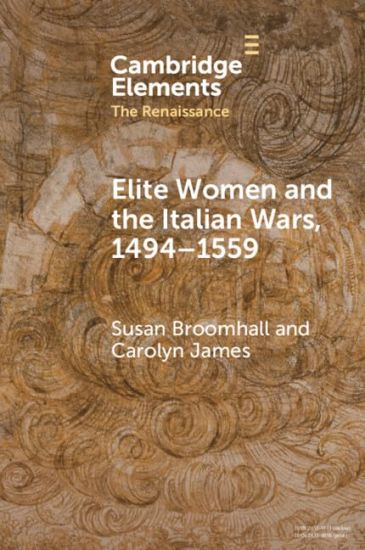
Elite Women and the Italian Wars, 1494–1559

Elite Women and the Italian Wars, 1494–1559

Susan Broomhall; Carolyn James

Cambridge University Press
2024
pokkari
The Element analyses the critical importance of elite women to the conflict conventionally known as the Italian Wars that engulfed much of Europe and the Mediterranean between 1494 and 1559. Through its considered attention to the interventions of women connected to imperial, royal and princely dynasties, the authors show the breadth and depth of the opportunities, roles, impact, and influence that certain women had to shape the course of the conflict in both wartime activities and in peace-making. The work thus expands the ways in which the authors can think about women's participation in war and politics. It makes use of a wide range of sources such as literature, art and material culture, as well as more conventional text forms. Women's voices and actions are prioritized in making sense of evidence and claims about their activities.
Elite Women and the Italian Wars, 1494–1559

Elite Women and the Italian Wars, 1494–1559

Susan Broomhall; Carolyn James

Cambridge University Press
2024
sidottu
The Element analyses the critical importance of elite women to the conflict conventionally known as the Italian Wars that engulfed much of Europe and the Mediterranean between 1494 and 1559. Through its considered attention to the interventions of women connected to imperial, royal and princely dynasties, the authors show the breadth and depth of the opportunities, roles, impact, and influence that certain women had to shape the course of the conflict in both wartime activities and in peace-making. The work thus expands the ways in which the authors can think about women's participation in war and politics. It makes use of a wide range of sources such as literature, art and material culture, as well as more conventional text forms. Women's voices and actions are prioritized in making sense of evidence and claims about their activities.
Encounter, Transformation, and Agency in a Connected World
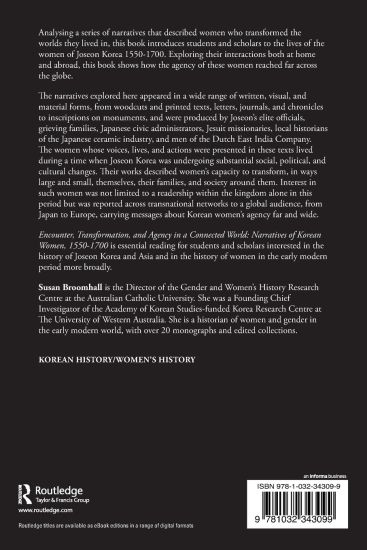
Analysing a series of narratives that described women who transformed the worlds they lived in, this book introduces students and scholars to the lives of the women of Joseon Korea 1550-1700. Exploring their interactions both at home and abroad, this book shows how the agency of these women reached far across the globe The narratives explored here appeared in a wide range of written, visual and material forms, from woodcuts and printed texts, letters, journals, and chronicles to inscriptions on monuments, and were produced by Joseon’s elite officials, grieving families, Japanese civic administrators, Jesuit missionaries, local historians of the Japanese ceramic industry, and men of the Dutch East India Company. The women whose voices, lives, and actions were presented in these texts lived during a time when Joseon Korea was undergoing substantial social, political, and cultural changes. Their works described women’s capacity to transform, in ways large and small, themselves, their families, and society around them. Interest in such women was not limited to a readership within the kingdom alone in this period but was reported across transnational networks to a global audience, from Japan to Europe, carrying messages about Korean women’s agency far and wide. Encounter, Transformation, and Agency in a Connected World: Narratives of Korean Women, 1550-1700 is essential reading for students and scholars interested in the history of Joseon Korea and Asia and the history of women in the early modern period more broadly.
Encounter, Transformation, and Agency in a Connected World
Analysing a series of narratives that described women who transformed the worlds they lived in, this book introduces students and scholars to the lives of the women of Joseon Korea 1550-1700. Exploring their interactions both at home and abroad, this book shows how the agency of these women reached far across the globe The narratives explored here appeared in a wide range of written, visual and material forms, from woodcuts and printed texts, letters, journals, and chronicles to inscriptions on monuments, and were produced by Joseon’s elite officials, grieving families, Japanese civic administrators, Jesuit missionaries, local historians of the Japanese ceramic industry, and men of the Dutch East India Company. The women whose voices, lives, and actions were presented in these texts lived during a time when Joseon Korea was undergoing substantial social, political, and cultural changes. Their works described women’s capacity to transform, in ways large and small, themselves, their families, and society around them. Interest in such women was not limited to a readership within the kingdom alone in this period but was reported across transnational networks to a global audience, from Japan to Europe, carrying messages about Korean women’s agency far and wide. Encounter, Transformation, and Agency in a Connected World: Narratives of Korean Women, 1550-1700 is essential reading for students and scholars interested in the history of Joseon Korea and Asia and the history of women in the early modern period more broadly.
The Art of Peace

The Art of Peace

Susan Broomhall

Tellwell Talent
2023
pokkari
We are living in exciting times. World peace is something we have all wanted but was seemingly unachievable. Now, however, through a global humanity awakening, our aspiration for a harmonious society is within our reach. Through the irony of paradox, this book theorises that by understanding what we do not want we can establish what we do want. If peace is what we want, surely this can be created by practising the polar opposite of war?Using psychospiritual philosophy and quantum psychology, Susan Broomhall is part of the global community currently co-creating heaven on earth. It is Susan's belief that global peace and harmony and the co-creation of the new humanity is assured - if everyone trusts in themselves as creators of peace.While each individual is contributing to the rich and diverse tapestry of humanity, not everyone understands what this means. This book reveals 'how to' create a harmonic new humanity through the art of peace. World peace starts with you.
Gender, Power and Identity in the Early Modern House of Orange-Nassau

Gender, Power and Identity in the Early Modern House of Orange-Nassau

Susan Broomhall; Jacqueline Van Gent

TAYLOR FRANCIS LTD
2022
nidottu
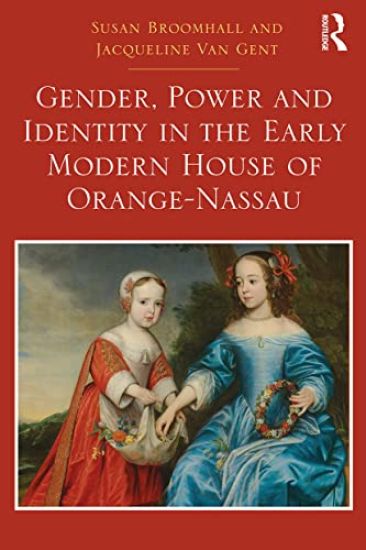
How do gender and power relationships affect the expression of family, House and dynastic identities? The present study explores this question using a case study of the House of Orange-Nassau, whose extensive visual, material and archival sources from both male and female members enable the authors to trace their complex attempts to express, gain and maintain power: in texts, material culture, and spaces, as well as rituals, acts and practices. The book adopts several innovative approaches to the history of the Orange-Nassau family, and to familial and dynastic studies generally. Firstly, the authors analyse in detail a vast body of previously unexplored sources, including correspondence, artwork, architectural, horticultural and textual commissions, ceremonies, practices and individual actions that have, surprisingly, received little attention to date individually, and consider these as the collective practices of a key early modern dynastic family. They investigate new avenues about the meanings and practices of family and dynasty in the early modern period, extending current research that focuses on dominant men to ask how women and subordinate men understood 'family' and 'dynasty', in what respects such notions were shared among members, and how it might have been fractured and fashioned by individual experiences. Adopting a transnational approach to the Nassau family, the authors explore the family's self-presentation across a range of languages, cultures and historiographical traditions, situating their representation of themselves as an influential House within an international context and offering a new vision of power as a gendered concept.
The Puzzle of Love

The Puzzle of Love

Susan Broomhall; Therese Vandling

ORION PUBLISHING CO
2022
muu
DISCOVER HEARTACHE AND HEARTBREAK, intense desire and deep affection with The Puzzle of Love. 150 PIECE GRADIENT PUZZLE for a new generation of jigsaw fans TAP INTO THE MINDFUL, SELF-CARE APPEAL OF JIGSAWS. The beautiful, mesmerising artwork focusses on the emotion of love, with accompanying text to help you understand and make sense of your feelings PART OF A SERIES that also includes The Puzzle of Hopefulness, The Puzzle of Happiness, The Puzzle of Calm and The Puzzle of Ecstasy STURDY & ATTRACTIVE BOX perfect for gifting
The Puzzle of Ecstasy

The Puzzle of Ecstasy

Susan Broomhall; Therese Vandling

ORION PUBLISHING CO
2022
muu
FEEL EUPHORIA, ELATION AND EXTREME DELIGHT and pleasure with The Puzzle of Ecstasy150 PIECE GRADIENT PUZZLE for a new generation of jigsaw fansTAP INTO THE MINDFUL, SELF-CARE APPEAL OF JIGSAWS. The beautiful, mesmerising artwork focusses on the emotion of ecstasy, with accompanying text to help you understand and make sense of your feelingsPART OF A SERIES that also includes The Puzzle of Hopefulness, The Puzzle of Happiness, The Puzzle of Calm and The Puzzle of LoveSTURDY & ATTRACTIVE BOX perfect for gifting
The Puzzle of Happiness

The Puzzle of Happiness

Therese Vandling; Susan Broomhall

ORION PUBLISHING CO
2021
muu
Discover the blissful transience of joy and cheerfulness with The Puzzle of Happiness.Part of a new 150-piece gradient puzzle series that taps into the mindful, self-care appeal of jigsaws. The beautiful, mesmerising artwork of each little puzzle focuses on a different emotion, with an accompanying essay to help you understand and make sense of these feelings.Other titles in the series include: The Puzzle of Hopefulness, The Puzzle of Calm, The Puzzle of Love and The Puzzle of Ecstasy.
The Puzzle of Hopefulness

The Puzzle of Hopefulness

Susan Broomhall; Therese Vandling

ORION PUBLISHING CO
2021
muu
Wish, daydream and discover a more optimistic outlook with The Puzzle of Hopefulness.Part of a new 150-piece gradient puzzle series that taps into the mindful, self-care appeal of jigsaws. The beautiful, mesmerising artwork of each little puzzle focuses on a different emotion, with an accompanying essay to help you understand and make sense of these feelings.Other titles in the series include: The Puzzle of Happiness, The Puzzle of Calm, The Puzzle of Love and The Puzzle of Ecstasy.
The Puzzle of Calm

The Puzzle of Calm

Therese Vandling; Susan Broomhall

ORION PUBLISHING CO
2021
muu
Discover peace, tranquillity and quiet with The Puzzle of Calm.Part of a new 150-piece gradient puzzle series that taps into the mindful, self-care appeal of jigsaws. The beautiful, mesmerising artwork of each little puzzle focuses on a different emotion, with an accompanying essay to help you understand and make sense of these feelings.Other titles in the series include: The Puzzle of Hopefulness, The Puzzle of Happiness, The Puzzle of Love and The Puzzle of Ecstasy.
The Identities of Catherine de' Medici
In The Identities of Catherine de' Medici, Susan Broomhall provides an innovative analysis of the representational strategies that constructed Catherine de’ Medici and sought to explain her behaviour and motivations. Through her detailed exploration of the identities that the queen, her allies, supporters, and clients sought to project, and how contemporaries responded to them, Broomhall establishes a new vision of this important sixteenth-century protagonist, a clearer understanding of the dialogic and dynamic nature of identity construction and reception, and its consequences for Catherine de' Medici’s legacy, memory, and historiography.
Dynastic Colonialism

Dynastic Colonialism

Susan Broomhall; Jacqueline Van Gent

Routledge
2019
nidottu
Dynastic Colonialism analyses how women and men employed objects in particular places across the world during the early modern period in order to achieve the remarkable expansion of the House of Orange-Nassau. Susan Broomhall and Jacqueline Van Gent explore how the House emerged as a leading force during a period in which the Dutch accrued one of the greatest seaborne empires. Using the concept of dynastic colonialism, they explore strategic behaviours undertaken on behalf of the House of Orange-Nassau, through material culture in a variety of sites of interpretation from palaces and gardens to prints and teapots, in Europe and beyond. Using over 140 carefully selected images, the authors consider a wide range of visual, material and textual sources including portraits, glassware, tiles, letters, architecture and global spaces in order to rethink dynastic power and identity in gendered terms. Through the House of Orange-Nassau, Broomhall and Van Gent demonstrate how dynasties could assert status and power by enacting a range of colonising strategies.Dynastic Colonialism offers an exciting new interpretation of the complex story of the House of Orange-Nassau‘s rise to power in the early modern period through material means that will make fascinating reading for students and scholars of early modern European history, material culture, and gender. This book is highly illustrated throughout. The print edition features the images in black and white, whereas the eBook edition contains the illustrations in colour.
Gender and Emotions in Medieval and Early Modern Europe: Destroying Order, Structuring Disorder
States of emotion were vital as a foundation to society in the premodern period, employed as a force of order to structure diplomatic transactions, shape dynastic and familial relationships, and align religious beliefs, practices and communities. At the same time, societies understood that affective states had the potential to destroy order, creating undesirable disorder and instability that had both individual and communal consequences. These had to be actively managed, through social mechanisms such as children's education, acculturation, and training, and also through religious, intellectual, and textual practices that were both socio-cultural and individual. Presenting the latest research from an international team of scholars, this volume argues that the ways in which emotions created states of order and disorder in medieval and early modern Europe were deeply informed by contemporary gender ideologies. Together, the essays reveal the critical roles that gender ideologies and lived, structured, and desired emotional states played in producing both stability and instability.