Kirjojen hintavertailu. Mukana 12 595 353 kirjaa ja 12 kauppaa.

Kirjailija

Susan Dewey

Kirjat ja teokset yhdessä paikassa: 16 kirjaa, julkaisuja vuosilta 2008-2024, suosituimpien joukossa Community-Based Participatory Research with Women in Prison. Vertaile teosten hintoja ja tarkista saatavuus suomalaisista kirjakaupoista.

16 kirjaa

Kirjojen julkaisuhaarukka 2008-2024.

Community-Based Participatory Research with Women in Prison

Community-Based Participatory Research with Women in Prison

Susan Dewey; Brittany VandeBerg; Julie Tennant-Caine

Springer International Publishing AG
2024
nidottu
This innovative work tells the story of a unique partnership between a state prison administration and a team of incarcerated women, prison administrators, researchers, artists, and students known as The WoW Collective due to their joint efforts in developing a peer mentoring program called “Women’s Words/Women’s Worlds (WoW).” Using the example of WoW, the book provides a guide to doing community-based participatory research (CBPR) with women in prison that takes a collaborative—rather than the typically adversarial—approach to working together toward the goal of transformative social change. This book provides a ground-breaking example of how incarcerated women, prison administrators, researchers, and artists successfully worked together on a community-based project that led to meaningful results in the form of a peer mentoring program designed by women in prison for women in prison. Remaining closely attuned to the ethical dimensions of doing CBPR in a highly structured prison environment, this book provides inspiration to CBPR practitioners who seek to work within the criminal justice system to create real and meaningful change for the better. Co-authored by two criminologists, a senior prison administrator, and the unique collective known as WoW, this book provides both a clear step-by-step CBPR guide and a visionary approach to working with criminal justice practitioners.

Gun Present

Gun Present

Susan Dewey; Brittany VandeBerg; Hays Webb

University of California Press
2024
pokkari
Gun Present takes us inside the everyday operations of the law at a courthouse in the Deep South. Illuminating the challenges accompanying the prosecution of criminal cases involving guns, the three coauthors—an anthropologist, a geographer, and a district attorney—present a deeply human portrait of prosecutors’ work. Built on an immersive, community-based participatory partnership between researchers and criminal justice professionals, Gun Present chronicles how a justice assemblage comprising institutional structures and practices, relationships and roles, and individual moral and emotional worlds informs the day-to-day administration of justice. Weaving together in-depth interviews, quantitative analysis of more than a thousand criminal cases, analysis of trial transcripts, and over a year of ethnographic observations, Gun Present provides a model for scholar-practitioner collaborations.
Gun Present

Gun Present

Susan Dewey; Brittany VandeBerg; Hays Webb

University of California Press
2024
sidottu
Gun Present takes us inside the everyday operations of the law at a courthouse in the Deep South. Illuminating the challenges accompanying the prosecution of criminal cases involving guns, the three coauthors—an anthropologist, a geographer, and a district attorney—present a deeply human portrait of prosecutors’ work. Built on an immersive, community-based participatory partnership between researchers and criminal justice professionals, Gun Present chronicles how a justice assemblage comprising institutional structures and practices, relationships and roles, and individual moral and emotional worlds informs the day-to-day administration of justice. Weaving together in-depth interviews, quantitative analysis of more than a thousand criminal cases, analysis of trial transcripts, and over a year of ethnographic observations, Gun Present provides a model for scholar-practitioner collaborations.
Third Sector Organizations in Sex Work and Prostitution

Third Sector Organizations in Sex Work and Prostitution

Isabel Crowhurst; Susan Dewey; Chimaraoke Izugbara

TAYLOR FRANCIS LTD
2022
nidottu
Third Sector Organizations in Sex Work and Prostitution is about sex work and prostitution third sector organizations (TSOs): non-governmental and non-profit organizations that provide support services to, and advocate for the well-being of people operating in the sex industries. With a focus on three vast and extremely diverse regions, Africa, the Americas, and Europe, this book provides a unique vantage point that shows how interlinked these organizations’ histories and configurations are. TSOs are fascinating research sites because they operate as zones of contestation which translate their understandings of sex work and prostitution into different support practices and advocacy initiatives. This book reveals that these organizations are not external to normative power but participate in it and are subject to it, conditioning how they can exist, who they can reach out to, where, and what they can achieve. Third Sector Organizations in Sex Work and Prostitution is a resource for scholars, policymakers, and activists involved in research on, and work with third sector organizations in the fields of sex work and prostitution, gender and sexuality, and human rights among others.
Third Sector Organizations in Sex Work and Prostitution

Third Sector Organizations in Sex Work and Prostitution

Isabel Crowhurst; Susan Dewey; Chimaraoke Izugbara

CRC Press Inc
2021
sidottu
Third Sector Organizations in Sex Work and Prostitution is about sex work and prostitution third sector organizations (TSOs): non-governmental and non-profit organizations that provide support services to, and advocate for the well-being of people operating in the sex industries. With a focus on three vast and extremely diverse regions, Africa, the Americas, and Europe, this book provides a unique vantage point that shows how interlinked these organizations’ histories and configurations are. TSOs are fascinating research sites because they operate as zones of contestation which translate their understandings of sex work and prostitution into different support practices and advocacy initiatives. This book reveals that these organizations are not external to normative power but participate in it and are subject to it, conditioning how they can exist, who they can reach out to, where, and what they can achieve. Third Sector Organizations in Sex Work and Prostitution is a resource for scholars, policymakers, and activists involved in research on, and work with third sector organizations in the fields of sex work and prostitution, gender and sexuality, and human rights among others.
Outlaw Women

Outlaw Women

Susan Dewey; Bonnie Zare; Catherine Connolly; Rhett Epler; Rosemary Bratton

New York University Press
2019
pokkari
A journey into the experiences of incarcerated women in rural areas, revealing how location can reinforce gendered violence Incarceration is all too often depicted as an urban problem, a male problem, a problem that disproportionately affects people of color. This book, however, takes readers to the heart of the struggles of the outlaw women of the rural West, considering how poverty and gendered violence overlap to keep women literally and figuratively imprisoned. Outlaw Women examines the forces that shape women’s experiences of incarceration and release from prison in the remote, predominantly white communities that many Americans still think of as “the Western frontier.” Drawing on dozens of interviews with women in the state of Wyoming who were incarcerated or on parole, the authors provide an in-depth examination of women’s perceptions of their lives before, during, and after imprisonment. Considering cultural mores specific to the rural West, the authors identify the forces that consistently trap women in cycles of crime and violence in these regions: felony-related discrimination, the geographic isolation that traps women in abusive relationships, and cultural stigmas surrounding addiction, poverty, and precarious interpersonal relationships. Following incarceration, women in these areas face additional, region-specific obstacles as they attempt to reintegrate into society, including limited social services, significant gender wage gaps, and even severe weather conditions that restrict travel. The book ultimately concludes with new, evidence-based recommendations for addressing the challenges these women face.
Outlaw Women

Outlaw Women

Susan Dewey; Bonnie Zare; Catherine Connolly; Rhett Epler; Rosemary Bratton

New York University Press
2019
sidottu
A journey into the experiences of incarcerated women in rural areas, revealing how location can reinforce gendered violence Incarceration is all too often depicted as an urban problem, a male problem, a problem that disproportionately affects people of color. This book, however, takes readers to the heart of the struggles of the outlaw women of the rural West, considering how poverty and gendered violence overlap to keep women literally and figuratively imprisoned. Outlaw Women examines the forces that shape women's experiences of incarceration and release from prison in the remote, predominantly white communities that many Americans still think of as "the Western frontier." Drawing on dozens of interviews with women in the state of Wyoming who were incarcerated or on parole, the authors provide an in-depth examination of women's perceptions of their lives before, during, and after imprisonment. Considering cultural mores specific to the rural West, the authors identify the forces that consistently trap women in cycles of crime and violence in these regions: felony-related discrimination, the geographic isolation that traps women in abusive relationships, and cultural stigmas surrounding addiction, poverty, and precarious interpersonal relationships. Following incarceration, women in these areas face additional, region-specific obstacles as they attempt to reintegrate into society, including limited social services, significant gender wage gaps, and even severe weather conditions that restrict travel. The book ultimately concludes with new, evidence-based recommendations for addressing the challenges these women face.
Women of the Street

Women of the Street

Susan Dewey; Tonia St. Germain

New York University Press
2017
sidottu
Explores encounters between those who make their living by engaging in street-based prostitution and the criminal justice and social service workers who try to curtail it Working together every day, the lives of sex workers, police officers, public defenders, and social service providers are profoundly intertwined, yet their relationships are often adversarial and rooted in fundamentally false assumptions. The criminal justice-social services alliance operates on the general belief that the women they police and otherwise regulate choose sex work as a result of traumatization, rather than acknowledging the fact that socioeconomic realities often inform their choices. Drawing on extraordinarily rich ethnographic research, including interviews with over one hundred street-involved women and dozens of criminal justice and social service professionals, Women of the Street argues that despite the intimate knowledge these groups have about each other, measures designed to help these women consistently fail because they do not take into account false assumptions about street life, homelessness, drug use and sex trading. Reaching beyond disciplinary silos by combining the analysis of an anthropologist and a legal scholar, the book offers an evidence-based argument for the decriminalization of prostitution.
Women of the Street

Women of the Street

Susan Dewey; Tonia St. Germain

New York University Press
2017
pokkari
Explores encounters between those who make their living by engaging in street-based prostitution and the criminal justice and social service workers who try to curtail it Working together every day, the lives of sex workers, police officers, public defenders, and social service providers are profoundly intertwined, yet their relationships are often adversarial and rooted in fundamentally false assumptions. The criminal justice-social services alliance operates on the general belief that the women they police and otherwise regulate choose sex work as a result of traumatization, rather than acknowledging the fact that socioeconomic realities often inform their choices. Drawing on extraordinarily rich ethnographic research, including interviews with over one hundred street-involved women and dozens of criminal justice and social service professionals, Women of the Street argues that despite the intimate knowledge these groups have about each other, measures designed to help these women consistently fail because they do not take into account false assumptions about street life, homelessness, drug use and sex trading. Reaching beyond disciplinary silos by combining the analysis of an anthropologist and a legal scholar, the book offers an evidence-based argument for the decriminalization of prostitution.
Sex Workers and Criminalization in North America and China

Sex Workers and Criminalization in North America and China

Susan Dewey; Tiantian Zheng; Treena Orchard

Springer International Publishing AG
2016
nidottu
Sex work continues to provoke controversial legal and public policy debates world-wide that raise fundamental questions about the state’s role in protecting individual rights, status quo social relations, and public health. This book unites ethnographic research from China, Canada, and the United States to argue that criminalization results in a totalizing set of negative consequences for sex workers’ health, safety, and human rights. Such consequences are enabled through the operations of an exclusionary regime, a dense coalescence of punitive forces that involves both governance, in the form of the criminal justice system and other state agents, and dynamic interpersonal encounters in which individuals both enforce and negotiate stigma-related discrimination against sex workers. Chapter Two demonstrates how criminalization harms sex workers by isolating their work to potentially dangerous locations, fostering mistrust of authority figures, further limiting their abilities to find legal work and housing, and restricting possibilities for collective rights-based organizing. Criminalized sex workers report police harassment, seizure of condoms, and adversarial police-sex worker relations that enable others to abuse them with impunity. Chapter Three describes how sex workers negotiate these restrictions on their rights and personal autonomy via their arrest avoidance and client management strategies, self-treatment of health issues, selective mutual aid, rights-based organizing, and entrenchment in sex work or other criminalized activities. Chapter Four describes how researchers working in countries or locales that criminalize sex work face ethical concerns as well as barriers to their work at the practical, institutional, and political levels.
Ethical Research with Sex Workers

Ethical Research with Sex Workers

Susan Dewey; Tiantian Zheng

Springer-Verlag New York Inc.
2013
nidottu
This volume is the result of the many years the authors have spent conducting ethnographic field research with sex workers, conversing with other researchers, and, perhaps most importantly, developing a deep sense of empathy for the sex worker participants in the research as well as the colleagues who carry out this work with the goal of advancing social justice. They have a combined total of twenty-five years’ experience carrying out research with sex workers, and this extensive period of time has given them ample opportunity to reflect upon the topic of ethics. Sex work, defined as the exchange of sexual or sexualized intimacy for money or something of value, encompasses a wide range of legal and illegal behaviors that present researchers with key ethical challenges explored in the volume. These ethical challenges include:· Research methodology· Distinguishing research from activism· Navigating the politically and ideologically charged environments in which researchers must remain constantly attuned to the legal and public policy implications of their work· Possibilities for participatory sex work research processes· Strategies for incorporating participants in a variety of collaborative waysSex work presents a unique set of challenges that are not always well understood by those working outside of anthropology and disciplines closely related to it. This book serves an important function by honestly and openly reviewing strategies for overcoming these ethical challenges with the end goal of producing path-breaking research that actively incorporates the perspectives of research participants on their own terms. Ever attuned to the reality that research on sex work remains a deeply political act, Ethical Research with Sex Workers: Anthropological Approaches aspires to begin a dialogue about the meanings and practices ascribed to ethics in a fraught environment. Drawing upon a reviewof published scholarly and activist work on the subject, as well as on interviews with researchers, social service providers, and sex workers themselves, this volume is an unprecedented contribution to the literature that will engage researchers across a variety of disciplines, such as academics and researchers in anthropology, sociology, criminal justice, and public health, as well as activists and policymakers.
Super Girls, Gangstas, Freeters, and Xenomaniacs

Super Girls, Gangstas, Freeters, and Xenomaniacs

Susan Dewey

Syracuse University Press
2012
sidottu
In recent years, there has been a proliferation of scholarly interest in youth cultures, with much of the focus on questions of how young people shape and are shaped by the experiences of globalisation in the modern age. As adolescents everywhere struggle to redefine their gendered and ethnic identities, they are keenly aware that they operate on an uneven global terrain. Transnational images of modern youth that stress independence and self-cultivation often exist in stark contrast to the actual local limitations many youth experience. Composed of twelve chapters based upon ethnographic research in Africa, Asia, and Oceania, this volume explores the gendered cultural diversity of how young people experience modernity. The first part features chapters on mobile phones as agents transforming gender norms for young Mozambicans and on economic independence and feminine beauty among young Namibian women. In part two, contributors describe children’s use of English and Pentecostal ideology as agents of social mobility in rural Fiji and examine androgyny, social mobility, and group membership for youth on reality television shows in China and India. Part three probes gendered discourses of “citizen warrior” versus “citizen shopper” in Cyprus and describes the moral panic surrounding child sex tourism in India. The last part analyses how New Zealanders make sense of a growing youth activist movement, how young Australian–Papua New Guineans embrace their parents’ traditional culture, and how Tongan male adolescents in the United States construct gang identities.
Neon Wasteland

Neon Wasteland

Susan Dewey

University of California Press
2011
pokkari
This path-breaking book examines the lives of five topless dancers in the economically devastated 'rust belt' of upstate New York. With insight and empathy, Susan Dewey shows how these women negotiate their lives as parents, employees, and family members while working in a profession widely regarded as incompatible with motherhood and fidelity. Neither disparaging nor romanticizing her subjects, Dewey investigates the complicated dynamic of performance, resilience, economic need, and emotional vulnerability that comprises the life of a stripper. An accessibly written text that uses academic theories and methods to make sense of feminized labor, "Neon Wasteland" shows that sex work is part of the learned process by which some women come to believe that their self-esteem, material worth, and possibilities for life improvement are invested in their bodies.
Neon Wasteland

Neon Wasteland

Susan Dewey

University of California Press
2011
sidottu
This path-breaking book examines the lives of five topless dancers in the economically devastated 'rust belt' of upstate New York. With insight and empathy, Susan Dewey shows how these women negotiate their lives as parents, employees, and family members while working in a profession widely regarded as incompatible with motherhood and fidelity. Neither disparaging nor romanticizing her subjects, Dewey investigates the complicated dynamic of performance, resilience, economic need, and emotional vulnerability that comprises the life of a stripper. An accessibly written text that uses academic theories and methods to make sense of feminized labor, "Neon Wasteland" shows that sex work is part of the learned process by which some women come to believe that their self-esteem, material worth, and possibilities for life improvement are invested in their bodies.
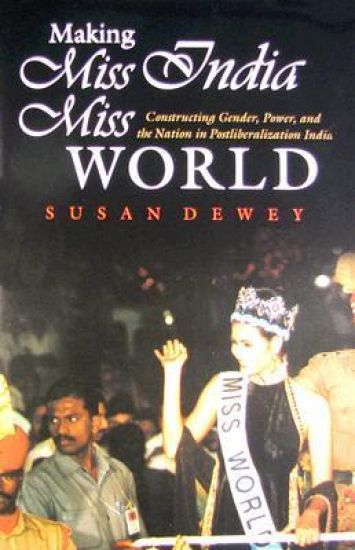
Making Miss India Miss World

Making Miss India Miss World

Susan Dewey

Syracuse University Press
2008
sidottu
For almost half a century, the Miss India competition has been a prominent feature of Indian popular culture, influencing, over time, the conventional standard for female beauty. As India participates increasingly in a global economy, that standard is gradually being shaped by forces beyond the country's borders. Through the unexpected lens of the 2003 beauty pageant, Susan Dewey's Making Miss India Miss World examines what feminine beauty has come to mean in a country transformed by recent political, economic, and cultural developments.Dewey offers readers an up-close view of the beauty pageant through her discussion of the contestants' intense training program, a process that involves extensive physical, emotional, and cultural transformations. Covering everything from proper table etiquette to preferred skin tone, the author reveals the exacting standards set by pageant officials and reflected in Indian society. Yet she also recognizes the empowerment these women are afforded by their status as beauty symbols in a culture increasingly shaped by the visual influence of national and international media. Making Miss India Miss World constitutes an important cultural critique and an enlightening take on how macroeconomic change affects cultural identity at the individual level.